
ᐅ Do we need an expert to assess potential consequential damages?
Created on: 6 Feb 2017 07:33
L
LuccarianL
Luccarian6 Feb 2017 07:33Good morning,
I am new here and feeling really overwhelmed. We are currently building or rather having our house built. Now the following problem has come up. Last week, our screed was poured. Before that, other tradespeople were still working in the house. On Saturday, we were able to enter the house for the first time. We noticed that someone must have cut a large hole in the vapor barrier beforehand—which was not sealed again. Naturally, all our mold warning signals are going off and panic has set in. The house is, of course, very damp, and I can well imagine that the moisture upstairs is already quite significant. We have an uninsulated, windowless attic space (gable roof). I am waiting for a callback from my site manager, whom I informed immediately on Saturday about this. I am really worried that our little home will be ruined or turn into a mold problem in a few years. Would you recommend consulting an expert in such a case—and if so, what kind of specialist would be suitable? Or how could this problem generally be resolved? I am very uncertain and just needed to get this off my chest.
I hope I have not broken any forum rules and look forward to some feedback. Thank you in advance and have a good start to the week 🙂
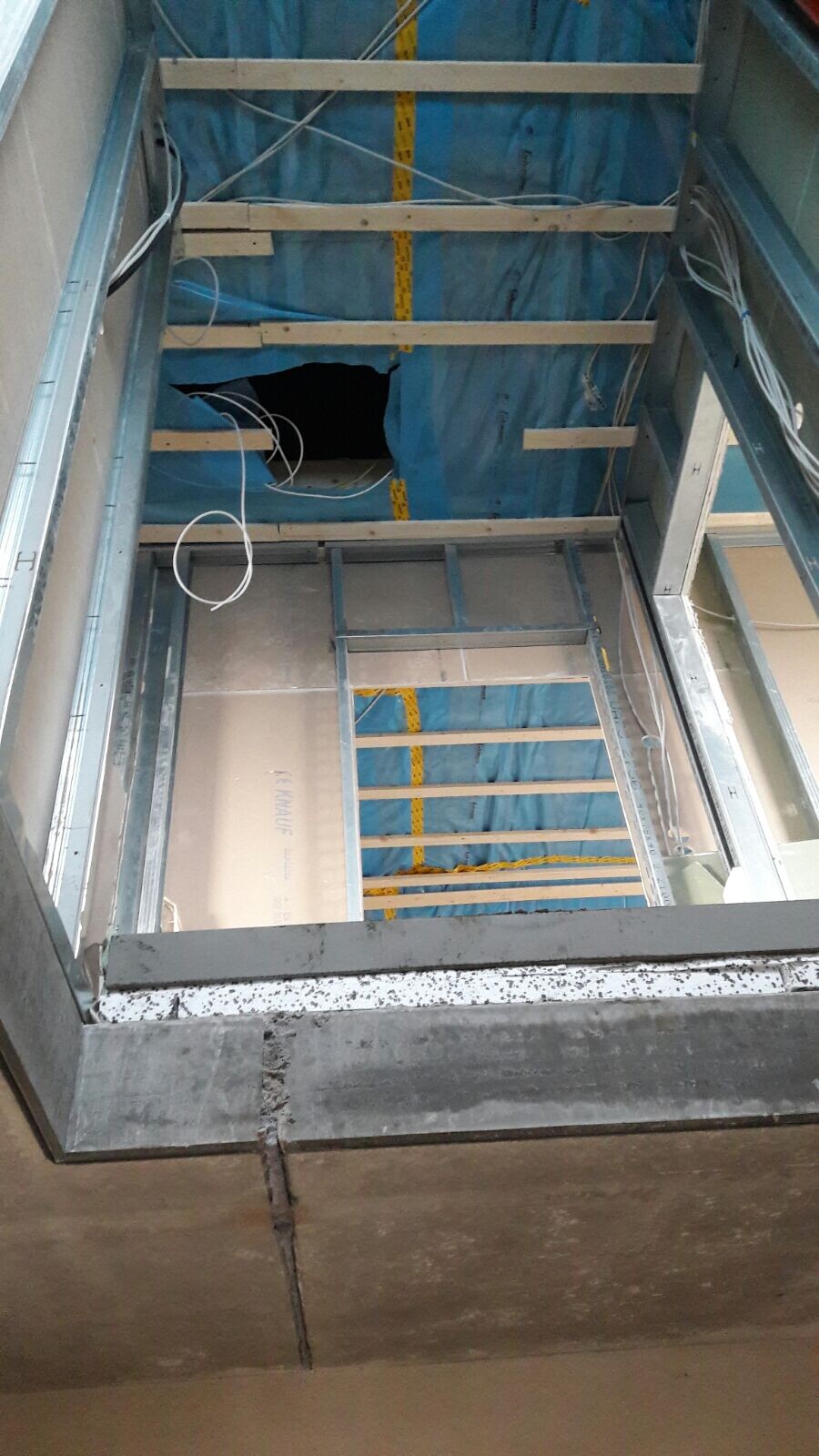
I am new here and feeling really overwhelmed. We are currently building or rather having our house built. Now the following problem has come up. Last week, our screed was poured. Before that, other tradespeople were still working in the house. On Saturday, we were able to enter the house for the first time. We noticed that someone must have cut a large hole in the vapor barrier beforehand—which was not sealed again. Naturally, all our mold warning signals are going off and panic has set in. The house is, of course, very damp, and I can well imagine that the moisture upstairs is already quite significant. We have an uninsulated, windowless attic space (gable roof). I am waiting for a callback from my site manager, whom I informed immediately on Saturday about this. I am really worried that our little home will be ruined or turn into a mold problem in a few years. Would you recommend consulting an expert in such a case—and if so, what kind of specialist would be suitable? Or how could this problem generally be resolved? I am very uncertain and just needed to get this off my chest.
I hope I have not broken any forum rules and look forward to some feedback. Thank you in advance and have a good start to the week 🙂
K
Knallkörper6 Feb 2017 14:17I wouldn’t panic about this. You need to put pressure on the general contractor (or however you are building) and insist on proposed solutions. They should come up with a plan to fix the defect. It is important that the hole is closed again first. I assume there is already insulation on top. This will likely need to be completely replaced, but that’s only a day’s work. If the attic doesn’t dry out naturally (depending on the season), technical measures will be necessary. The dryness should be verified with measurements.
This is solvable and not a disaster. However, having an expert involved would be a real help and make it easier to assert your interests against the general contractor.
This is solvable and not a disaster. However, having an expert involved would be a real help and make it easier to assert your interests against the general contractor.
L
Luccarian6 Feb 2017 14:24I have now reached my construction manager. A satisfactory solution was not offered. He said that with this weather, adhesive probably wouldn’t hold anyway!? I have involved a building inspector, whom I will meet on Wednesday. That reassures me a bit more^^ especially since that darn hole finally needs to be closed up!
K
Knallkörper6 Feb 2017 15:23Luccarian schrieb:
He said that with this kind of weather, no adhesive would probably hold anyway!?To tape the hole again? That statement is quite disappointing, especially since the hole should be sealed IMMEDIATELY. If it were my build, I would close the hole myself right away. Just think about how much water is passing through per hour...

Hello "Luccarian".
Whether an expert on building damage will be able to provide meaningful input in the field of floor technology will become clear after their inspection.
Floor technology, including screeds, is quite complex, which is why courts usually appoint specialists specifically for this trade.
Regarding your information:
I would advise not to overemphasize the topic of mold and related concerns for now! What kind of membrane was it, and what was its purpose?
I’m asking for a reason, because a vapor barrier, as you mentioned, is generally not used in mineral-based floor constructions.
It is used as a covering for the insulation layer, but not as a vapor barrier.
So my question is: at which point in the floor assembly did you find it?
------------------
Best regards, KlaRa
Whether an expert on building damage will be able to provide meaningful input in the field of floor technology will become clear after their inspection.
Floor technology, including screeds, is quite complex, which is why courts usually appoint specialists specifically for this trade.
Regarding your information:
I would advise not to overemphasize the topic of mold and related concerns for now! What kind of membrane was it, and what was its purpose?
I’m asking for a reason, because a vapor barrier, as you mentioned, is generally not used in mineral-based floor constructions.
It is used as a covering for the insulation layer, but not as a vapor barrier.
So my question is: at which point in the floor assembly did you find it?
------------------
Best regards, KlaRa

@KlaRa
If I interpret the picture correctly, it shows the vapor barrier on the upper side towards the attic. The original poster is concerned about moisture moving upwards into the insulation.
To me, it looks like the electrician had to run cables upwards through the future floor hatch to pull his wires.
If I interpret the picture correctly, it shows the vapor barrier on the upper side towards the attic. The original poster is concerned about moisture moving upwards into the insulation.
To me, it looks like the electrician had to run cables upwards through the future floor hatch to pull his wires.
Similar topics