
ᐅ Are HDMI in-wall cables different from standard HDMI cables?
Created on: 20 Aug 2023 19:00
S
ScriptX
Hello,
I am currently renovating some rooms and want to install HDMI wall outlets while running the cables through my suspended ceiling to the planned projector.
Since the outlets are from Busch Jaeger and the individual wires need to be screwed in separately instead of simply plugging a connector into the back of the outlet, I am wondering if there are differences between an HDMI in-wall cable and a standard “device cable.”
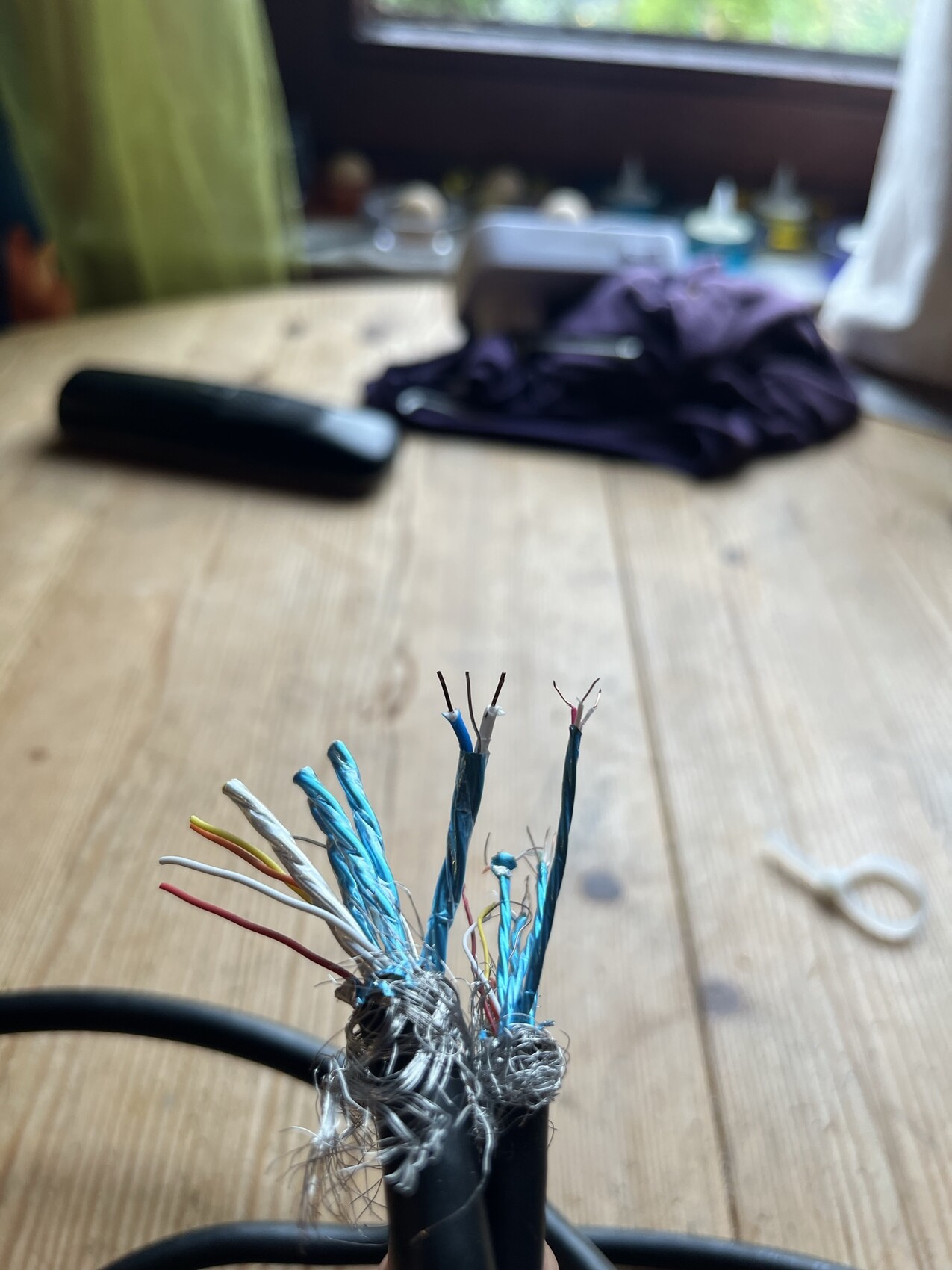
For testing purposes, I opened an HDMI cable I would use (Kabeldirekt) and prepared it for the HDMI outlet according to the manufacturer’s instructions. However, the wires in this cable are very fragile, and I could not find any cross-sectional area in mm² to compare it with in-wall cables. So now I am asking if these cables are essentially the same or if there are certain advantages to one or the other.
Thanks in advance for your help.
I am currently renovating some rooms and want to install HDMI wall outlets while running the cables through my suspended ceiling to the planned projector.
Since the outlets are from Busch Jaeger and the individual wires need to be screwed in separately instead of simply plugging a connector into the back of the outlet, I am wondering if there are differences between an HDMI in-wall cable and a standard “device cable.”
For testing purposes, I opened an HDMI cable I would use (Kabeldirekt) and prepared it for the HDMI outlet according to the manufacturer’s instructions. However, the wires in this cable are very fragile, and I could not find any cross-sectional area in mm² to compare it with in-wall cables. So now I am asking if these cables are essentially the same or if there are certain advantages to one or the other.
Thanks in advance for your help.
xMisterDx schrieb:
Um, no? A solid cable just means it comes without a plug. A CAT7 cable also doesn’t have stranded conductors when you pull it off the roll.
Anything else, especially for a layperson, is an absolute disaster. 0.25mm² solid? That breaks so easily—you just have to accidentally cough. Sorry, but the CAT5/6/7 solid cables I’ve installed so far always had solid copper conductors (0.55mm–0.6mm) as the wires. The standard connectors, patch panels, and keystone jacks using the insulation displacement connection (IDC) system don’t work any differently.
xMisterDx schrieb:
Everything else is, especially for a layperson, an absolute disaster. 0.25 mm² solid? That breaks so easily, you just need to cough accidentally.If it breaks that easily, it usually means someone chose CCA cable. That’s saving money in the wrong place.
Thanks in advance for your answers. Since I couldn’t find an AWG rating for my pre-made cable, I will have to try it out myself. I ordered one meter of AWG24 (3 feet) to compare which one is easier to work with. Since no one has claimed that either cable has a significant advantage so far, I’ll just see which one is easier to handle... Thanks for your help.
A small update from my side. My 1m (3.3 ft) test piece has arrived, and I’m pleased to see that the cable cross-section is significantly larger than that of the cut-off device cable. The new cable has a cross-section of AWG24 (0.2050 mm²), whereas I couldn’t find any information on the old one. The difference is clearly visible in the picture. Both cables are held at the same distance.
Similar topics