
ᐅ Distance between the interior window sill and the window frame
Created on: 10 Apr 2026 12:34
P
Philipp89P
Philipp8910 Apr 2026 12:34Hello dear house building forum,
In our case, an interior window sill or probably the window itself was installed slightly crooked, so that the interior window sill protrudes about 5 mm (0.2 inches) on one side (intentionally) and is flush with the interior plaster on the other side. The window sill was cut correctly. After I pointed this out, the window sill was moved forward. Now, however, there is a larger gap to the window frame on one side. Is it allowed for the joint to the window frame to be this large (about 9 mm / 0.35 inches)? Could this cause problems with moisture? Should I ask the window installer to cut a new/correctly angled interior window sill? Or is this "only" a visual defect due to a wider silicone joint?
We appreciate any feedback.
Best regards
Philipp
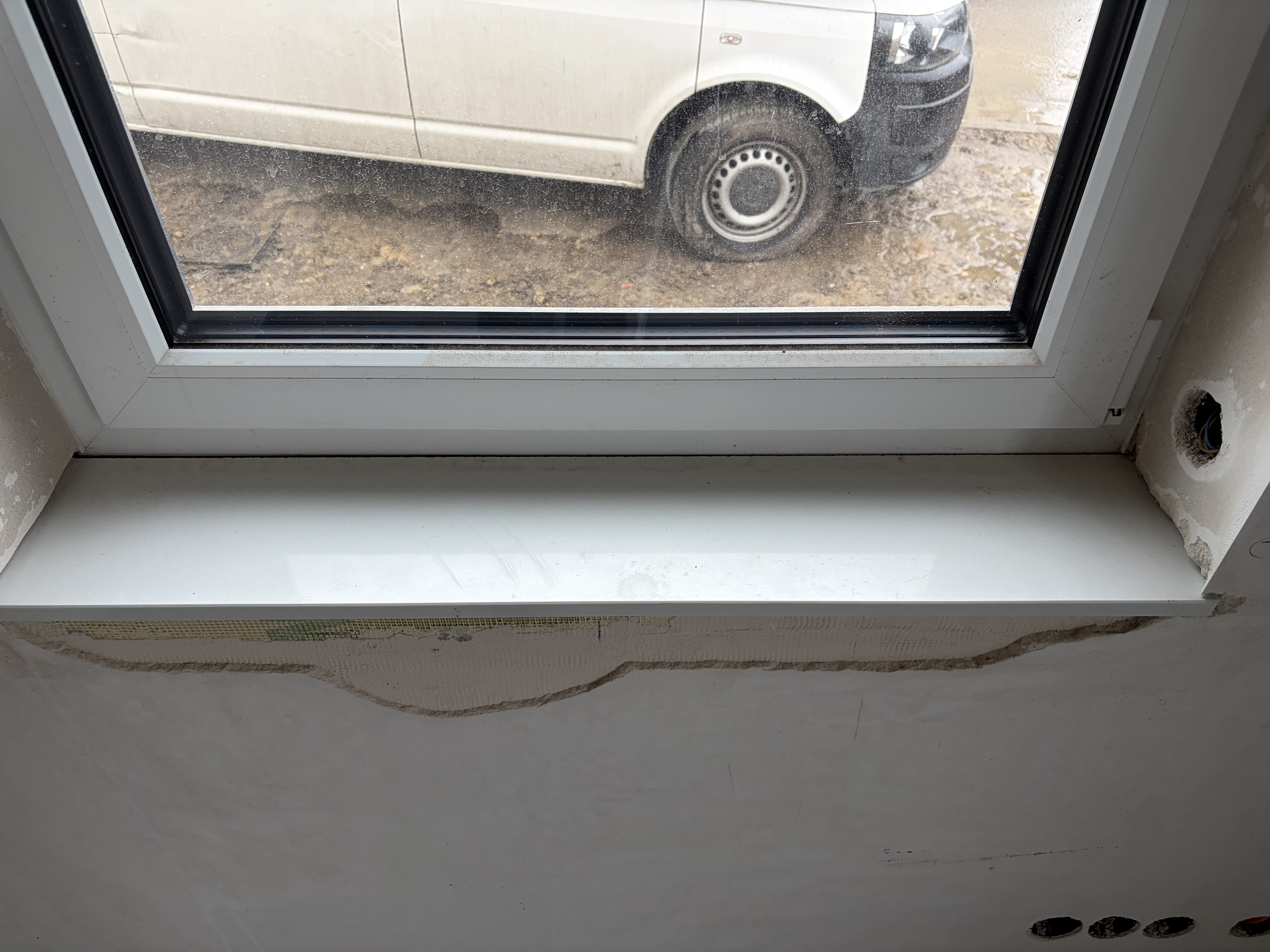
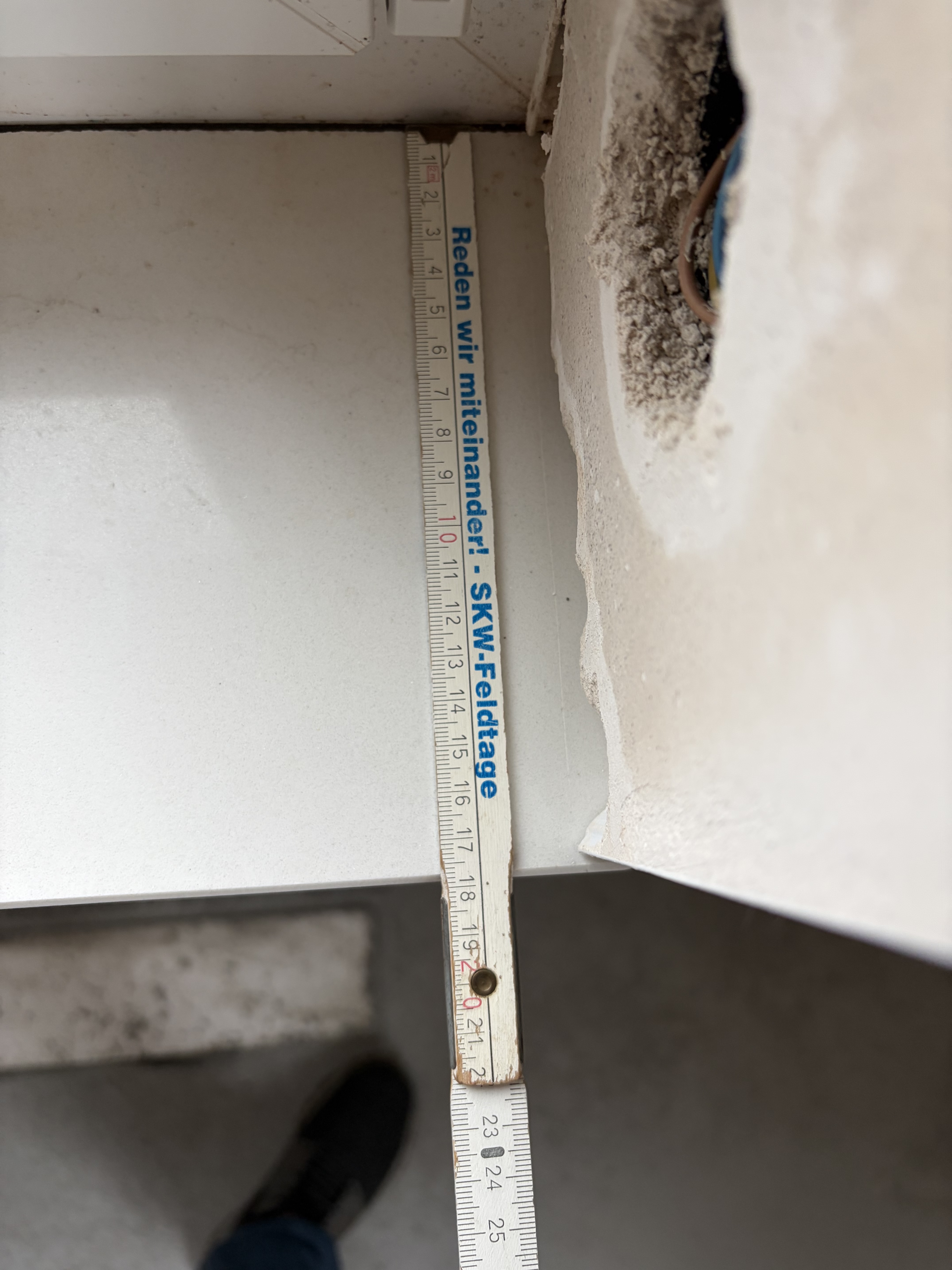
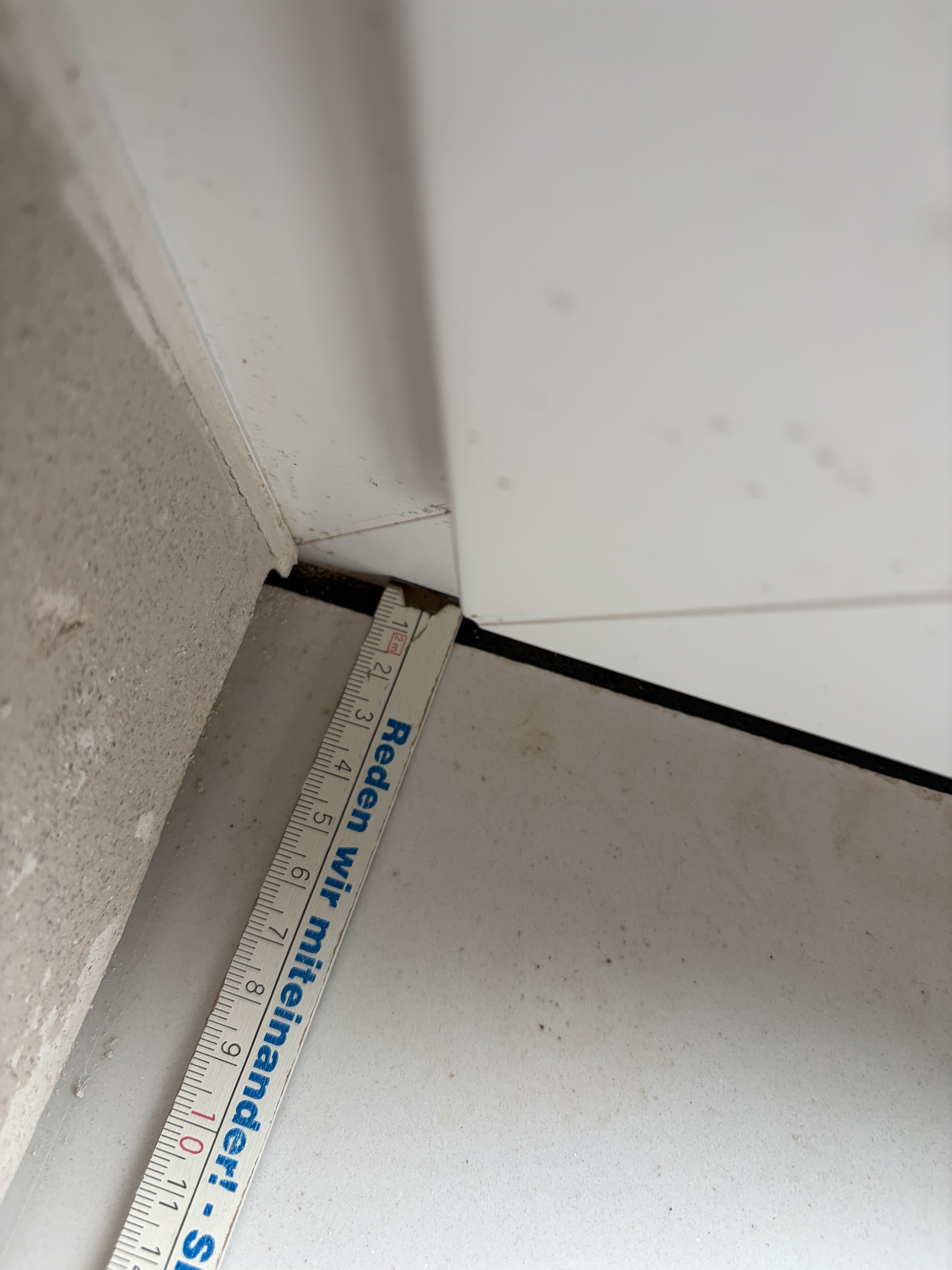
In our case, an interior window sill or probably the window itself was installed slightly crooked, so that the interior window sill protrudes about 5 mm (0.2 inches) on one side (intentionally) and is flush with the interior plaster on the other side. The window sill was cut correctly. After I pointed this out, the window sill was moved forward. Now, however, there is a larger gap to the window frame on one side. Is it allowed for the joint to the window frame to be this large (about 9 mm / 0.35 inches)? Could this cause problems with moisture? Should I ask the window installer to cut a new/correctly angled interior window sill? Or is this "only" a visual defect due to a wider silicone joint?
We appreciate any feedback.
Best regards
Philipp

5mm (0.2 inches) is quite a lot, but who is to blame?
Is it the plaster? Is it the shell construction?
Honestly, just cut the window sill slightly angled at the back and you're done. But of course, you’ll have to pay again—either the shell constructor, the window installer, or the plasterer.
And it’s not worth the stress unless there are multiple issues with these trades.
PS: In a few weeks, you won’t even notice it anymore.
Is it the plaster? Is it the shell construction?
Honestly, just cut the window sill slightly angled at the back and you're done. But of course, you’ll have to pay again—either the shell constructor, the window installer, or the plasterer.
And it’s not worth the stress unless there are multiple issues with these trades.
PS: In a few weeks, you won’t even notice it anymore.

Philipp89 schrieb:
Should I ask the window installer to cut a new/slanted interior window sill? Or is this "just" a visual flaw caused by a wider silicone joint? At least since the initial installation, the gap for the silicone joint has been too wide. In my case, a frame-colored angle trim strip has been glued over it to discreetly cover the joint; this seems to be a more or less standard solution during replacement installations and here it just doesn’t look like it has been installed yet.
https://www.instagram.com/11antgmxde/
https://www.linkedin.com/company/bauen-jetzt/
M
MachsSelbst10 Apr 2026 22:06Regarding mistakes made. The tolerance for interior plaster is 4mm (0.16 inches) over a 1m (3.3 feet) measuring length.
If it’s 5mm (0.2 inches)... it’s actually better, so then complain... or measure precisely, a folding ruler is not sufficient for this. 😉
Of course, silicone or polyurethane (PU) can help here as well. Insert a joint filler profile, and it fits.
What is supposed to get damp there?
I understand expecting perfection in new builds given the prices. But tolerances do exist...
If it’s 5mm (0.2 inches)... it’s actually better, so then complain... or measure precisely, a folding ruler is not sufficient for this. 😉
Of course, silicone or polyurethane (PU) can help here as well. Insert a joint filler profile, and it fits.
What is supposed to get damp there?
I understand expecting perfection in new builds given the prices. But tolerances do exist...
P
Philipp8915 Apr 2026 20:28Thank you for the feedback. The developer has acknowledged the gap as a visual flaw and plans to discuss the issue with the window manufacturer.
Similar topics