
Hello everyone,
We recently moved into a new build a few days ago. We immediately noticed a large gap between the bottom edge of the door and the floor covering. We pointed this out during the final inspection, but the only response we received was that it has to be that way because of the internal ventilation system or something similar.
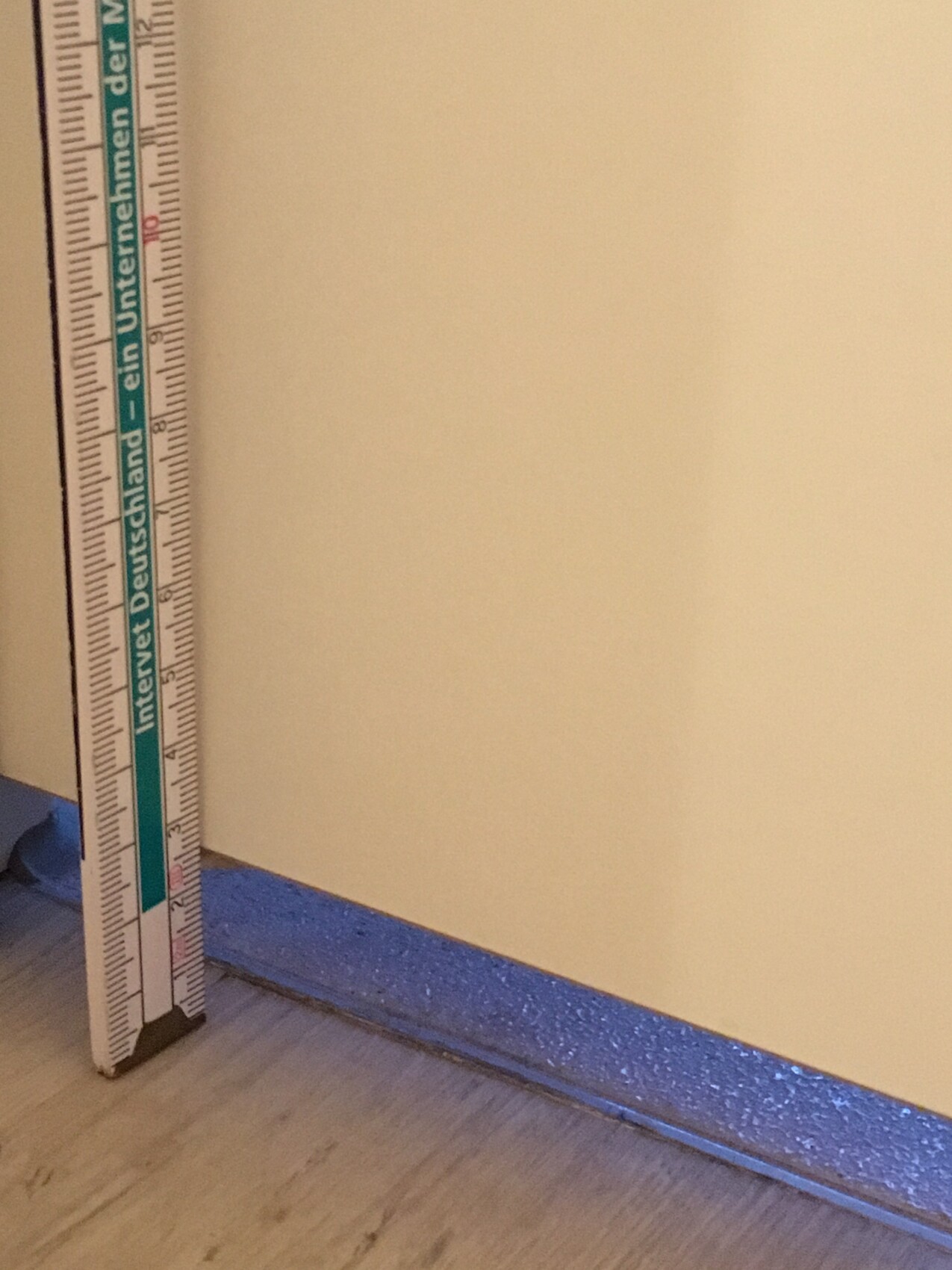
Today, I measured the gap myself. There is a space of 25mm (1 inch) between the bottom edge of the door and the tiles. Is this normal? Is the builder’s explanation correct? It looks unattractive and drafts come through. Surely this cannot be the purpose of a new build that is supposed to be highly energy efficient.
Thank you for your support,
Volkeracho
We recently moved into a new build a few days ago. We immediately noticed a large gap between the bottom edge of the door and the floor covering. We pointed this out during the final inspection, but the only response we received was that it has to be that way because of the internal ventilation system or something similar.
Today, I measured the gap myself. There is a space of 25mm (1 inch) between the bottom edge of the door and the tiles. Is this normal? Is the builder’s explanation correct? It looks unattractive and drafts come through. Surely this cannot be the purpose of a new build that is supposed to be highly energy efficient.
Thank you for your support,
Volkeracho
repentless schrieb:
In our case, the necessary air circulation for the ventilation system is handled differently. The doors have a maximum gap of 3-5mm (0.12-0.2 inches) at the bottom, but the door frame at the top is specially routed on the inside on both sides at the factory, making it invisible. We will do it the same way. My cousin did it like this as well, and it works perfectly. You don’t see anything, and the function is ensured. For me, a large gap under the doors would be an absolute no-go. A few millimeters are fine, but I definitely wouldn’t accept 2.5cm (1 inch). That looks terrible.
Our ventilation system installer provided us with a calculation showing how wide the gap under each door needs to be to guarantee the proper function of the ventilation system. For the living and bedrooms, we need to leave a gap of about 5mm (0.2 inches) under the door, I think (I don’t have the note with me right now), and for the bathroom, it was about 1.2cm (0.5 inches). Even that 1.2cm (0.5 inches) is too much for me and wouldn’t have been an option, so we are solving it with a small gap under the door plus additional routed sections in the door frame.
We have also seen calculations estimating how large the gap under the doors should be. However, these theoretical measurements are unnecessary in practice, since the doors are not kept completely closed. They are opened repeatedly throughout the day or are usually left open anyway.
Kind regards,
Sabine
Kind regards,
Sabine
B
Bieber081513 Nov 2017 09:04Volkeracho schrieb:
There was no cooperation regarding the doors, so nothing was recorded in the report. For you, it’s too late now, but for future cases: the final inspection is essentially a one-sided process carried out by the builder or buyer. There does not need to be agreement on the report; whatever you want to include in the report, you should do so. It’s best to have paper and pen with you. And it’s very important to reserve your rights concerning any known defects. In any case, a one-time early legal consultation is recommended when building or buying a house.
Lanini schrieb:
Our ventilation system installer gave us a calculation showing how large the gap under the door needs to be First of all, it’s exemplary that such a calculation exists! But besides the gap between the door and the floor, there are other options:
- Air transfer through the door frame (as described earlier in this thread),
- Automatic drop-down seals with air transfer function,
- Special air transfer vents, for example installed in the wall.
No one *has* to accept saloon doors just because they have a ventilation system.
Bieber0815 schrieb:
Nobody *has to* accept saloon doors if they have ventilation. I agree. Although we have the calculation, we will still opt for frame ventilation (i.e., routing out the door frame), because I want to avoid the large gaps under the doors.

Curly schrieb:
These theoretical measurements are not really necessary in practice since doors are usually not kept fully closed. People open the doors repeatedly throughout the day or keep them open anyway.Well, not in every room, but bathrooms, utility rooms, kitchens, studies, guest rooms, etc., are sometimes or even often kept closed for extended periods.
B
Bieber081513 Nov 2017 15:32Lanini schrieb:
We do have the calculation, but we will still use a frame ventilation The calculation only indicates the required free cross-sectional area. A frame ventilation should also provide the necessary airflow.
Similar topics