
Since our photovoltaic system, despite its east/west/southwest orientation, regularly operates at a 70% limitation daily, I am currently exploring ways to utilize these excess peaks. In doing so, I came across some unusual behavior with our heat pump, for which I have no explanation so far.
The installed unit is a Dimplex SI8TU with a deep borehole. Commissioning was carried out by the manufacturer’s service team. The brine circulation pump can be set in 10 levels (directly on the pump). During installation, level 1 was selected. As a result, during winter this regularly led to brine temperature differences of more than 9K (Kelvin). The domestic hot water temperature was set at 50°C (122°F).
As part of efficiency optimization and elimination of various faults (hydraulic balancing, etc.), the domestic hot water temperature was gradually lowered and the brine pump was increased until the temperature difference was about 3-4K (Kelvin), last set at level 5.5. This significantly improved the COP. Meanwhile, the manufacturer’s service team visited for other reasons and inspected the system. They pointed out that the brine pump must be set to level 10 because the heat pump can only operate efficiently with maximum flow. The more flow, the better. The heat pump is now in summer mode, and at times the cooling function was active, causing brine temperatures to rise significantly. Now the heat pump goes into high-pressure error mode already at a domestic hot water temperature of 43°C (109°F). As a test, I set the brine pump back to level 1 today and the heat pump promptly delivered hot water at 49°C (120°F) until I turned it off myself.
I always thought that the higher the brine temperature, the lower the required temperature lift and, therefore, the better the heat pump’s performance. This is also how the data sheets present it. However, the manual contains the confusing sentence: “The lower the heat source temperature (e.g., outside temperature, brine temperature), the higher the achievable domestic hot water temperature.” I initially assumed this was a typo or translation error, but it exactly describes the observed behavior. Could this be related to the refrigerant’s evaporation temperatures or how can this be explained? If it is really like this, then the only solution may be to manually adjust the brine pump during both winter and summer.
The installed unit is a Dimplex SI8TU with a deep borehole. Commissioning was carried out by the manufacturer’s service team. The brine circulation pump can be set in 10 levels (directly on the pump). During installation, level 1 was selected. As a result, during winter this regularly led to brine temperature differences of more than 9K (Kelvin). The domestic hot water temperature was set at 50°C (122°F).
As part of efficiency optimization and elimination of various faults (hydraulic balancing, etc.), the domestic hot water temperature was gradually lowered and the brine pump was increased until the temperature difference was about 3-4K (Kelvin), last set at level 5.5. This significantly improved the COP. Meanwhile, the manufacturer’s service team visited for other reasons and inspected the system. They pointed out that the brine pump must be set to level 10 because the heat pump can only operate efficiently with maximum flow. The more flow, the better. The heat pump is now in summer mode, and at times the cooling function was active, causing brine temperatures to rise significantly. Now the heat pump goes into high-pressure error mode already at a domestic hot water temperature of 43°C (109°F). As a test, I set the brine pump back to level 1 today and the heat pump promptly delivered hot water at 49°C (120°F) until I turned it off myself.
I always thought that the higher the brine temperature, the lower the required temperature lift and, therefore, the better the heat pump’s performance. This is also how the data sheets present it. However, the manual contains the confusing sentence: “The lower the heat source temperature (e.g., outside temperature, brine temperature), the higher the achievable domestic hot water temperature.” I initially assumed this was a typo or translation error, but it exactly describes the observed behavior. Could this be related to the refrigerant’s evaporation temperatures or how can this be explained? If it is really like this, then the only solution may be to manually adjust the brine pump during both winter and summer.
T
T_im_Norden4 Jun 2021 07:34The heat exchanger in the domestic hot water tank might be too small or dirty.
If I remember correctly, there should also be a filter installed somewhere before the heat exchanger.
If not, the heat pump will not be able to transfer the heat efficiently, and the temperature difference will decrease.
This would also be consistent with the high-pressure fault during hot water production.
If I remember correctly, there should also be a filter installed somewhere before the heat exchanger.
If not, the heat pump will not be able to transfer the heat efficiently, and the temperature difference will decrease.
This would also be consistent with the high-pressure fault during hot water production.
If the WT is too small, that would be a design flaw. However, it is not the only model used by customers.
@TE: Then it is likely a system error or defect, because higher temperatures are definitely required during domestic hot water operation than during heating operation. What output does the heat pump deliver during hot water production? Have you checked that? A constant 8 kW?
@TE: Then it is likely a system error or defect, because higher temperatures are definitely required during domestic hot water operation than during heating operation. What output does the heat pump deliver during hot water production? Have you checked that? A constant 8 kW?
The system is 8 months old and we have very soft water. I dug out the planning diagram from the documents; maybe someone can make sense of it. It’s all Greek to me.
I cannot display the output power of the heat pump, only the electricity consumption of the compressor. This is constantly around 2300W when heating water, and somewhat lower during heating operation, roughly between 1900 and 2100W.
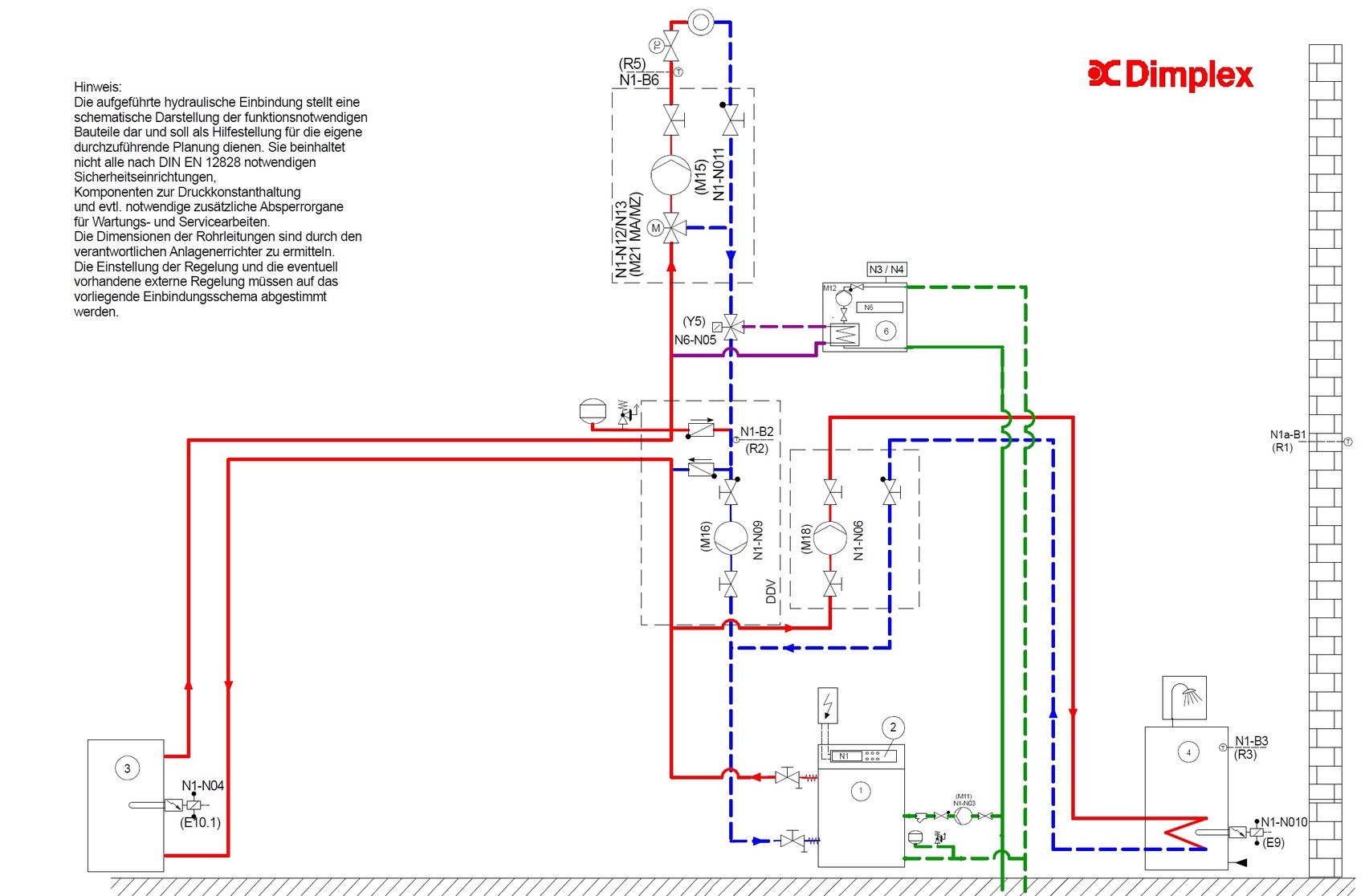
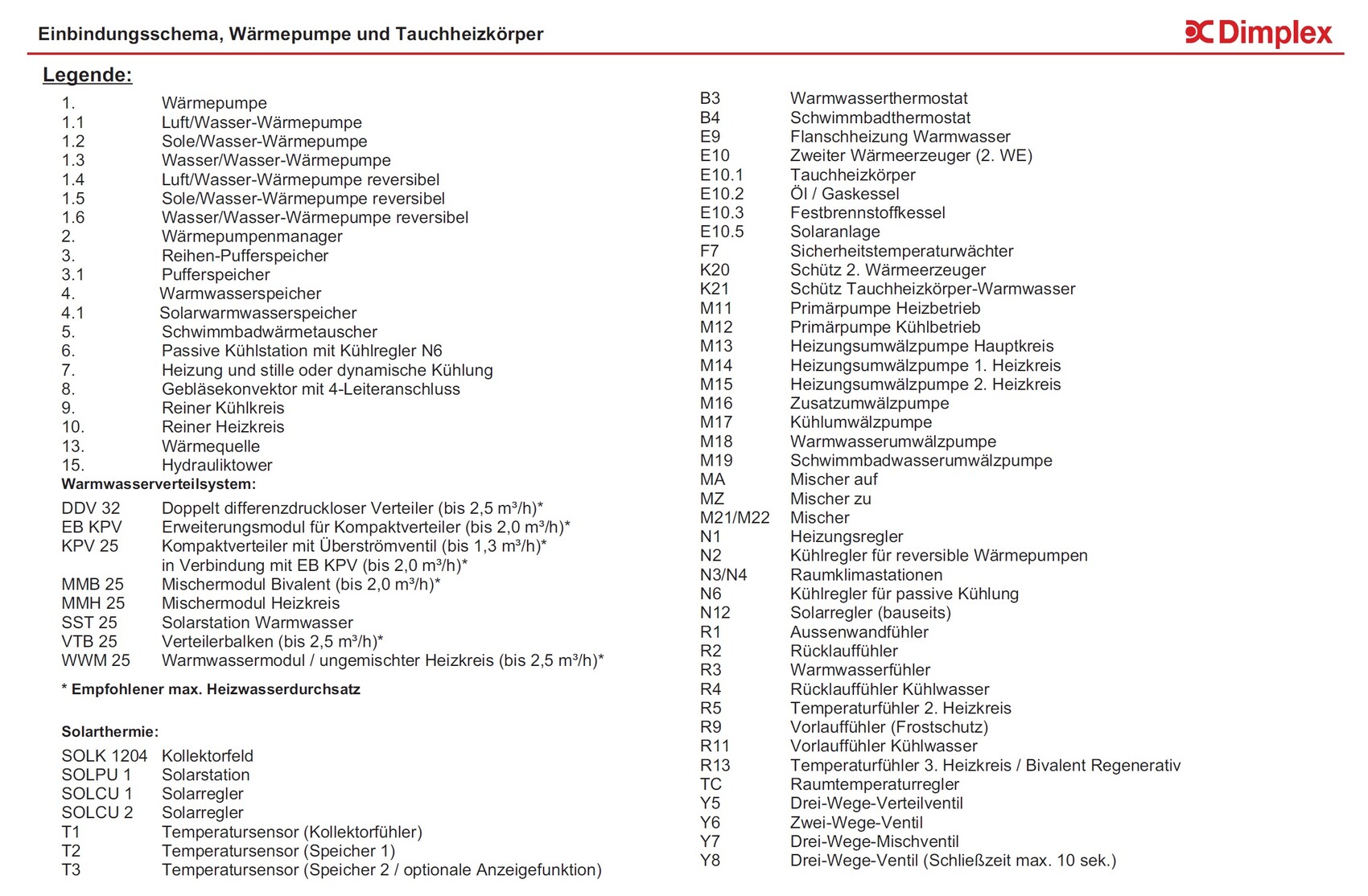
I cannot display the output power of the heat pump, only the electricity consumption of the compressor. This is constantly around 2300W when heating water, and somewhat lower during heating operation, roughly between 1900 and 2100W.
To avoid leaving this as an open question and in case someone else encounters a similar problem in the future:
A technician came to inspect the system. A control valve is defective, which prevents the system from regulating itself. This causes the internal pressure to be twice as high as normal despite reduced performance, triggering the high-pressure fault. The issue is unrelated to cooling or hot water; the defect was likely present from the start but only became noticeable now due to the higher brine temperatures causing faults.
The temperature differences between the supply and return lines during hot water production have also been clarified: The heat pump only has one temperature sensor for the return line, which is located in the heating circuit. Therefore, it is not connected to the hot water circuit and does not provide any useful readings there.
The control valve will be replaced soon, and we will assess the situation afterward. This will be a major task, with an estimated installation time of about 4 hours.
A technician came to inspect the system. A control valve is defective, which prevents the system from regulating itself. This causes the internal pressure to be twice as high as normal despite reduced performance, triggering the high-pressure fault. The issue is unrelated to cooling or hot water; the defect was likely present from the start but only became noticeable now due to the higher brine temperatures causing faults.
The temperature differences between the supply and return lines during hot water production have also been clarified: The heat pump only has one temperature sensor for the return line, which is located in the heating circuit. Therefore, it is not connected to the hot water circuit and does not provide any useful readings there.
The control valve will be replaced soon, and we will assess the situation afterward. This will be a major task, with an estimated installation time of about 4 hours.
Similar topics