
B
bspire202427 Dec 2024 21:56Hello,
I have a question for the heat pump or Dimplex specialists here in the forum.
I have an issue with the outdoor temperature sensor on my Dimplex heat pump (System S Comfort).
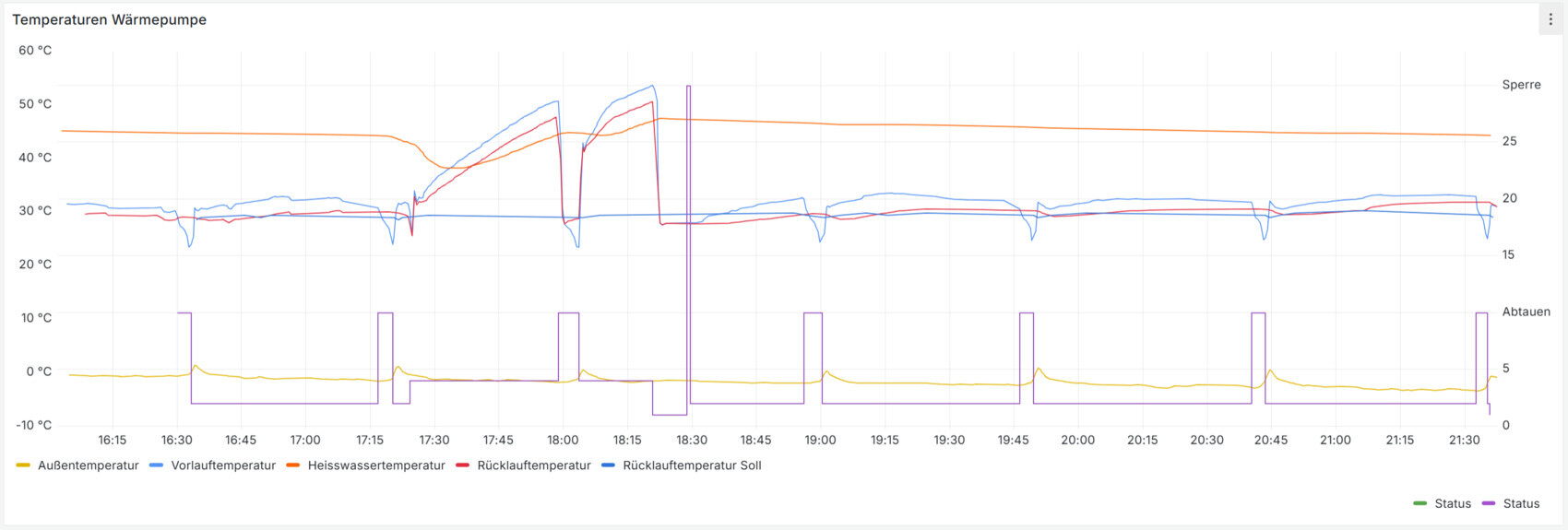
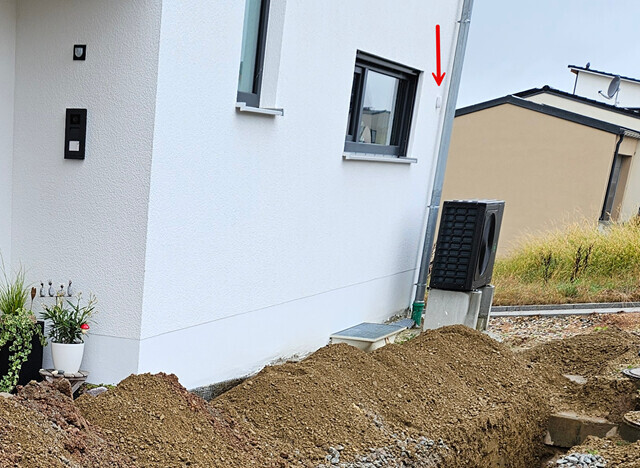
I noticed that during each defrost cycle of the outdoor unit, there is a significant spike in the outdoor temperature reading (see diagram). This seems to be caused by the unfavorable placement of the outdoor temperature sensor (see picture), which is mounted about 1m (3 feet) above the outdoor unit.
Unfortunately, these spikes in the outdoor temperature directly affect the flow temperature (see diagram), which in my opinion leads to inefficient control behavior.
I have thought of three possible solutions to improve this:
1) Prevent the immediate reaction to temperature jumps (filtering, smoothing, delaying, etc. the input signal) – is such an option available? Does anyone know of a setting for the Dimplex heat pump?
2) Use the outdoor temperature from my weather station instead of this sensor. I saw that the outdoor temperature can be written via Modbus to register 112. Is there anything else that needs to be considered here? How often should the register be updated? And how could I switch back to the heat pump’s sensor if needed?
3) Install the outdoor temperature sensor in a different location. This would be my last resort since it would damage the house facade.
Do you have any other ideas or suggestions?
Best regards

I have a question for the heat pump or Dimplex specialists here in the forum.
I have an issue with the outdoor temperature sensor on my Dimplex heat pump (System S Comfort).
I noticed that during each defrost cycle of the outdoor unit, there is a significant spike in the outdoor temperature reading (see diagram). This seems to be caused by the unfavorable placement of the outdoor temperature sensor (see picture), which is mounted about 1m (3 feet) above the outdoor unit.
Unfortunately, these spikes in the outdoor temperature directly affect the flow temperature (see diagram), which in my opinion leads to inefficient control behavior.
I have thought of three possible solutions to improve this:
1) Prevent the immediate reaction to temperature jumps (filtering, smoothing, delaying, etc. the input signal) – is such an option available? Does anyone know of a setting for the Dimplex heat pump?
2) Use the outdoor temperature from my weather station instead of this sensor. I saw that the outdoor temperature can be written via Modbus to register 112. Is there anything else that needs to be considered here? How often should the register be updated? And how could I switch back to the heat pump’s sensor if needed?
3) Install the outdoor temperature sensor in a different location. This would be my last resort since it would damage the house facade.
Do you have any other ideas or suggestions?
Best regards
J
Jesse Custer28 Dec 2024 06:09bspire2024 schrieb:
The peaks in the outside temperature unfortunately have an immediate effect on the supply temperature (see diagram) and thus lead, in my opinion, to inefficient control behavior. Misconception – the effect you are seeing is not because the outdoor temperature sensor is reacting, but rather because the heat pump first needs to catch up on the time it couldn’t heat during the defrost cycle.
So, I see this more as a correlation than a causation...
B
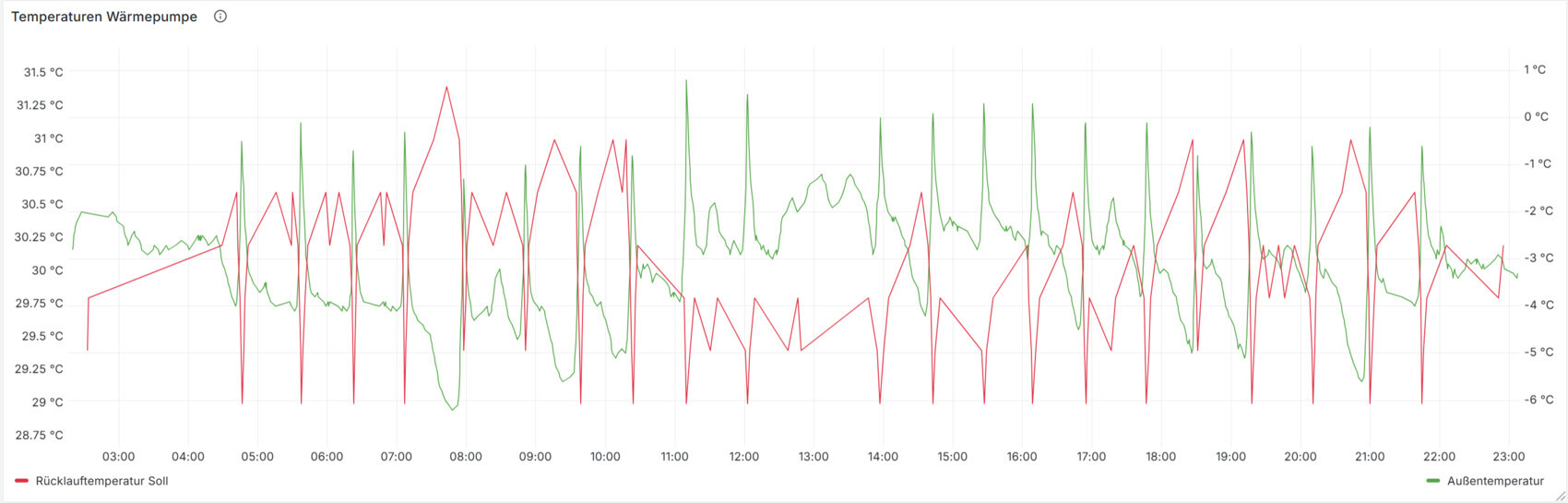
bspire202429 Dec 2024 10:52Okay, but the peaks in the outdoor temperature still affect the target return temperature (see image). Is this something that can be ignored?
J
Jesse Custer29 Dec 2024 14:40Compare that to your actual return temperature – you’ll see that there is essentially no noticeable change. Variations of up to 2 degrees within minutes go unnoticed by the heat pump’s control system. Its response time is simply too slow for these changes to have any real effect.
See your second chart for reference.
Don’t let all your measurements drive you crazy – as mentioned, by the time the heat pump could react at all, the situation has already passed.
A small tip: try “shielding” the temperature sensor a bit – for example, wrap it in fleece and place a drip shield or similar underneath. That said, I can already tell you that you will likely consume more energy through these attempts than you could possibly save from any theoretical optimization of the control system over 100 years... and this situation only occurs on perhaps 30 days per year when defrosting is needed...
See your second chart for reference.
Don’t let all your measurements drive you crazy – as mentioned, by the time the heat pump could react at all, the situation has already passed.
A small tip: try “shielding” the temperature sensor a bit – for example, wrap it in fleece and place a drip shield or similar underneath. That said, I can already tell you that you will likely consume more energy through these attempts than you could possibly save from any theoretical optimization of the control system over 100 years... and this situation only occurs on perhaps 30 days per year when defrosting is needed...
B
bspire202429 Dec 2024 21:12Okay, you are probably right.
I was just surprised by the (outside) temperature fluctuations during the defrosting process and thought that this must have an (unfavorable) impact on the control behavior. But they are apparently too short to have any (negative) effect.
Thank you for your help.
I was just surprised by the (outside) temperature fluctuations during the defrosting process and thought that this must have an (unfavorable) impact on the control behavior. But they are apparently too short to have any (negative) effect.
Thank you for your help.
Similar topics