
ᐅ Issues with Wood Cladding Including Insulation on the Exterior Wall
Created on: 15 May 2018 20:11
A
AnMesHello,
we would like to clad the walls of our terrace, which are L-shaped and surrounded by two walls, with wood and at the same time add insulation, as our house (built in 1974) is unfortunately not insulated yet.
However, in the inner corner of these two walls, there is only a 5cm (2 inches) wide strip before the reveal of the patio door begins, so on one wall there is only a build-up depth of 5cm (2 inches) available to install insulation and a substructure for the cladding.
How can this issue be solved without having the mentioned wall insulated less than the other wall, or the other wall also being insulated only minimally? Describing the problem is difficult, so I am uploading two pictures that hopefully clarify what I mean.
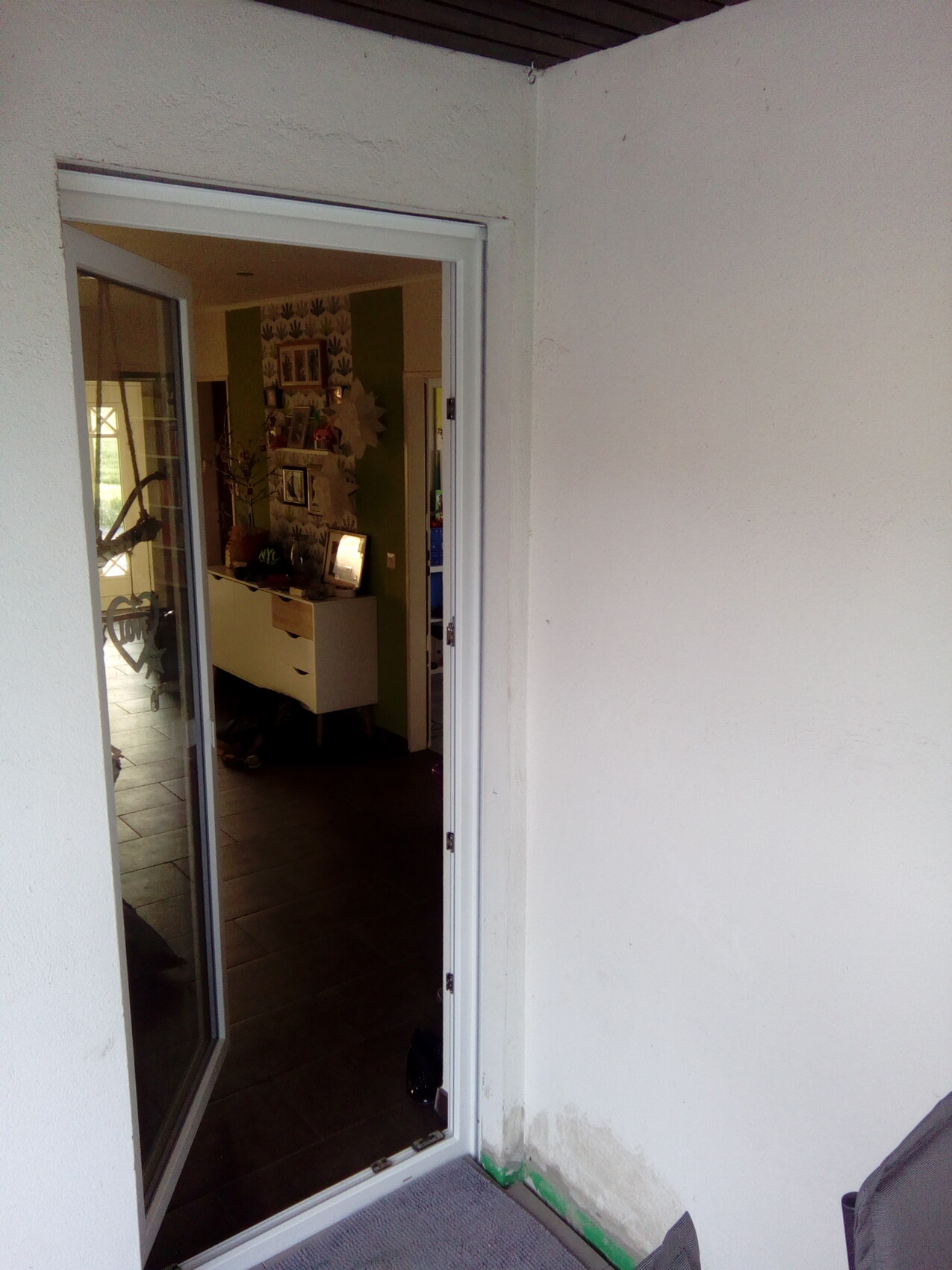
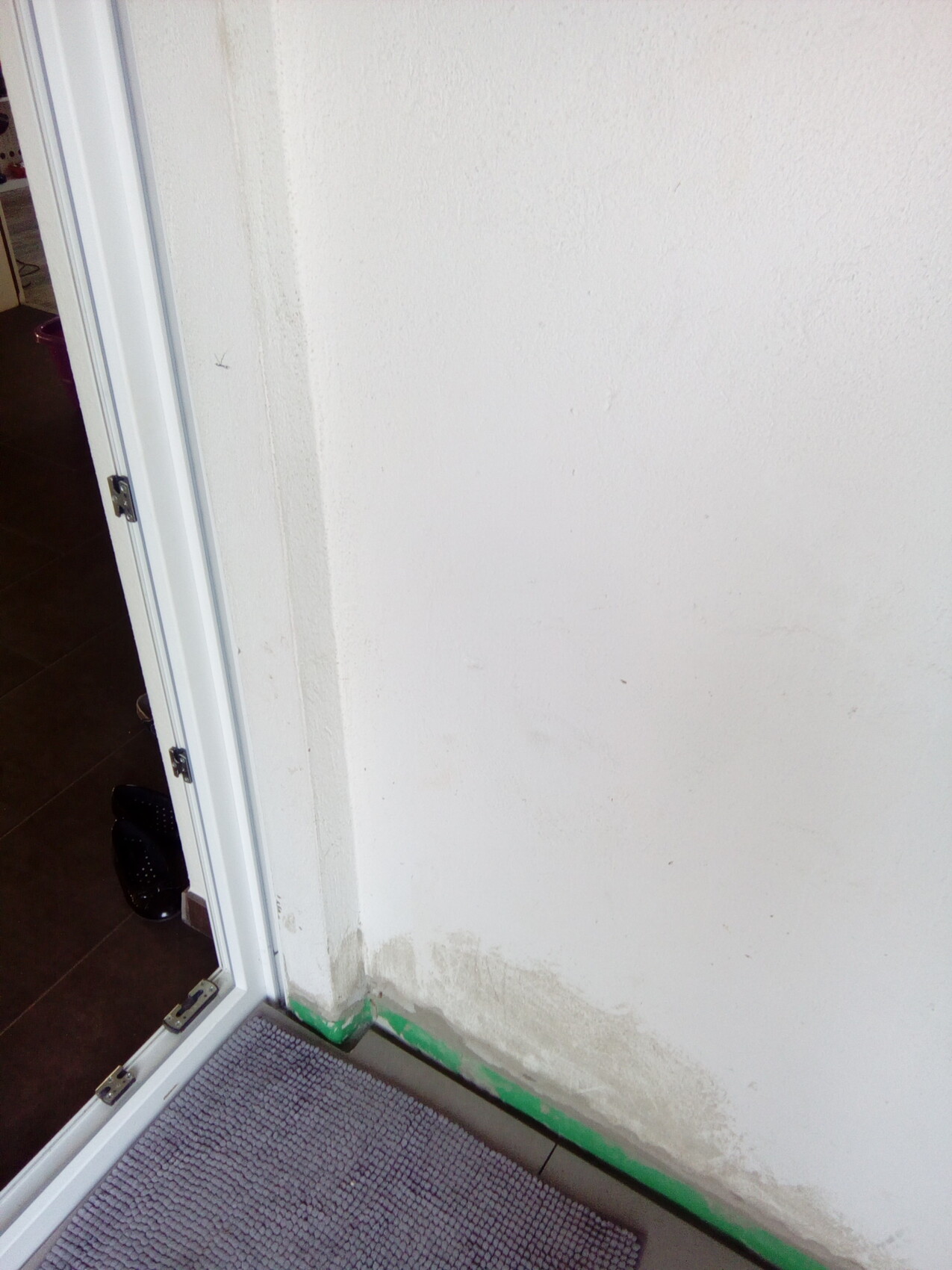
Even with more extensive construction work, moving the door is unfortunately not an option, as it adjoins a load-bearing interior wall directly on the other side.
Thanks in advance for any suggestions.
Best regards
AnMes
we would like to clad the walls of our terrace, which are L-shaped and surrounded by two walls, with wood and at the same time add insulation, as our house (built in 1974) is unfortunately not insulated yet.
However, in the inner corner of these two walls, there is only a 5cm (2 inches) wide strip before the reveal of the patio door begins, so on one wall there is only a build-up depth of 5cm (2 inches) available to install insulation and a substructure for the cladding.
How can this issue be solved without having the mentioned wall insulated less than the other wall, or the other wall also being insulated only minimally? Describing the problem is difficult, so I am uploading two pictures that hopefully clarify what I mean.
Even with more extensive construction work, moving the door is unfortunately not an option, as it adjoins a load-bearing interior wall directly on the other side.
Thanks in advance for any suggestions.
Best regards
AnMes
You will only have that available installation height, no more than that! This will be quite tight, so roughly estimated, you could apply a maximum insulation thickness of about 3.5 cm (1.4 inches). Even then, a wooden system needs to be installed on top, which can typically be glued onto the insulation.
However, insulation of this thickness doesn’t make much sense; even the 5 cm (2 inches) you currently have is actually not really sufficient. Will the rest of the house be insulated as well? I would probably limit myself to just the wooden cladding and work without insulation, as it’s hardly feasible otherwise. Even the wooden cladding will be quite tight with 5 cm (2 inches) of space, but it is doable.
However, insulation of this thickness doesn’t make much sense; even the 5 cm (2 inches) you currently have is actually not really sufficient. Will the rest of the house be insulated as well? I would probably limit myself to just the wooden cladding and work without insulation, as it’s hardly feasible otherwise. Even the wooden cladding will be quite tight with 5 cm (2 inches) of space, but it is doable.
First of all, we are concerned with the cladding of these two walls, since our house has six exterior walls due to its L-shape, and at the moment we can only afford some "cosmetic" work on the house, so insulating the entire house is not an option right now.
What risks are there if one wall, which also has the door, is insulated with, for example, 20cm (8 inches) of insulation, while the other wall is insulated with a maximum of 5cm (2 inches) or not insulated at all?
What risks are there if one wall, which also has the door, is insulated with, for example, 20cm (8 inches) of insulation, while the other wall is insulated with a maximum of 5cm (2 inches) or not insulated at all?
Basically, I don’t see a problem with that, but there is also little benefit in insulating only certain parts. Unless you, for example, focus on the entire main weather-exposed side or something similar. However, a professional should provide precise advice for such partial insulation.
The question I would ask is what exactly do you expect to achieve with this kind of partial insulation? I believe the effect is quite limited, especially in the area with the 5cm (2 inches) insulation. Therefore, I would probably just focus on the aesthetic aspect. Just to give a rough idea: if you want to attach wooden strips to a substructure on the wall, even 5cm (2 inches) can be quite tight. It should be possible with about 3cm (1¼ inches) battens and then strips or boards of around 2cm (¾ inch).
The question I would ask is what exactly do you expect to achieve with this kind of partial insulation? I believe the effect is quite limited, especially in the area with the 5cm (2 inches) insulation. Therefore, I would probably just focus on the aesthetic aspect. Just to give a rough idea: if you want to attach wooden strips to a substructure on the wall, even 5cm (2 inches) can be quite tight. It should be possible with about 3cm (1¼ inches) battens and then strips or boards of around 2cm (¾ inch).
For us, it would make sense that if we insulate the other walls at some point, we wouldn’t have to remove this wooden cladding to add insulation behind it later. The wooden cladding itself serves purely an aesthetic purpose.
The corresponding walls face southeast and, due to large window areas and low height, require only minimal insulation effort—making it suitable for a DIY project. The wall that could benefit from more insulation belongs to a 41m² (440 sq ft) living room, which also has a radiator on this wall; here we expect to save energy. The wall that could be less insulated is part of the bedroom, which we have wallpapered with insulating fleece that has already significantly improved the climate, but there is still room for improvement. Additionally, this room (at the end of the L-shape) has three exterior walls.
My main concern is that there might be building physics disadvantages if some walls are insulated 20cm (8 inches) thick and others only 3–5cm (1–2 inches) thick. But for this, it would probably be best to consult a professional.
Thank you for your advice!
The corresponding walls face southeast and, due to large window areas and low height, require only minimal insulation effort—making it suitable for a DIY project. The wall that could benefit from more insulation belongs to a 41m² (440 sq ft) living room, which also has a radiator on this wall; here we expect to save energy. The wall that could be less insulated is part of the bedroom, which we have wallpapered with insulating fleece that has already significantly improved the climate, but there is still room for improvement. Additionally, this room (at the end of the L-shape) has three exterior walls.
My main concern is that there might be building physics disadvantages if some walls are insulated 20cm (8 inches) thick and others only 3–5cm (1–2 inches) thick. But for this, it would probably be best to consult a professional.
Thank you for your advice!
Similar topics