
ᐅ Detailed Floor Plan for a Single-Family Home with Basement and Separate Apartment
Created on: 29 Dec 2020 15:11
H
Harakiri
Hello everyone,
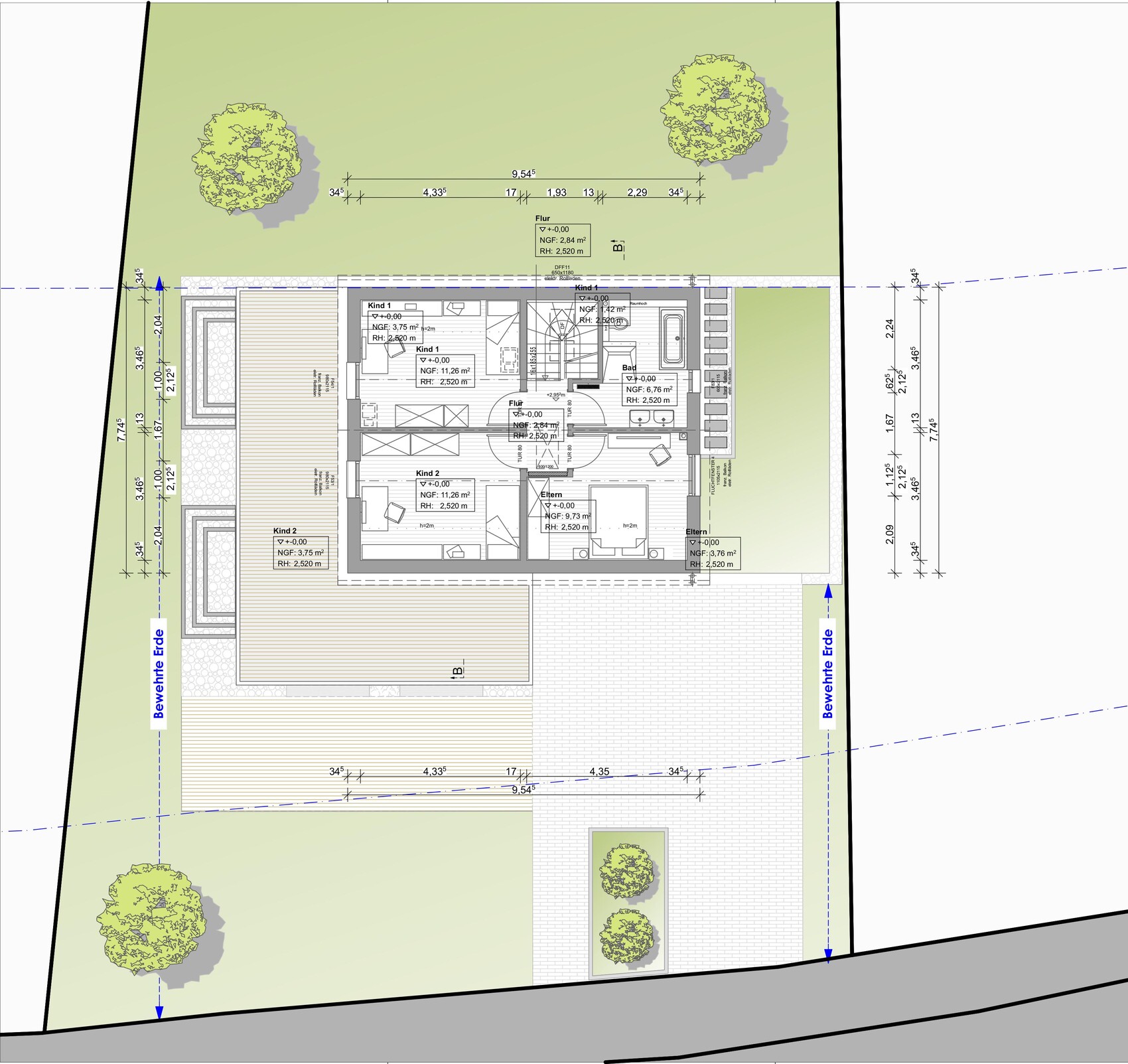
I would like to get some crowd wisdom on our floor plan (I have already shared it here before regarding a specific detail and an earlier version – see here, but at that time the main focus was on the separation between garage and house).
A quick heads up, since this has been discussed before: unfortunately, the floor plans for the ground floor (GF) and upper floor (UF) are set in stone — they are part of a standard house model from a prefab house manufacturer that cannot be altered (or can, but not within our budget). So, feel free to give harsh criticism on those, but we probably won’t be able to make changes. We believe the floor plan fits our wishes and needs well.
Where we do have some flexibility is in the basement level, which we have to build separately under individual contracts.
There, we have some leeway within certain limits, and this is where my main questions are:
By the way, the site plan is oriented with north at the top, while the others are slightly rotated, but effectively north is still upwards.
For completeness, I have also filled out the questionnaire.
Development plan / restrictions
Plot size: 1018 sqm (10956 sq ft)
Slope: yes
Floor area ratio: no restrictions
Floor space index: no restrictions
Building envelope, building line, boundary: as in site plan
Adjacent buildings: no
Number of parking spaces: 2
Number of floors: no restrictions, according to surrounding buildings
Roof style: -
Architectural style: -
Orientation: -
Maximum heights / limits: -
Other requirements: retention cistern, fully biological small sewage treatment plant
Client requirements
Architectural style, roof style, building type: gable roof, rather classic
Basement, floors: basement + ground floor + upper floor
Number of people, age: 2 adults in early 40s, 2 small children, possibly 1 or 2 retirees in the separate apartment
Space requirements on ground and upper floors: as planned
Office, family use or home office?: possibly, if the apartment is not used as intended
Number of overnight guests per year: 10 to 20 (as long as apartment remains a guest unit)
Open or closed architecture: open
Conservative or modern construction: mixed
Open kitchen, kitchen island: open kitchen, peninsula
Number of dining seats: 6
Fireplace: no
Music/sound wall: no
Balcony, roof terrace: yes
Garage, carport: garage, integrated in basement
Utility garden, greenhouse: no
Special features: KfW 55 standard
House design
Planning by: architect for basement, prefab house manufacturer for ground and upper floors
What do you like most? Why? Utilization of limited building envelope and plot width
What don’t you like? Why? see questions
Cost estimate by architect/planner: not relevant
Personal price limit for house including fittings: not relevant
Preferred heating technology: brine-to-water heat pump
If you had to forgo anything, which details/extensions
- could be omitted: green roof on garage, possibly garage
- cannot be omitted: separate apartment
Why is the design the way it is now? For example:
Mixed standard design + individual/architect planning, largely implemented as desired.
Many thanks in advance for your help!
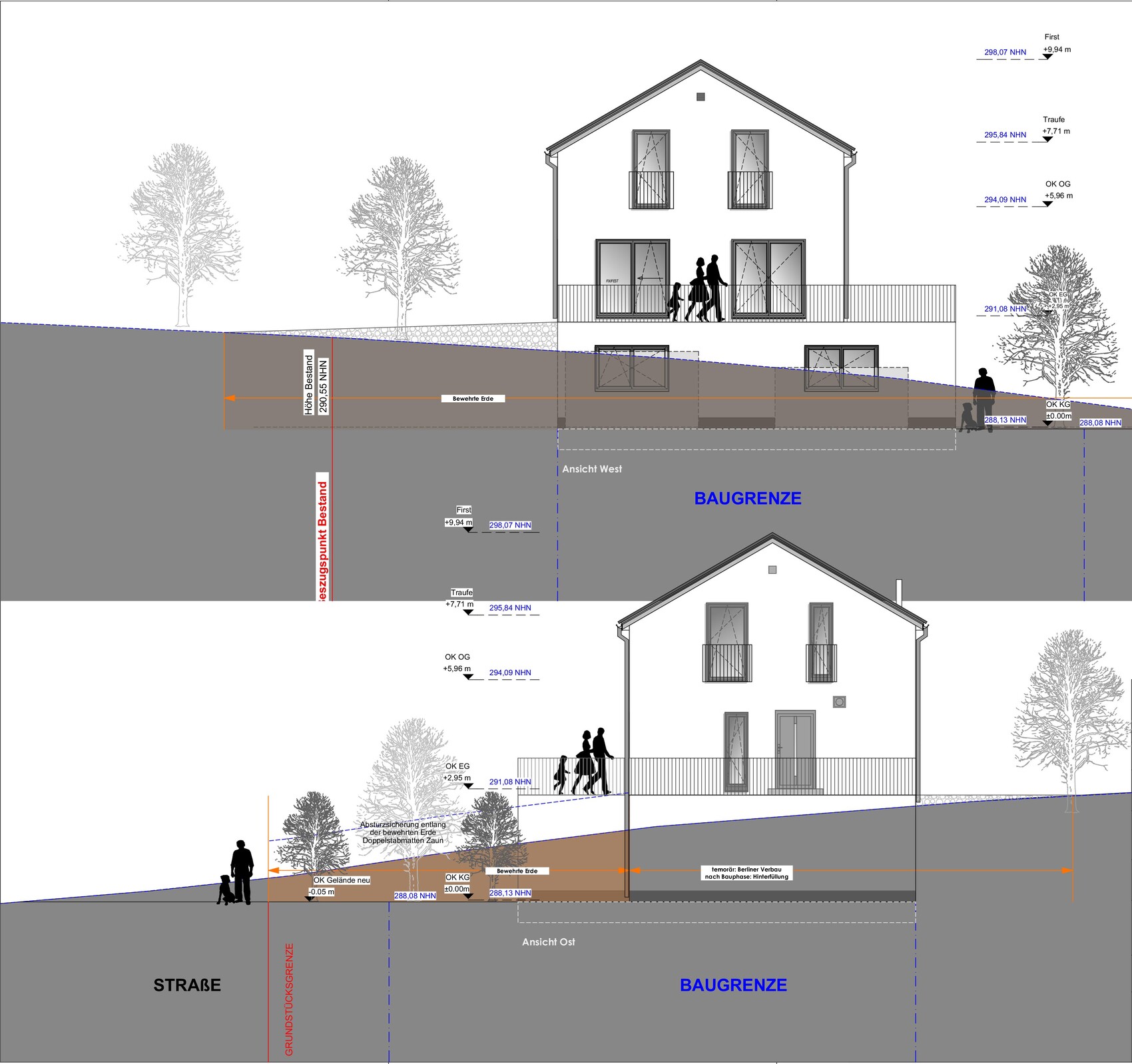
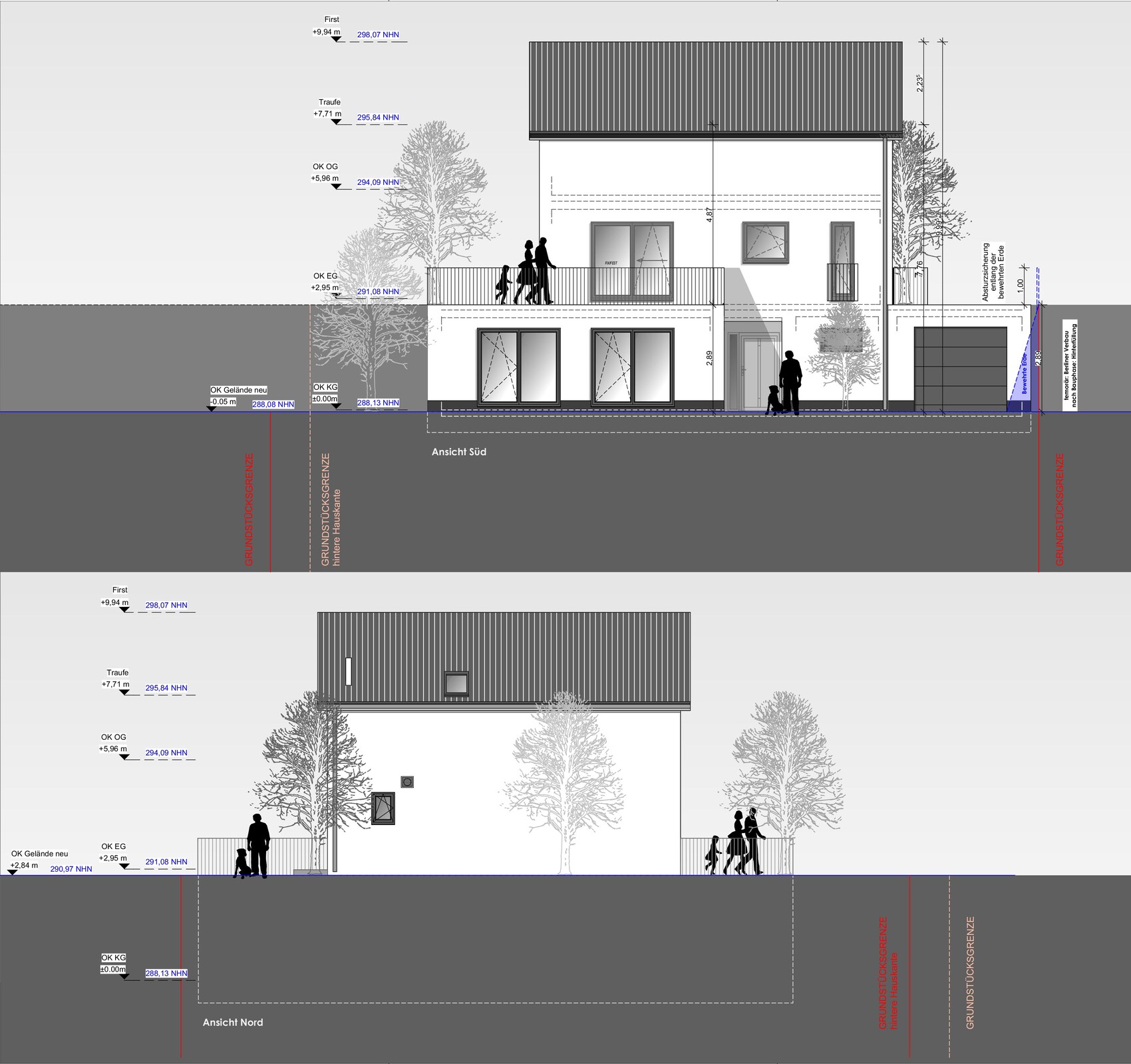

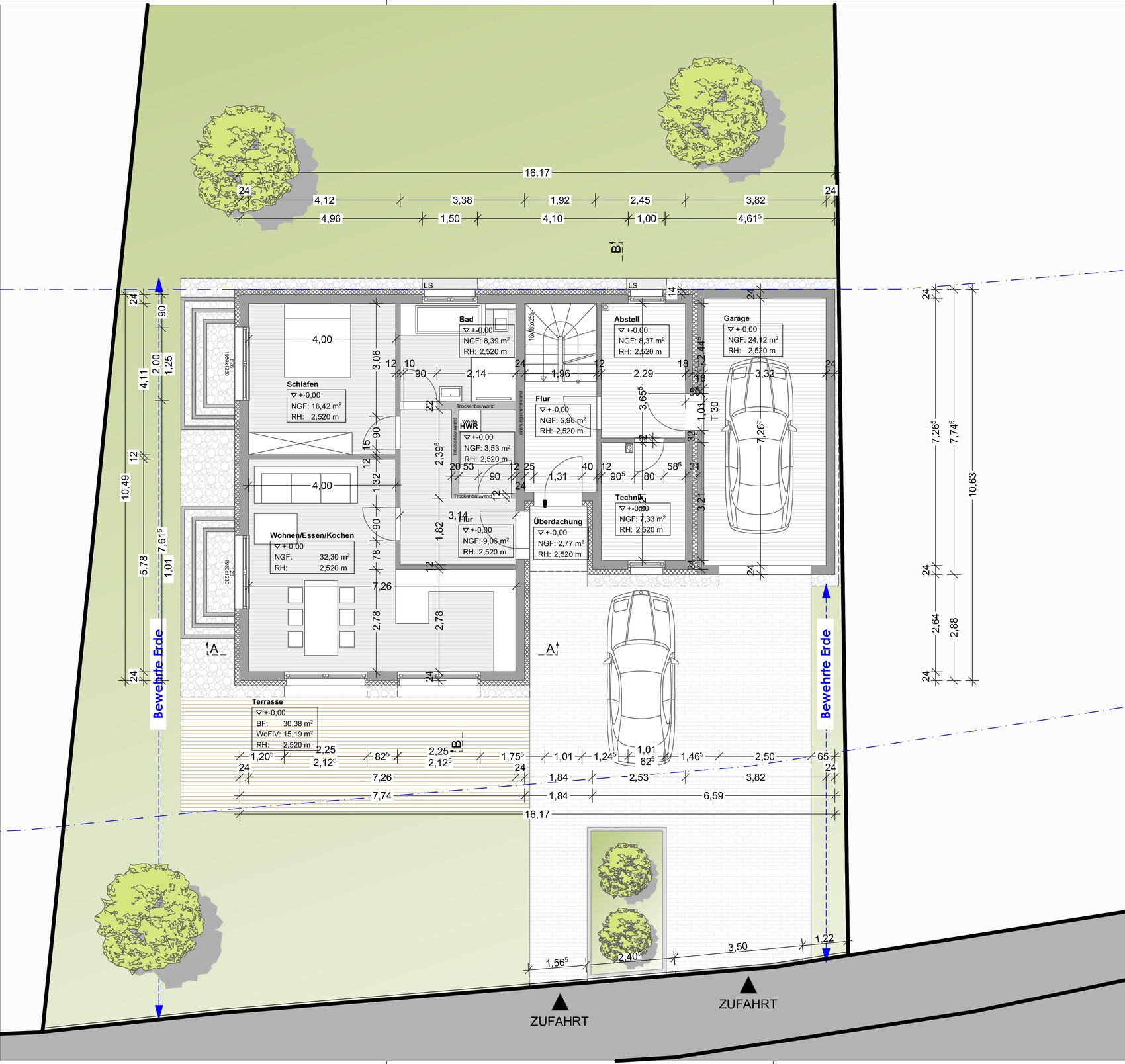
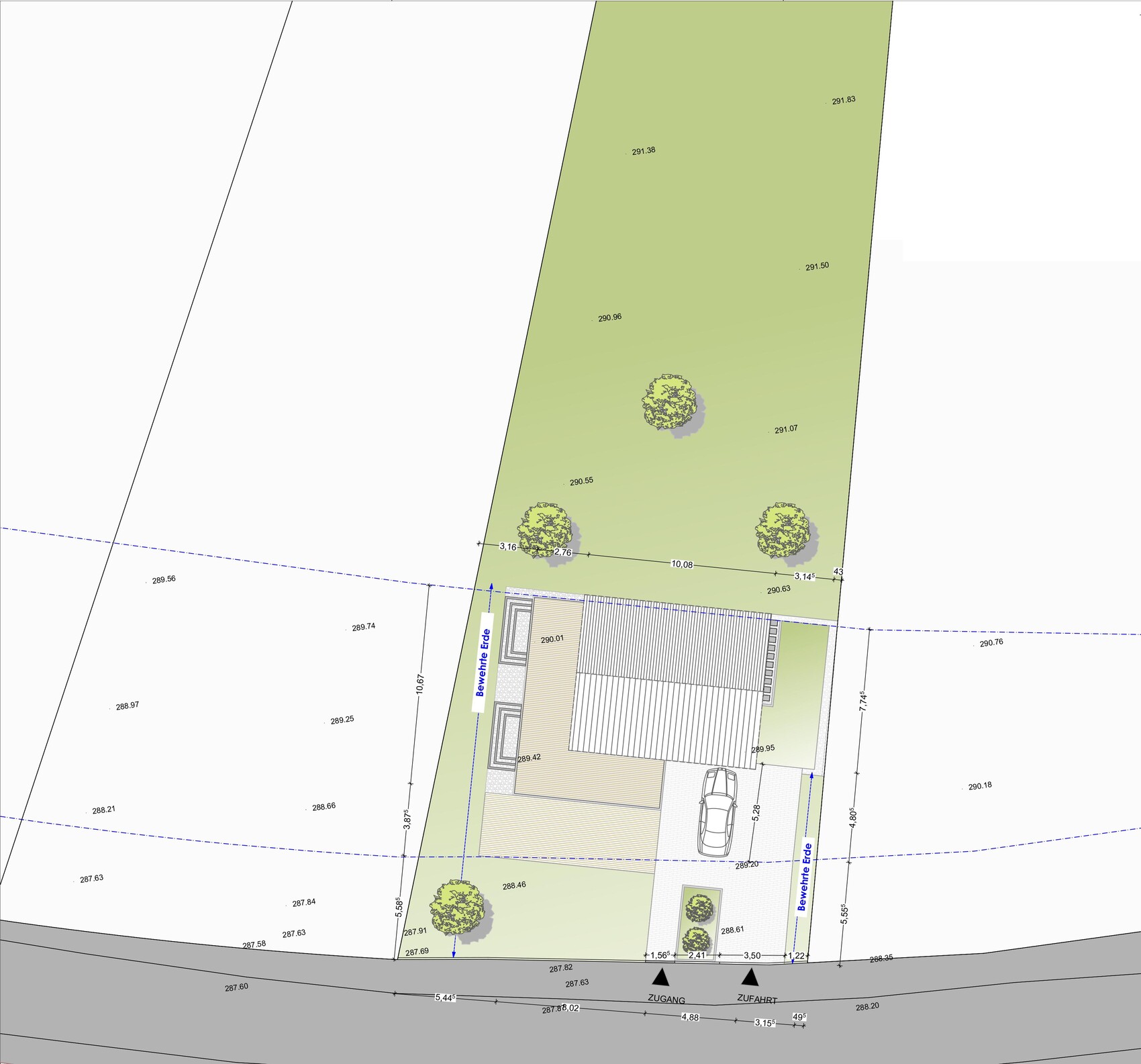
I would like to get some crowd wisdom on our floor plan (I have already shared it here before regarding a specific detail and an earlier version – see here, but at that time the main focus was on the separation between garage and house).
A quick heads up, since this has been discussed before: unfortunately, the floor plans for the ground floor (GF) and upper floor (UF) are set in stone — they are part of a standard house model from a prefab house manufacturer that cannot be altered (or can, but not within our budget). So, feel free to give harsh criticism on those, but we probably won’t be able to make changes. We believe the floor plan fits our wishes and needs well.
Where we do have some flexibility is in the basement level, which we have to build separately under individual contracts.
There, we have some leeway within certain limits, and this is where my main questions are:
- In the basement’s separate apartment living area, I’m unsure whether to locate the kitchen in the southeast corner (as currently suggested in the plans) or rather in the northwest, where the sofa is shown now. I could weigh up the pros and cons of both options...
- Compared to the current plan, I have decided to combine the two windows on the apartment’s south side into one large wide lift-and-slide door. Now I’m hesitating whether it might make sense to extend the ground floor roof terrace with a balcony of about 1 meter (3 feet) towards the south, so it would act as a small canopy over the basement window front. I’d like to install the lift-and-slide door as close to flush with the floor as possible and am somewhat concerned about precipitation. However, that would mean integrating it into the facade with a thermal break (Isokorb), which of course would be a bit more costly.
- I’m also not very happy with the bathroom layout in the apartment, but I don’t yet have any striking ideas on how to improve it. One requirement is that the bathroom be as age- and disability-friendly as possible — not necessarily to meet any specific standards, but to make it as practical as possible for such users (or for us in a few decades…).
- Recently – and this relates more to garden design – I’ve been unsure whether to plan light wells on the west side in front of the living/dining area and bedroom windows (as currently shown), or instead run a pathway around the house that goes just under the window sill height (around -30 cm (1 foot)) and compensate for the height differences with steps…
By the way, the site plan is oriented with north at the top, while the others are slightly rotated, but effectively north is still upwards.
For completeness, I have also filled out the questionnaire.
Development plan / restrictions
Plot size: 1018 sqm (10956 sq ft)
Slope: yes
Floor area ratio: no restrictions
Floor space index: no restrictions
Building envelope, building line, boundary: as in site plan
Adjacent buildings: no
Number of parking spaces: 2
Number of floors: no restrictions, according to surrounding buildings
Roof style: -
Architectural style: -
Orientation: -
Maximum heights / limits: -
Other requirements: retention cistern, fully biological small sewage treatment plant
Client requirements
Architectural style, roof style, building type: gable roof, rather classic
Basement, floors: basement + ground floor + upper floor
Number of people, age: 2 adults in early 40s, 2 small children, possibly 1 or 2 retirees in the separate apartment
Space requirements on ground and upper floors: as planned
Office, family use or home office?: possibly, if the apartment is not used as intended
Number of overnight guests per year: 10 to 20 (as long as apartment remains a guest unit)
Open or closed architecture: open
Conservative or modern construction: mixed
Open kitchen, kitchen island: open kitchen, peninsula
Number of dining seats: 6
Fireplace: no
Music/sound wall: no
Balcony, roof terrace: yes
Garage, carport: garage, integrated in basement
Utility garden, greenhouse: no
Special features: KfW 55 standard
House design
Planning by: architect for basement, prefab house manufacturer for ground and upper floors
What do you like most? Why? Utilization of limited building envelope and plot width
What don’t you like? Why? see questions
Cost estimate by architect/planner: not relevant
Personal price limit for house including fittings: not relevant
Preferred heating technology: brine-to-water heat pump
If you had to forgo anything, which details/extensions
- could be omitted: green roof on garage, possibly garage
- cannot be omitted: separate apartment
Why is the design the way it is now? For example:
Mixed standard design + individual/architect planning, largely implemented as desired.
Many thanks in advance for your help!
An in-law apartment is not cost-effective. I would plan differently.
There is a wide range between being healthy and using a wheelchair. If someone can no longer manage their home alone, at least one person has a disability and requires assistance and aids. The turning circle for a rollator is almost the same as for a wheelchair. Doors need to be wider, the bathroom completely redesigned, and electrical outlets placed higher, at the level of the light switches. Take a look at accessible design guidelines — you can find the dimensions there. Just don’t get caught up in details. The main point is that a grab bar can be installed near the toilet, not which specific one. Dimensions are necessary; everything else can be added if needed.
There is a wide range between being healthy and using a wheelchair. If someone can no longer manage their home alone, at least one person has a disability and requires assistance and aids. The turning circle for a rollator is almost the same as for a wheelchair. Doors need to be wider, the bathroom completely redesigned, and electrical outlets placed higher, at the level of the light switches. Take a look at accessible design guidelines — you can find the dimensions there. Just don’t get caught up in details. The main point is that a grab bar can be installed near the toilet, not which specific one. Dimensions are necessary; everything else can be added if needed.
Ah, okay, just KG:
Accessible and age-appropriate: Replace toilet and shower.
Allowing parents to move into a basement apartment or moving into something like that ourselves: no.
Harakiri schrieb:
Afterwards, our parents-in-law want to move in with us once they are no longer fit enough to manage their own house.
Accessible and age-appropriate: Replace toilet and shower.
Allowing parents to move into a basement apartment or moving into something like that ourselves: no.
hanse987 schrieb:
I’ll start with the upper part. If you replace the double casement window in the stairwell with windows installed in the wall that extend further down, you would get light into the basement as well.Thanks, that would probably make sense, but unfortunately it’s only possible there – requirement from the house type. 🙁
I hope we can slightly improve the lighting situation in the basement entrance area/stairwell by adding side glazing to the front door.
hanse987 schrieb:
Who is handling the detailed design and execution planning? One person for everything or two? The terrace reminds me of the roof terrace of the "Räuber" house that had a step, because they forgot that the floor structure inside the house has a different height than outside.The execution planning is done by the home builder, except for the reinforcement and structural detailing of the concrete construction, which is the responsibility of the structural engineer/basement specialist. I’m hoping to identify and fix mistakes like this now – I had hoped the architect would cooperate, but... well.
hanse987 schrieb:
Where do your utility lines enter the basement?Before or just after the south wall of the technical room.
haydee schrieb:
An accessory apartment is not economical. I would plan it differently.Okay, I should also mention the repayment grant for two residential units, although this only compensates for a small part of the costs.
haydee schrieb:
There is a wide range between being healthy and needing a wheelchair. If someone can no longer manage their home, then at least one person has a disability and requires assistance and aids. The turning radius for a walker is almost the same as for a wheelchair. Doors need to be wider, the bathroom completely renovated, sockets placed higher up near the light switches. Check out Nullbarriere for the measurements. Just don’t get lost in the details. The main point is that a grab rail can be fitted in the toilet, not which one. Dimensions are necessary, the rest can be added if needed.Thank you, we have already tried to take several things into account, e.g., everything step-free, interior doors all 90 cm (35 inches), corridors wider than 140 cm (55 inches), walk-in shower 120 x 120 cm (47 x 47 inches), etc. But admittedly, I am not satisfied with the widths for toilet and shower access. As for placing sockets higher up near the light switches— is this still allowed under VDE regulations?
Harakiri schrieb:
Thank you, it would probably make sense, but unfortunately it is only possible there – specification for the standard house. 🙁 To be honest: I know that promotional houses cannot be altered. For general contractors (GCs), the term “promotion” basically means scaled-down, so it implies a low budget.
As far as I know, however, a standard house still always comes with a custom architectural and structural plan, and standard houses generally offer options to adjust walls, move windows, add recesses, etc.
Which GC no longer offers that? Who are you building with?
Similar topics