
Hello everyone,
perhaps one of you can help me or give me a tip. I have attached 3 photos. This concerns a new build using a monolithic construction method with aerated concrete blocks 36.5cm (14.4 inches). The problem is on the west side. We had the shell construction completed by a contractor and finished the rest ourselves or with a lot of our own work. We have now been living in the house for almost a year and so far everything has been fine. That’s the background.
About 2 weeks ago, it rained heavily for 4 days. The morning after, I noticed two damp spots on the living room wall, which disappeared by the second day (it got warmer outside). I immediately called the shell builder and the heating engineer and explained the situation. They immediately ruled out any fault on their side such as thermal bridging, pressure loss in the manometer, etc. The underfloor heating and water pipes are tight. There are no water pipes in this wall, only underfloor heating in the children’s room upstairs. Those are all working properly. Yesterday it rained heavily again and the spot reappeared today. No visible signs from outside. However, it is located exactly in the middle below the upstairs window. Could it have something to do with the window? Or possibly with the plastered facade? (Cracks?)
Thank you in advance..
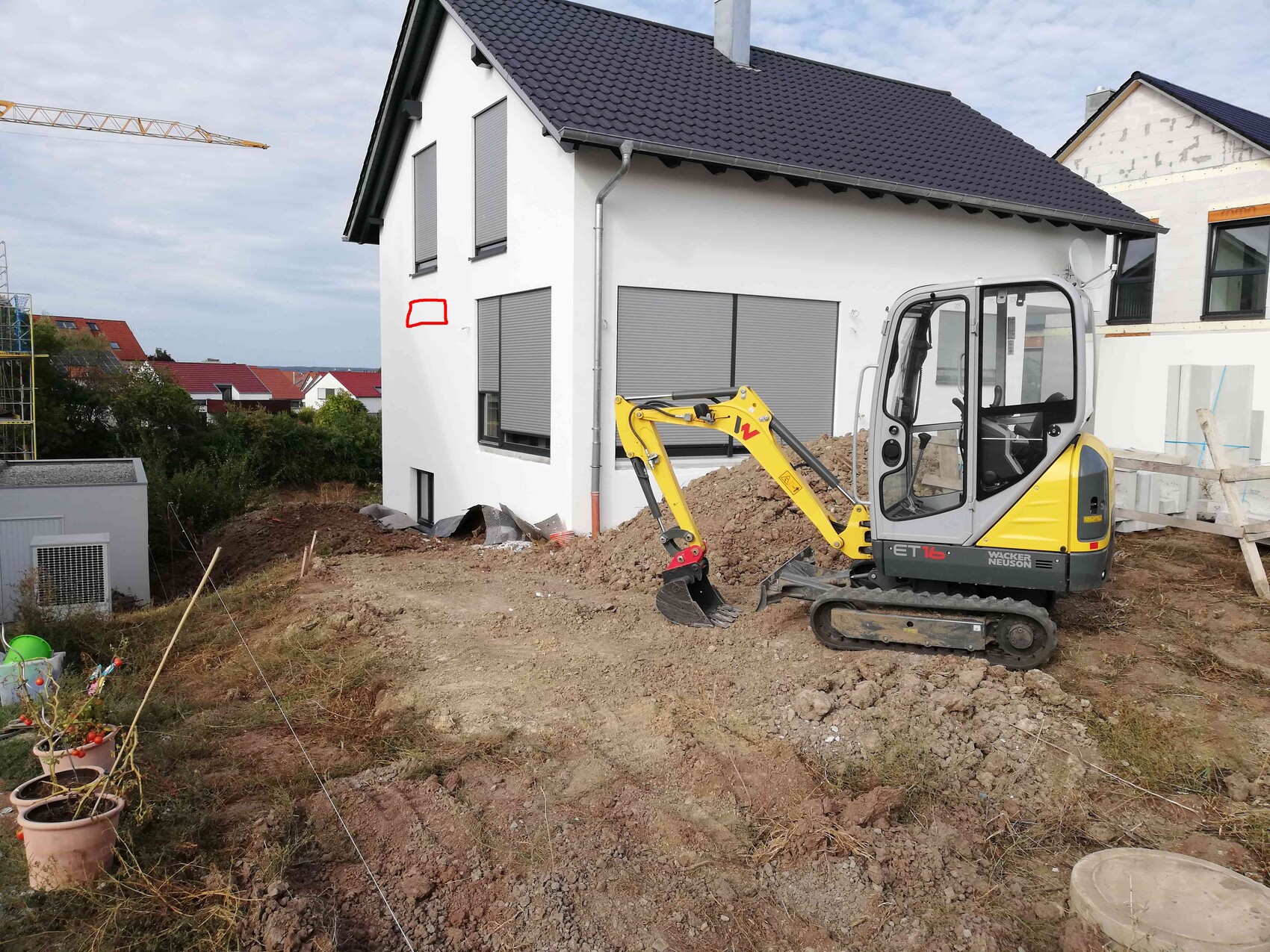
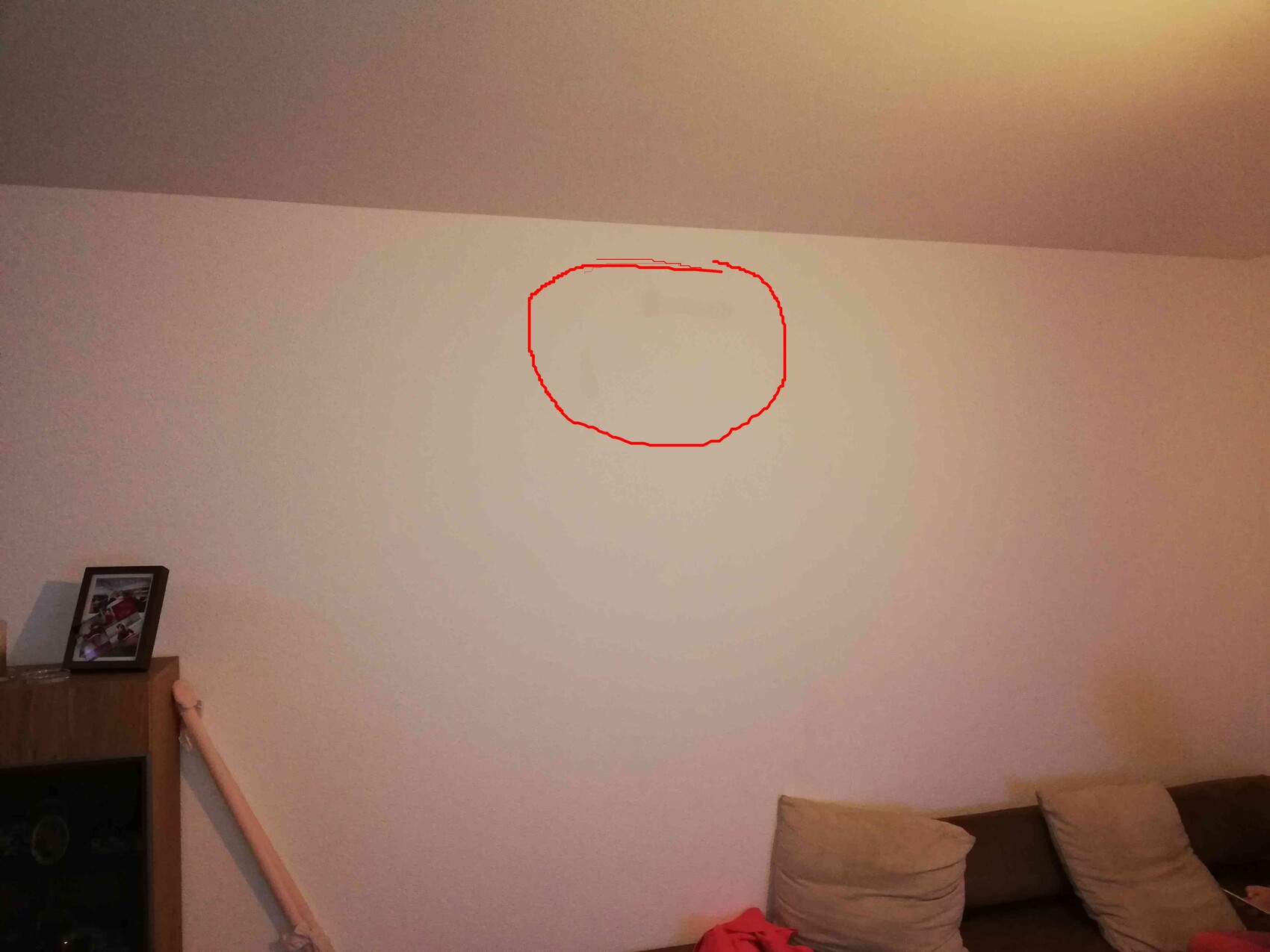
perhaps one of you can help me or give me a tip. I have attached 3 photos. This concerns a new build using a monolithic construction method with aerated concrete blocks 36.5cm (14.4 inches). The problem is on the west side. We had the shell construction completed by a contractor and finished the rest ourselves or with a lot of our own work. We have now been living in the house for almost a year and so far everything has been fine. That’s the background.
About 2 weeks ago, it rained heavily for 4 days. The morning after, I noticed two damp spots on the living room wall, which disappeared by the second day (it got warmer outside). I immediately called the shell builder and the heating engineer and explained the situation. They immediately ruled out any fault on their side such as thermal bridging, pressure loss in the manometer, etc. The underfloor heating and water pipes are tight. There are no water pipes in this wall, only underfloor heating in the children’s room upstairs. Those are all working properly. Yesterday it rained heavily again and the spot reappeared today. No visible signs from outside. However, it is located exactly in the middle below the upstairs window. Could it have something to do with the window? Or possibly with the plastered facade? (Cracks?)
Thank you in advance..
You should definitely check the lower sealing of the floor-to-ceiling window above. If you feel a draft from the inside, it is definitely not sealed properly. If you don't notice anything inside, then check from the outside. Are there any pictures of the installation? Faulty lower sealing of floor-to-ceiling window units is unfortunately a common construction defect.
If you don’t notice anything at first glance, get a thermal imaging camera and try again. Especially at the current temperatures, you can quickly detect a difference this way. A few threads above us also show an example.
Many electricians have them available, or you can nicely ask companies if they would lend one for 2-3 photos in exchange for a small donation to their coffee fund.
Many electricians have them available, or you can nicely ask companies if they would lend one for 2-3 photos in exchange for a small donation to their coffee fund.
Similar topics