
Hello everyone,
In my apartment, the room temperature is not right at all.
Although the thermostat is set to 22 degrees, the room temperature sometimes reaches 25 degrees.
I have done some research and read that it might help to reduce the flow temperature. Does the return temperature also need to be reduced?
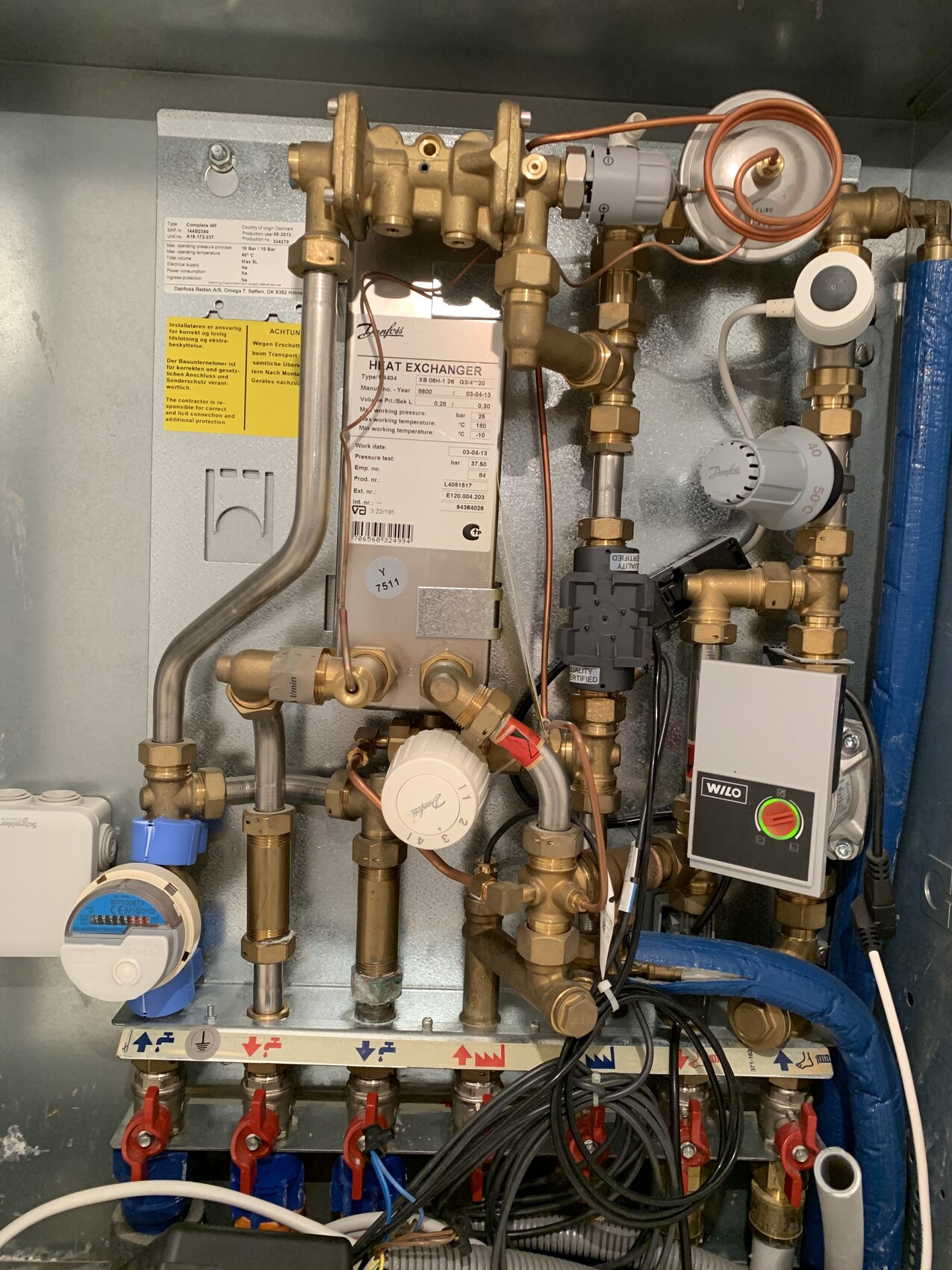
Could someone please tell me, based on my photo, where I can adjust the flow temperature and where I can adjust the return temperature? Maybe also a tip on what values I should set?
Thank you very much
In my apartment, the room temperature is not right at all.
Although the thermostat is set to 22 degrees, the room temperature sometimes reaches 25 degrees.
I have done some research and read that it might help to reduce the flow temperature. Does the return temperature also need to be reduced?
Could someone please tell me, based on my photo, where I can adjust the flow temperature and where I can adjust the return temperature? Maybe also a tip on what values I should set?
Thank you very much
superzapp schrieb:
or the ERR is disabled! (as is often recommended here in the forum)That would also be an option. How can I find out if it is disabled?So, after having 26°C (79°F) room temperature in the living room today and seeing that adjusting the setting on the room thermostat made no difference, I slightly reduced the pump output.
What else could I try? As a next step, could I lower the supply temperature to 25°C (77°F)?
Somehow, I need to make the apartment cooler 😕
What else could I try? As a next step, could I lower the supply temperature to 25°C (77°F)?
Somehow, I need to make the apartment cooler 😕
K
knalltüte31 Dec 2020 13:36I can’t make sense of the picture. The longer I look at it, the more confused I get. The combination of pump, plate heat exchanger, the wiring and piping, cold water meter (but no heat meter) etc., doesn’t make any sense to me. There is a controller set to 30°C (86°F) (supply?) on the same line, and apparently a solenoid valve (or similar) doing something. Also, the controller in the middle set to III? What does that do? To me, it looks like a standard radiator thermostat valve. But what is it for in this setup? There is also something similar above (a thermostat with a small tube extending, marked with + and -).
Then there are the symbols/labels below with warm and cold feet, etc.?
I’m afraid you’ll need to ask a professional, preferably the person who installed it.
Or: you could document every setting (take photos and mark them precisely with a fine liner pen) and turn all controllers completely off. Then gradually turn them back up in small increments. But keep in mind that underfloor heating is very slow to respond, and changes might only take effect after 2-3 hours!
Then there are the symbols/labels below with warm and cold feet, etc.?
I’m afraid you’ll need to ask a professional, preferably the person who installed it.
Or: you could document every setting (take photos and mark them precisely with a fine liner pen) and turn all controllers completely off. Then gradually turn them back up in small increments. But keep in mind that underfloor heating is very slow to respond, and changes might only take effect after 2-3 hours!

So, the first picture you posted shows the supply lines for the underfloor heating and the water. In the second picture, that’s the heating circuit manifold, but I don’t see any actuators there.
Theoretically, I would start by turning down the temperature on the right regulator in picture 1 until the apartment gradually starts to feel cooler. Then adjust the room controller if any room is still too warm.
Otherwise, ask the building manager if you have one.
Turn the regulator and see if anything moves on the manifold.
Theoretically, I would start by turning down the temperature on the right regulator in picture 1 until the apartment gradually starts to feel cooler. Then adjust the room controller if any room is still too warm.
Otherwise, ask the building manager if you have one.
Niha123 schrieb:
That could be an option as well, how can I find out if it’s disabled?
Turn the regulator and see if anything moves on the manifold.
Similar topics