
M
MIkro198621 Jan 2019 23:21Hello everyone,
My family and I have been living in our own home for two years now. We are very happy—if it weren’t for the word “BUT.”
We have a moisture problem behind our front door. Since the guest bathroom is directly behind this wall, we initially suspected water damage. However, it seems to depend more on the weather. We consulted our architect, who after much back and forth provided several explanations and possible remedies:
- Residual moisture from construction → continuous heat treatment
- Hairline cracks in the water pipe → no action recommended ?!?!
- Condensation from cold outside air → more ventilation, less heating ?!?!?
- “Moisture migration” in an electrical conduit → no action recommended ?!?!?
For us, these explanations do not align at all. Therefore, here are our open questions:
1. What could it be?
2. Who is the best professional to inspect this?
3. Is the architect responsible if he supervised the construction but we did a lot of the work ourselves?
The photos are from October 2017 (yes, we have been pestering the architect for a long time but keep getting postponed). Currently, the damage looks the same, but it has spread up to about 1 meter (3 feet) high. We have already started removing the paint. Afterward, the paint simply peeled off further up.
We would appreciate any input from you. Of course, I can provide more information if needed.
Thank you very much in advance.
Best regards,
Stefan
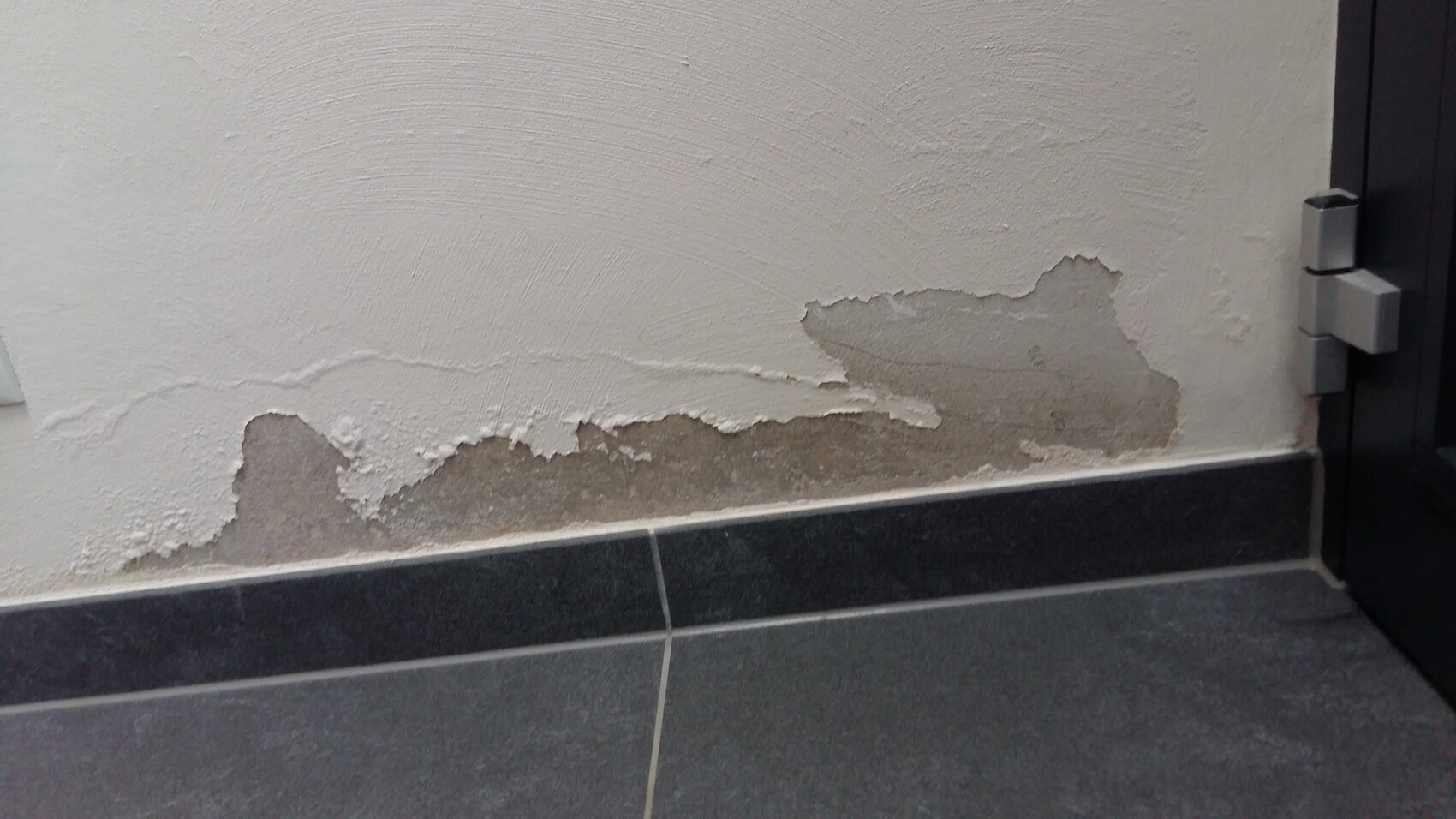
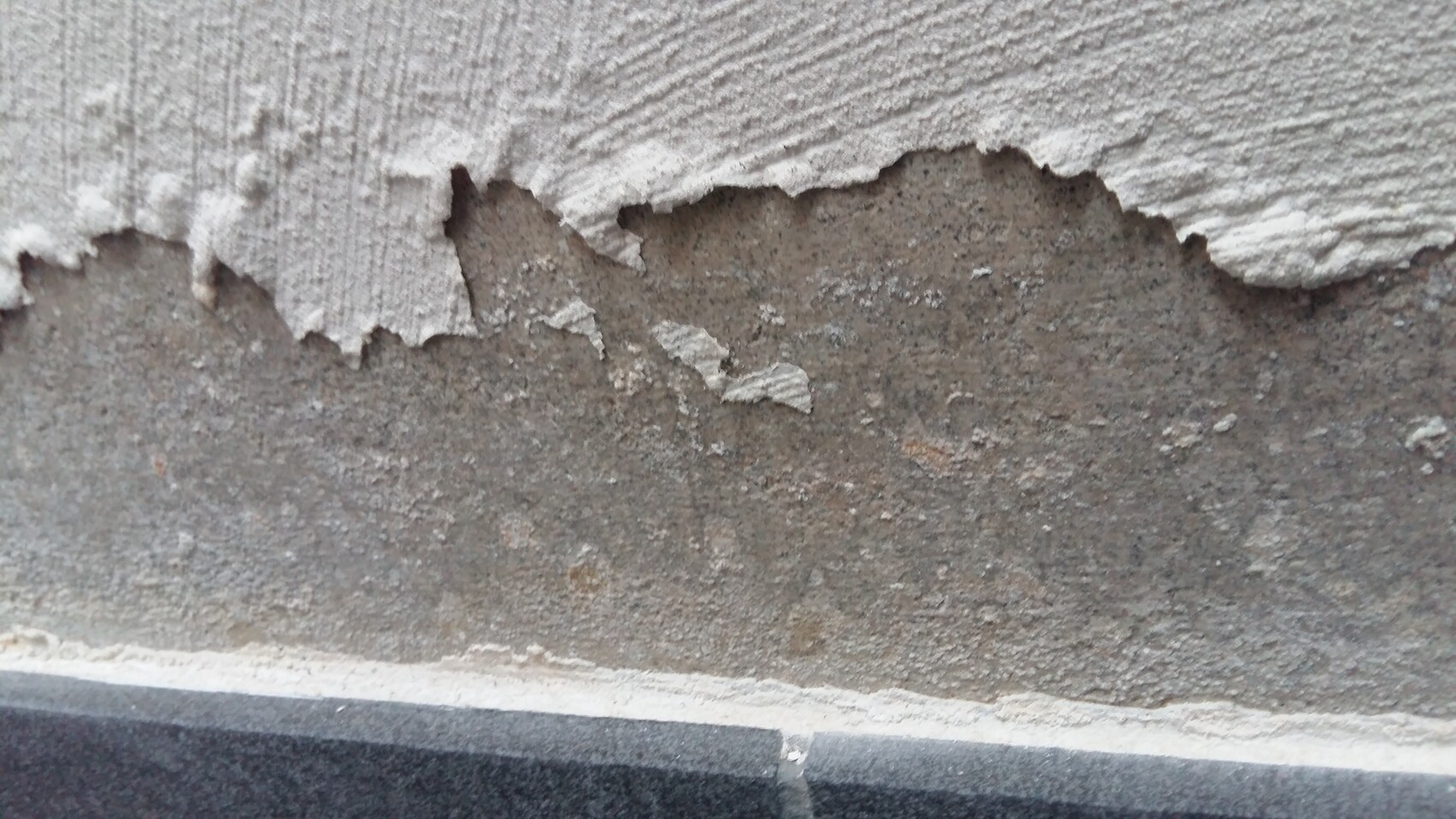
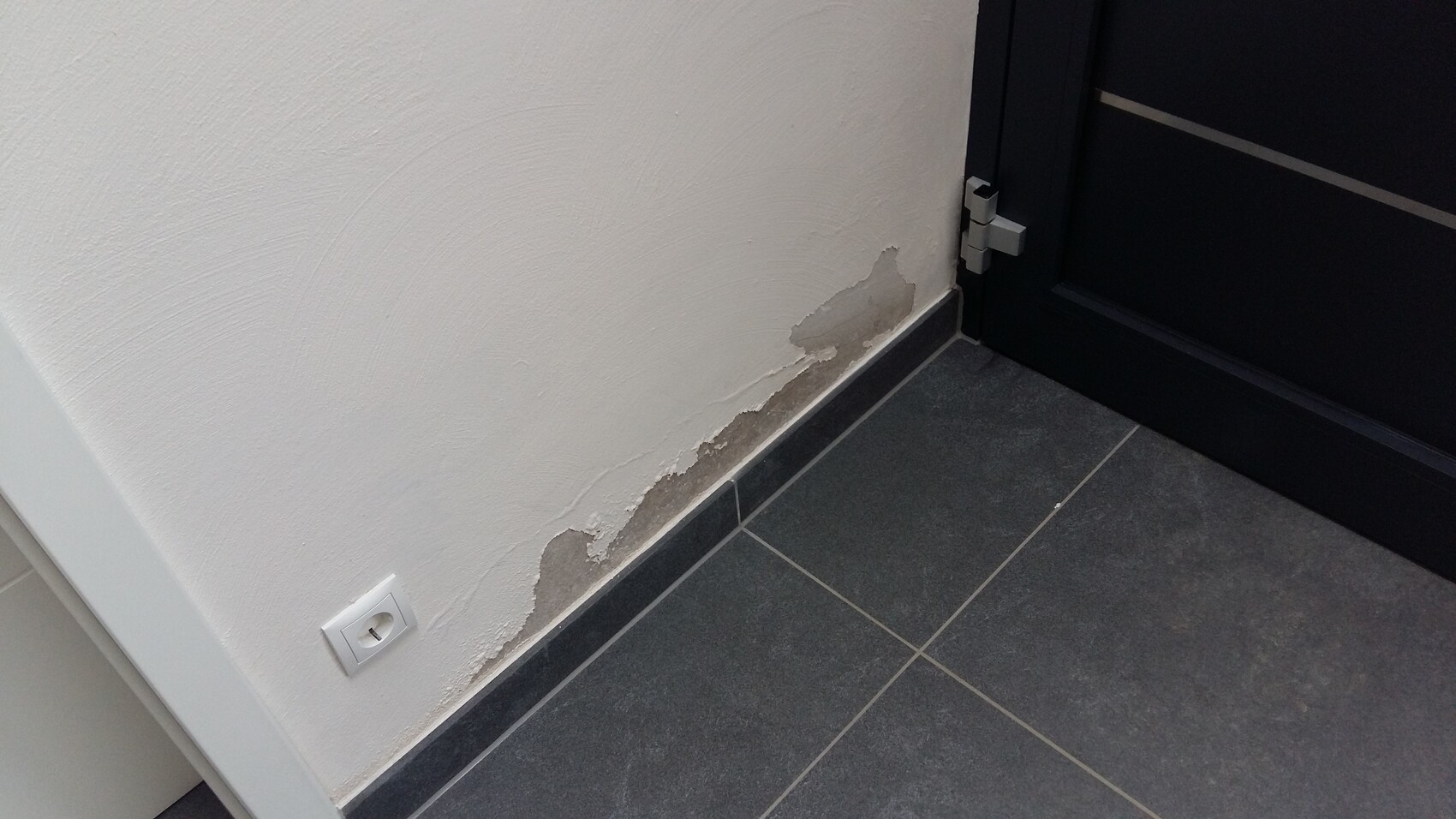
My family and I have been living in our own home for two years now. We are very happy—if it weren’t for the word “BUT.”
We have a moisture problem behind our front door. Since the guest bathroom is directly behind this wall, we initially suspected water damage. However, it seems to depend more on the weather. We consulted our architect, who after much back and forth provided several explanations and possible remedies:
- Residual moisture from construction → continuous heat treatment
- Hairline cracks in the water pipe → no action recommended ?!?!
- Condensation from cold outside air → more ventilation, less heating ?!?!?
- “Moisture migration” in an electrical conduit → no action recommended ?!?!?
For us, these explanations do not align at all. Therefore, here are our open questions:
1. What could it be?
2. Who is the best professional to inspect this?
3. Is the architect responsible if he supervised the construction but we did a lot of the work ourselves?
The photos are from October 2017 (yes, we have been pestering the architect for a long time but keep getting postponed). Currently, the damage looks the same, but it has spread up to about 1 meter (3 feet) high. We have already started removing the paint. Afterward, the paint simply peeled off further up.
We would appreciate any input from you. Of course, I can provide more information if needed.
Thank you very much in advance.
Best regards,
Stefan
T
Trasher1922 Jan 2019 10:16Have you already conducted a moisture measurement in this area using a calibrated device? This would clearly determine whether residual moisture or condensation from the construction process is still present. If the reading is above 100 digits, an external source of moisture should be considered as the cause.
Judging by your photos, I would say it is rising damp with an external origin (sealing issue, leak in a pipeline).
A construction expert would likely be able to determine the exact cause without any problem.
Judging by your photos, I would say it is rising damp with an external origin (sealing issue, leak in a pipeline).
A construction expert would likely be able to determine the exact cause without any problem.
M
Mottenhausen22 Jan 2019 11:45Rising damp due to the pipe penetrations from the guest WC not being properly sealed in the floor slab... (assumption!)
M
MIkro198622 Jan 2019 17:02Thank you for the many responses.
A proper moisture measurement has not been carried out yet. Our architect prefers to handle this remotely.
What kind of structural measures would rising damp require?
How does the architect’s liability look in this case?
Thank you.
A proper moisture measurement has not been carried out yet. Our architect prefers to handle this remotely.
What kind of structural measures would rising damp require?
How does the architect’s liability look in this case?
Thank you.
Similar topics