
Hello dear community,
we have had a problem with a damp corner in our newly built house for years. The builder has so far claimed that it is due to incorrect ventilation behavior, meaning improper use.
About 14 days ago, when the big thaw occurred, the entire corner was wet again. However, we are not sure if that was the cause.
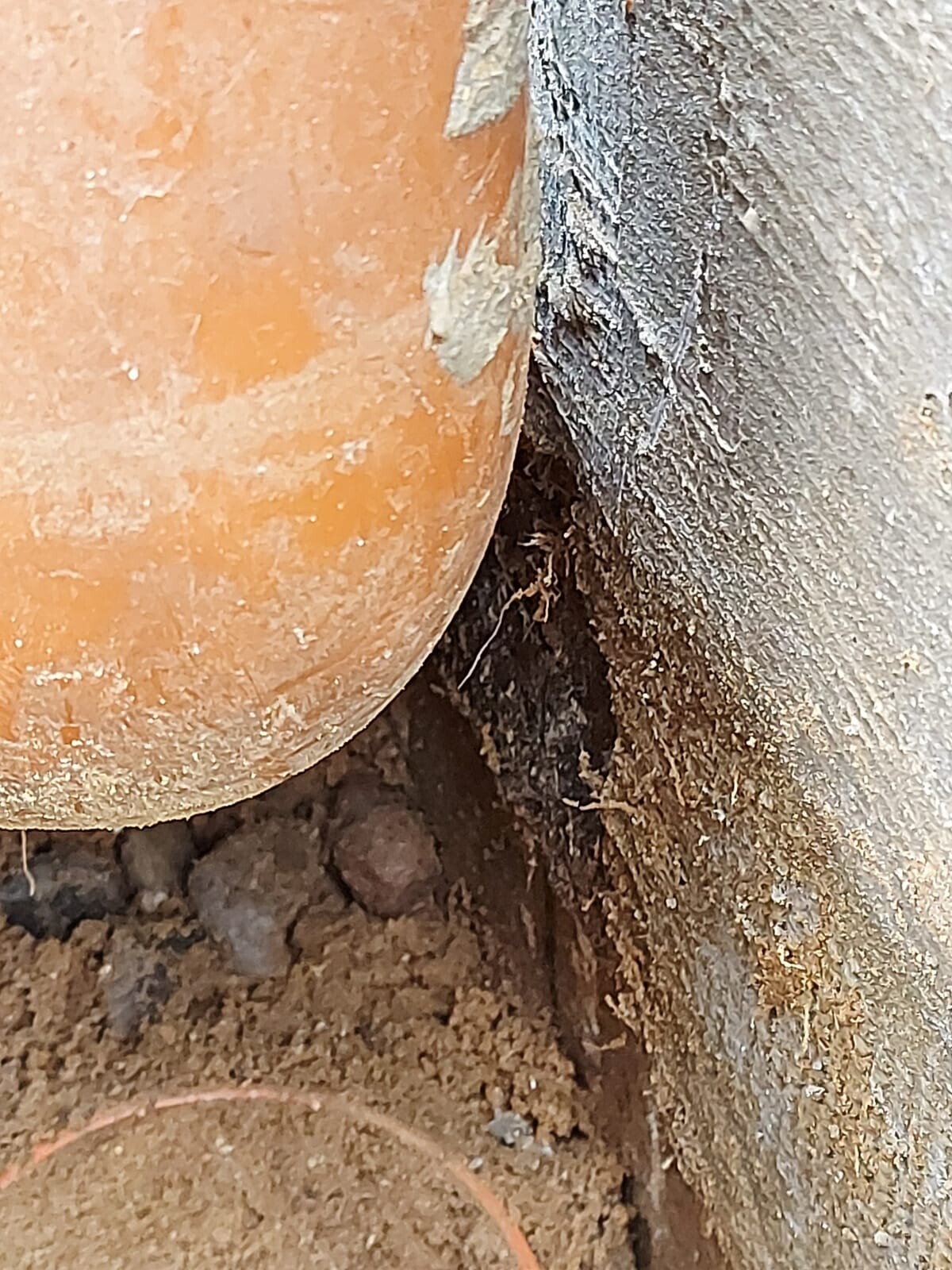
So far, the base of the house (transition to the external thermal insulation composite system) has been completely sealed again (except for a small spot behind the downspout).
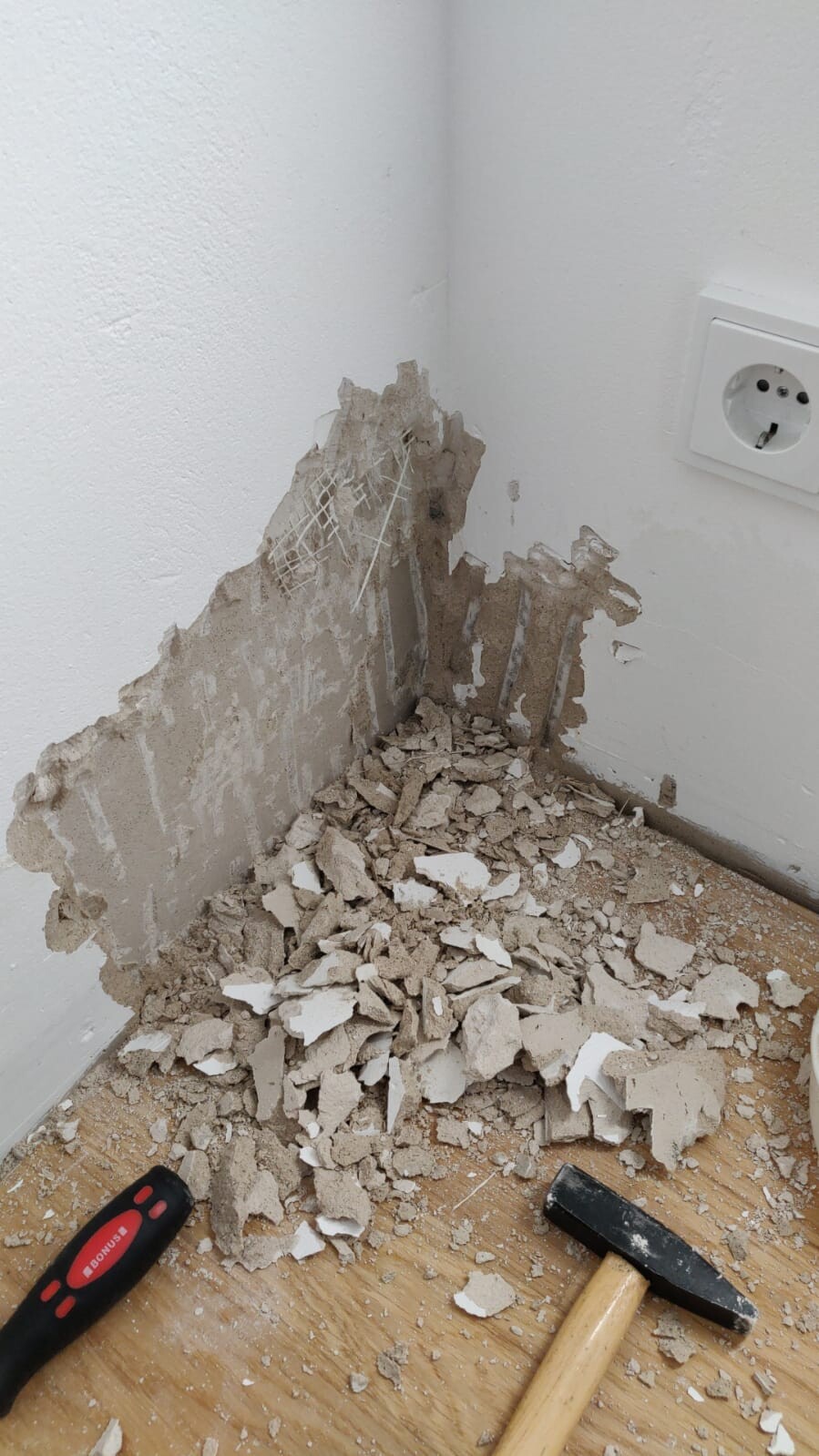
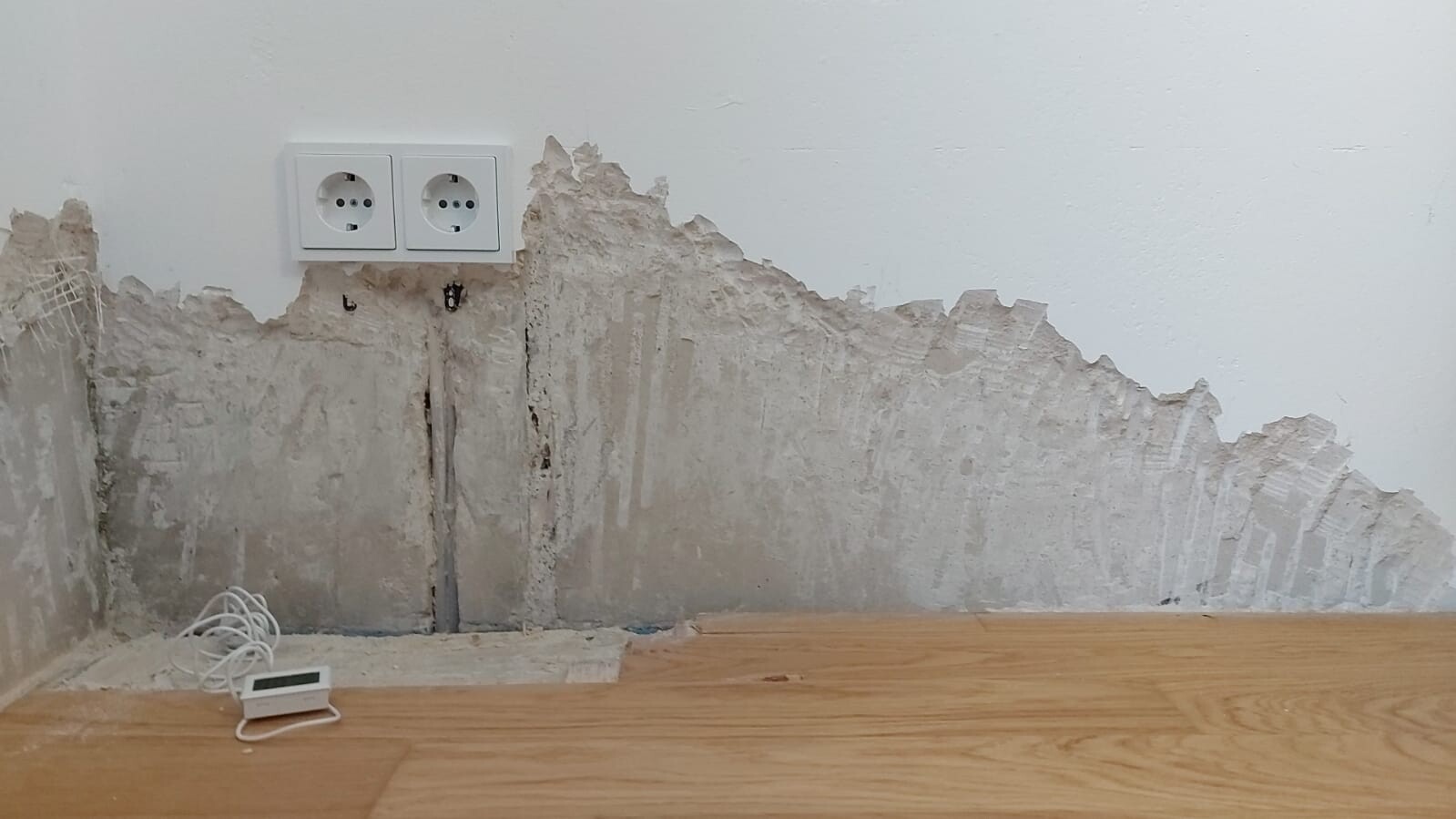
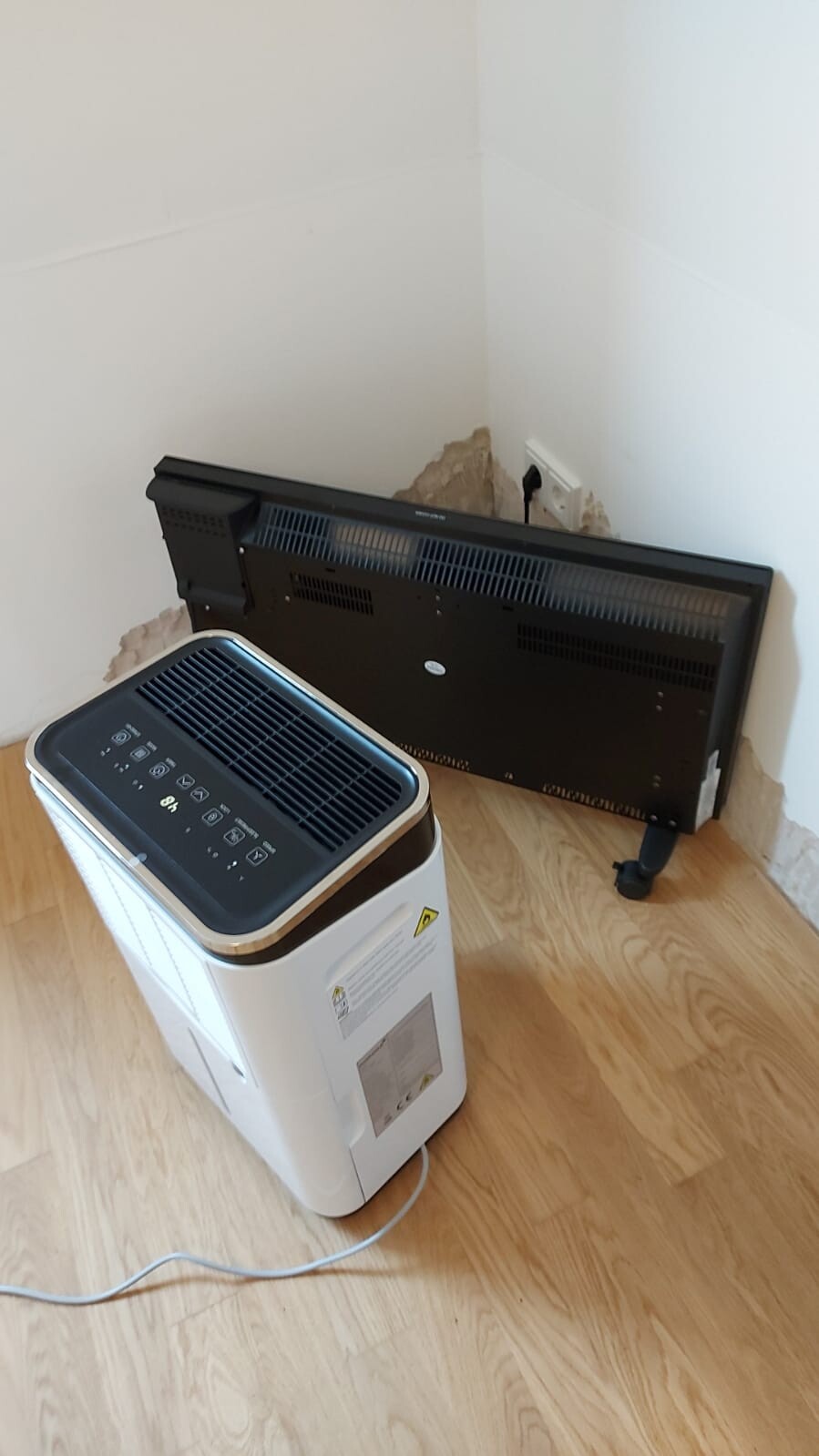
Since the entire corner was wet 14 days ago, we have heated the corner with a panel radiator and completely dried the room using a dehumidifier. We removed the gypsum plaster from the corner to check the masonry directly and to prevent or interrupt this sponge effect. The gypsum-based plaster soaks up water like a big sponge, and we wanted to stop that. Additionally, we placed a moisture meter in the screed joint to monitor what is happening there. Conclusion: After drying the room, the corner remains damp (99% humidity in the screed joint, after 3 hours of panel radiator heating it drops to 88%, but then it rises again to 99%).
What could be the cause and how can we fix this?
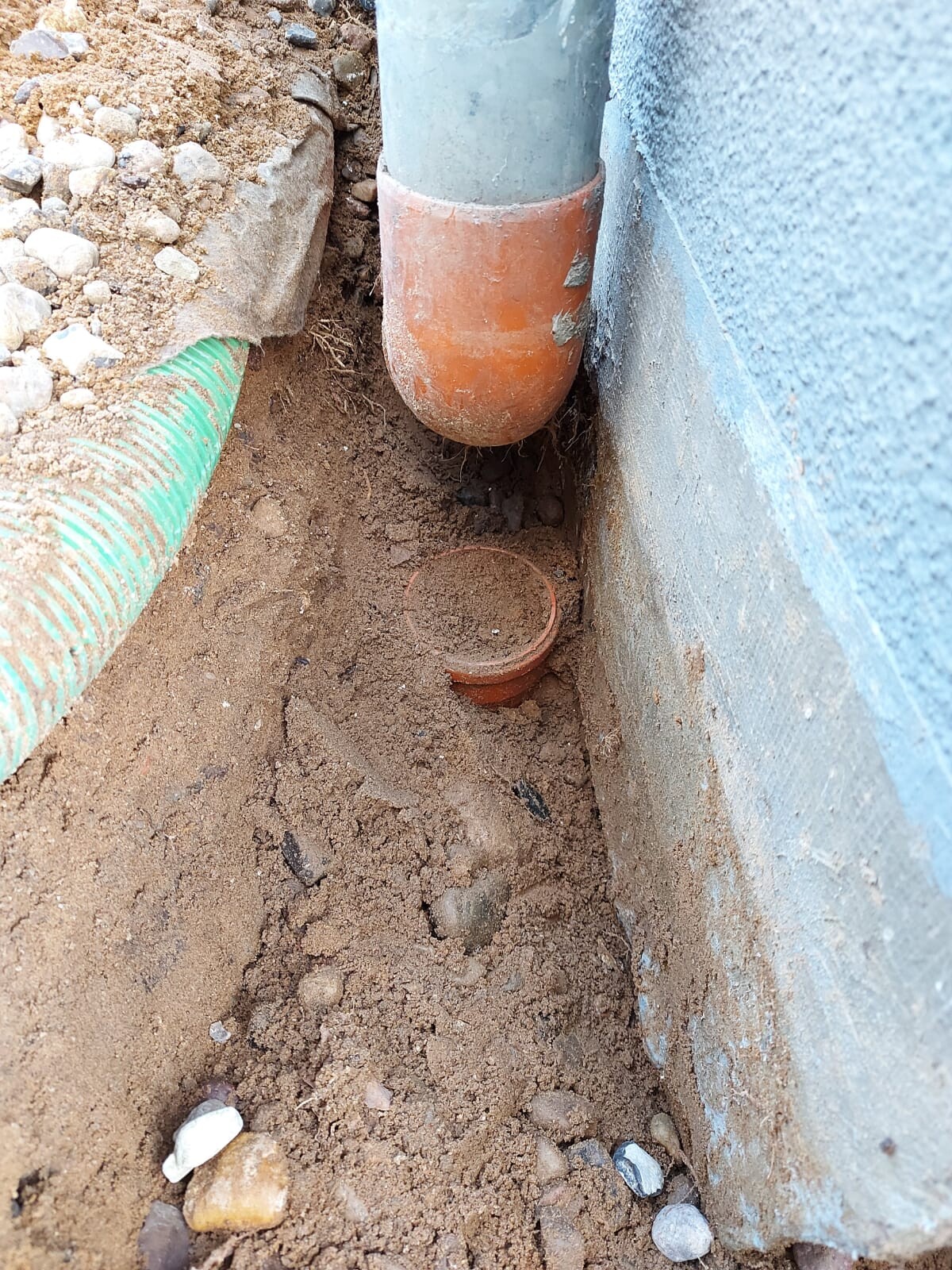
(The downspout has since been routed and connected to the drainage system because water also accumulated in front of the house.)
Thank you very much!

we have had a problem with a damp corner in our newly built house for years. The builder has so far claimed that it is due to incorrect ventilation behavior, meaning improper use.
About 14 days ago, when the big thaw occurred, the entire corner was wet again. However, we are not sure if that was the cause.
So far, the base of the house (transition to the external thermal insulation composite system) has been completely sealed again (except for a small spot behind the downspout).
Since the entire corner was wet 14 days ago, we have heated the corner with a panel radiator and completely dried the room using a dehumidifier. We removed the gypsum plaster from the corner to check the masonry directly and to prevent or interrupt this sponge effect. The gypsum-based plaster soaks up water like a big sponge, and we wanted to stop that. Additionally, we placed a moisture meter in the screed joint to monitor what is happening there. Conclusion: After drying the room, the corner remains damp (99% humidity in the screed joint, after 3 hours of panel radiator heating it drops to 88%, but then it rises again to 99%).
What could be the cause and how can we fix this?
(The downspout has since been routed and connected to the drainage system because water also accumulated in front of the house.)
Thank you very much!

What is the construction year of the new building (in Havana, the old town is 400 years old and the new town 200 years old),
was the new building constructed by a company or is it DIY,
has waterproofing been applied to the floor slab, basement, exterior walls, and base?
This could be a construction defect and it must be addressed.
was the new building constructed by a company or is it DIY,
has waterproofing been applied to the floor slab, basement, exterior walls, and base?
This could be a construction defect and it must be addressed.
G
Gartenfreund4 Mar 2021 05:23Is picture 2 showing the current condition of how the downpipe is connected to the drainage pipe?
If so, I would say that the bend is installed the wrong way around. This allows rainwater to escape freely if it backs up in the rest of the pipe. It’s possible that the pipes in the remaining section are also installed incorrectly. Water can then leak at the connection points, especially if the rubber seals are not properly seated or are missing altogether.
If so, I would say that the bend is installed the wrong way around. This allows rainwater to escape freely if it backs up in the rest of the pipe. It’s possible that the pipes in the remaining section are also installed incorrectly. Water can then leak at the connection points, especially if the rubber seals are not properly seated or are missing altogether.
Similar topics