
F
freitami822 Mar 2021 12:10Hello dear community,
we have had a problem with a damp corner in our newly built house for years. The builder has so far claimed that it is due to incorrect ventilation behavior, meaning improper use.
About 14 days ago, when the big thaw occurred, the entire corner was wet again. However, we are not sure if that was the cause.
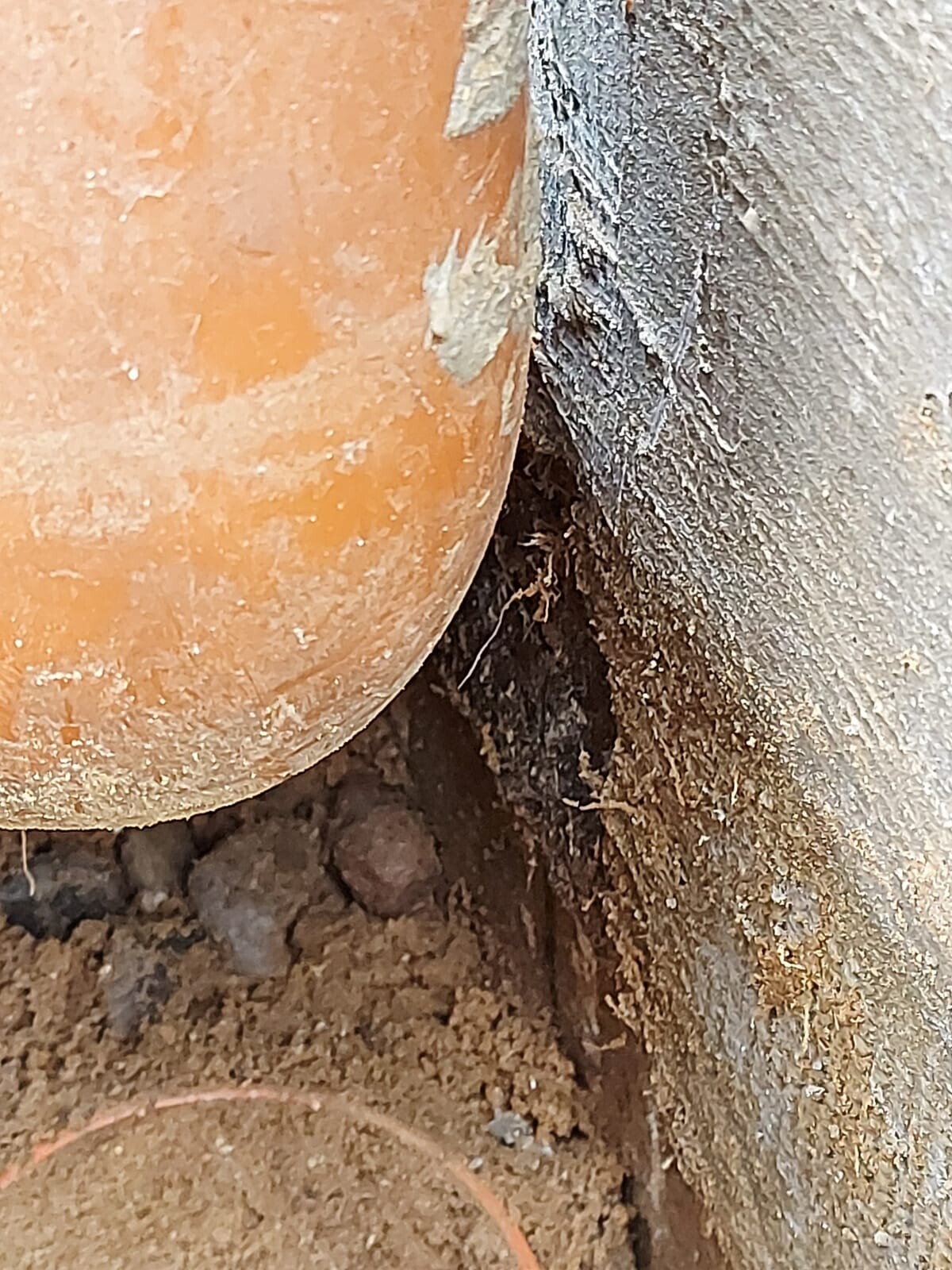
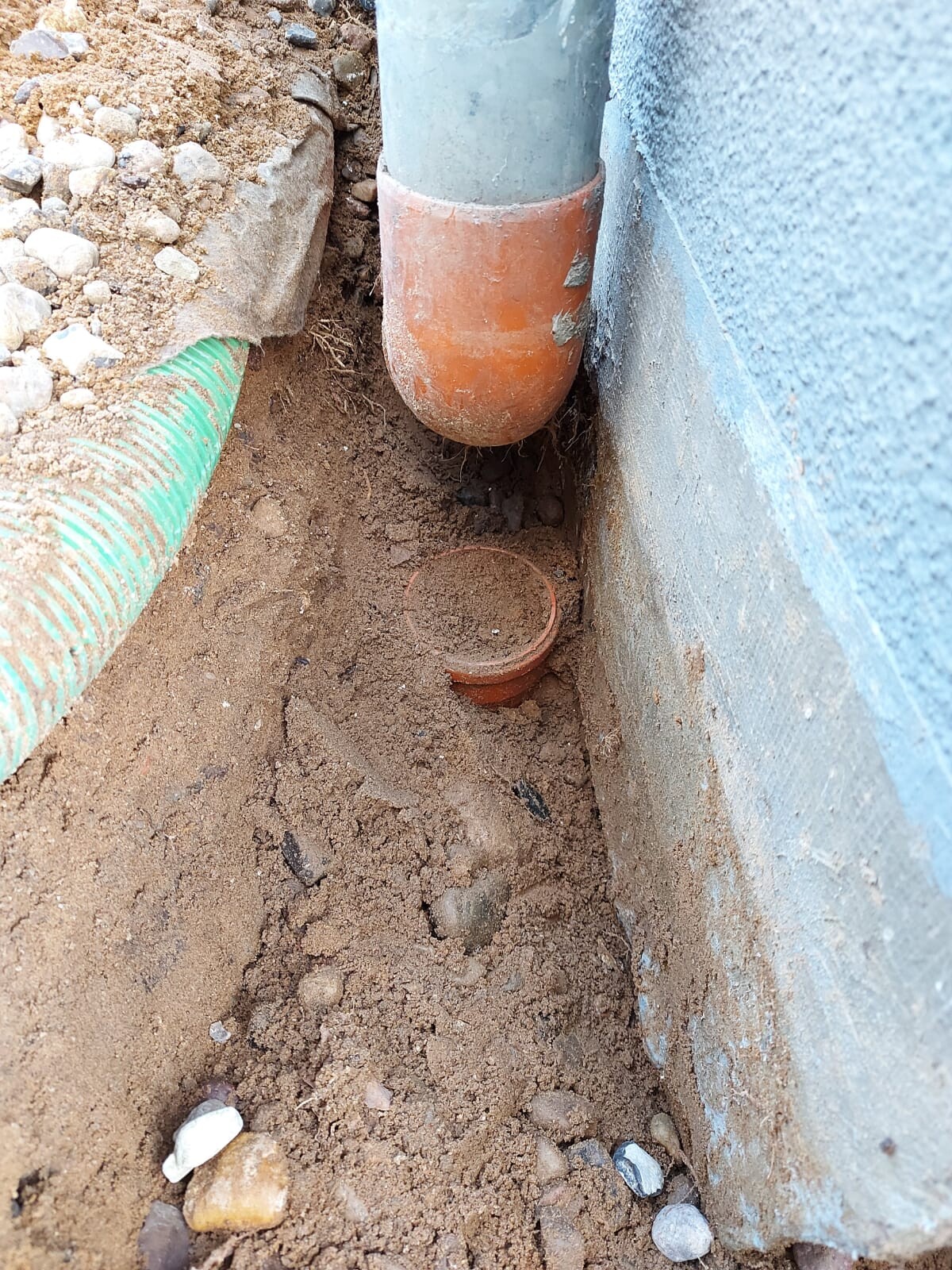
So far, the base of the house (transition to the external thermal insulation composite system) has been completely sealed again (except for a small spot behind the downspout).
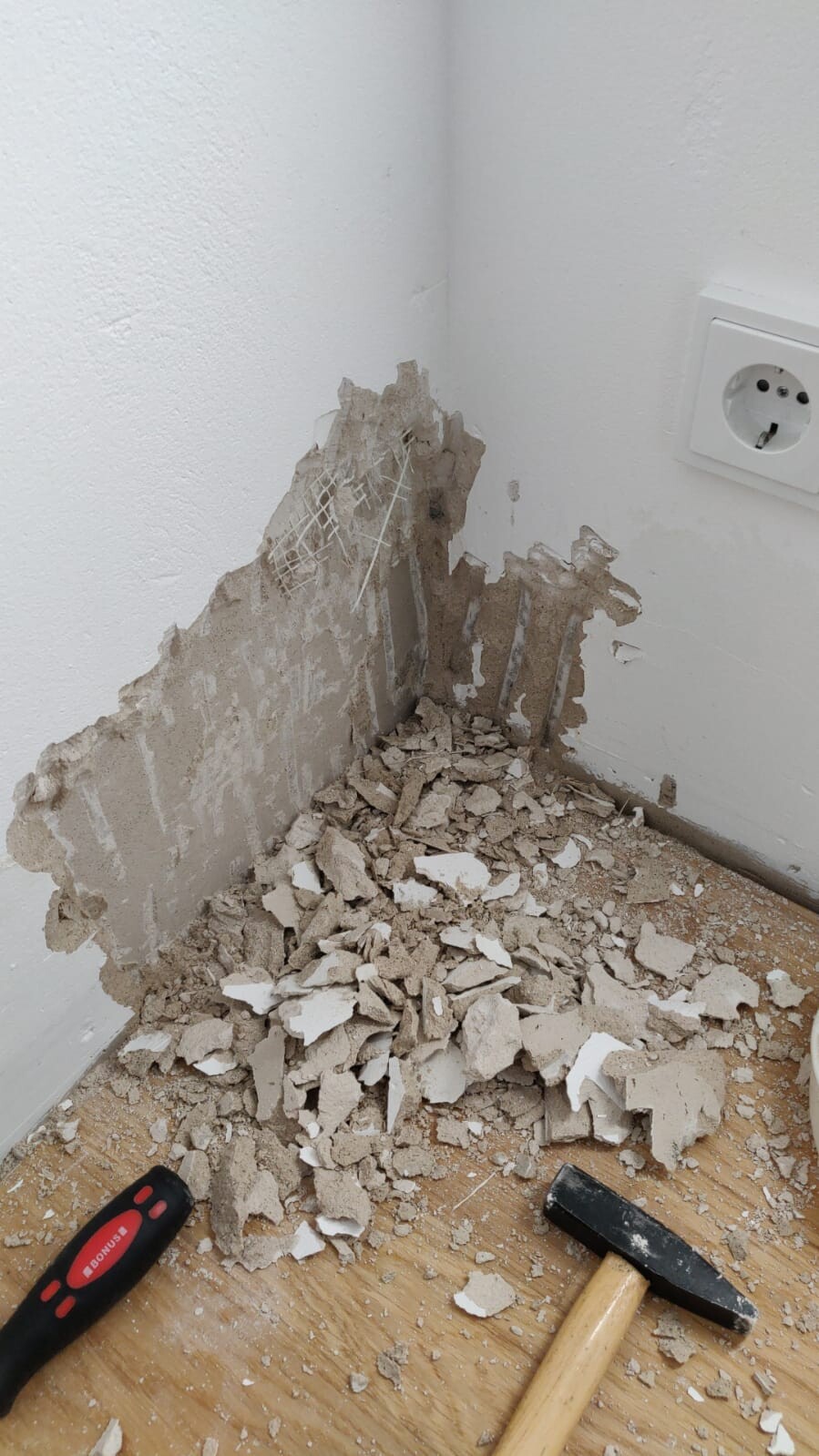
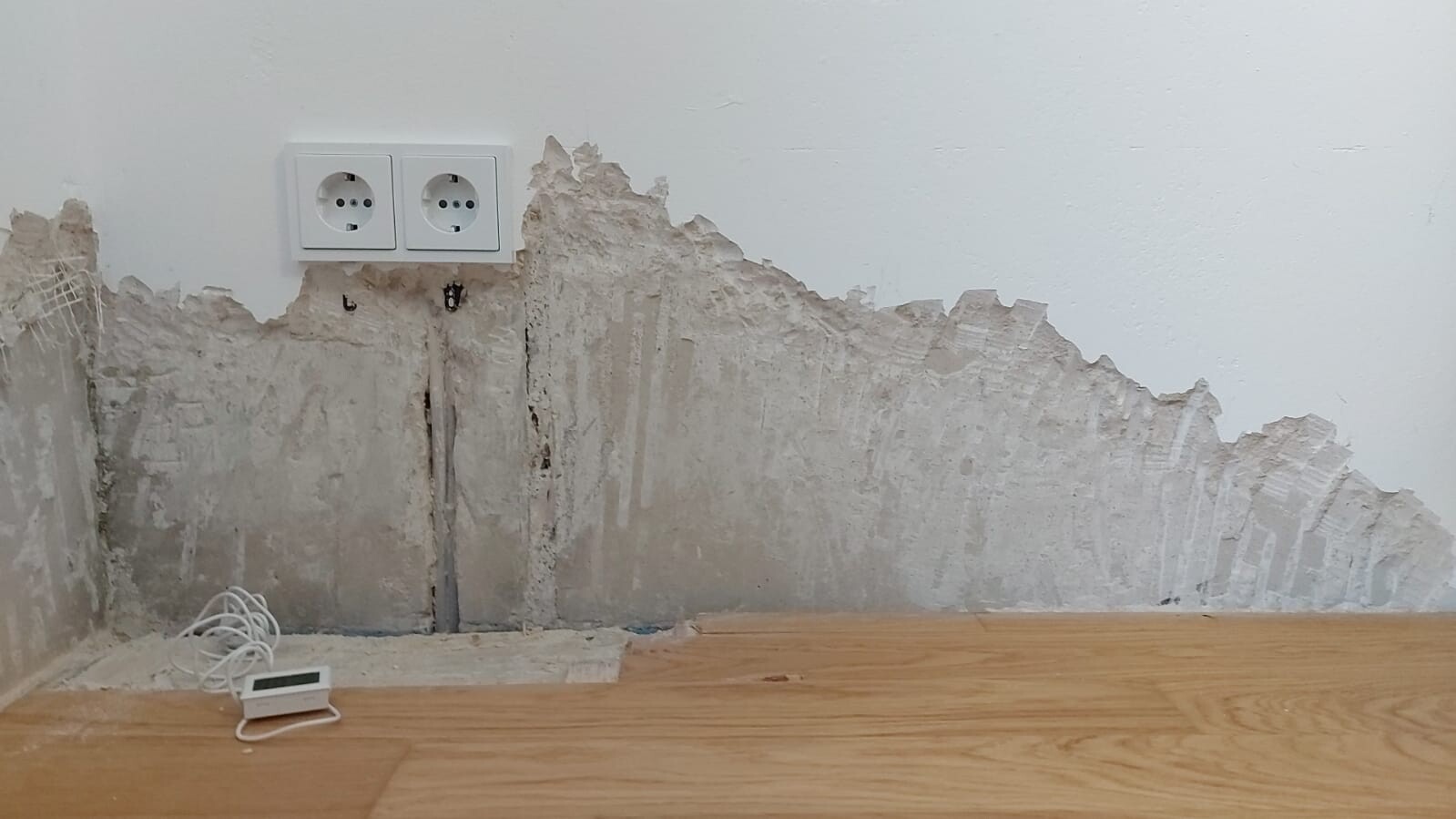
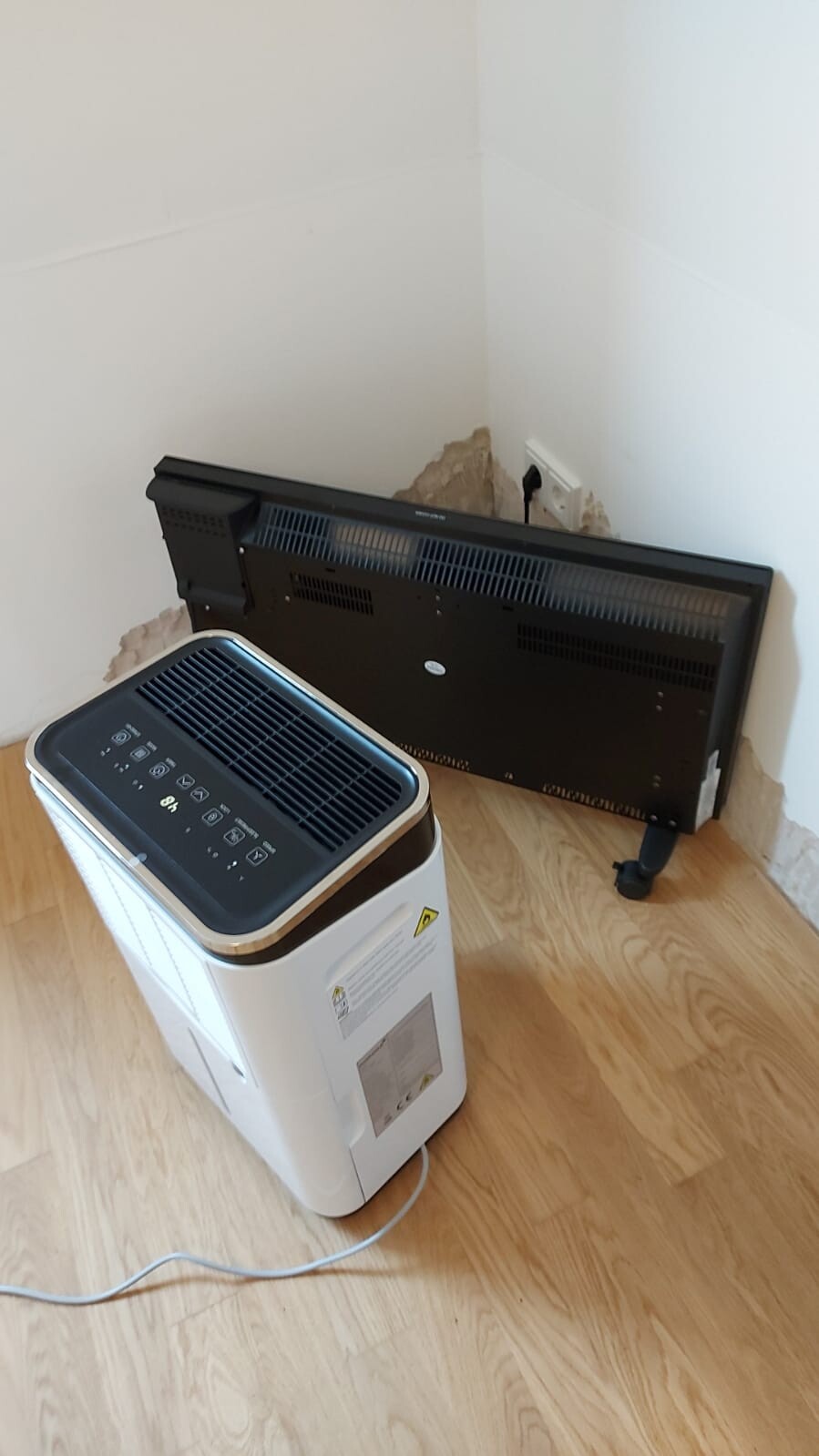
Since the entire corner was wet 14 days ago, we have heated the corner with a panel radiator and completely dried the room using a dehumidifier. We removed the gypsum plaster from the corner to check the masonry directly and to prevent or interrupt this sponge effect. The gypsum-based plaster soaks up water like a big sponge, and we wanted to stop that. Additionally, we placed a moisture meter in the screed joint to monitor what is happening there. Conclusion: After drying the room, the corner remains damp (99% humidity in the screed joint, after 3 hours of panel radiator heating it drops to 88%, but then it rises again to 99%).
What could be the cause and how can we fix this?
(The downspout has since been routed and connected to the drainage system because water also accumulated in front of the house.)
Thank you very much!

we have had a problem with a damp corner in our newly built house for years. The builder has so far claimed that it is due to incorrect ventilation behavior, meaning improper use.
About 14 days ago, when the big thaw occurred, the entire corner was wet again. However, we are not sure if that was the cause.
So far, the base of the house (transition to the external thermal insulation composite system) has been completely sealed again (except for a small spot behind the downspout).
Since the entire corner was wet 14 days ago, we have heated the corner with a panel radiator and completely dried the room using a dehumidifier. We removed the gypsum plaster from the corner to check the masonry directly and to prevent or interrupt this sponge effect. The gypsum-based plaster soaks up water like a big sponge, and we wanted to stop that. Additionally, we placed a moisture meter in the screed joint to monitor what is happening there. Conclusion: After drying the room, the corner remains damp (99% humidity in the screed joint, after 3 hours of panel radiator heating it drops to 88%, but then it rises again to 99%).
What could be the cause and how can we fix this?
(The downspout has since been routed and connected to the drainage system because water also accumulated in front of the house.)
Thank you very much!
 KingJulien3 Mar 2021 05:23
freitami82 schrieb:
the base (transition to the exterior insulation and finish system, EIFS) completely sealed again (except for a small spot behind the downpipe).Without being an expert:Wouldn't that cause all the water pooling in front of the seal to penetrate at that spot?
Do you really have standing water at the wall? No drainage system?
If the downpipe was also happily dripping there, I’m actually not surprised. When was it connected?
N
Nice-Nofret3 Mar 2021 09:00What does the area look like from the outside? Have you measured any moisture there? How far does the affected area extend?
If in doubt, the only solution is to dig down from the outside to below the foundation walls and apply waterproofing.
If in doubt, the only solution is to dig down from the outside to below the foundation walls and apply waterproofing.
 bauenmk20203 Mar 2021 09:14
Was the drainage (green pipe wrapped with felt; visible on the outside in the picture) placed close to the base of the wall, or was the downspout temporarily connected here?
Additionally, I am interested in the type of waterproofing used. Was a mineral-based waterproofing applied and then painted over, or why is there no visible black or gray surface here?
Additionally, I am interested in the type of waterproofing used. Was a mineral-based waterproofing applied and then painted over, or why is there no visible black or gray surface here?

bauenmk2020 schrieb:
Was the drainage pipe (green pipe wrapped with felt; visible on the outside in the picture) installed close to the base of the wall, or was the downspout temporarily connected there?
Additionally, I am interested in the type of waterproofing used. Was a mineral-based waterproofing applied and then painted over, or why is there no visible (black-gray) surface here? I noticed that too—where is the membrane and so on?
N
Nice-Nofret3 Mar 2021 11:47Well, considering the year the house was built, there was no waterproofing... so if you want to use the room properly, you should install it.
Similar topics