
ᐅ Current Building Practices and New Residential Developments Compliant with Energy Efficiency Regulations
Created on: 24 Mar 2018 14:36
F
Fuchur
New development areas and how they look nowadays due to energy saving regulations, etc.
It used to be a huge site in an old district of East Berlin (former military area and restricted zone).
In 2006, things still started off quite reasonably. In the end, there are now around 500 houses. What’s interesting is that each year the plots got smaller, but the houses built on them became larger.
This was the beginning in 2006, as mentioned, still quite moderate:
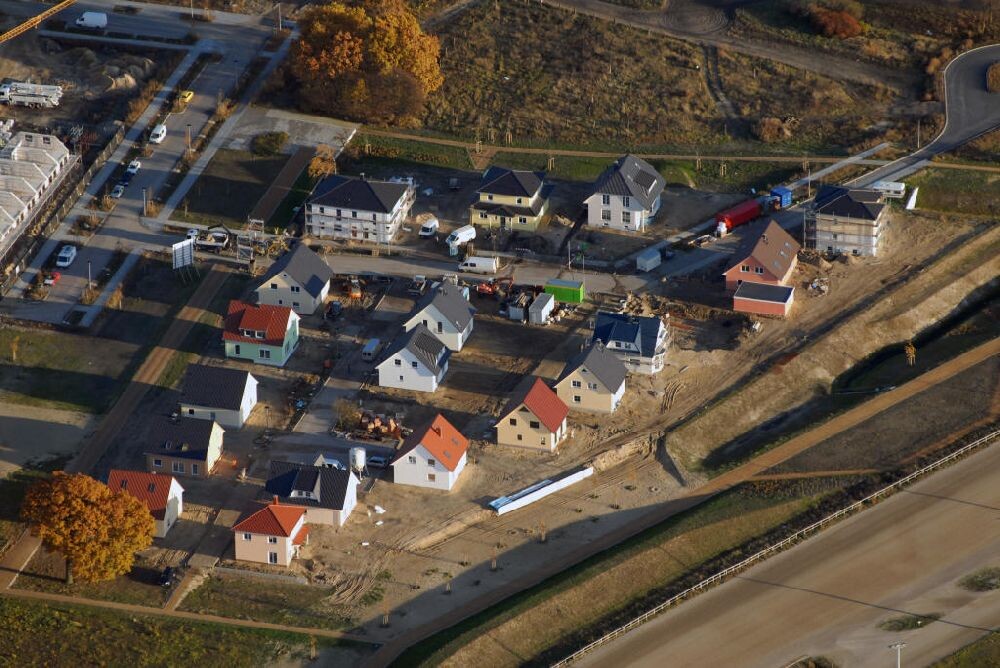
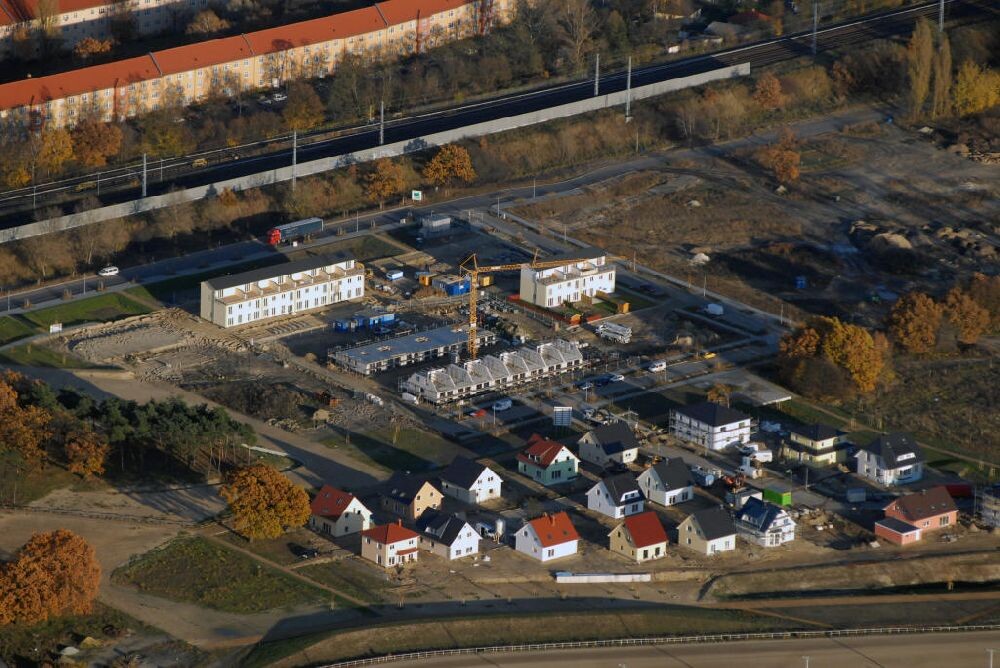
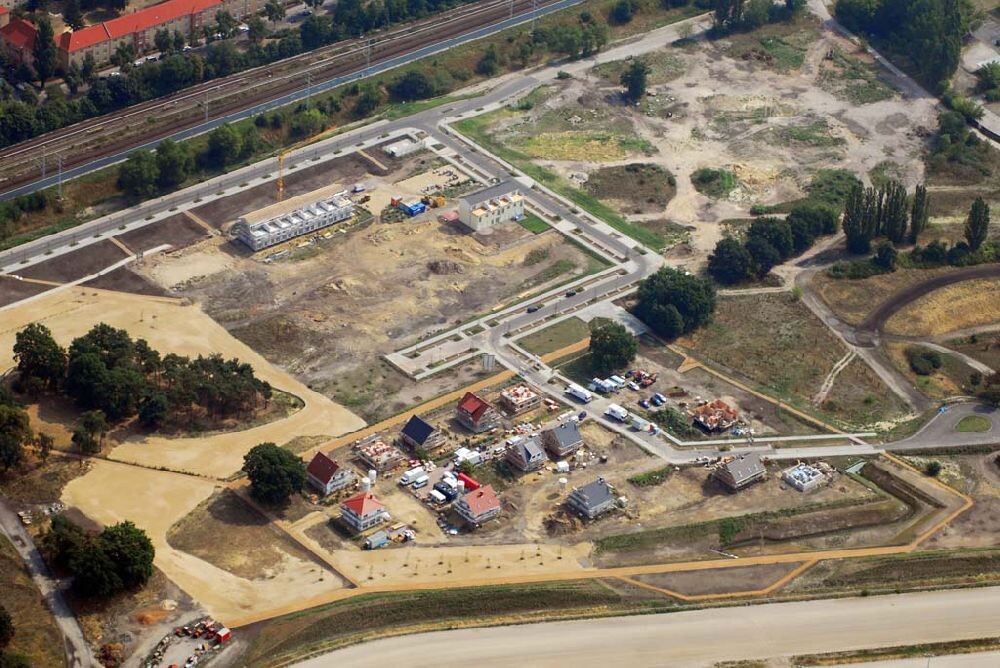
Now, around 2017 and after about four construction phases, this is what it looks like:
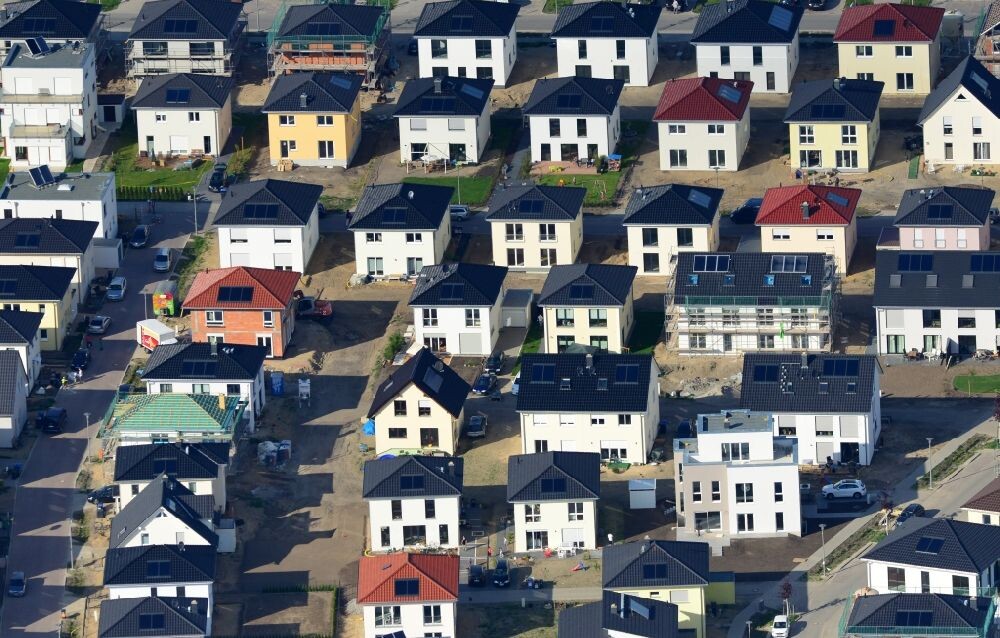
There was no real zoning plan there. Practically anything could be built that was available in the portfolio.
Combining and rearranging didn’t go perfectly smoothly but it’s alright...
Regards, Mycraft
It used to be a huge site in an old district of East Berlin (former military area and restricted zone).
In 2006, things still started off quite reasonably. In the end, there are now around 500 houses. What’s interesting is that each year the plots got smaller, but the houses built on them became larger.
This was the beginning in 2006, as mentioned, still quite moderate:
Now, around 2017 and after about four construction phases, this is what it looks like:
There was no real zoning plan there. Practically anything could be built that was available in the portfolio.
Fuchur schrieb:
OT: I would feel claustrophobic with these plots. The best ones are almost always in the shade...
Combining and rearranging didn’t go perfectly smoothly but it’s alright...
Regards, Mycraft
@Müllerin
After the first two-thirds of your post, I would have thought you were building on 1000 sqm (10,764 sq ft) or more. Then only 460 sqm (4,951 sq ft) – everything is relative, I guess.
I wonder if the ones in the picture are really that much smaller...
In our area, the smallest plot is 410 sqm (4,413 sq ft). I’m curious to see the finished result, especially since the very small ones are all located close together (courtyard structures, not lined up along a street).
Karsten, they are so small because a) more money can be made that way, and b) regular people can no longer afford larger ones.
After the first two-thirds of your post, I would have thought you were building on 1000 sqm (10,764 sq ft) or more. Then only 460 sqm (4,951 sq ft) – everything is relative, I guess.
I wonder if the ones in the picture are really that much smaller...
In our area, the smallest plot is 410 sqm (4,413 sq ft). I’m curious to see the finished result, especially since the very small ones are all located close together (courtyard structures, not lined up along a street).
Karsten, they are so small because a) more money can be made that way, and b) regular people can no longer afford larger ones.


57-50 are quite acceptable. However, the problem with the living quality, or if you prefer, the aura, is the dense and overly massive construction. If the plot is 460 sqm (5,000 sq ft), then a house of about 10 by 12 meters (33 by 39 feet) should be built on it at most. The concept of aura is not that bad. It means that every living being has a space around them that is no longer part of the body but is still perceived as an extension of it. Don’t get too close to me. This certainly applies to living spaces as well. The Neue Heimat blocks from 1972 create unhealthy atmospheres. Karsten
Alex85 schrieb:
@Müllerin
After the first two-thirds of your post, I would have thought you were building on 1000sqm or more. Then only 460sqm (4950 sq ft) – I guess it’s all relative. I felt the same way. We’re also in that range and had been looking for something between 500sqm and 600sqm (5400 to 6450 sq ft). As someone who moved from Lower Saxony to Franconia over 15 years ago, you don’t stand a chance with all the typical local models. The price per square meter now runs into the thousands near the city, and in the commuter belt it starts at around 400€ (about $430) or more. You’re just happy if you a) find anything at all and b) can actually afford it. Naturally, everything is handled via real estate agents. Building plots with existing old buildings are even rarer. Nominally, 400sqm (4300 sq ft) is actually too small for me, but it really depends on the location, neighboring buildings, and what the architect can make of it.
Advantage of a smaller garden – less gardening work [emoji6]
Advantage of a new housing development, especially for young families: quick community integration, lots of opportunities for the kids.
Crazy world in the end. My sister built a house three years ago about 40km (25 miles) southeast of Hamburg, in a town with around 5000 inhabitants. My brother-in-law wanted around 500 to 600sqm (5400 to 6450 sq ft), but the municipality said, “Nothing below 800sqm (8600 sq ft).” So they got 870sqm (9400 sq ft) for a price of €78,000 (about $84,000).
That only works for us if you move way out, about 80km (50 miles) into the sticks, to a place with just a milk can and a street lamp…
Mycraft schrieb:
You might be surprised, but apparently you already have that.
Most of the lots in the last picture with all the houses are exactly 450 sqm (4844 sq ft) in size,however, we only have a semi-detached house – so there’s significantly more garden space than in those photos.
And in that last phase of construction up there, I would have wanted at most one lot at the edge, the one with the relatively large garden facing the edge.
I once dreamed of 600-800 sqm (6460-8611 sq ft) – I love gardening and landscaping and... but I also know that I wouldn’t have the time alone to maintain it the way I’d want it to look. So now I’m content with our 460 sqm (4951 sq ft) and making the best of it in a way that I can manage on my own. Now and hopefully still in 20 years.
Similar topics