
ᐅ Current Building Practices and New Residential Developments Compliant with Energy Efficiency Regulations
Created on: 24 Mar 2018 14:36
F
Fuchur
New development areas and how they look nowadays due to energy saving regulations, etc.
It used to be a huge site in an old district of East Berlin (former military area and restricted zone).
In 2006, things still started off quite reasonably. In the end, there are now around 500 houses. What’s interesting is that each year the plots got smaller, but the houses built on them became larger.
This was the beginning in 2006, as mentioned, still quite moderate:
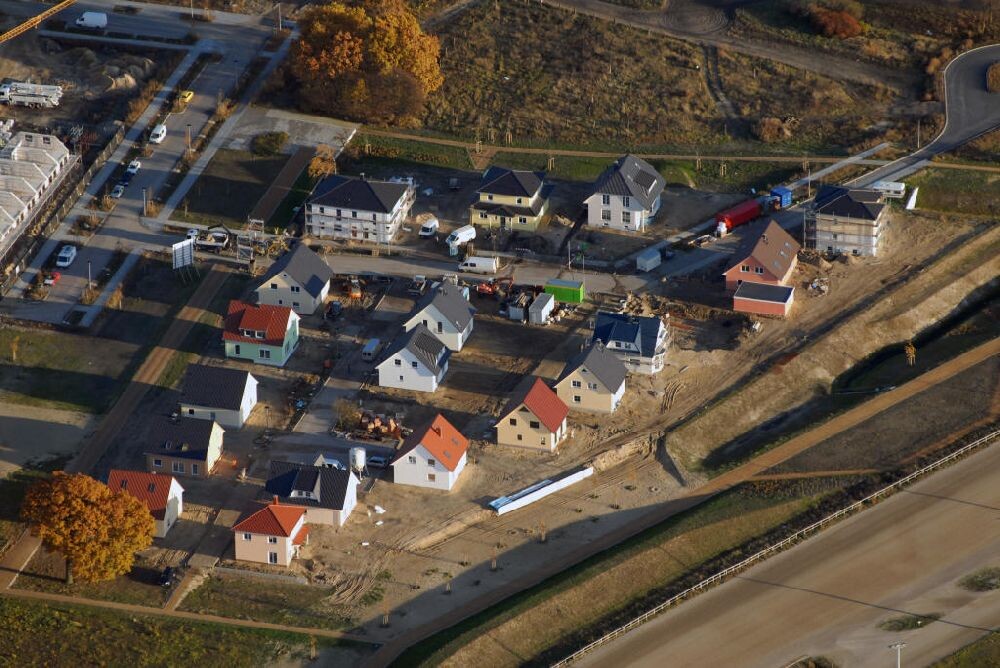
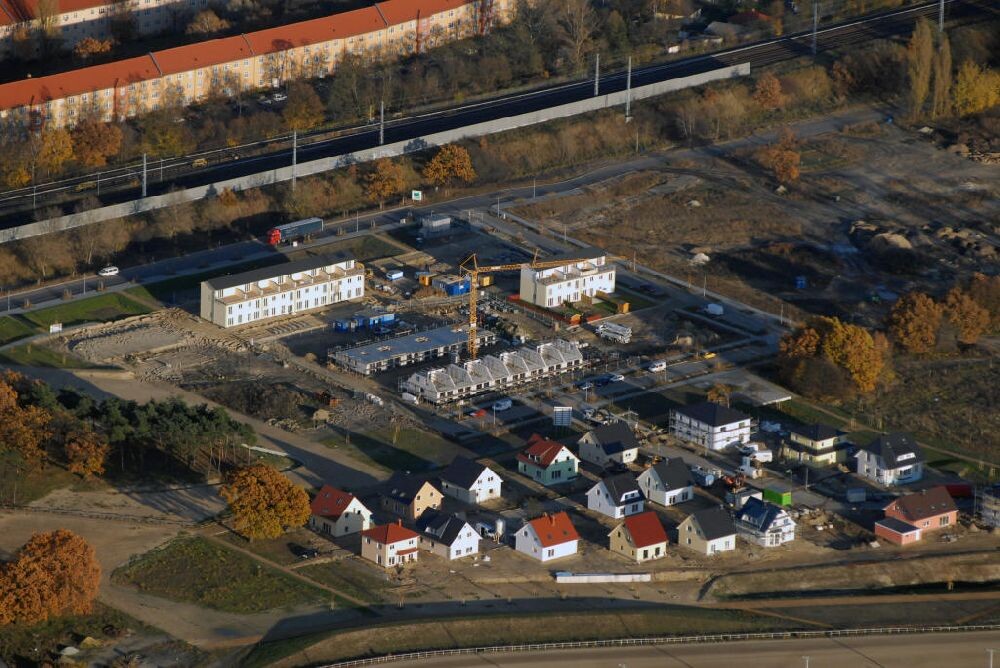
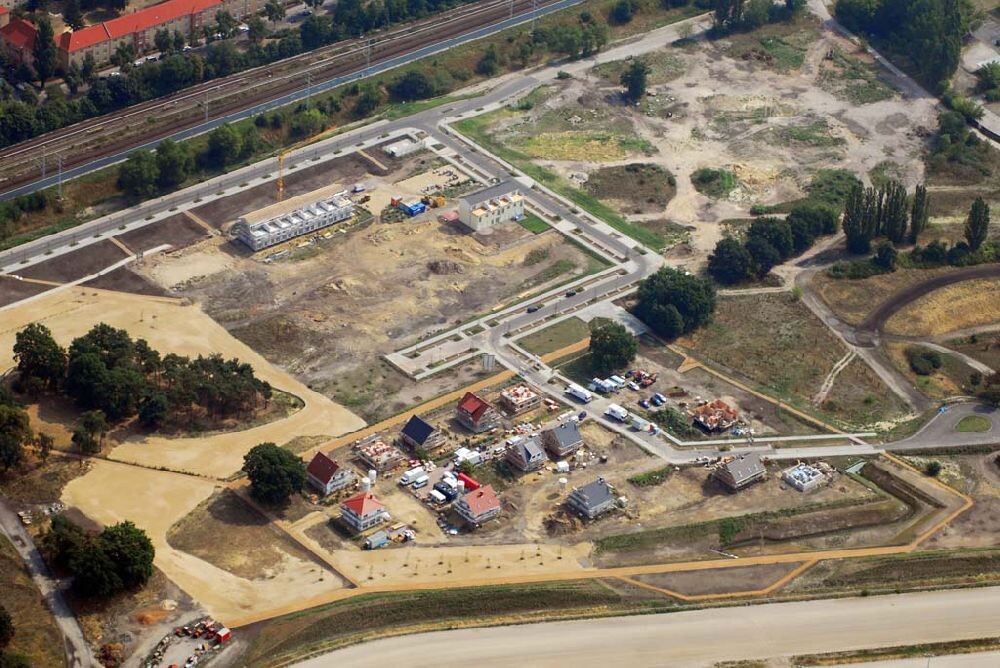
Now, around 2017 and after about four construction phases, this is what it looks like:
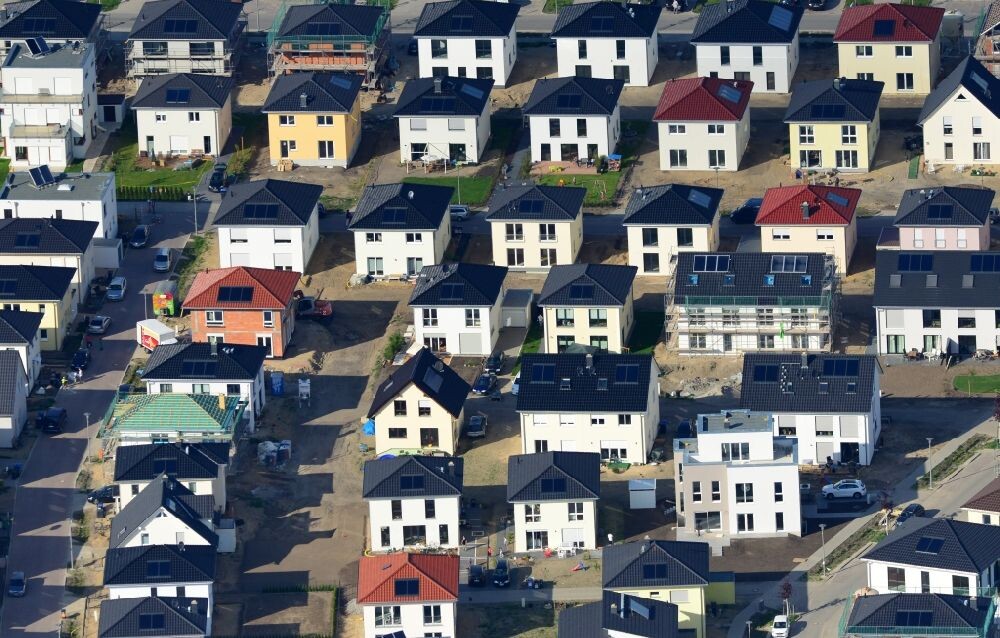
There was no real zoning plan there. Practically anything could be built that was available in the portfolio.
Combining and rearranging didn’t go perfectly smoothly but it’s alright...
Regards, Mycraft
It used to be a huge site in an old district of East Berlin (former military area and restricted zone).
In 2006, things still started off quite reasonably. In the end, there are now around 500 houses. What’s interesting is that each year the plots got smaller, but the houses built on them became larger.
This was the beginning in 2006, as mentioned, still quite moderate:
Now, around 2017 and after about four construction phases, this is what it looks like:
There was no real zoning plan there. Practically anything could be built that was available in the portfolio.
Fuchur schrieb:
OT: I would feel claustrophobic with these plots. The best ones are almost always in the shade...
Combining and rearranging didn’t go perfectly smoothly but it’s alright...
Regards, Mycraft
ypg schrieb:
@ruppsn
The permit will cost you 80 instead of 50.
Happy Easter [emoji214]Okay, I don’t have practical experience with that, it was meant as an example [emoji6]Happy Easter to you too [emoji195][emoji4]

ypg schrieb:
I question it from the opposite perspective: why not accept the various options available instead of pushing through what shouldn’t be allowed. Probably because we live in a time when it’s considered normal and justified to sue the teacher if a child receives a low grade.
The purpose of a development plan—which some people seem to forget—is not to allow every builder to have their dream home without regard for the local character, but rather to protect that character. After all, nobody wants to feel disgusted when passing by their neighbors’ houses.
And it is not the duty of a property to be suitable for the prize-winning house from my house exhibition marathon.
Müllerin schrieb:
Lawsuits? I doubt they’ll succeed if payment has already been made. But we will see how things actually turn out. New game, new luck: your interests (neighbor rights) are a completely different matter than the planning and building law issues of the municipality. An administrative fine cannot compensate for your concerns.
https://www.instagram.com/11antgmxde/
https://www.linkedin.com/company/bauen-jetzt/
Our neighbor also has glazed roof tiles on their gable roof, which goes against the local development plan. In the mornings, they reflect a lot of sunlight into our living room. However, since we hardly spend time there, we tolerate it. If the municipality notices, they will probably have to replace the roof.
Just as a side note: two-story construction is also possible with a gable roof, provided the ridge height is specified as more than 8 meters (26 feet). It doesn’t always have to be a townhouse.
Just as a side note: two-story construction is also possible with a gable roof, provided the ridge height is specified as more than 8 meters (26 feet). It doesn’t always have to be a townhouse.
11ant schrieb:
Probably because we live in a time when it is considered normal and acceptable to sue a teacher if a child has received a grade of C.What nonsense to try to link those things.The purpose of a development plan is – but for some reason this no longer registers with some people – not to allow every builder to construct their dream house without regard to the local character, but rather to serve as the legal protection of that local character.Its purpose – and unfortunately this no longer gets through to some minds – is to achieve harmony and compliance with the fundamental rights of our citizens, not arbitrary decisions based on the whims of a few entrenched municipal council members.The judiciary is still responsible for rulings, not the lawyers.
And just as lawyers are subject to the courts, in this specific case – which is what this is about (or isn’t it?) – one aspect of the development plan was indeed unlawful because it had NO impact on the local character, since the dark roofing had already been approved on two streets. But facts don’t seem to matter—they only cause inconvenience...
I’m checking out now; facts are being ignored or twisted here. Frankly, I’m just not interested in that.
ruppsn schrieb:
I'm out of this now; facts are being ignored or twisted here. I simply find it too ridiculous. Not more ridiculous than claiming a building freedom enshrined in the Basic Law. Article 14 of the Basic Law actually states the following: "(1) Property and the right of inheritance shall be guaranteed. Content and limits shall be defined by law.
(2) Property entails obligations. Its use shall also serve the public good.
(3) Expropriation is only permissible for the public good. It may only be carried out by law or on the basis of law, which regulates the nature and extent of compensation. Compensation shall be determined by a fair balance of the interests of the public and those affected. In case of disputes regarding the amount of compensation, legal recourse to ordinary courts is available."
I do not read a prohibition on enacting development plans/planning regulations from this. That restrictive regulations should be designed in a reasonable way is a widely accepted principle, which, in my opinion, the vast majority of development plans do comply with.
https://www.instagram.com/11antgmxde/
https://www.linkedin.com/company/bauen-jetzt/
I would really prefer if our development plan were more strict. It doesn’t necessarily need to specify brick types, brick colors, or roof colors, but I would appreciate if it either limited the floor area ratio to less than 2 or outright prohibited having 2 full stories. The first construction phase already feels oppressively dense. I doubt that reducing the site coverage ratio from 0.4 to 0.3 on a 640 m² (6889 sq ft) lot (excluding ancillary structures) will make any difference. No one really builds that large anyway…
Instead, houses with steeper roof pitches are restricted by height limits, but that does nothing to change the overall impression since these limits are defined relative to the finished floor level, not the terrain. I wonder what experts were involved in creating this.
Instead, houses with steeper roof pitches are restricted by height limits, but that does nothing to change the overall impression since these limits are defined relative to the finished floor level, not the terrain. I wonder what experts were involved in creating this.
Similar topics