
ᐅ Current Building Practices and New Residential Developments Compliant with Energy Efficiency Regulations
Created on: 24 Mar 2018 14:36
F
Fuchur
New development areas and how they look nowadays due to energy saving regulations, etc.
It used to be a huge site in an old district of East Berlin (former military area and restricted zone).
In 2006, things still started off quite reasonably. In the end, there are now around 500 houses. What’s interesting is that each year the plots got smaller, but the houses built on them became larger.
This was the beginning in 2006, as mentioned, still quite moderate:
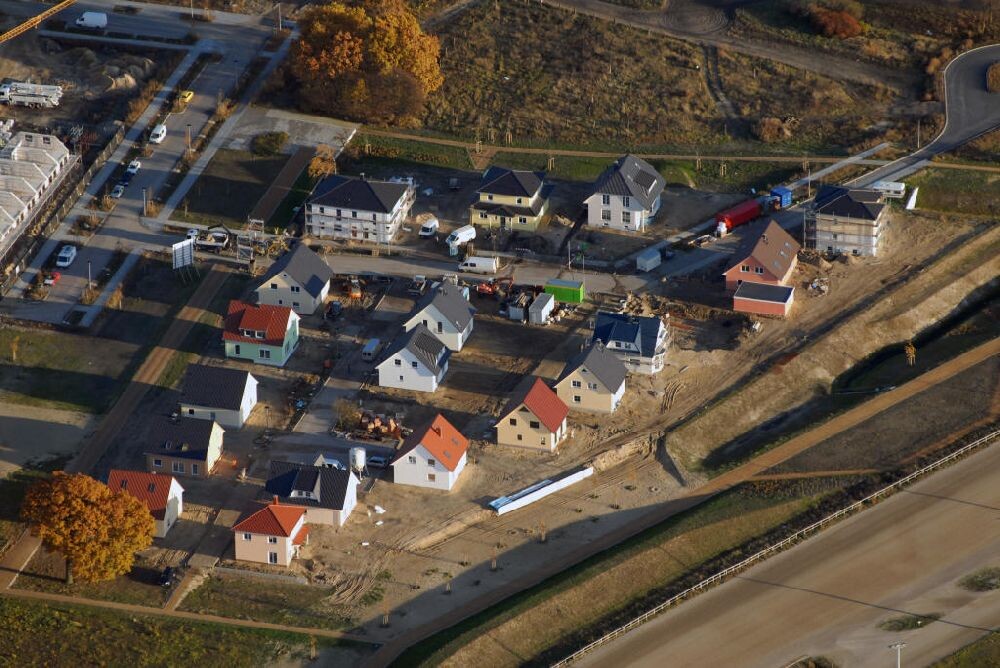
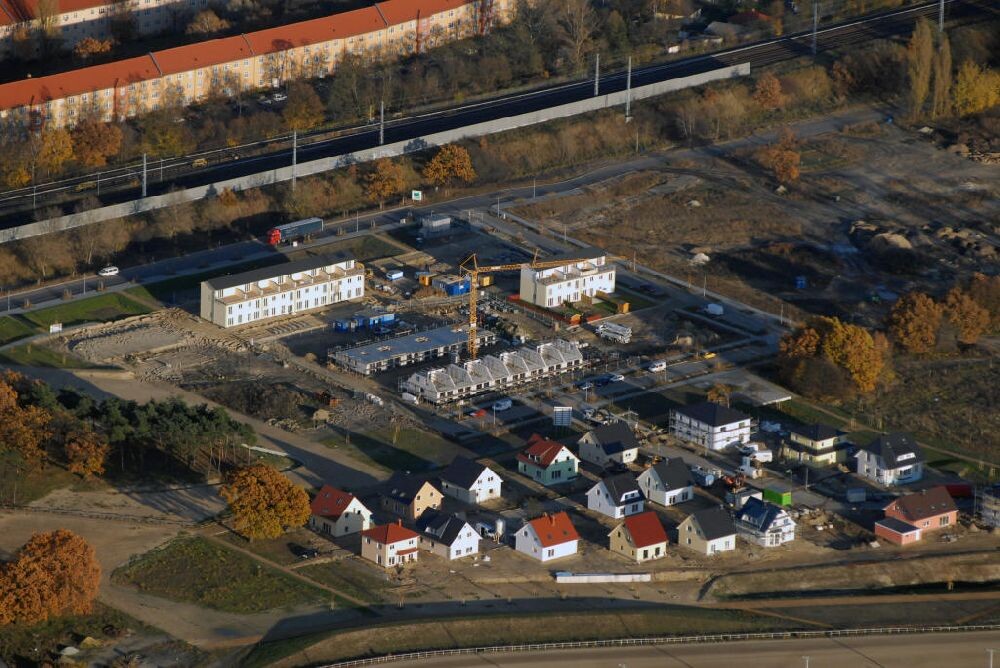
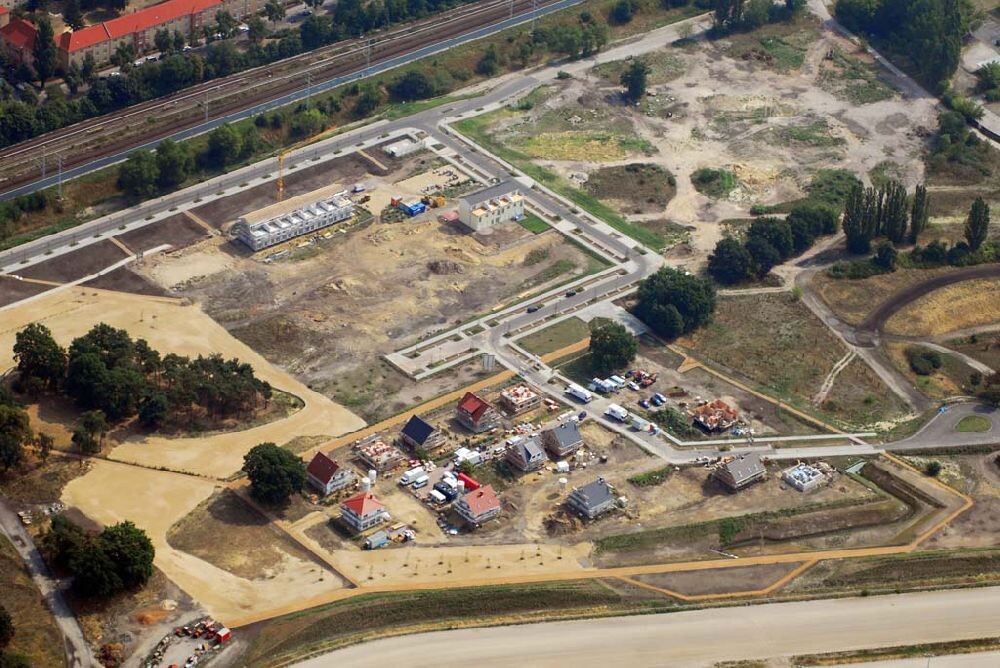
Now, around 2017 and after about four construction phases, this is what it looks like:
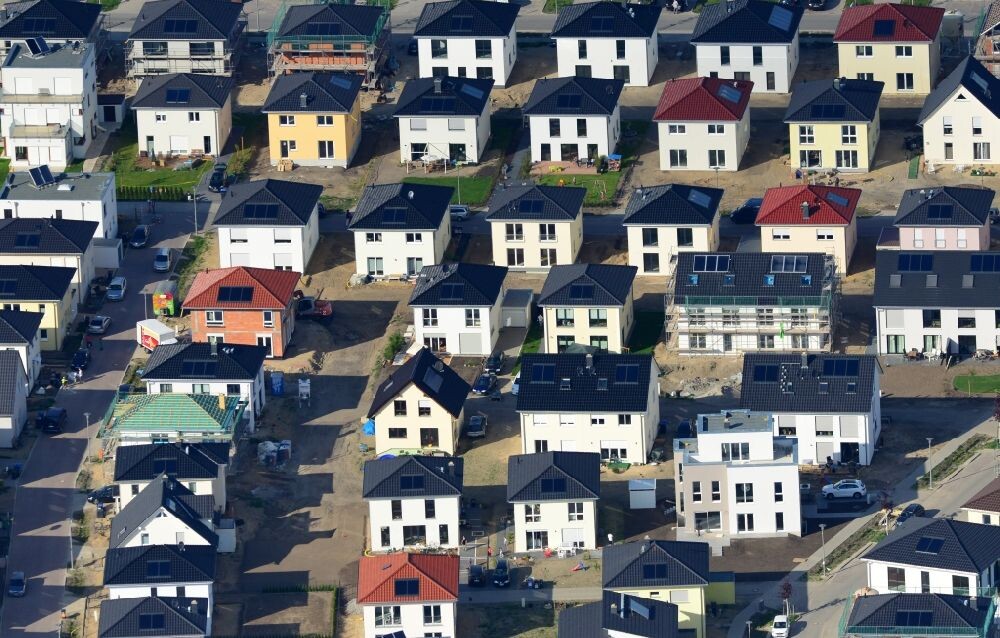
There was no real zoning plan there. Practically anything could be built that was available in the portfolio.
Combining and rearranging didn’t go perfectly smoothly but it’s alright...
Regards, Mycraft
It used to be a huge site in an old district of East Berlin (former military area and restricted zone).
In 2006, things still started off quite reasonably. In the end, there are now around 500 houses. What’s interesting is that each year the plots got smaller, but the houses built on them became larger.
This was the beginning in 2006, as mentioned, still quite moderate:
Now, around 2017 and after about four construction phases, this is what it looks like:
There was no real zoning plan there. Practically anything could be built that was available in the portfolio.
Fuchur schrieb:
OT: I would feel claustrophobic with these plots. The best ones are almost always in the shade...
Combining and rearranging didn’t go perfectly smoothly but it’s alright...
Regards, Mycraft
I don’t understand the argument. So, it’s fine to rent and look at prison-like walls (and line the landlord’s pockets), but owning property like that isn’t acceptable (not to mention that 440 sqm (4,736 sq ft) has little to do with a prison)? Hm, I don’t know. With 440 sqm (4,736 sq ft) you have a garden (even if it’s small) and a sunny terrace. Why that should be worse than an apartment in the city, someone needs to explain to me. Because in most cases, that’s exactly the choice: an apartment with all its drawbacks (noise from neighbors because they’re selfish, have different schedules, or the building structure is too thin; constant antisocial behavior regarding garbage cans; parking situation; generally MUCH smaller terraces or balconies—not everyone lives in a penthouse, etc.) versus a small but nice plot of land in the commuter belt, a more child-friendly environment, and the freedom to design room layouts including outdoor spaces and terraces. So I wouldn’t have to think twice about that. And no one says that if larger plots were available for a similar price, they wouldn’t choose the bigger one—rather, some purposely pick the smaller one. But some seem to misjudge the situation here: 1. You won’t find anything in the 500 sqm to 800 sqm range (5,382 to 8,611 sq ft) unless you move more than 60 km (37 miles) out with hardly any infrastructure. 2. If you’re lucky enough to find something like that, the plots go under auction, starting bids at at least €400/sqm (about $44/sq ft) — then end up well above €500/sqm (about $55/sq ft). I’ve participated three times. 3. Available infill lots don’t go under €500/sqm (about $55/sq ft), sometimes with four-figure per square meter prices. 4. Locals-only models make it nearly impossible, even for young families working and living in the region for over ten years, to get building plots in new development areas in neighboring municipalities. 5. The situation with existing properties is no different; owners aren’t dumb and know the prices, sometimes charging the above prices even for tear-downs.
I find it difficult to create a fictional ideal world, compare it to reality, and then conclude that only fiction would be a real option. Come to Franconia (or Bavaria) and try your luck. Then try searching for 500 to 600 sqm (5,382 to 6,458 sq ft) for your family for five years and see how that time window slowly closes. Then we’ll talk again. And please spare me comments like “up here in the North...” I’m from Lower Saxony myself, have family up there, and know the differences. But that doesn’t help me down here...
Sorry, but that’s a bit of a sore spot for me...
I find it difficult to create a fictional ideal world, compare it to reality, and then conclude that only fiction would be a real option. Come to Franconia (or Bavaria) and try your luck. Then try searching for 500 to 600 sqm (5,382 to 6,458 sq ft) for your family for five years and see how that time window slowly closes. Then we’ll talk again. And please spare me comments like “up here in the North...” I’m from Lower Saxony myself, have family up there, and know the differences. But that doesn’t help me down here...
Sorry, but that’s a bit of a sore spot for me...
Maybe there will come a time when it becomes clear that detached single-family houses (SFHs) are simply no longer feasible or practical in densely populated areas.
There is already a shortage of housing in some places. Isn’t it then misguided to designate new development areas exclusively for SFHs?
There is already a shortage of housing in some places. Isn’t it then misguided to designate new development areas exclusively for SFHs?

Alex85 schrieb:
There is already a shortage of housing in some areas. Isn’t it counterproductive, then, to designate new development areas only for single-family homes? Probably. Then places like this will end up filled with skyscrapers, like in New York or similar cities.
Alex85 schrieb:
There is already a shortage of housing in some areas. Would it not be misguided, then, to designate new development areas only for single-family homes? What would be the alternative, or how could a solution look like?
ruppsn schrieb:
What would be the alternative or what could a solution look like?Build multi-family houses or at most townhouses.
Single-family homes in the city will simply no longer be available.
Eventually, expectations will change – ordinary people won’t be able to afford a single-family home in or near the city. There is already outrage about this shift, and in response, plots are being made smaller or ineffective measures like homebuyer subsidies are introduced. But single-family lots smaller than 400cm (157 inches) are no longer feasible; soon it will mostly be semi-detached houses or townhouses, until there are only apartments left.
It’s a logical progression when land in urban areas keeps getting more expensive.
In that case, single-family homes in or near the city will simply become obsolete.
C
Caspar202029 Mar 2018 08:45ruppsn schrieb:
440sqm (4740 sq ft)That is true luxury. Around here, rabbit hutches with 110sqm (1184 sq ft) of living space spread over three floors without a basement are sold on 144sqm (1550 sq ft) plots. You can almost shake hands with your neighbors on both sides at the same time; and there are half new housing developments like that.
And they still sell quickly.
Similar topics