
Hello,
Currently, a basement rental apartment is being renovated here, and the interior plaster was applied about a week ago (it is still not completely dry in some areas). Now I have noticed a spot with crystal formation under a hopper window (which was also recently installed along with the windowsill), measuring about 30 cm x 10 cm (12 inches x 4 inches). A photo is attached.
What causes this? Is it a problem?
I also checked with a flashlight to see if there is any other sparkling area, but it is only at this spot. You can also see that the crystal formation is quite thick in most places. I estimate it to be about 2 to 3 mm (0.08 to 0.12 inches) at its thickest point.
Unfortunately, I don’t remember exactly what type of plaster was used.
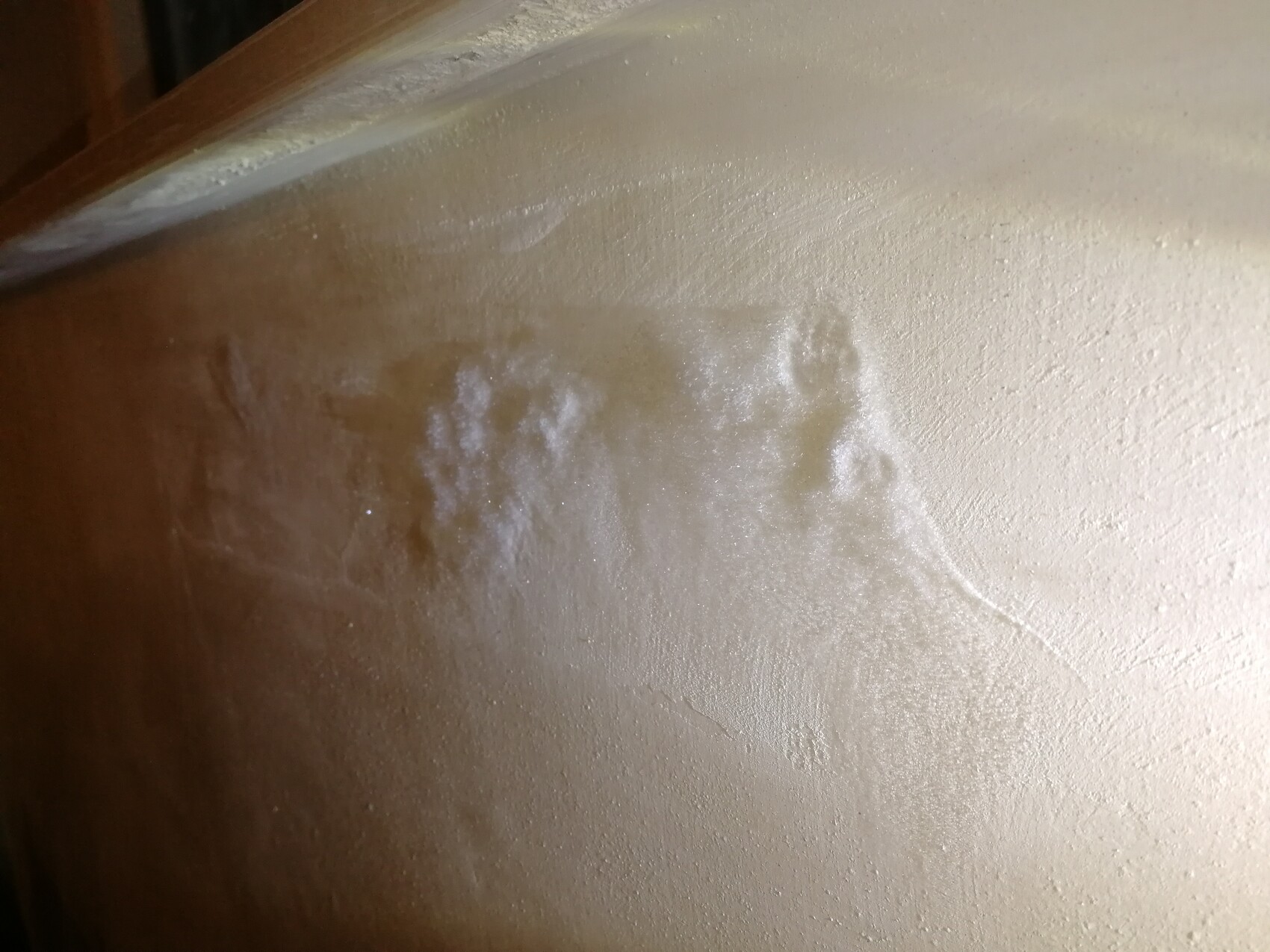
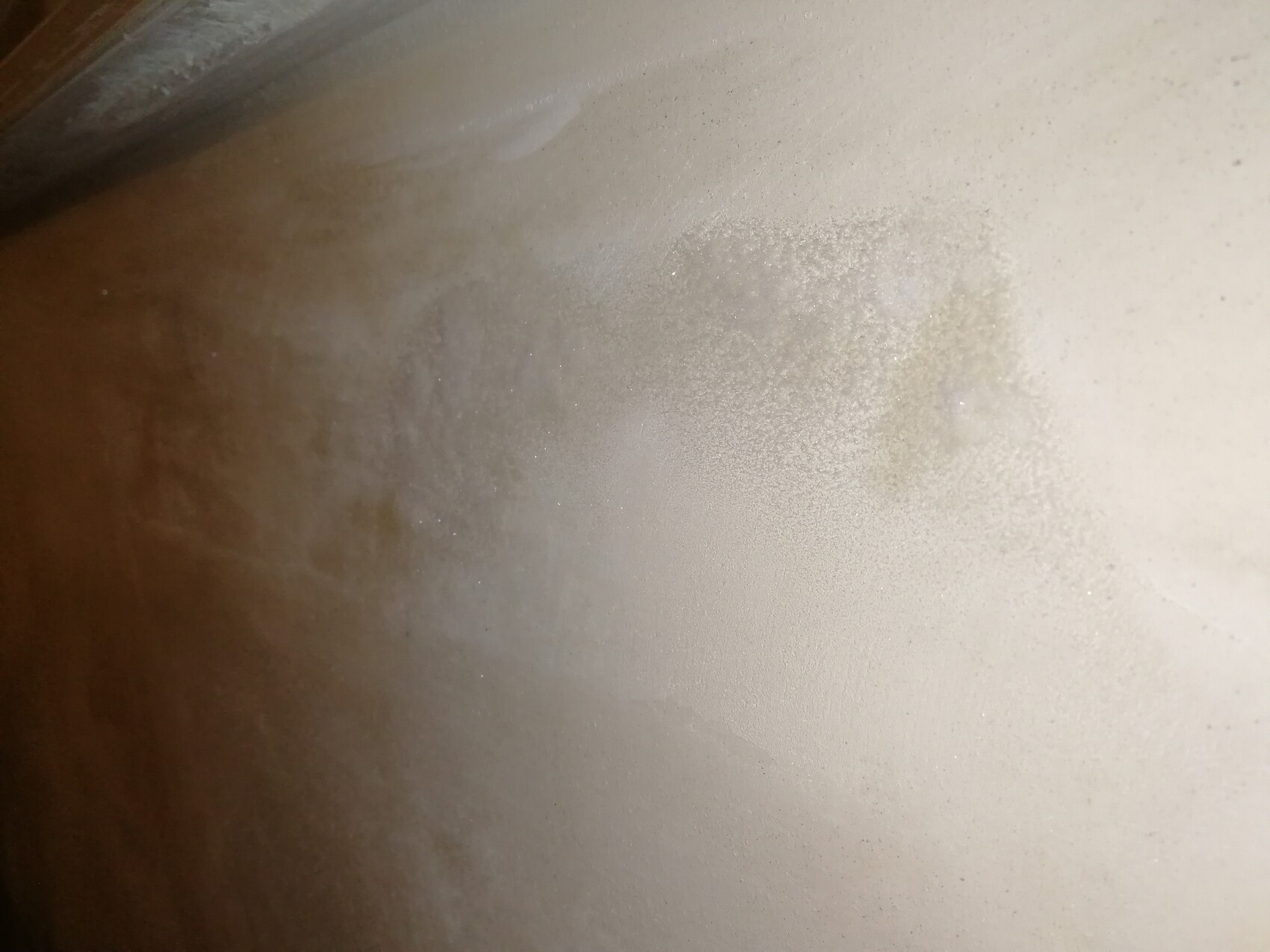
Currently, a basement rental apartment is being renovated here, and the interior plaster was applied about a week ago (it is still not completely dry in some areas). Now I have noticed a spot with crystal formation under a hopper window (which was also recently installed along with the windowsill), measuring about 30 cm x 10 cm (12 inches x 4 inches). A photo is attached.
What causes this? Is it a problem?
I also checked with a flashlight to see if there is any other sparkling area, but it is only at this spot. You can also see that the crystal formation is quite thick in most places. I estimate it to be about 2 to 3 mm (0.08 to 0.12 inches) at its thickest point.
Unfortunately, I don’t remember exactly what type of plaster was used.
M
Mottenhausen19 Dec 2018 12:20Cause: Moisture
Cause of the moisture: my guess is that light wells were screwed on from the outside, perforating the external basement waterproofing? Or during window installation, the seal between the basement exterior wall and the window was not properly connected or created?
Cause of the moisture: my guess is that light wells were screwed on from the outside, perforating the external basement waterproofing? Or during window installation, the seal between the basement exterior wall and the window was not properly connected or created?
It is an old house. Around that spot, the old plaster had also been damp.
The workers said this was due to the shaft near the window, which is not properly sealed or angled, allowing water to penetrate underneath the window. They said they would fix this later.
Isn't this usually done before plastering? Is the plaster ruined at that spot now?
The workers said this was due to the shaft near the window, which is not properly sealed or angled, allowing water to penetrate underneath the window. They said they would fix this later.
Isn't this usually done before plastering? Is the plaster ruined at that spot now?
M
Mottenhausen19 Dec 2018 12:43If it is rainwater, it would of course be ideal if it could drain into the shaft (holes on the side facing away from the house) or if no water could enter in the first place (making the shaft roof transparent to light). However, I don’t really think that’s the case; I would guess it’s moisture coming from the ground outside. Or was the basement possibly already excavated and renovated?
The basement has been renovated. Only at one spot is it still damp. As mentioned, when the old window was removed, it was also clear that the mortar underneath was completely crumbly at that point because moisture had always been seeping in there. From the outside, you can see a gap of about 1 cm (0.4 inches) between the wall/window and the shaft. The workers said this gap should be sealed and sloped.
Similar topics