
Hello everyone,
My wife and I are currently renovating her parents’ house, built in 1954. We are working on the upper floor and have now stripped most of it down to the structural shell.
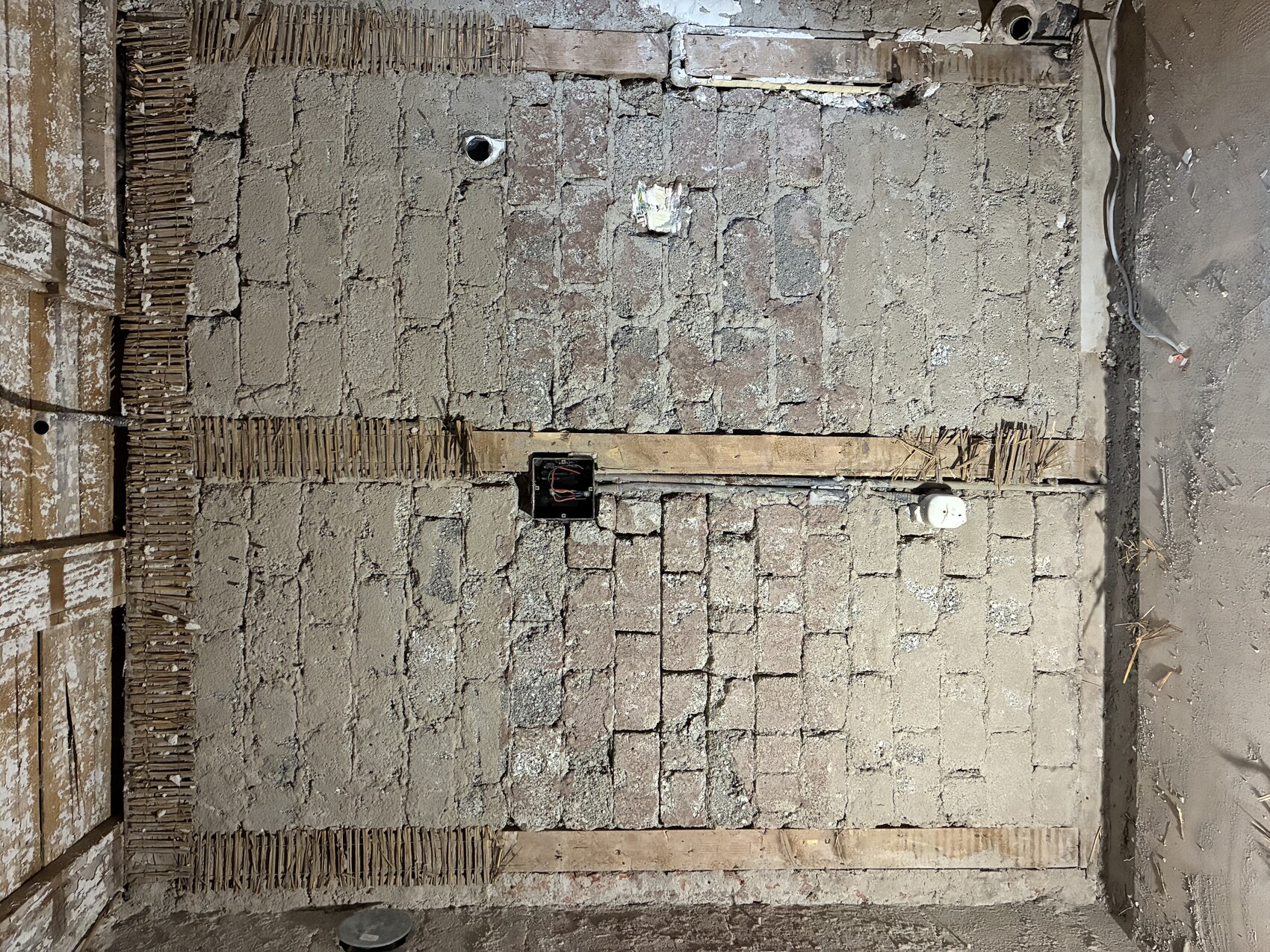
The plaster on the walls has almost fallen off on its own, so we removed it. The entire upper floor is constructed with wooden beams, and the spaces between the studs are filled with pumice stone blocks.
We now want to rebuild the walls using drywall, and I was thinking along these lines:
The wooden beams of the stud framework in the load-bearing walls (Image 1) are spaced 1 meter (3 feet) apart and are connected by a crossbeam at the ceiling and floor.
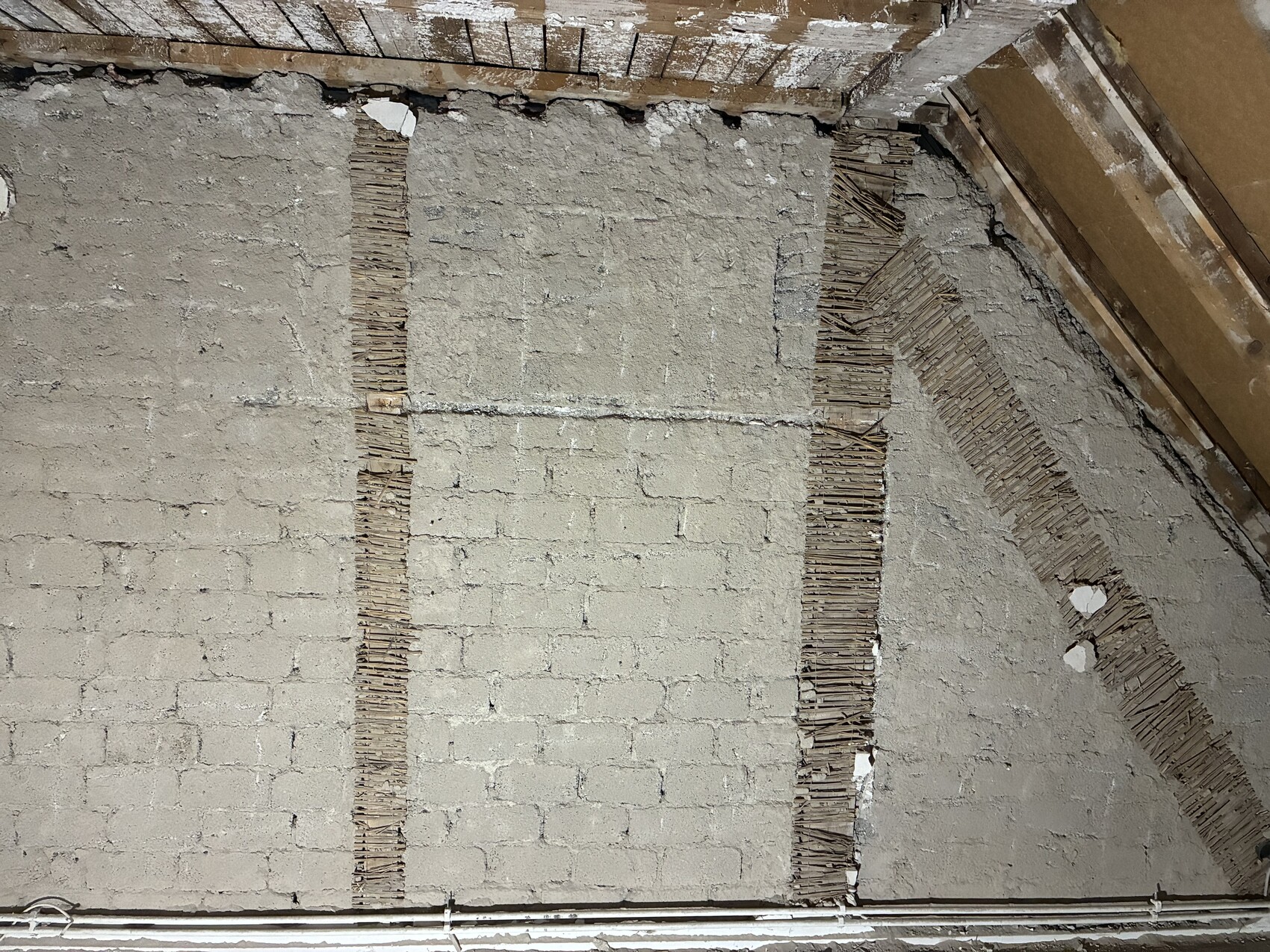
The two non-load-bearing walls (Image 2) were joined to the ceiling beam with horizontal beams, spaced approximately 1.2 meters (4 feet). I’m not sure yet whether there is a load-bearing beam in the floor because the old flooring is still in place. This will be removed next week, apart from the old floorboards.
For the renovation, I plan to install a cross battens framework on the existing beams using 40 x 60 mm (1.6 x 2.4 inches) planed timber, spaced 50 cm (20 inches) apart. The pumice stones will remain in place since they are still stable. The cavity created by the battens will be used for electrical installations and filled with insulation wool. On some walls, the wooden beams do not reach the entire length, so I would add a horizontal batten there and connect it with the cross battens.
For the wall cladding, I am thinking of double boarding: one layer of gypsum fiberboard for load-bearing of hanging loads plus one layer of drywall for easier surface finishing. This approach is based on the wooden house my parents had built in 2002 by their builder, where it was done the same way.
One point I am still uncertain about is the top and bottom battens. Should they be fixed to the floor and ceiling? Should they be installed with or without sealing tape?
What do you think? Is this construction stable enough?
I look forward to your suggestions and opinions.
My wife and I are currently renovating her parents’ house, built in 1954. We are working on the upper floor and have now stripped most of it down to the structural shell.
The plaster on the walls has almost fallen off on its own, so we removed it. The entire upper floor is constructed with wooden beams, and the spaces between the studs are filled with pumice stone blocks.
We now want to rebuild the walls using drywall, and I was thinking along these lines:
The wooden beams of the stud framework in the load-bearing walls (Image 1) are spaced 1 meter (3 feet) apart and are connected by a crossbeam at the ceiling and floor.
The two non-load-bearing walls (Image 2) were joined to the ceiling beam with horizontal beams, spaced approximately 1.2 meters (4 feet). I’m not sure yet whether there is a load-bearing beam in the floor because the old flooring is still in place. This will be removed next week, apart from the old floorboards.
For the renovation, I plan to install a cross battens framework on the existing beams using 40 x 60 mm (1.6 x 2.4 inches) planed timber, spaced 50 cm (20 inches) apart. The pumice stones will remain in place since they are still stable. The cavity created by the battens will be used for electrical installations and filled with insulation wool. On some walls, the wooden beams do not reach the entire length, so I would add a horizontal batten there and connect it with the cross battens.
For the wall cladding, I am thinking of double boarding: one layer of gypsum fiberboard for load-bearing of hanging loads plus one layer of drywall for easier surface finishing. This approach is based on the wooden house my parents had built in 2002 by their builder, where it was done the same way.
One point I am still uncertain about is the top and bottom battens. Should they be fixed to the floor and ceiling? Should they be installed with or without sealing tape?
What do you think? Is this construction stable enough?
I look forward to your suggestions and opinions.
Similar topics