
Hello,
I am currently considering creating a driveway in the garden; at the moment, there is a wall.
The height difference is about 1.80m (5 ft 11 in) ± up to the front door.
I have created two diagrams to illustrate this a bit.
At first, I actually thought it would be possible to do everything manually, but I believe that won’t work out.
What kind of companies handle projects like a driveway or slope without paving?
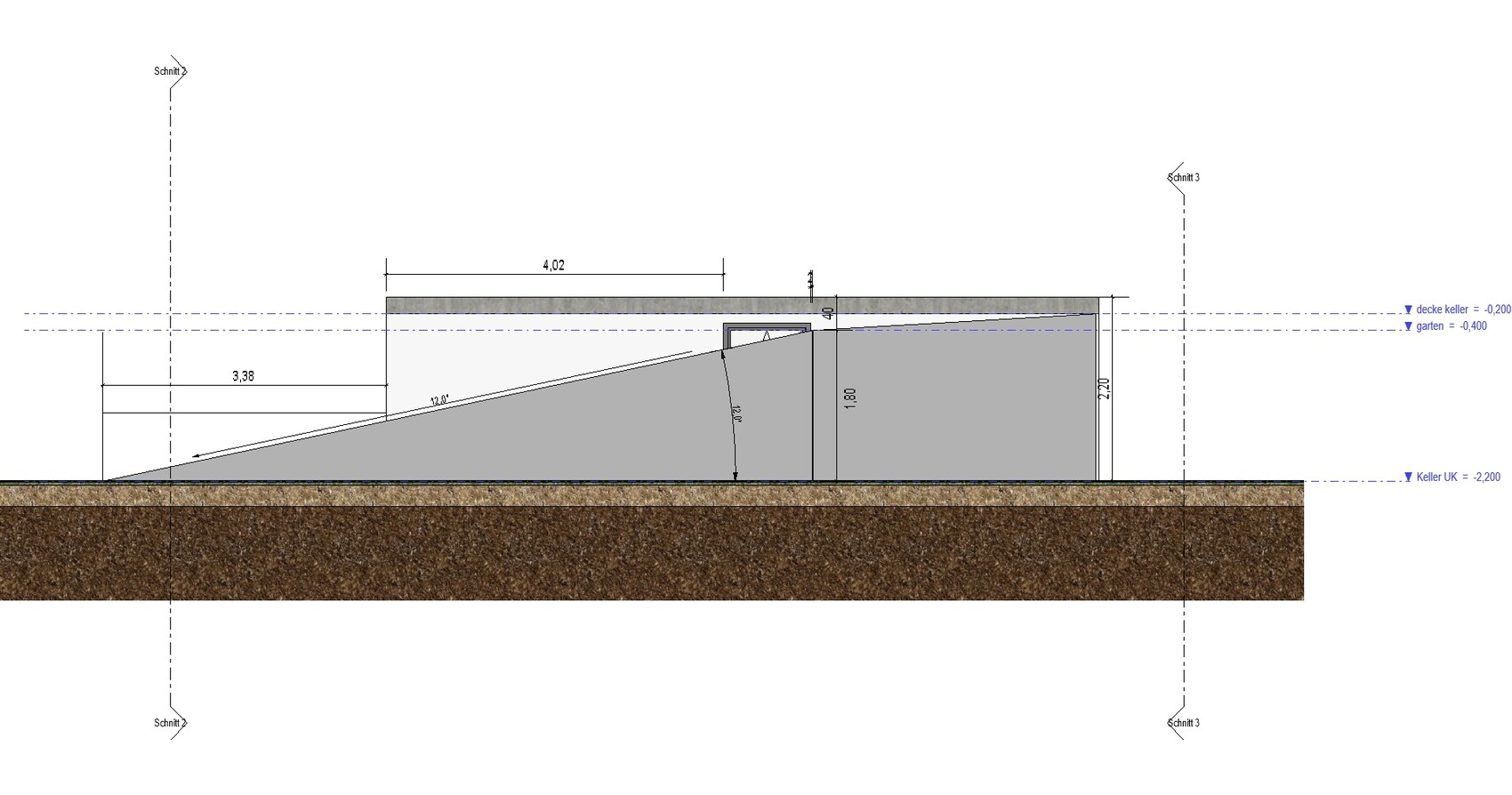
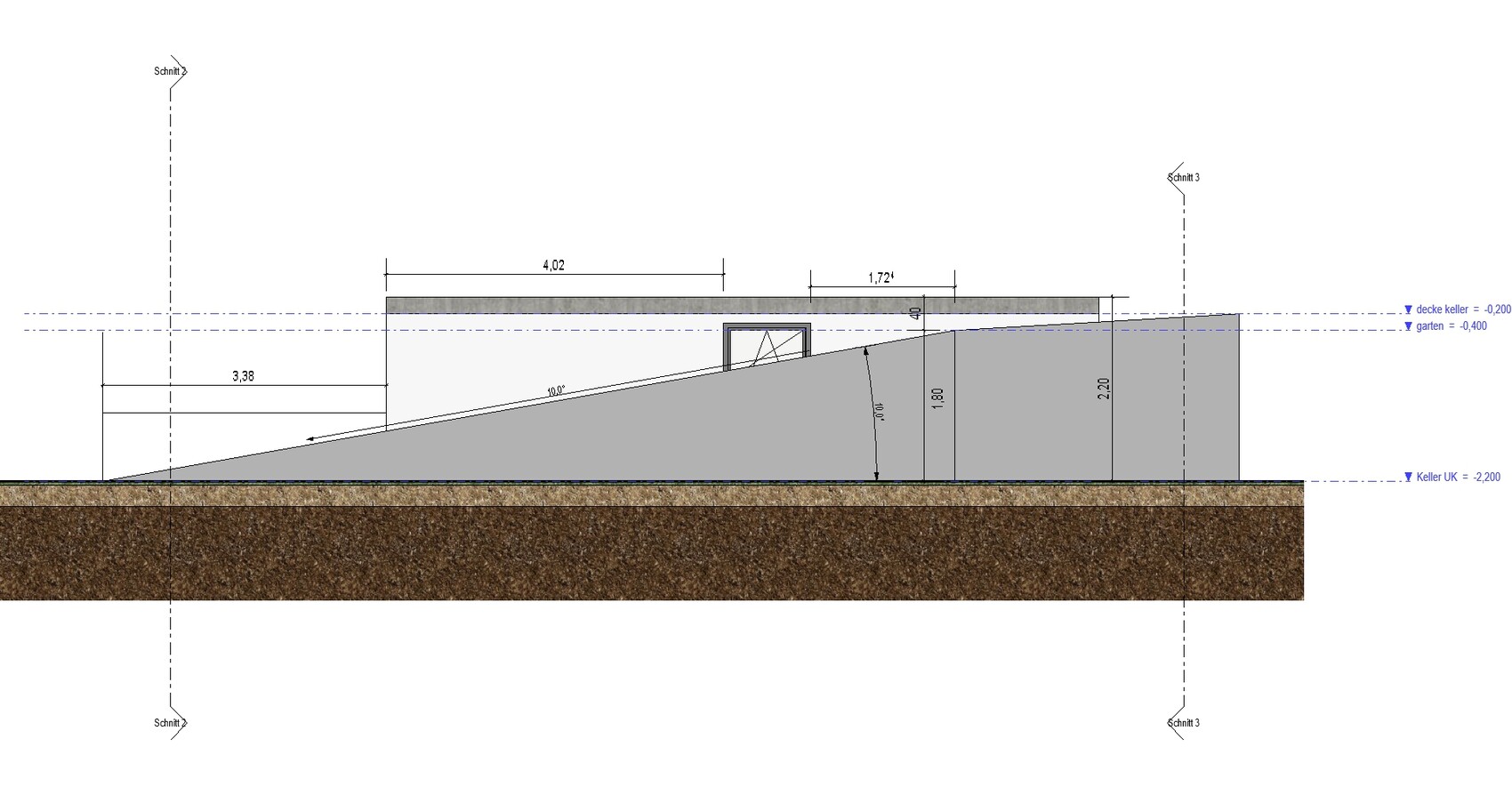
I am currently considering creating a driveway in the garden; at the moment, there is a wall.
The height difference is about 1.80m (5 ft 11 in) ± up to the front door.
I have created two diagrams to illustrate this a bit.
At first, I actually thought it would be possible to do everything manually, but I believe that won’t work out.
What kind of companies handle projects like a driveway or slope without paving?

SarahMüller schrieb:
I am currently considering creating a driveway in the garden; so far, there is a wall.
The height difference is unfortunately about 1.80m (6 feet) ± up to the front door.
I have created two graphics to illustrate it a bit. Even the rule that a picture is worth a thousand words apparently has exceptions.
Maybe you should consider expressing yourself in full sentences (?)
https://www.instagram.com/11antgmxde/
https://www.linkedin.com/company/bauen-jetzt/
W
WilderSueden7 Nov 2023 08:43Have you already asked this question in the green forum, or do two people happen to have the same crazy idea?
It has already been mentioned that this is far too steep. Ramp angles, slope gradients, and in winter it would become a slippery slide.
It has already been mentioned that this is far too steep. Ramp angles, slope gradients, and in winter it would become a slippery slide.
S
Sunshine3877 Nov 2023 09:44Well, 15°C (59°F) is the usual standard for underground garages. In some cases, for smaller garages, 20°C (68°F) is also common.
K
KarstenausNRW7 Nov 2023 10:14Sunshine387 schrieb:
Well, 15 degrees is the usual standard for underground garages. In some cases for small garages, also 20 degrees.No, that’s not quite correct. It’s actually a 15% incline (percent, not degrees!). That equals roughly 8.5 degrees. Such a small symbol makes all the difference ;-)However, this only refers to the slope of the driving surface, not the incline at the entrance or exit ramps.
Additionally, if the incline exceeds 10%, there must be a flat driveway section at least 3 m (10 feet) long with a maximum slope of 5% between the public area and the ramp.
This means that the maximum effective angle for a car at the transition from flat to ramp is about 10%—around 6 degrees.
For ramps steeper than 10%, the crests must be flattened to half the slope over a length of 1.5 m (5 feet). For concave transitions (from flat to rising), the flattening must extend to 2.5 m (8 feet) with half the slope.
In summary: 12 degrees is 1.5 times steeper than what you typically find in public garages. Also, you would need about 4.5 m (15 feet) of flattening before and after the incline in total.

We also have a fairly long driveway leading to the house, with steps at a right angle to it, mainly for access during winter when it might be slippery—which has been rare so far.
We cover an elevation difference of just under 2 meters over a length of 12 meters (approximately 39 feet), resulting in a slope of about 17%.
I regularly drive this route with my car, especially when fully loaded after visiting the beverage store or the Swedish furniture retailer.
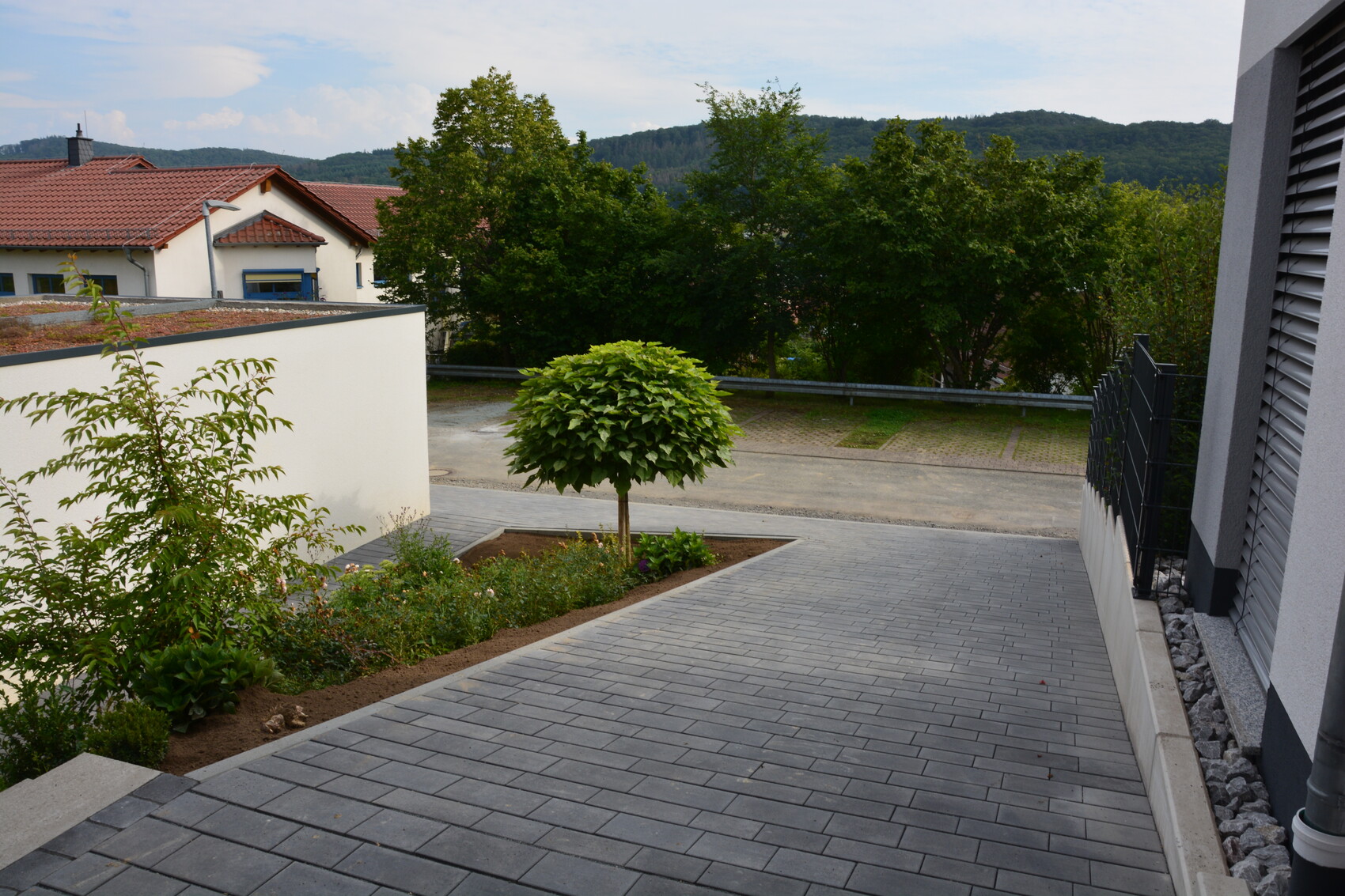
We cover an elevation difference of just under 2 meters over a length of 12 meters (approximately 39 feet), resulting in a slope of about 17%.
I regularly drive this route with my car, especially when fully loaded after visiting the beverage store or the Swedish furniture retailer.
S
Sunshine3877 Nov 2023 10:28KarstenausNRW schrieb:
No, that’s not quite correct. It’s a 15% grade (percent, not degrees!). That equals about 8.5 degrees. How much difference a small symbol can make ;-)
But that’s only the slope of the driving surface, not the entrance slope at the driveway ramp.
Please also add that for slopes over 10%, a flat approach of at least 3 m (10 feet) in length with a maximum slope of 5% must be provided (between the public area and the ramp).
This means that for a car, the maximum actual angle at the transition from flat to ramp is 10% grade—about 6 degrees.
For ramps steeper than 10%, the crests must be flattened at half the slope over a length of 1.5 m (5 feet). In cases of a “dip” (from flat to rising), this flattening must be done over 2.5 m (8 feet) at half the slope.
In summary: 12 degrees is 1.5 times as steep as what you find in a public garage. Plus, you would also need 4.5 m (15 feet) of flattening before and after the slope (total).Yes, that is of course correct. It’s still early in the morning…