
Hello,
We have the final inspection of our house next week. Today, we thoroughly examined the house and noticed that long cracks have appeared in the screed on the ground floor. Also, the corners at the patio doors are rounded.
The builder says these are normal stress cracks and nothing to worry about.
Do these cracks necessarily need to be repaired? What happens if we simply lay our vinyl flooring over them now?
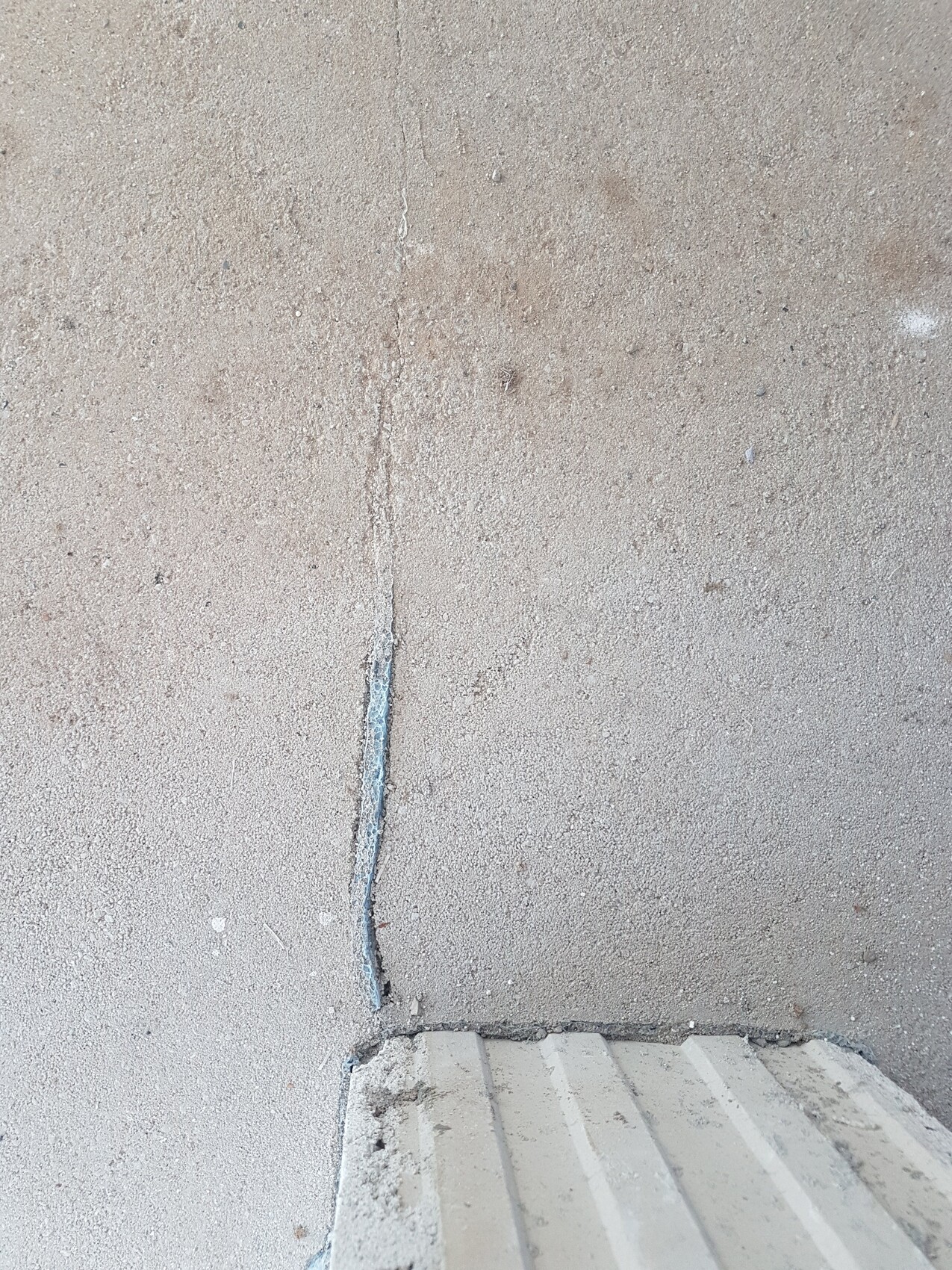
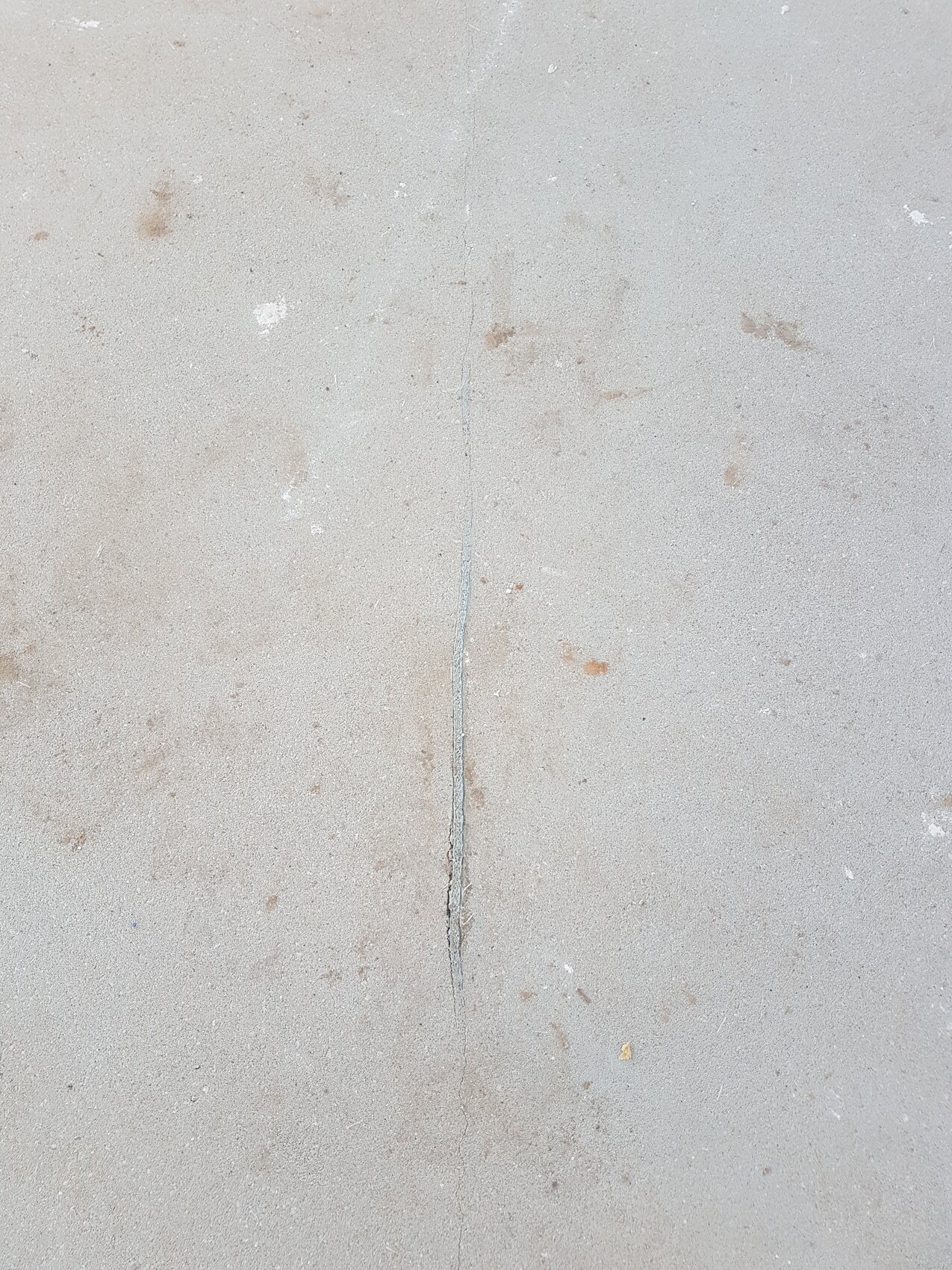
Also, does anyone know what these 'cables' (last picture) in the screed are?
Thank you in advance
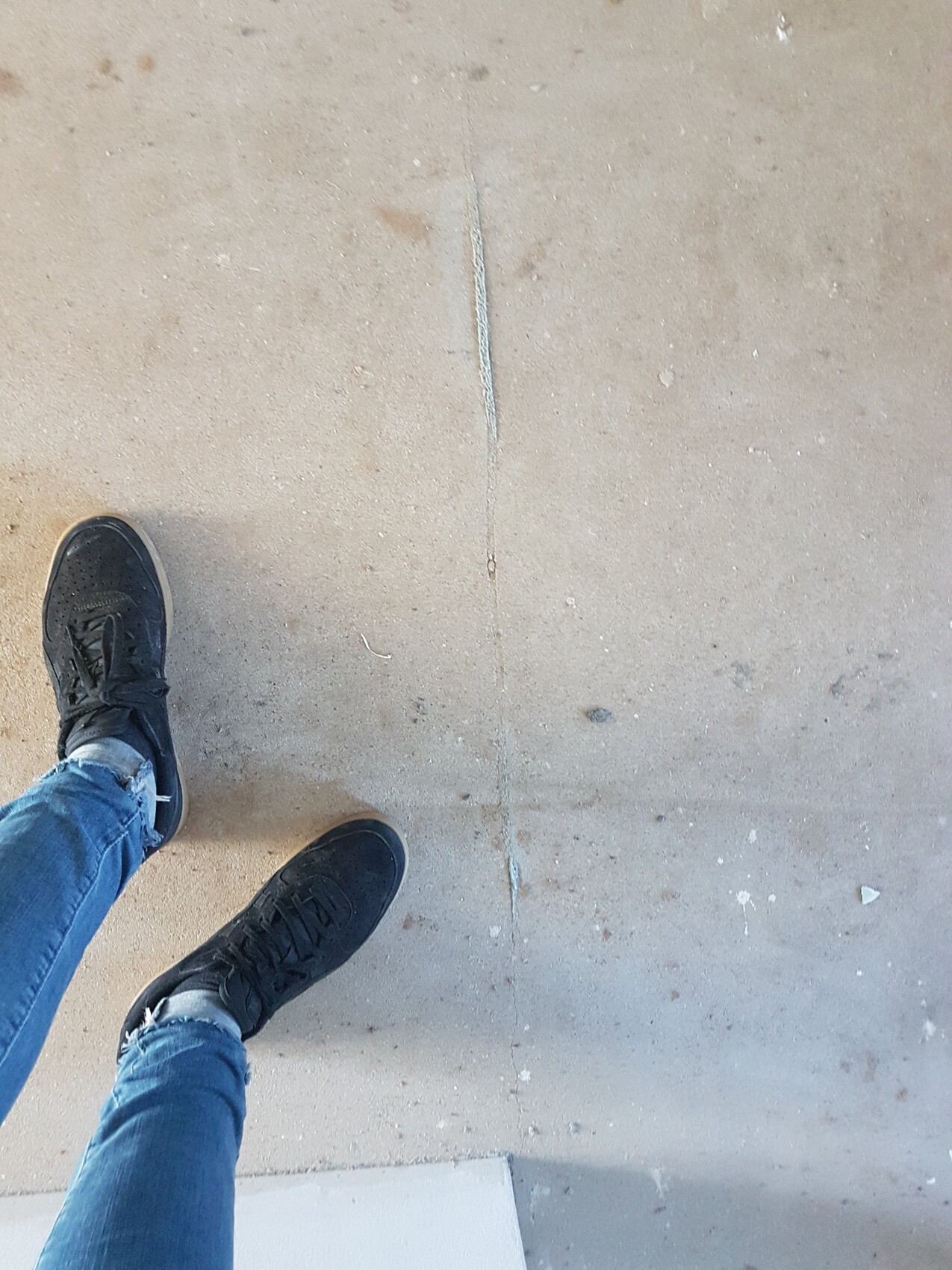
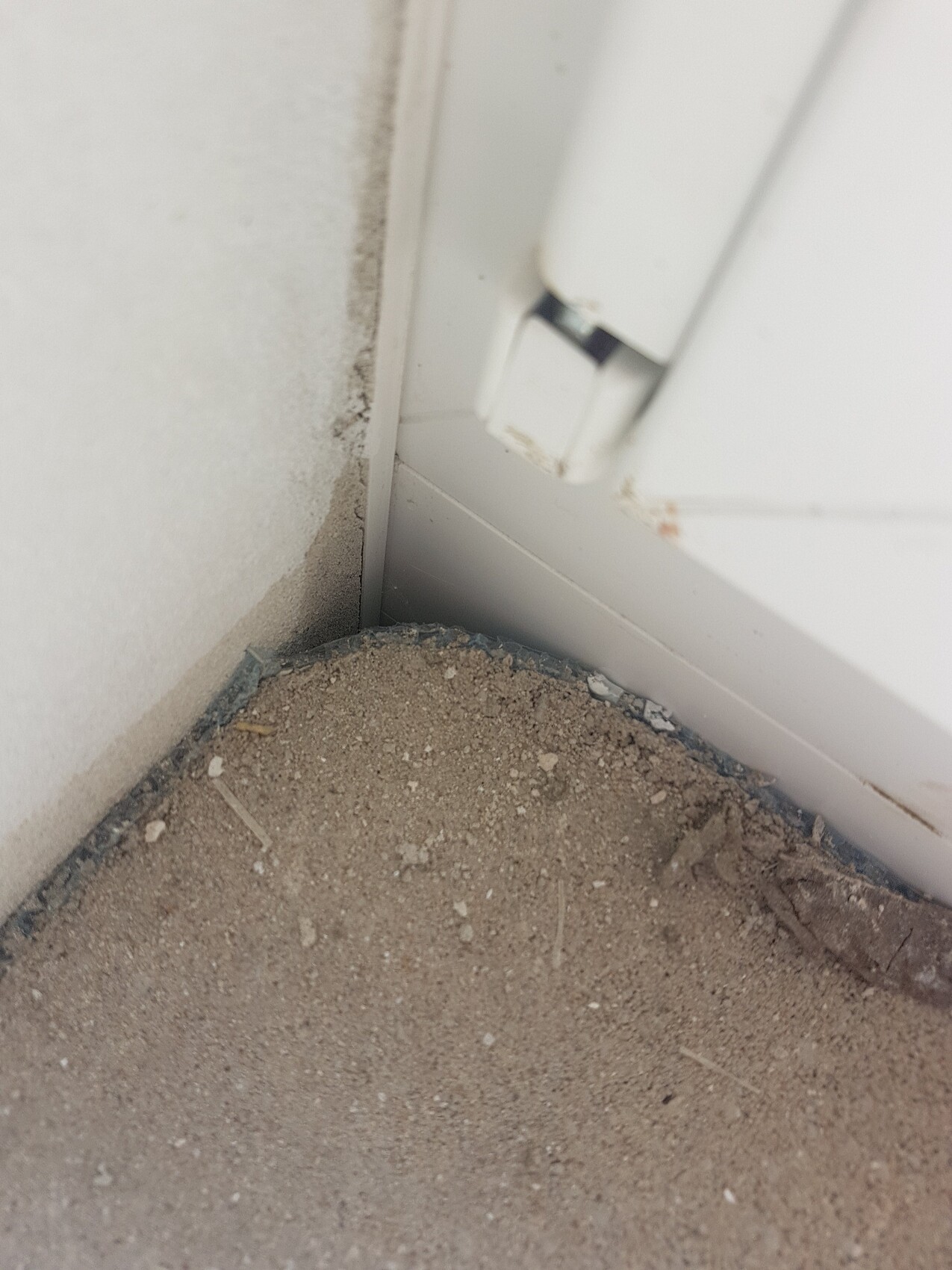

We have the final inspection of our house next week. Today, we thoroughly examined the house and noticed that long cracks have appeared in the screed on the ground floor. Also, the corners at the patio doors are rounded.
The builder says these are normal stress cracks and nothing to worry about.
Do these cracks necessarily need to be repaired? What happens if we simply lay our vinyl flooring over them now?
Also, does anyone know what these 'cables' (last picture) in the screed are?
Thank you in advance
N
nordanney6 May 2020 18:58Onik900 schrieb:
Cracks can be seen more clearly in these pictures.These are not cracks. You can even see the separation strip that divides the right section of the screed from the left section. It looks like this in cross-section:
The expansion joint in the top layer should also be placed there.
W
Wintersonne6 May 2020 19:00The "cracks" are located between the doors; I would say these are expansion joints, which should also be continued later in the flooring (there was a thread about this recently).
N
nordanney6 May 2020 21:09KlaRa schrieb:
The photo sizes are outrageous.
Please reduce them before uploading again; otherwise, even with a fast computer, we won’t be able to see all the photos until our grandchildren, who are currently in kindergarten, are having their First Communion! ???
They actually run smoothly. They load so fast you barely have time to blink in between. Maybe your internet isn’t cooperating right now.

First of all, I would like to apologize to the local community for my earlier “quick post” regarding the photo loading times, which I have since deleted! After all, we are only human ...
Addressing the questioner:
What we are seeing here is an edge insulation strip made of closed-cell foam, commonly used in screed installation to ensure movement joints around rising building elements.
In your case, the edge strip was apparently adjusted during the smoothing of the screed surface, at the point shown, probably to create a movement joint. This can happen, occurs thousands of times on all construction sites, and is not a serious issue.
The floor installer has to perform a mandatory cleaning sanding before doing any further work anyway. Since the cement layer above the visible edge strip is very thin, it will inevitably be removed during this cleaning sanding. This can happen and is not a problem!
What is not acceptable, despite some offhand comments made during the discussion, is the rounding off in one of the corners. The screed standard clearly states that the edge strip must lie flat, including in the corners. If the edge strip had been cut in the corner before screeding, the adjoining piece set at a right angle and the strips secured against slipping, there would have been a sharp corner formation in that area.
Simply laying tiles over this is not a serious solution and should not be taken as such! The floor installer should raise formal concerns about the screed work at this or these points.
Meaning: A written (!!) defect notice from the builder to the screed installer requesting correction.
Usually, any additional effort involved in the correction, if done by the floor installer (which is almost always the case), will be deducted from the screed installer’s invoice.
I am not a lawyer, but this procedure is standard on all construction sites and is legally acceptable.
This means: A written defect notification to the screed installer titled “DEFECT NOTICE” with a deadline for the correction of the improperly formed corner(s)!
--------------------
I hope these more detailed explanations have made up for my earlier quick post.
A nighttime greeting to everyone: KlaRa
Addressing the questioner:
What we are seeing here is an edge insulation strip made of closed-cell foam, commonly used in screed installation to ensure movement joints around rising building elements.
In your case, the edge strip was apparently adjusted during the smoothing of the screed surface, at the point shown, probably to create a movement joint. This can happen, occurs thousands of times on all construction sites, and is not a serious issue.
The floor installer has to perform a mandatory cleaning sanding before doing any further work anyway. Since the cement layer above the visible edge strip is very thin, it will inevitably be removed during this cleaning sanding. This can happen and is not a problem!
What is not acceptable, despite some offhand comments made during the discussion, is the rounding off in one of the corners. The screed standard clearly states that the edge strip must lie flat, including in the corners. If the edge strip had been cut in the corner before screeding, the adjoining piece set at a right angle and the strips secured against slipping, there would have been a sharp corner formation in that area.
Simply laying tiles over this is not a serious solution and should not be taken as such! The floor installer should raise formal concerns about the screed work at this or these points.
Meaning: A written (!!) defect notice from the builder to the screed installer requesting correction.
Usually, any additional effort involved in the correction, if done by the floor installer (which is almost always the case), will be deducted from the screed installer’s invoice.
I am not a lawyer, but this procedure is standard on all construction sites and is legally acceptable.
This means: A written defect notification to the screed installer titled “DEFECT NOTICE” with a deadline for the correction of the improperly formed corner(s)!
--------------------
I hope these more detailed explanations have made up for my earlier quick post.
A nighttime greeting to everyone: KlaRa