
ᐅ Cracks in the ceiling plaster around the chimney – what could be the cause?
Created on: 11 Jan 2022 15:31
B
basti009Hello,
I have the following situation:
Semi-detached house from 1971
Purchased in 2014 – ceiling was repainted
February 2021: flat roof renovation
The top floor ceiling is made of concrete.
Today, I happened to notice the following in one of the upper rooms:
Cracks in the ceiling plaster, but only in the area around the chimney – that is, behind the wall is the flue of the wood-burning stove, which has actually not been used for over a year.
I am pretty sure that the cracks were not there before the roof renovation, or I just didn’t notice them – after all, you don’t usually look up there every day.
Of course, it is possible that they were already there and the roof at the chimney was not completely waterproof?
They shouldn’t be new, as the roof was renovated just over a year ago.
Also, the plaster doesn’t look damp, nor does it seem to have been damp before, right?
Where could the cracks come from? They don’t bother me, and I would prefer not to do anything to the ceiling like repainting, replastering, or anything else – it still looks fine otherwise.
Does this look more like an acute issue?
Could the cracks have been caused by vibrations during the renovation? Some work on the roof did make the house feel like it shook.
Sorry for the way I’m explaining this, I’m not an expert. Since it is my property, I am just wondering if there might be a cause that needs fixing urgently. Thank you!
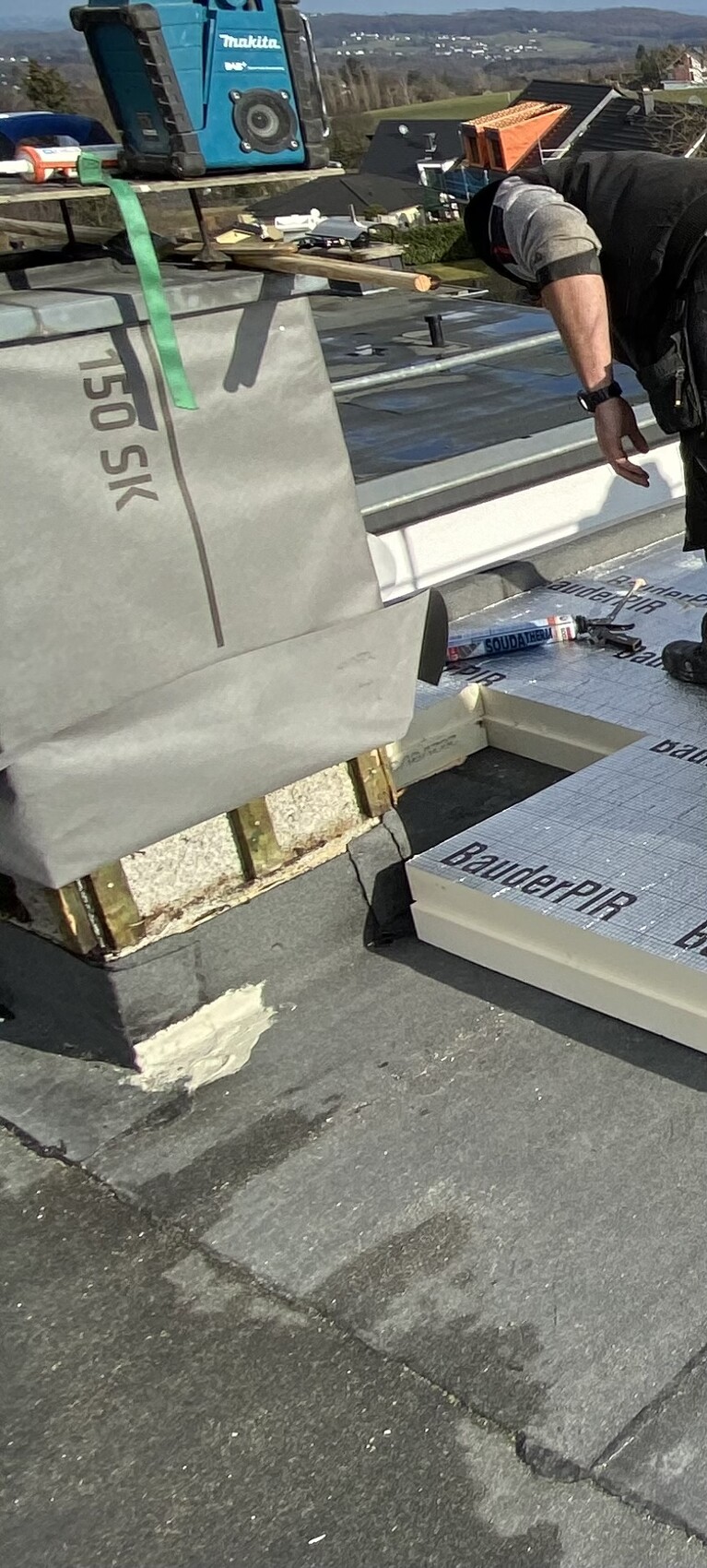
Attached are photos. The last one shows the top of the chimney during the renovation.
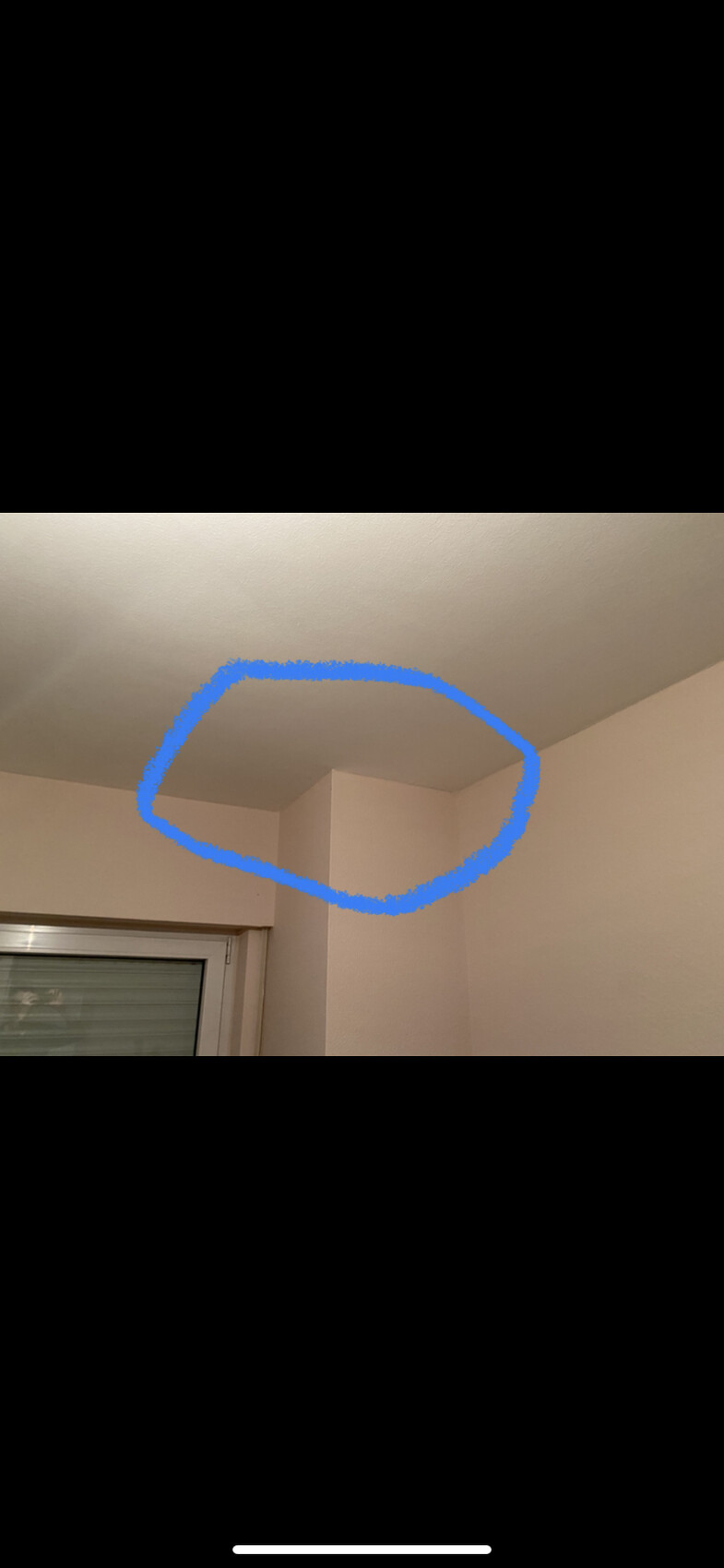
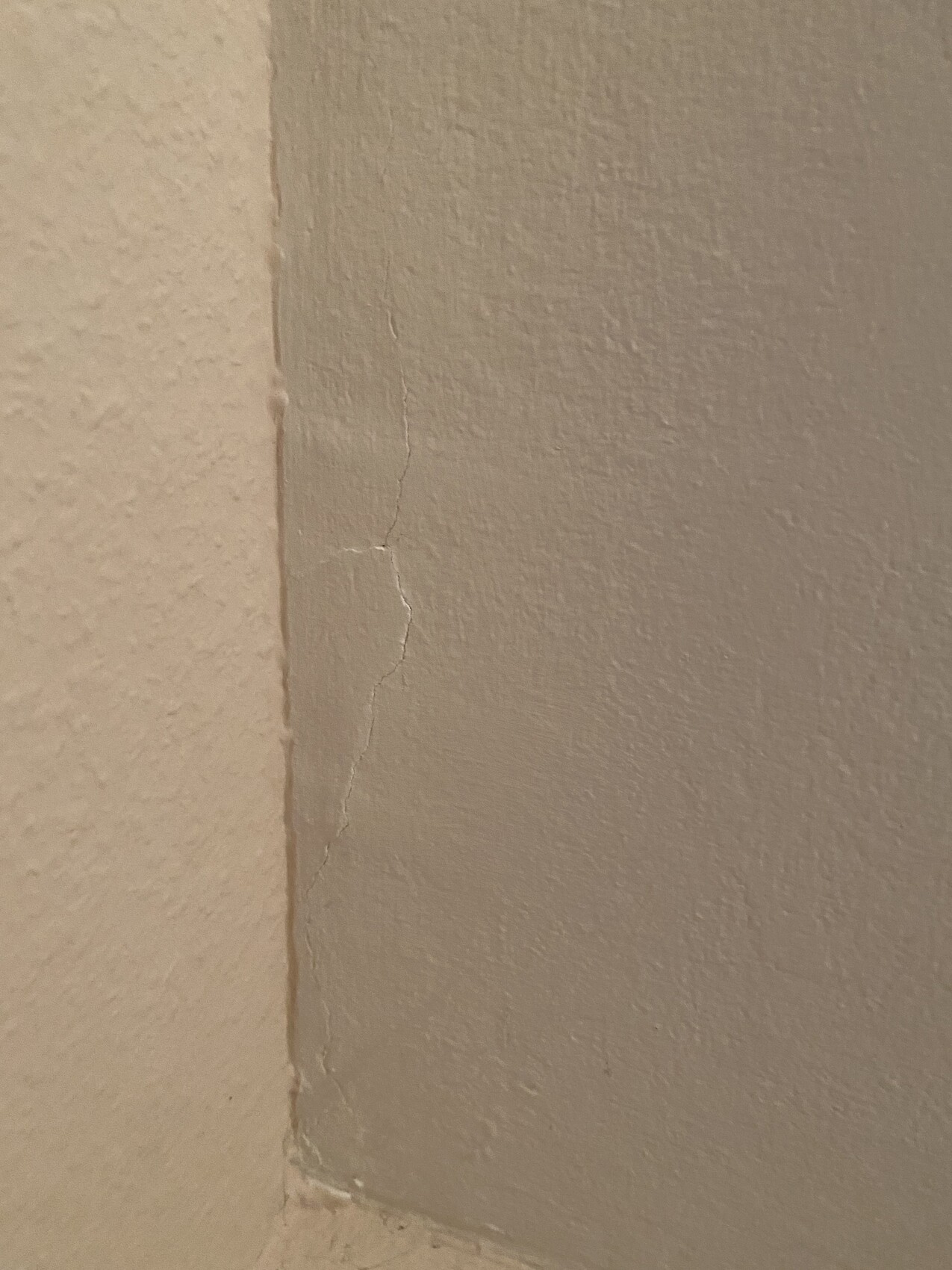
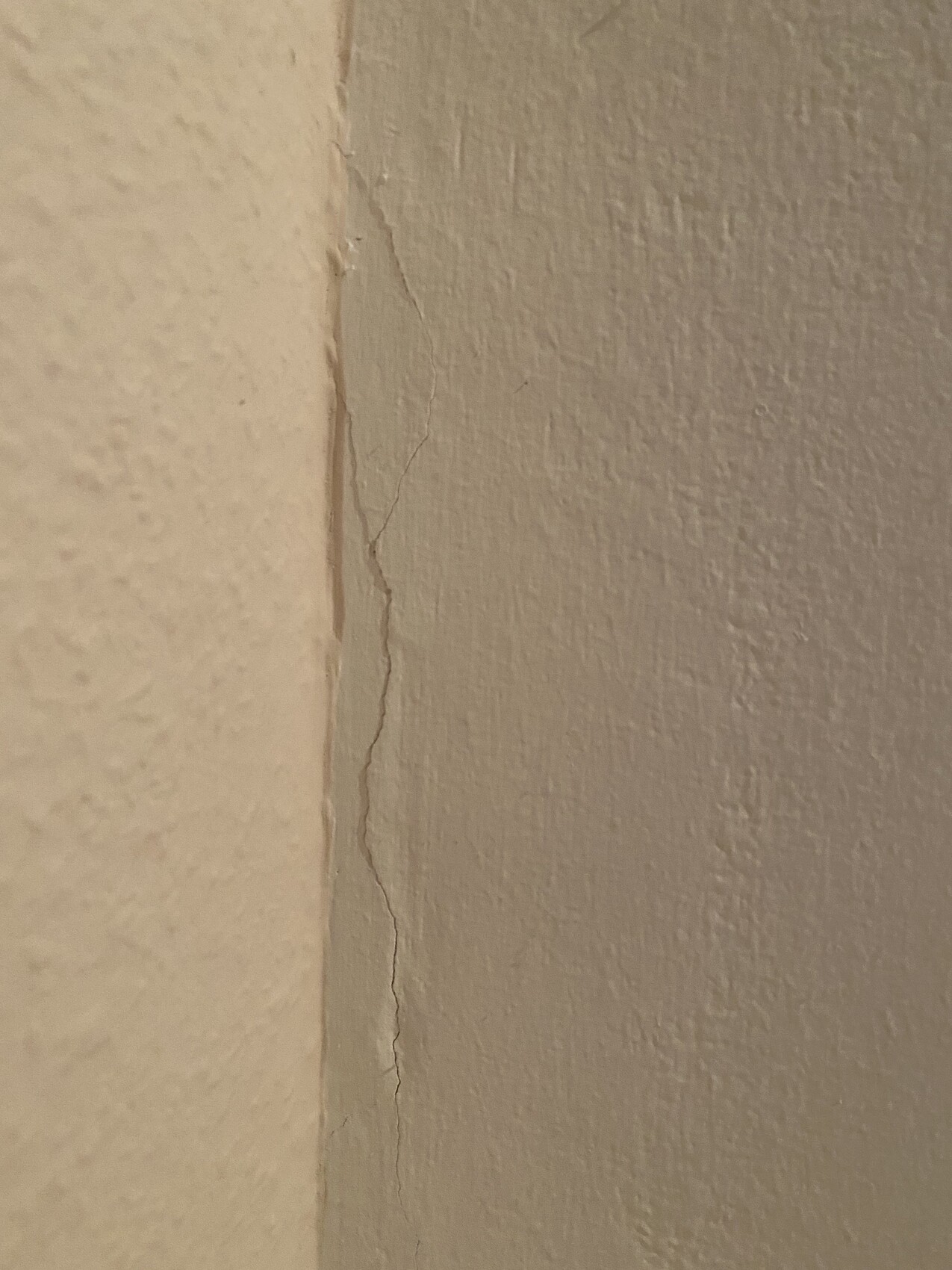
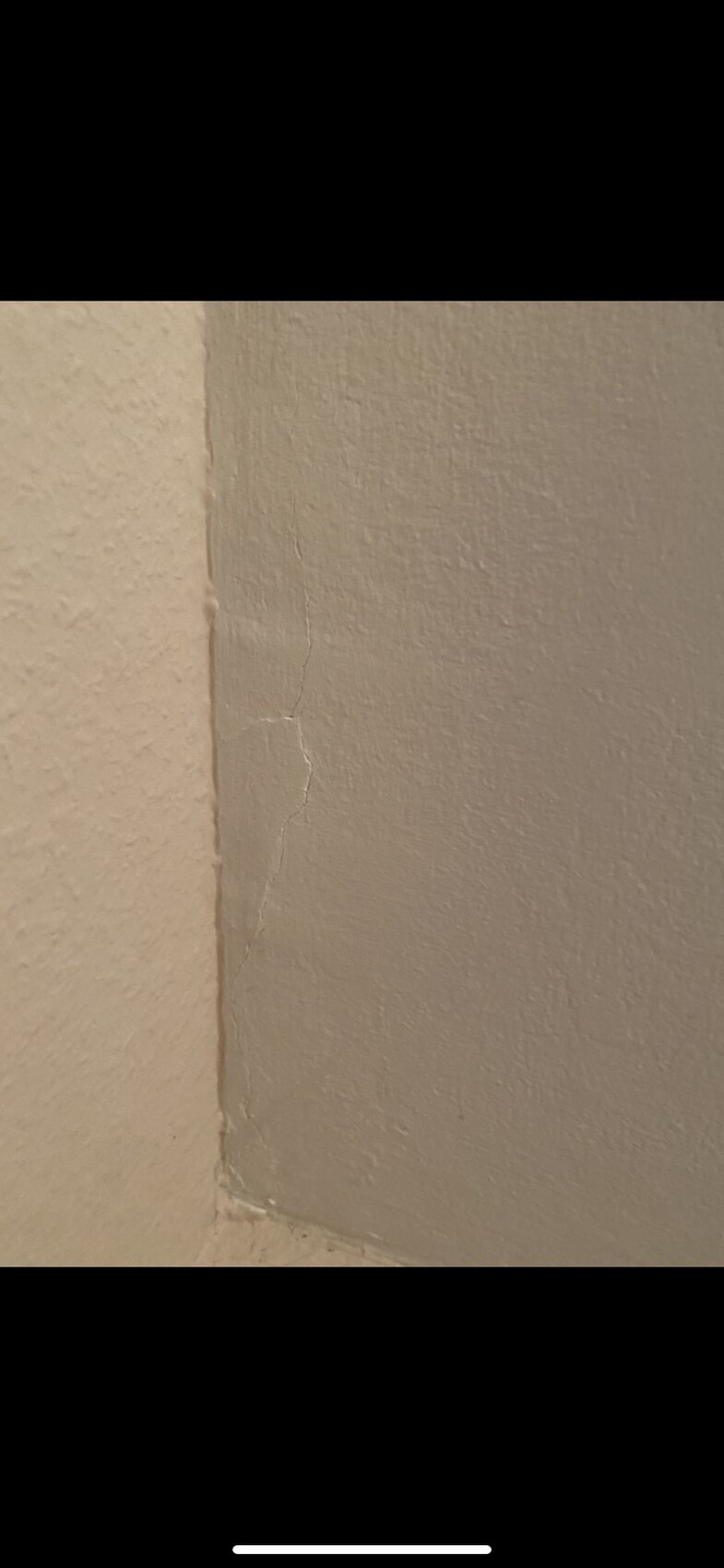
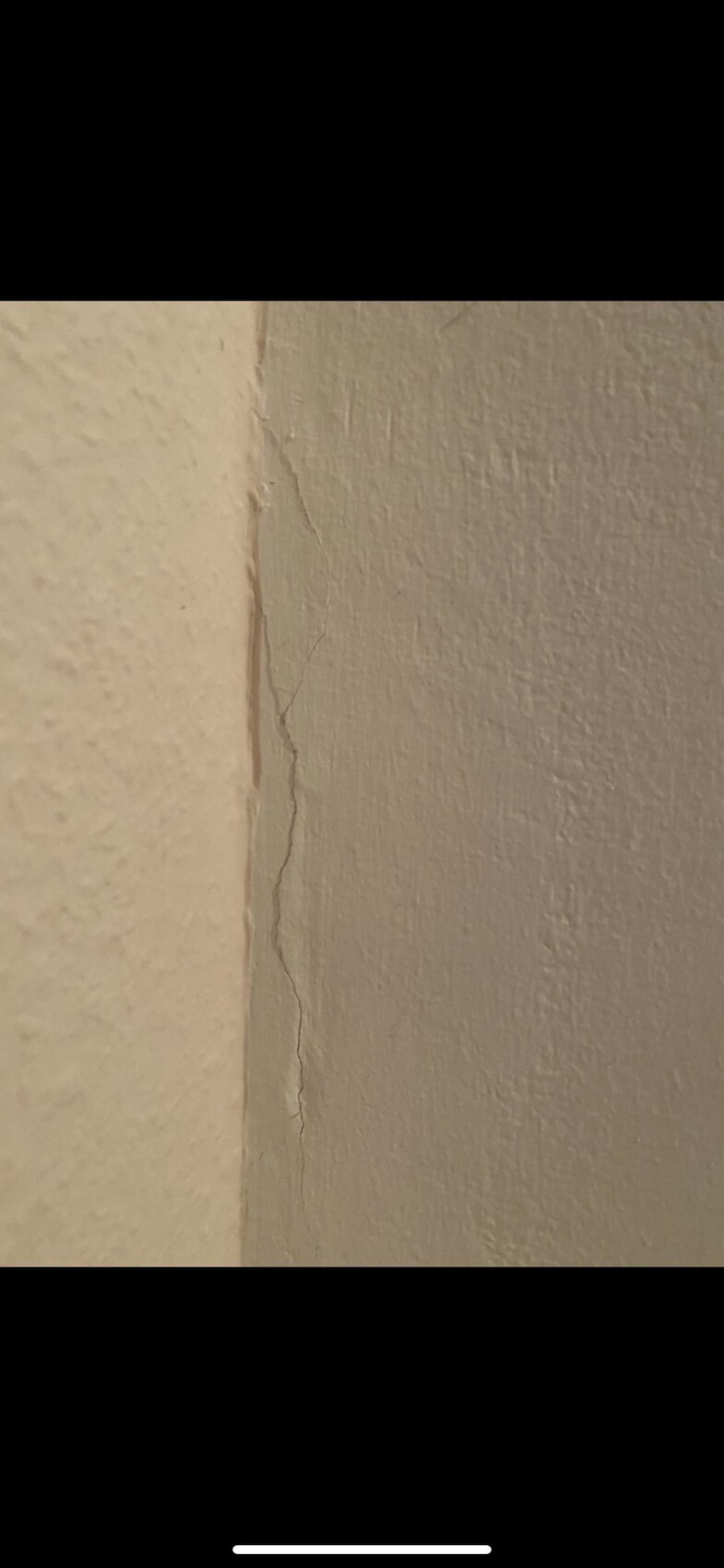
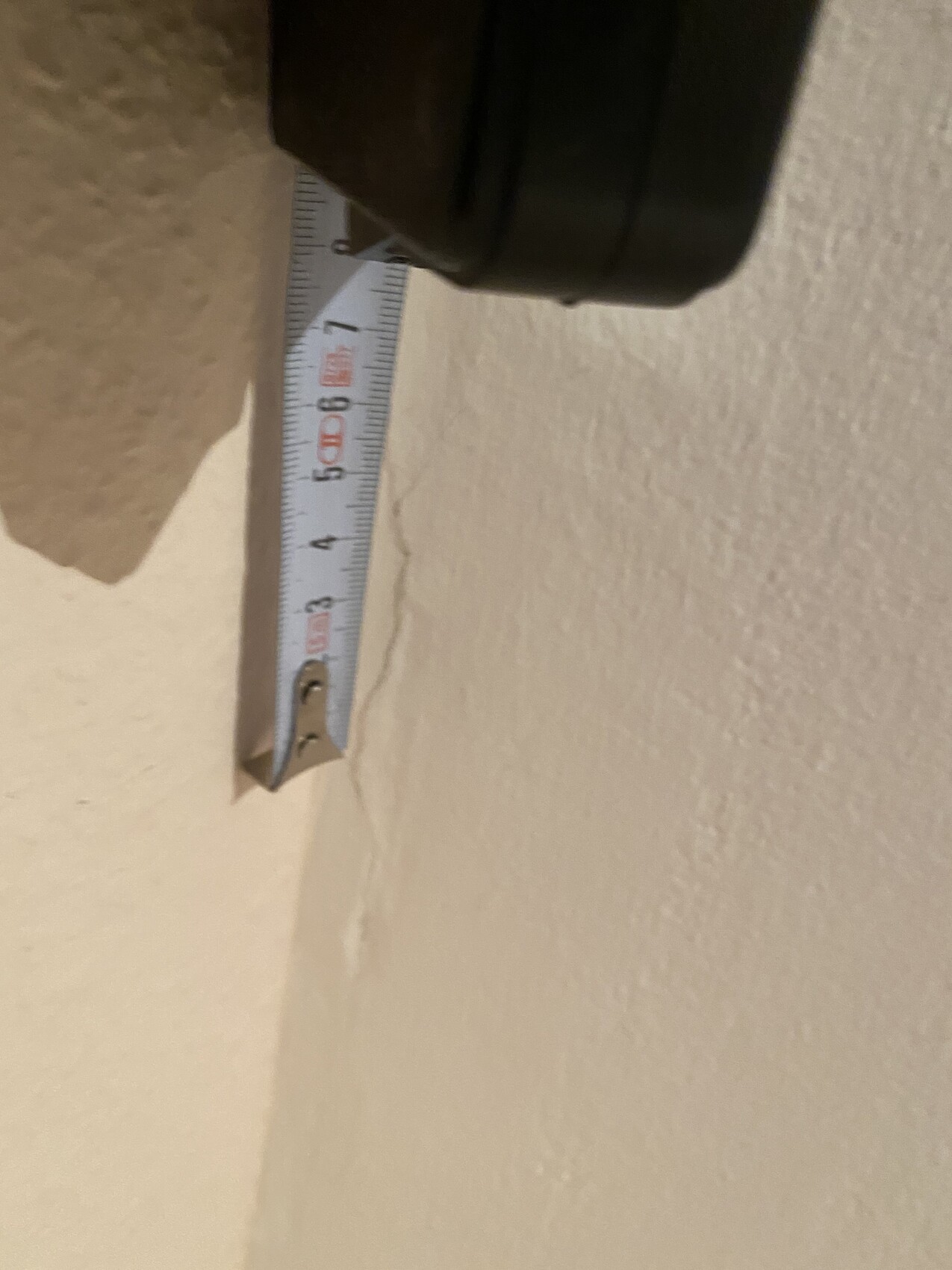
I have the following situation:
Semi-detached house from 1971
Purchased in 2014 – ceiling was repainted
February 2021: flat roof renovation
The top floor ceiling is made of concrete.
Today, I happened to notice the following in one of the upper rooms:
Cracks in the ceiling plaster, but only in the area around the chimney – that is, behind the wall is the flue of the wood-burning stove, which has actually not been used for over a year.
I am pretty sure that the cracks were not there before the roof renovation, or I just didn’t notice them – after all, you don’t usually look up there every day.
Of course, it is possible that they were already there and the roof at the chimney was not completely waterproof?
They shouldn’t be new, as the roof was renovated just over a year ago.
Also, the plaster doesn’t look damp, nor does it seem to have been damp before, right?
Where could the cracks come from? They don’t bother me, and I would prefer not to do anything to the ceiling like repainting, replastering, or anything else – it still looks fine otherwise.
Does this look more like an acute issue?
Could the cracks have been caused by vibrations during the renovation? Some work on the roof did make the house feel like it shook.
Sorry for the way I’m explaining this, I’m not an expert. Since it is my property, I am just wondering if there might be a cause that needs fixing urgently. Thank you!
Attached are photos. The last one shows the top of the chimney during the renovation.

K1300S schrieb:
It looks to me like they forgot to separate the plaster on the chimney flue from the plaster on the wall/ceiling using an edge cut (and acrylic). Not ideal but harmless.Could it be that this only appeared recently? The last painting was done 7 years ago. Plastered: no idea, we bought the house in 2014 and don’t know what was done before that. Year of construction 1971.The roof wasn’t insulated before? If the chimney now cools down but the rest is insulated, could that cause a stress crack? That might be possible.
In any case, it looks very harmless and safe!
How many cm (inches) of PIR insulation is that, 12-14? That should have a significant impact on the energy demand.
In any case, it looks very harmless and safe!
How many cm (inches) of PIR insulation is that, 12-14? That should have a significant impact on the energy demand.
TmMike_2 schrieb:
Was the roof not insulated before? If the chimney cools down now while the rest is insulated, could that cause a stress crack? That might be possible.
Anyway, it definitely looks very minor and harmless!
How many cm of PIR insulation is that, 12–14? That should have a significant impact on energy demand. There was insulation on it before as well, but I don’t know how old it is. Can you possibly tell from this?
Now there are 16 cm (6.3 inches) installed, which was enough to achieve a U-value qualifying for funding.
One more question:
The energy performance certificate from 2014 shows:
Energy efficiency class E (demand certificate) with a value of 133.
From 130 onwards, class D starts. About how much do you think the new roof has lowered that value? It should definitely be class D now, right?
Similar topics