
Hello everyone,
Our screed (with underfloor heating) from 1979 has cracks. Previously, tiles were glued on top. We would like to glue down parquet flooring and are wondering if the cracks need to be repaired beforehand. The cracks run across the entire screed, always from wall to wall. Is it possible to assess this remotely?
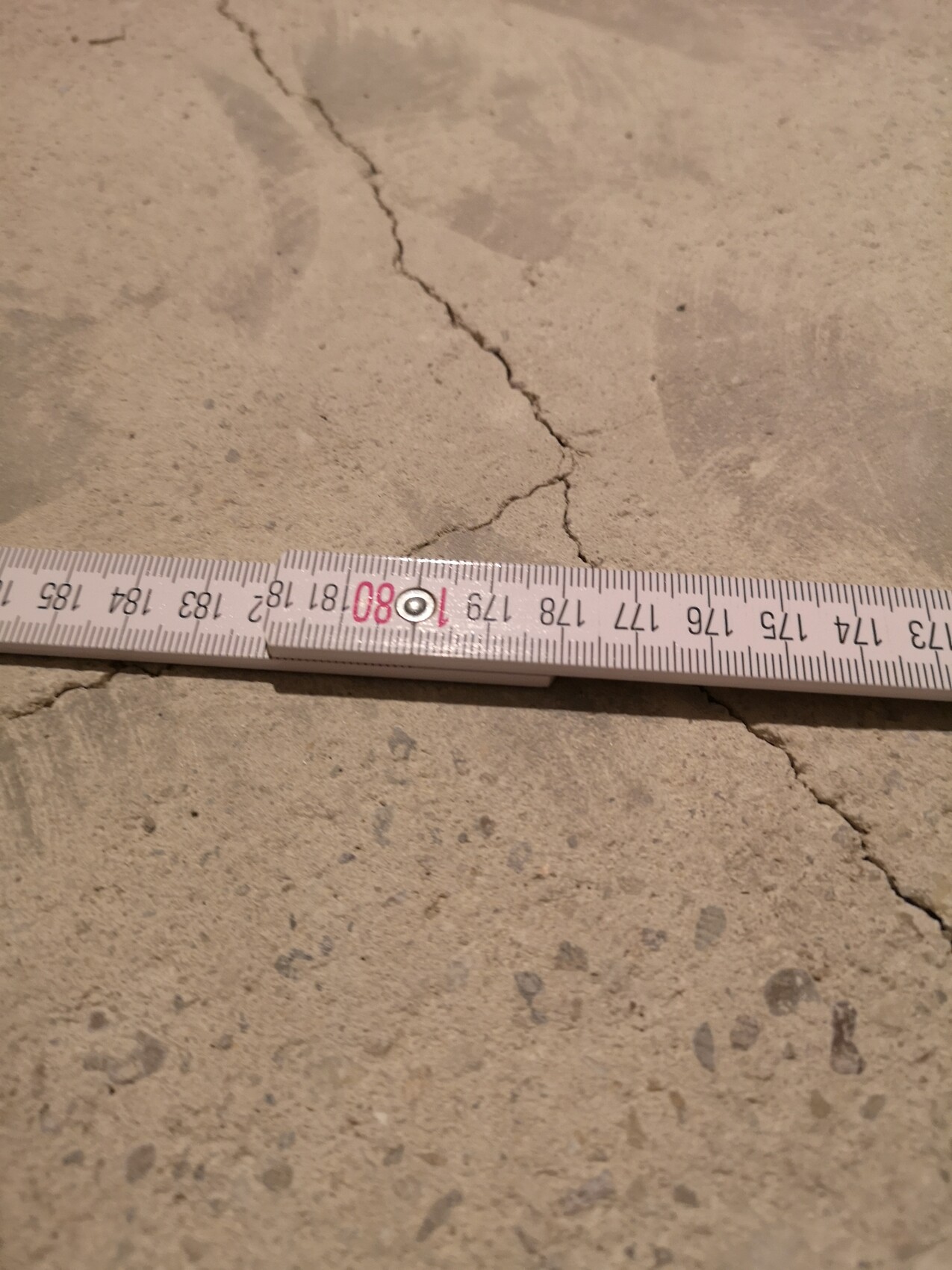
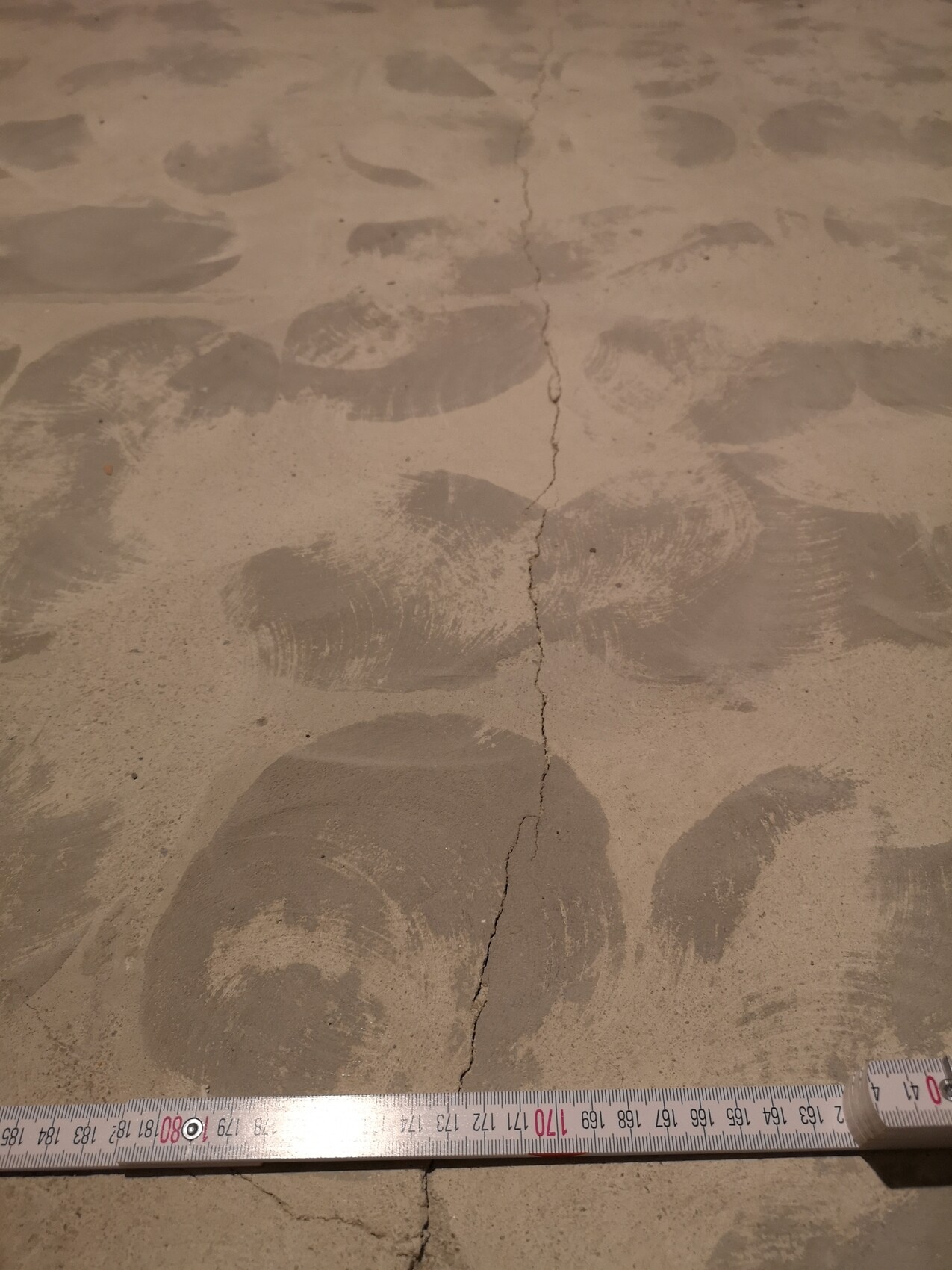
Our screed (with underfloor heating) from 1979 has cracks. Previously, tiles were glued on top. We would like to glue down parquet flooring and are wondering if the cracks need to be repaired beforehand. The cracks run across the entire screed, always from wall to wall. Is it possible to assess this remotely?
 Vicky Pedia22 Jan 2020 15:36
Usually, such cracks are sealed with resin. To do this, a reservoir groove with cross channels is milled along the crack. Connectors are placed in the cross channels, and resin is applied in the longitudinal groove. Caution! Use a depth stop when milling to avoid damaging heating pipes. There are many instructional videos available online that also mention suitable products. If you are not confident doing this yourself, it is better to have it done by a professional!!!!
Vicky Pedia22 Jan 2020 16:10Oh God, pure theory. Nothing happens because it has settled a long time ago, or in the worst case, it cracks and takes the underfloor heating with it. I won’t make any definitive statements from afar. The fact is that the screed is no longer a homogeneous surface and the individual slabs can move. The tiles obviously bridged the cracks effectively. Officially, I can only advise you to use resin... Anything else would be speculation.
L
LordEichi3 Feb 2020 11:55Hello and sorry for jumping into the thread, but I’m stuck on the same question. So, a quick follow-up: do I need to fill the cracks with resin if I lay a decoupling membrane over the screed?
Thank you very much and best regards, Sven
Thank you very much and best regards, Sven
Before retiling, uncoupling mats (if I remember correctly, from Sopro) were fully applied to the surface; no adhesive was used (the cracks were also very narrow). The screed was from 1979/80 and had underfloor heating.
Often, the pipes of the underfloor heating system from that construction period are problematic because they are not oxygen-tight. In case of issues (corrosion damage caused by oxygen ingress through the pipes), you should either have them replaced or flush the system and separate it from the rest of the heating system using a heat exchanger.
Often, the pipes of the underfloor heating system from that construction period are problematic because they are not oxygen-tight. In case of issues (corrosion damage caused by oxygen ingress through the pipes), you should either have them replaced or flush the system and separate it from the rest of the heating system using a heat exchanger.
Similar topics