
Hello everyone,
I bought a house built in 1959.
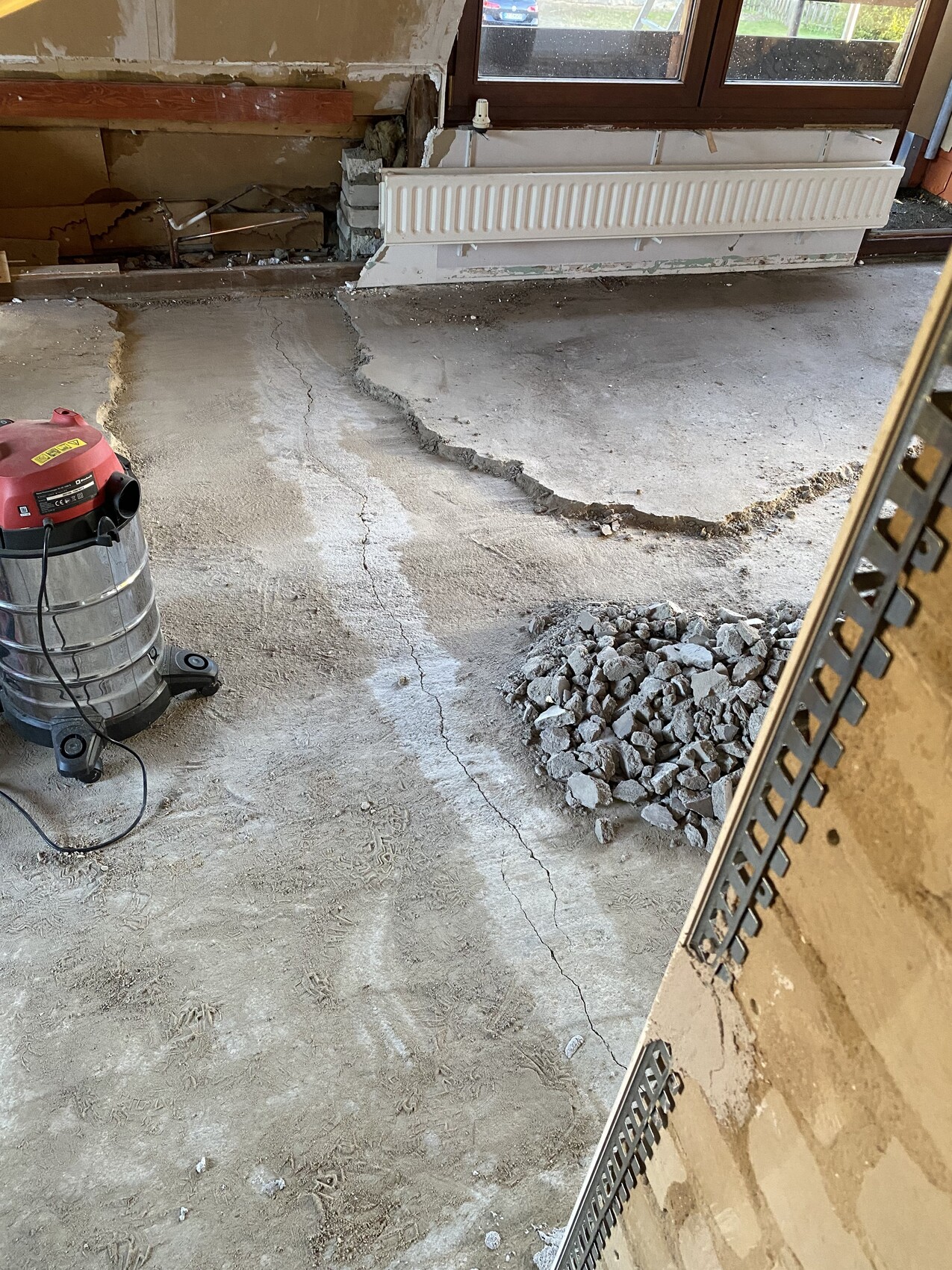
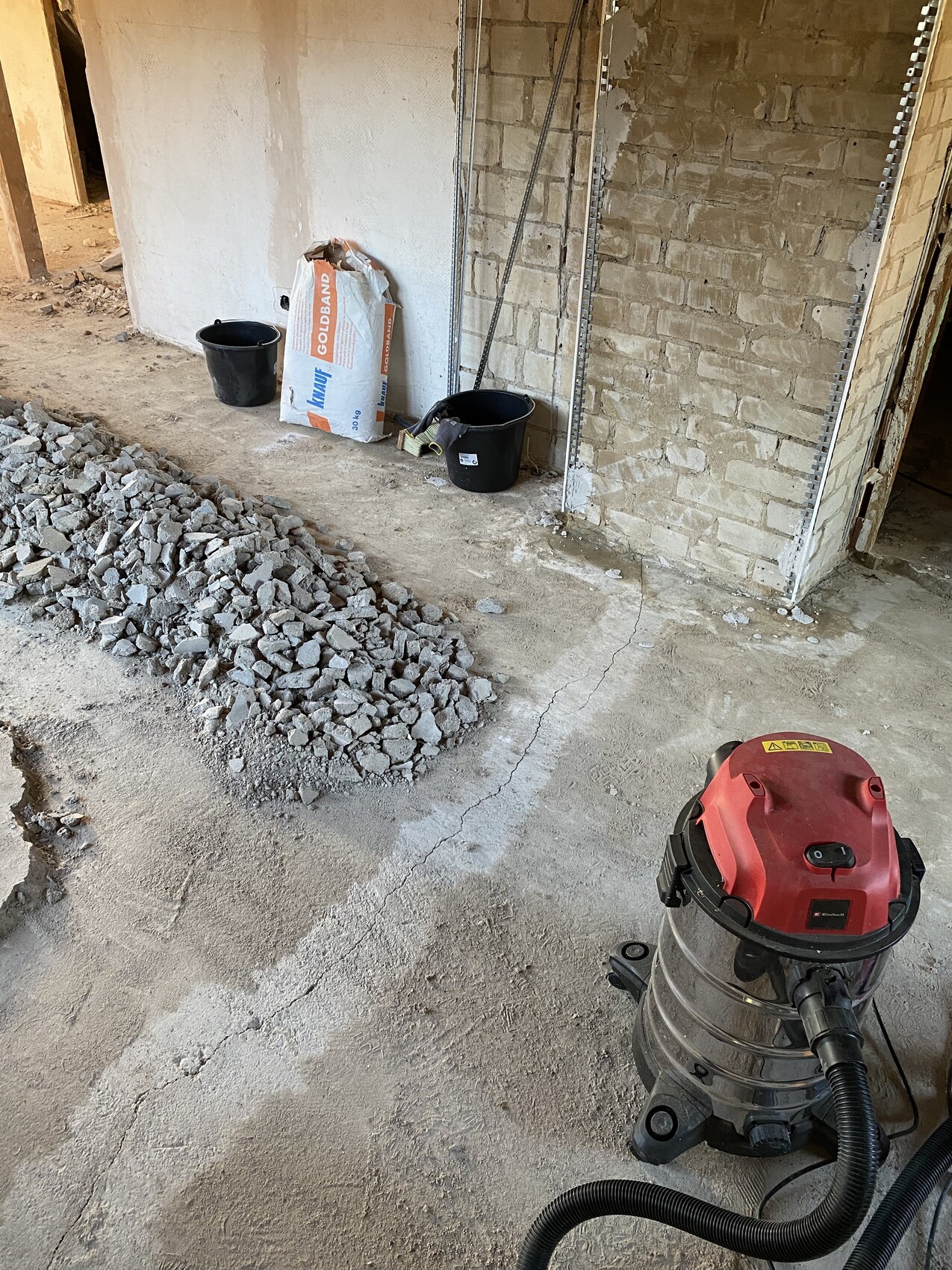
When we removed the screed from the ceiling slab between the ground floor and the first floor, a crack became visible.
It runs almost exactly along the wall below.
Is it possible to make any judgment about whether this is dangerous or not at this stage?
Best regards,
Robin
I bought a house built in 1959.
When we removed the screed from the ceiling slab between the ground floor and the first floor, a crack became visible.
It runs almost exactly along the wall below.
Is it possible to make any judgment about whether this is dangerous or not at this stage?
Best regards,
Robin
Reinhard84.2 schrieb:
I wouldn’t have even noticed the mini thing 😉.Then I hope you’re not a professional concrete worker 😱 😎B
Badener19709 Aug 2022 22:07If there is a wall directly underneath and nothing has changed since the 59, I wouldn’t worry about it either... 🙂
The fact is, there is a continuous crack extending over several meters (yards).
This should definitely not be ignored!
After all, no one wants the ceiling to collapse.
It needs to be checked whether there is a steel beam or a load-bearing wall at least 17.5cm (7 inches) below the crack.
It would probably be worth having an expert inspect it on-site.
I would consider paying around a hundred (0.5 hours of work plus travel time) for that.
Nevertheless, this looks to me like settlement near the outer edges of the house.
So there must be a wall underneath there.
After 70 years, this is completely normal.
This should definitely not be ignored!
After all, no one wants the ceiling to collapse.
It needs to be checked whether there is a steel beam or a load-bearing wall at least 17.5cm (7 inches) below the crack.
It would probably be worth having an expert inspect it on-site.
I would consider paying around a hundred (0.5 hours of work plus travel time) for that.
Nevertheless, this looks to me like settlement near the outer edges of the house.
So there must be a wall underneath there.
After 70 years, this is completely normal.
TmMike_2 schrieb:
The fact is, it’s a continuous crack extending over several meters.
That should not be ignored initially!
After all, nobody wants the ceiling to fall down.
It needs to be checked whether there is a steel beam or a load-bearing wall at least 17.5cm (7 inches) beneath the crack.
You should probably have an expert inspect it on site.
For the hundred (0.5 hours work + travel), it would be worth it to me.
Nevertheless, it looks to me like settlement towards the outer edges of the house.
So there must be a wall beneath it.
After 70 years, this is completely normal. Unfortunately, it seems no one dares to address the problem. I called a structural engineer who said a building surveyor must check it. Then I called a building surveyor who said a structural engineer needs to look at it. I get the feeling they’re not interested in these small jobs like you mean.
Robin82 schrieb:
Unfortunately, it seems no one is willing to tackle the problem. I called a structural engineer who said a building surveyor needs to check it. Then I called a building surveyor who said a structural engineer has to look at it. I get the feeling they are not interested in these tricky jobs like the one you mean.And what is actually beneath the crack?!!!!!TmMike_2 schrieb:
and what is now below the crack?!!!!!Right next to the crack is an 11.5 cm (4.5 inches) wall. I assume it’s a tensile crack caused by pressure from the wall below when the ceiling on the left and right sides settles slightly.
Similar topics