
Hello dear forum members,
we have been working for some time with our architects to design our dream house. With the third version, we have finally found the floor plan we want.
Now our problem: the cost estimate is unfortunately above our budget. Since the cost estimate was based on the building volume (gross internal volume), the architects suggested the following ways to save costs:
- Reducing the floor area
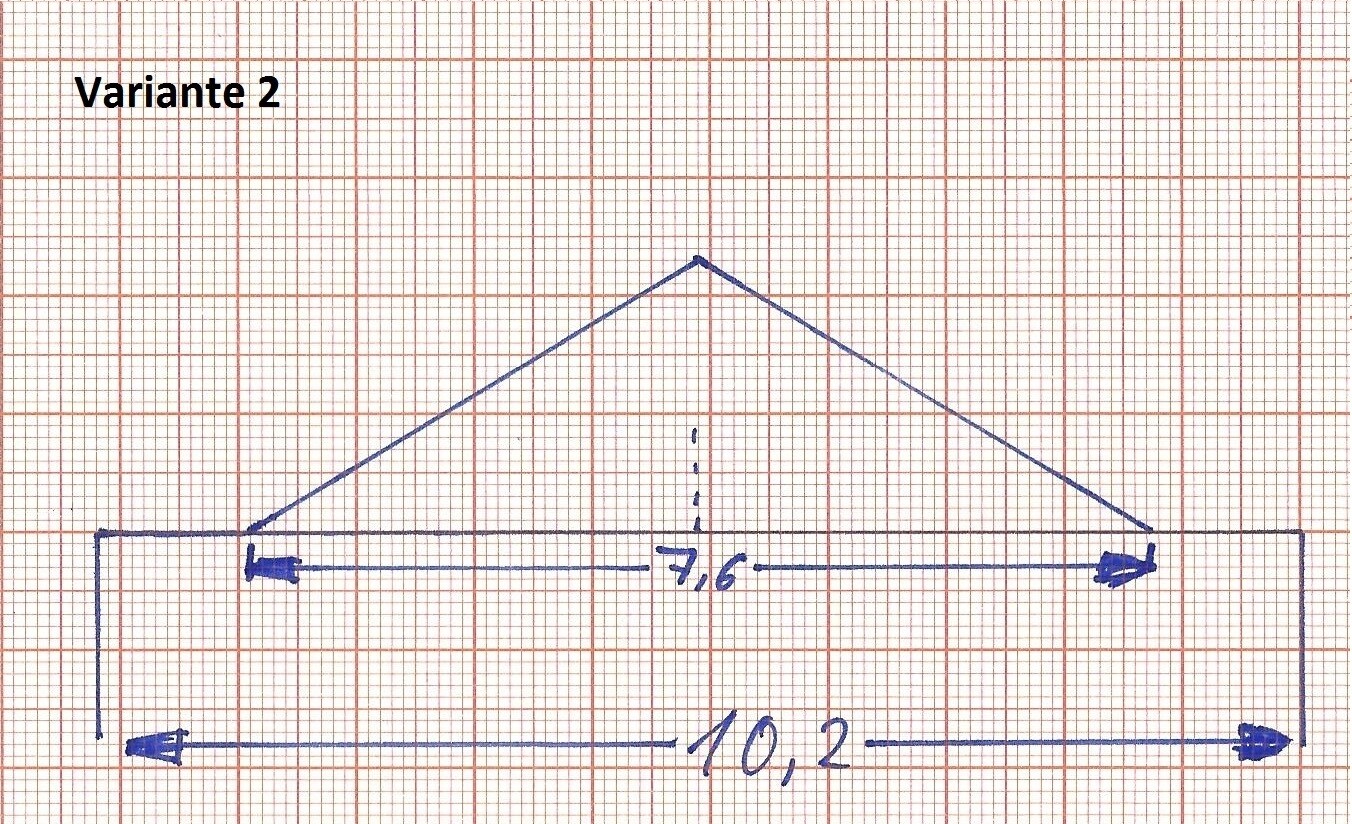
- Instead of a traditional gable roof spanning the full width of the house (version 1), a recessed gable roof (version 2) is planned. The smaller roof reduces the building volume and thus the cost estimate.
The house (2 full stories) has a floor area of 10.2 x 12m (33.5 x 39.4 ft). The gable roof is designed with a pitch of 30° and will have exposed rafters.
Has anyone already built such a recessed gable roof? Are there really significant cost savings possible with this?
Our concerns:
Is it really possible to keep such a gable roof combined with a flat roof permanently watertight? Or does the implementation require so much effort that there are actually no savings left?
I read quite a bit online about the costs of flat roofs and gable roofs, and the general opinion seems to be that flat roofs are not cheaper than gable roofs. Does this type of construction really save costs?
Thank you very much in advance for your help and opinions.

we have been working for some time with our architects to design our dream house. With the third version, we have finally found the floor plan we want.
Now our problem: the cost estimate is unfortunately above our budget. Since the cost estimate was based on the building volume (gross internal volume), the architects suggested the following ways to save costs:
- Reducing the floor area
- Instead of a traditional gable roof spanning the full width of the house (version 1), a recessed gable roof (version 2) is planned. The smaller roof reduces the building volume and thus the cost estimate.
The house (2 full stories) has a floor area of 10.2 x 12m (33.5 x 39.4 ft). The gable roof is designed with a pitch of 30° and will have exposed rafters.
Has anyone already built such a recessed gable roof? Are there really significant cost savings possible with this?
Our concerns:
Is it really possible to keep such a gable roof combined with a flat roof permanently watertight? Or does the implementation require so much effort that there are actually no savings left?
I read quite a bit online about the costs of flat roofs and gable roofs, and the general opinion seems to be that flat roofs are not cheaper than gable roofs. Does this type of construction really save costs?
Thank you very much in advance for your help and opinions.
K
Komposthaufen25 Jul 2016 07:30Uh-oh... A flat roof also costs money. The combination of a flat roof with a recessed pitched roof won’t save you anything compared to a pure pitched roof.
This kind of "saving" only works on paper. Ask a carpentry company.
If you want to save money, you need to focus on other aspects. Floor area, number and size of windows, number of full stories, fittings...
Best regards.
This kind of "saving" only works on paper. Ask a carpentry company.
If you want to save money, you need to focus on other aspects. Floor area, number and size of windows, number of full stories, fittings...
Best regards.
P
Peanuts7425 Jul 2016 10:47I also find it hard to believe that such significant savings are possible, not to mention whether this "unconventional" construction would remain permanently airtight.
Since you are building full storeys anyway, would a roof with just one sloping surface (usually around 15–20 degrees) be an option? This type is often called a shed roof or mono-pitched roof.
This would definitely reduce the overall volume, you would have a standard covered roof, and it should realistically allow some savings on timber, membranes, roofing materials, etc. Also, the shallow pitch makes it easier to walk on.
The only downside is that the appearance might not appeal to everyone...
Since you are building full storeys anyway, would a roof with just one sloping surface (usually around 15–20 degrees) be an option? This type is often called a shed roof or mono-pitched roof.
This would definitely reduce the overall volume, you would have a standard covered roof, and it should realistically allow some savings on timber, membranes, roofing materials, etc. Also, the shallow pitch makes it easier to walk on.
The only downside is that the appearance might not appeal to everyone...
To summarize: The architect planned too large and therefore too expensive. Now we have to look at where savings can be made.
There is the idea of "disfiguring" the roof to stay within the budget. They mention x square meters of living space, which we don’t know.
I wonder if the house with a different roof would still be the dream home.
Why aren’t the usual items being considered for savings?
There is the idea of "disfiguring" the roof to stay within the budget. They mention x square meters of living space, which we don’t know.
I wonder if the house with a different roof would still be the dream home.
Why aren’t the usual items being considered for savings?
N
nordanney25 Jul 2016 13:51berndn schrieb:
@MarcWen: I had the same idea, with 181m³ (6400 ft³) for the roof, the estimated costs would be 73,000 euros lower, which would put us back in the safe zone... But that is just the cost estimate; it won’t have much to do with reality. How can the gable roof be 73,000 euros cheaper than the flat roof?
T
toxicmolotof25 Jul 2016 14:02I would consider starting by saving on the exposed roof truss...
There is a book, a few years old now, published by a savings bank publisher, with a title roughly meaning "99 Tips to Save Money on House Construction"...
Not a bad investment for 20 euros.
There is a book, a few years old now, published by a savings bank publisher, with a title roughly meaning "99 Tips to Save Money on House Construction"...
Not a bad investment for 20 euros.
Similar topics