
Hello fellow home builders,
Like many of you, I am currently in the early stages of planning my house. I’m really just at the beginning: the plot is reserved, I have had some discussions with construction companies, and I have created a spreadsheet listing all additional building costs, partly based on many contributions I found here in the forum.
However, there is one concerning item: earthworks.
The plot slopes down about 1.5–2 meters (5–6.5 feet) along its entire width (20 meters / 65 feet). I have been reading a lot over the last few days and I am currently very uncertain about what costs for earthworks I should expect. Right now, I have a very wide estimate range of 20,000 to 100,000 Euros, which makes planning difficult.
In my last conversation with a builder, the sales representative told me that the civil engineering companies I contacted could not provide a proper quote because soil reports and similar documents are missing. But I can only provide all the required information once I purchase the plot—a bit of a catch-22.
So I’m trying my luck here in the forum. Maybe some of you have had a similar plot and have built on it, and can give me a rough cost estimate or advice on which additional items to expect compared to a flat plot.
Yes, I know it’s quite difficult without knowing the soil conditions, but perhaps the current wide estimate of 20,000 to 100,000 Euros can be narrowed down a bit.
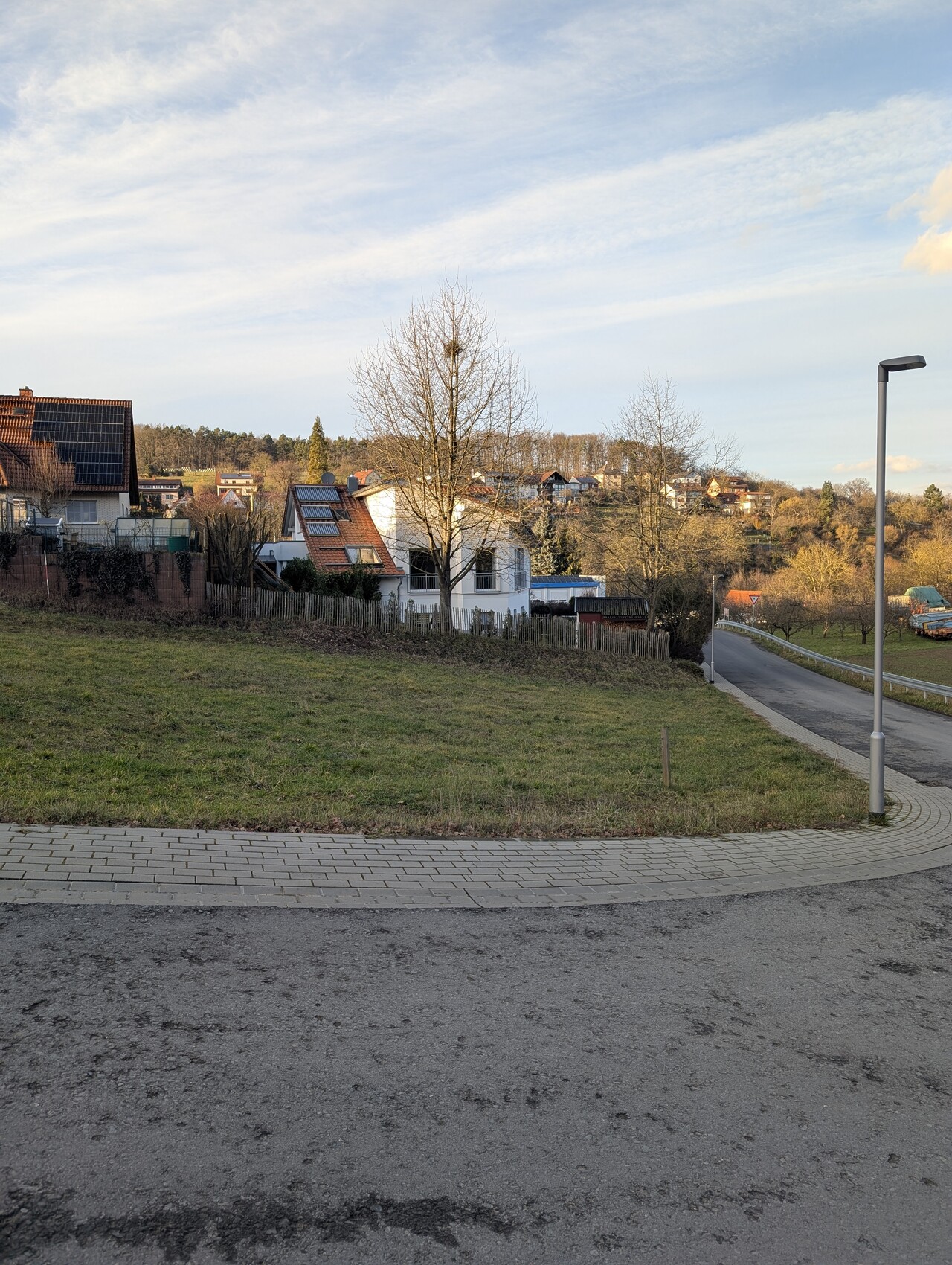
I’m attaching a picture taken from the front.
By the way, the planned house will be 9.5 meters (31 feet) wide and 11.5 meters (38 feet) deep, and the plot starts right at the left edge of the picture.
I appreciate any helpful and constructive input.
Like many of you, I am currently in the early stages of planning my house. I’m really just at the beginning: the plot is reserved, I have had some discussions with construction companies, and I have created a spreadsheet listing all additional building costs, partly based on many contributions I found here in the forum.
However, there is one concerning item: earthworks.
The plot slopes down about 1.5–2 meters (5–6.5 feet) along its entire width (20 meters / 65 feet). I have been reading a lot over the last few days and I am currently very uncertain about what costs for earthworks I should expect. Right now, I have a very wide estimate range of 20,000 to 100,000 Euros, which makes planning difficult.
In my last conversation with a builder, the sales representative told me that the civil engineering companies I contacted could not provide a proper quote because soil reports and similar documents are missing. But I can only provide all the required information once I purchase the plot—a bit of a catch-22.
So I’m trying my luck here in the forum. Maybe some of you have had a similar plot and have built on it, and can give me a rough cost estimate or advice on which additional items to expect compared to a flat plot.
Yes, I know it’s quite difficult without knowing the soil conditions, but perhaps the current wide estimate of 20,000 to 100,000 Euros can be narrowed down a bit.
I’m attaching a picture taken from the front.
By the way, the planned house will be 9.5 meters (31 feet) wide and 11.5 meters (38 feet) deep, and the plot starts right at the left edge of the picture.
I appreciate any helpful and constructive input.
H
hanghaus20237 Feb 2025 14:11I don’t understand why the OP doesn’t at least share the dimensions of the plot. That would make it easier to provide helpful advice. I already have some ideas, but I won’t post anything without basis.
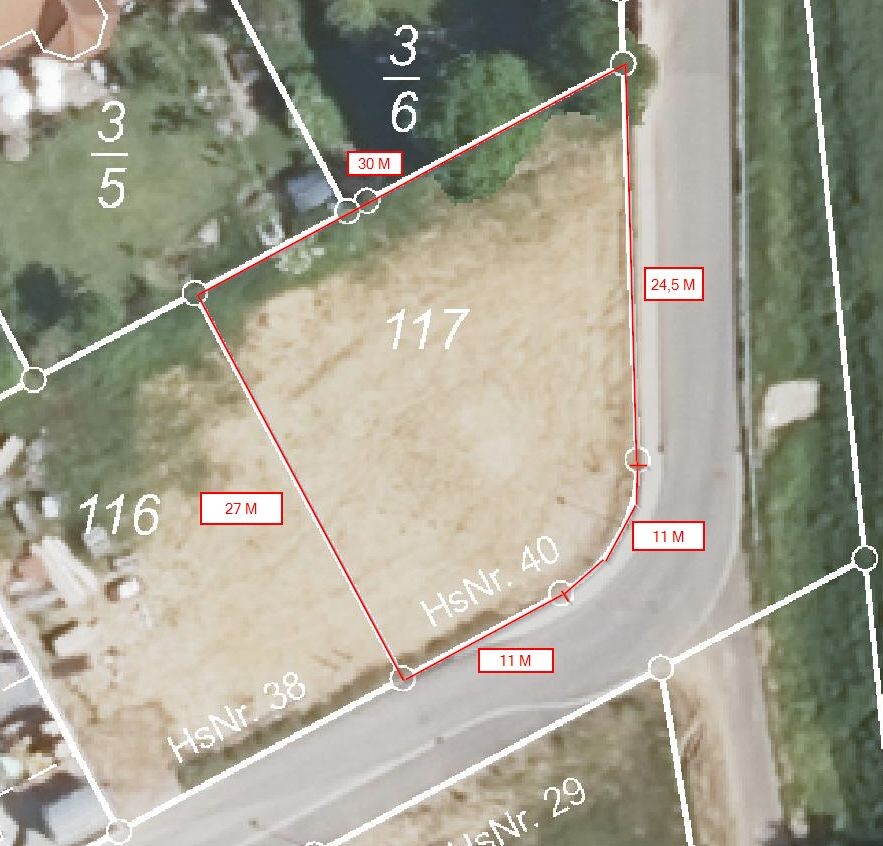
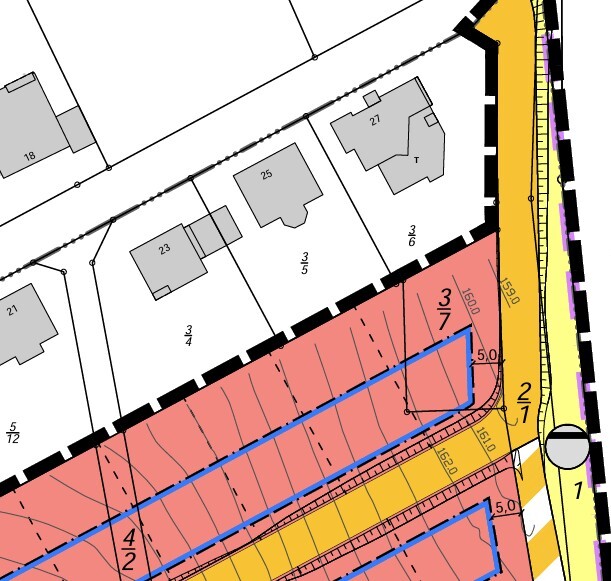
Here is some additional information.
A minimum distance of 3 meters (10 feet) from the property boundary must be maintained; however, garages and carports are allowed to be built directly on the boundary line.
Based on the data I have, a house measuring 10 x 12 meters (33 x 39 feet) would fit on the plot.

A minimum distance of 3 meters (10 feet) from the property boundary must be maintained; however, garages and carports are allowed to be built directly on the boundary line.
Based on the data I have, a house measuring 10 x 12 meters (33 x 39 feet) would fit on the plot.
W
wiltshire7 Feb 2025 16:15The main cost factors for earthworks when building on a slope are as follows:
1. Soil conditions. There are different soil types, and they vary in how expensive they are to work with. A geotechnical report can provide you with some information about the soil conditions. A major cost factor is when excavation with a machine is no longer possible and rock breaking (breaking with a hammer or chisel) is required. Sometimes, even a large underground boulder can significantly affect construction costs. What is not visible presents a cost risk, and that risk is yours to bear.
2. Architecture. You can build with the slope or against it. Basement rooms on a slope are advantageous because they will receive daylight from at least one side, which makes basements relatively inexpensive. On the other hand, placing a bungalow on a slab foundation on a slope is comparatively costly. If you know and accept this during the planning phase, it is not a problem.
3. Disposal of excavated material. It is cost-effective to integrate the excavated soil into the landscaping and site design. On your property, however, you will hardly avoid having to transport away some truckloads. Simply put: more truck trips mean higher costs.
As long as you do not have a finalized house plan, no one can tell you what the earthworks will cost. The quoted range varies from surprisingly affordable to moderately careless. Through your influence on the architecture and terrain design, you have considerable control over these costs.
Since there is no reliable cost estimate upfront, I would recommend setting aside an amount in the upper third of the cost range— for example, 75,000€—during the decision phase for the plot and house and then testing feasibility. It is quite possible that you will end up spending significantly less, which will give you some flexibility in your financial plan. If you risk overstretching your finances, you will know the level of risk you are taking.
1. Soil conditions. There are different soil types, and they vary in how expensive they are to work with. A geotechnical report can provide you with some information about the soil conditions. A major cost factor is when excavation with a machine is no longer possible and rock breaking (breaking with a hammer or chisel) is required. Sometimes, even a large underground boulder can significantly affect construction costs. What is not visible presents a cost risk, and that risk is yours to bear.
2. Architecture. You can build with the slope or against it. Basement rooms on a slope are advantageous because they will receive daylight from at least one side, which makes basements relatively inexpensive. On the other hand, placing a bungalow on a slab foundation on a slope is comparatively costly. If you know and accept this during the planning phase, it is not a problem.
3. Disposal of excavated material. It is cost-effective to integrate the excavated soil into the landscaping and site design. On your property, however, you will hardly avoid having to transport away some truckloads. Simply put: more truck trips mean higher costs.
As long as you do not have a finalized house plan, no one can tell you what the earthworks will cost. The quoted range varies from surprisingly affordable to moderately careless. Through your influence on the architecture and terrain design, you have considerable control over these costs.
Since there is no reliable cost estimate upfront, I would recommend setting aside an amount in the upper third of the cost range— for example, 75,000€—during the decision phase for the plot and house and then testing feasibility. It is quite possible that you will end up spending significantly less, which will give you some flexibility in your financial plan. If you risk overstretching your finances, you will know the level of risk you are taking.
M
MachsSelbst7 Feb 2025 21:48People from the Rhineland have known for centuries... What will be, will be. It comes as it comes... and it costs what it costs.
Of course, you can check with the neighbors to get an idea of their soil survey results, which gives you a rough impression. But you only have 100% certainty once the excavator arrives and starts digging deep.
And slopes—even slight slopes—even if you plan the house to fit the slope. You will need to remove soil that you cannot use. Usually, you can’t use soil from deeper layers for your garden, and you will inevitably end up with too much soil, silt, clay, or other materials.
And even after the house is built, for your outdoor spaces, the rule is… retaining, retaining, steps, retaining...
I have about 1 meter (3 feet) of height difference on a 35 meter (115 feet) property and am planning a terraced garden with two levels. For that, I need to install around 50 meters (165 feet) of retaining wall posts, including frost protection, foundation, and so on.
If you have 2 or 3 meters (6 to 10 feet), it will get expensive. If not with the house, then with the garden.
Of course, you can check with the neighbors to get an idea of their soil survey results, which gives you a rough impression. But you only have 100% certainty once the excavator arrives and starts digging deep.
And slopes—even slight slopes—even if you plan the house to fit the slope. You will need to remove soil that you cannot use. Usually, you can’t use soil from deeper layers for your garden, and you will inevitably end up with too much soil, silt, clay, or other materials.
And even after the house is built, for your outdoor spaces, the rule is… retaining, retaining, steps, retaining...
I have about 1 meter (3 feet) of height difference on a 35 meter (115 feet) property and am planning a terraced garden with two levels. For that, I need to install around 50 meters (165 feet) of retaining wall posts, including frost protection, foundation, and so on.
If you have 2 or 3 meters (6 to 10 feet), it will get expensive. If not with the house, then with the garden.
As mentioned before, the soil quality can be determined quickly.
If I were you, I would focus more on the intended size of the house, its location, and the position of the garage.
You can already see from your neighbor how complex the planning is. The neighbor further up seems to have a flatter plot.
I don’t currently see your desired house with the angled design as feasible. The main consideration here is still the housing needs: how many people, the age of the children, residents’ requirements, number of parking spaces (as required by the building code). Budget.
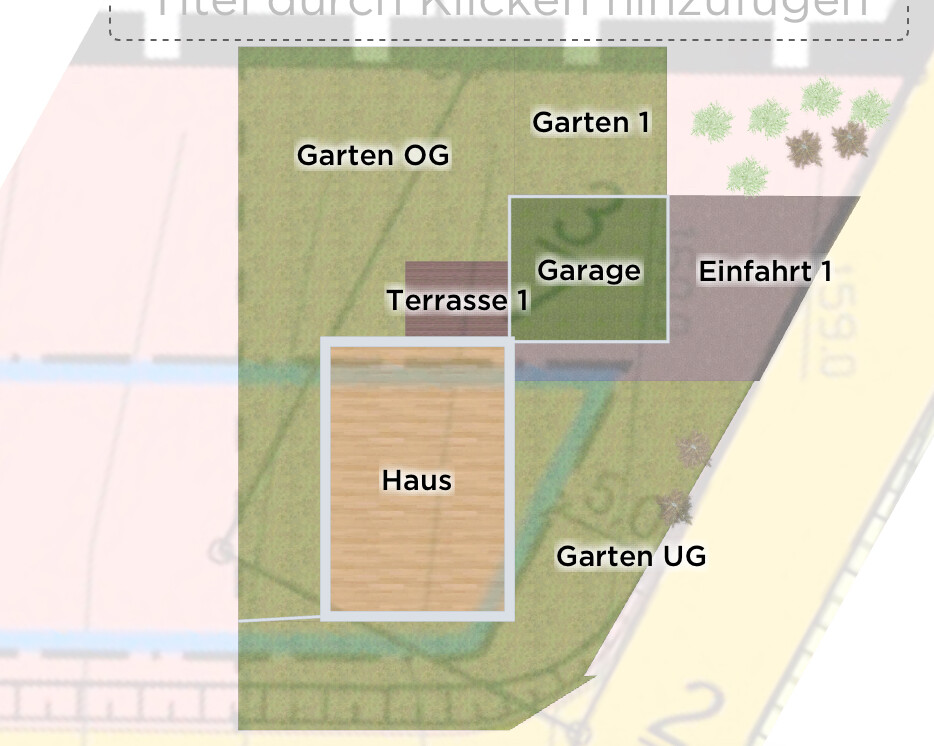
The building envelope is limited—3 meters (10 feet) to the south, and you can’t create much space for a garden on the west side either. The garden will mainly be on the north side. But that’s manageable if you plan south- and west-facing windows.
A garage would be possible on the west side, then positioned further up. If the entrance is also placed there, that would create a main living floor at the entrance level, with a basement below (house extending eastward) for the bedrooms.
Alternatively, the garage could be partially built into the west slope, with a small garden area above it, roughly the width of the garage. This would result in an entrance floor with access, but also include bedrooms. The living floor with the northern garden would then be above.
The same layout can be achieved if the driveway is from the east. The garage would then be at the entrance level with minimal excavation, and the house would extend into the upper floor with the living spaces. This would be the most natural and cost-effective option regarding earthworks. The excavated soil for the basement can be placed next to the garage on the north side to create a level garden area or a gently sloping path down.
Children’s rooms would be located in the south/east basement, fully functional. The north side of the basement would house technical rooms and storage.
I consider the allowed one-meter (3 feet) overrun of the footprint practically necessary.
If I were you, I would focus more on the intended size of the house, its location, and the position of the garage.
You can already see from your neighbor how complex the planning is. The neighbor further up seems to have a flatter plot.
I don’t currently see your desired house with the angled design as feasible. The main consideration here is still the housing needs: how many people, the age of the children, residents’ requirements, number of parking spaces (as required by the building code). Budget.
The building envelope is limited—3 meters (10 feet) to the south, and you can’t create much space for a garden on the west side either. The garden will mainly be on the north side. But that’s manageable if you plan south- and west-facing windows.
A garage would be possible on the west side, then positioned further up. If the entrance is also placed there, that would create a main living floor at the entrance level, with a basement below (house extending eastward) for the bedrooms.
Alternatively, the garage could be partially built into the west slope, with a small garden area above it, roughly the width of the garage. This would result in an entrance floor with access, but also include bedrooms. The living floor with the northern garden would then be above.
The same layout can be achieved if the driveway is from the east. The garage would then be at the entrance level with minimal excavation, and the house would extend into the upper floor with the living spaces. This would be the most natural and cost-effective option regarding earthworks. The excavated soil for the basement can be placed next to the garage on the north side to create a level garden area or a gently sloping path down.
Children’s rooms would be located in the south/east basement, fully functional. The north side of the basement would house technical rooms and storage.
I consider the allowed one-meter (3 feet) overrun of the footprint practically necessary.
Similar topics