
ᐅ Interpreting Structural Calculations for a Garage (Reinforcement…) Correctly
Created on: 11 Aug 2025 14:51
I
Ilchbart
Dear all,
We have an old house (built in 1924 with an extension from 1994) and always too little space (5–6 people)!
Therefore, a second garage is planned, which I want to build together with my neighbor (a mason).
The structural calculation is available; I wanted to order the materials tomorrow, but unfortunately, the structural engineer is now on vacation.
Could you please tell me based on the photos how many reinforcement mats I need for the ceiling and exactly where they should be placed? Neither the mason nor the building materials supplier could give me a definite answer. So I hope you can help me.
Thank you very much!
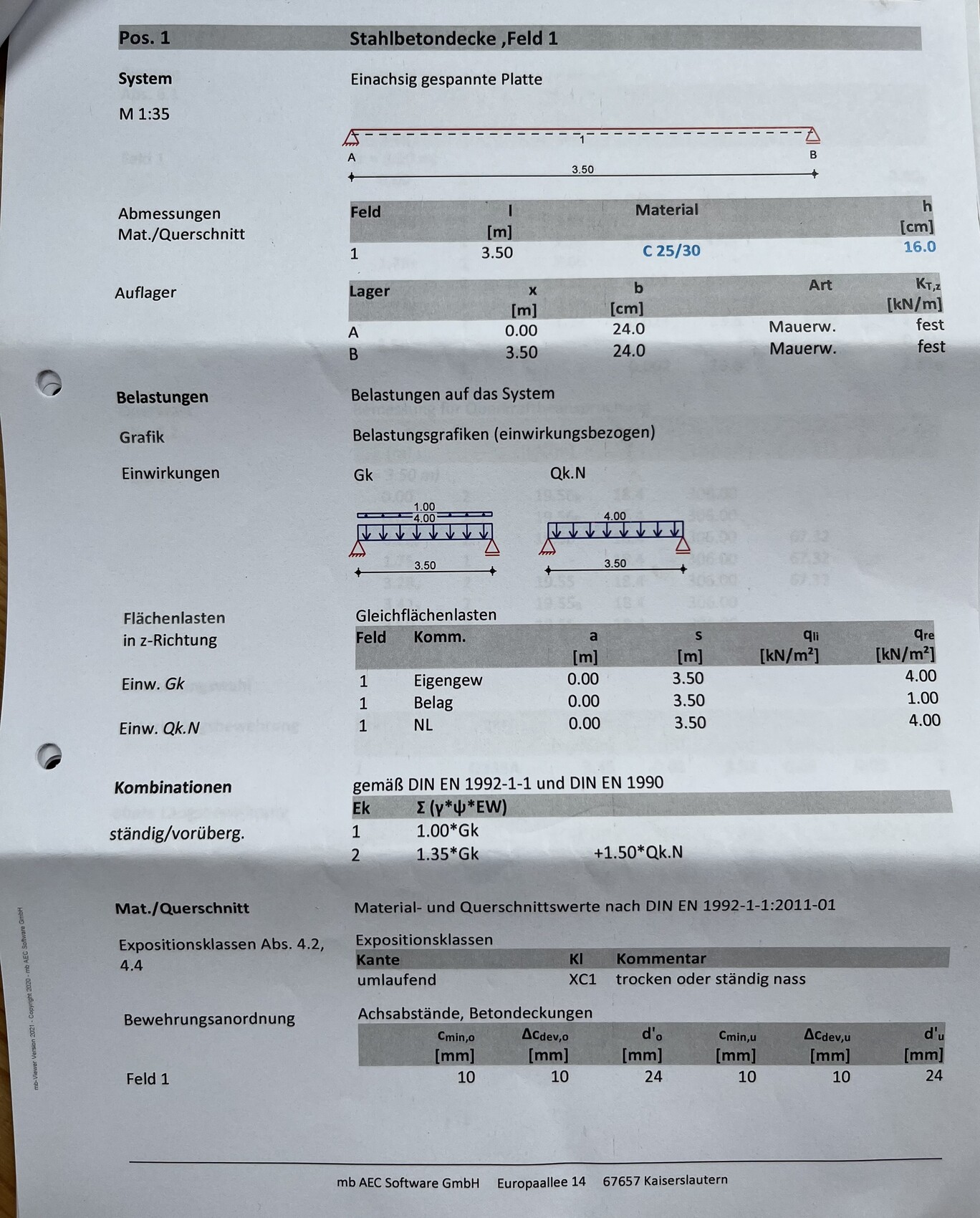
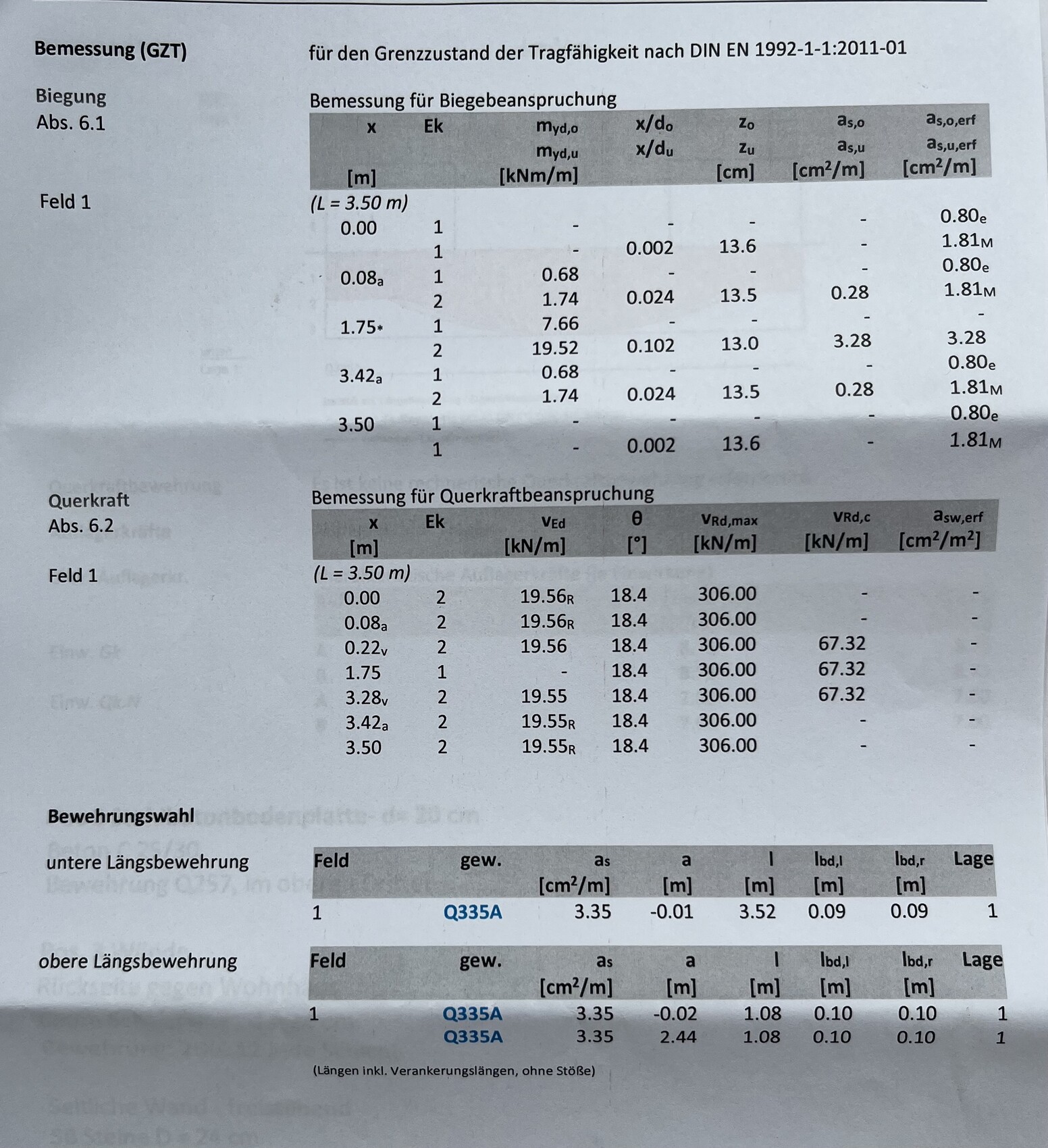
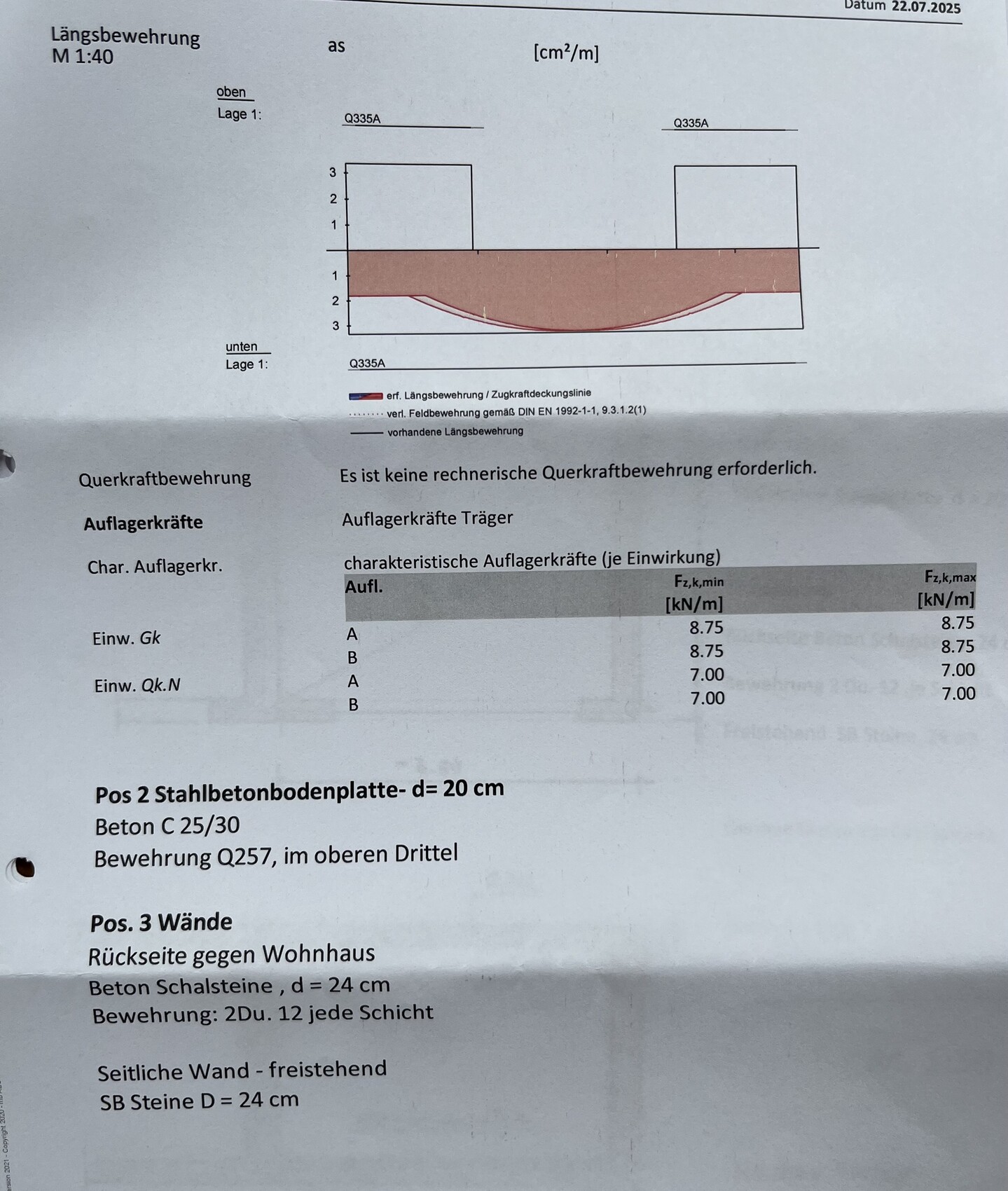
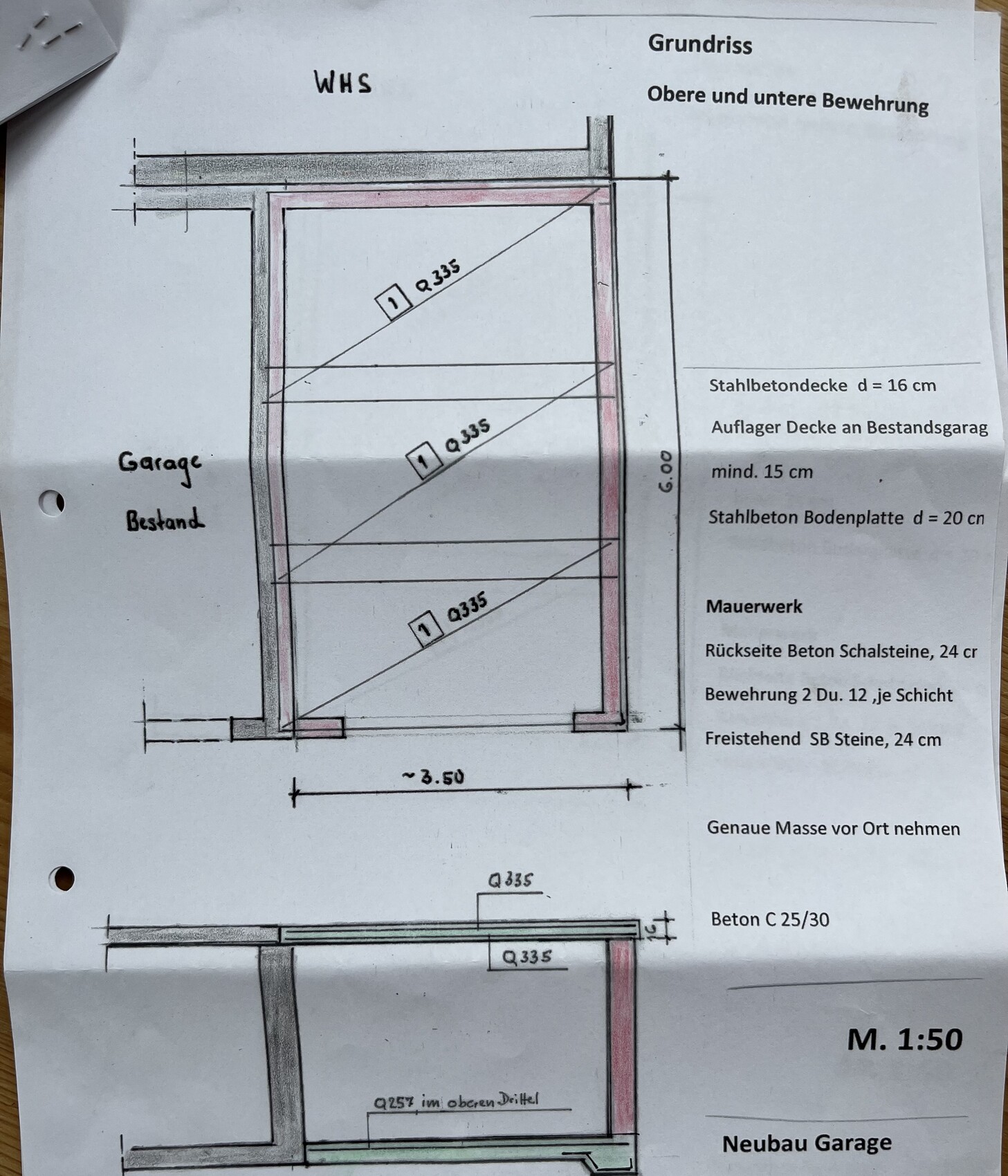
We have an old house (built in 1924 with an extension from 1994) and always too little space (5–6 people)!
Therefore, a second garage is planned, which I want to build together with my neighbor (a mason).
The structural calculation is available; I wanted to order the materials tomorrow, but unfortunately, the structural engineer is now on vacation.
Could you please tell me based on the photos how many reinforcement mats I need for the ceiling and exactly where they should be placed? Neither the mason nor the building materials supplier could give me a definite answer. So I hope you can help me.
Thank you very much!
A
ajokr202518 Aug 2025 08:13The critical area is the underside, where the structurally required reinforcement is located.
Here, XC3 - applicable for open halls and garages - applies. Therefore, an additional one centimeter (0.4 inches) of concrete cover should be provided on the underside.
However, the reinforcement is still sufficient because the calculation was done for one-way bending, while the slab actually rests on all four sides, and a Q-mat was chosen instead of an R-mat.
Here, XC3 - applicable for open halls and garages - applies. Therefore, an additional one centimeter (0.4 inches) of concrete cover should be provided on the underside.
However, the reinforcement is still sufficient because the calculation was done for one-way bending, while the slab actually rests on all four sides, and a Q-mat was chosen instead of an R-mat.