
ᐅ Oven connection not routed through RCD/GFCI despite presence – is rewiring advisable?
Created on: 27 Aug 2022 13:49
D
DReffects
Hello,
I'm currently replacing the kitchen and noticed that despite the protective earth conductor in the stove connection box, the RCD does not trip, and the stove box still has power even when the RCD is switched off.
A look inside the distribution panel shows:
The three phases to the three 16A fuses come directly from above at the RCD to the fuses, not from below, so they are positioned before the RCD.
Two questions: why was it done this way?
Is it now sufficient to simply connect the three fuses below the RCD?
Photo attached
Thank you
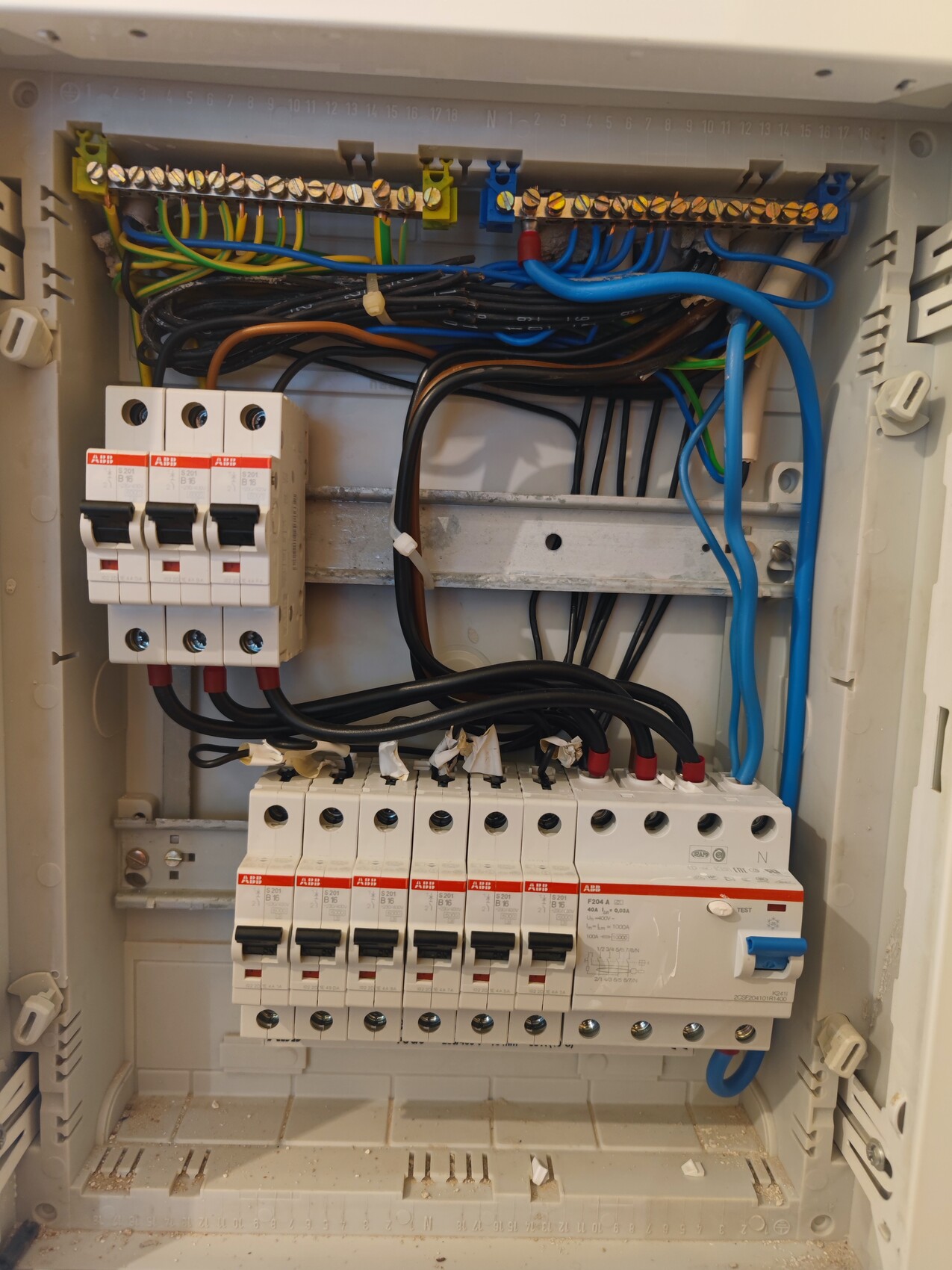
I'm currently replacing the kitchen and noticed that despite the protective earth conductor in the stove connection box, the RCD does not trip, and the stove box still has power even when the RCD is switched off.
A look inside the distribution panel shows:
The three phases to the three 16A fuses come directly from above at the RCD to the fuses, not from below, so they are positioned before the RCD.
Two questions: why was it done this way?
Is it now sufficient to simply connect the three fuses below the RCD?
Photo attached
Thank you

RotorMotor schrieb:
So now it’s not just the stove that should be connected, but the entire kitchen? Well, the usual stuff that belongs in a kitchen 😉 besides the stove connection outlet, there are unfortunately only two sockets at countertop height, each protected with 1x16A. So everything has to run through the stove connection...
That’s also why there’s a separate oven and a two-burner cooktop.
I don’t want to do any DIY wiring, that’s why I’m asking here.
I understand the existing 2x16A per phase—the residential unit is protected by a 75A main breaker in the main panel. So I would need to provide the stove connection outlet with its own RCD (residual current device) or replace the existing one?
Thanks for watching. Could you help me out a bit so I can learn something?
I would have expected that if I connect the three phases **after** the RCD, it would be properly protected at first, of course with the limitation that the RCD can only switch 3x40A and therefore should urgently be replaced with a 63A device. Or am I missing something here?
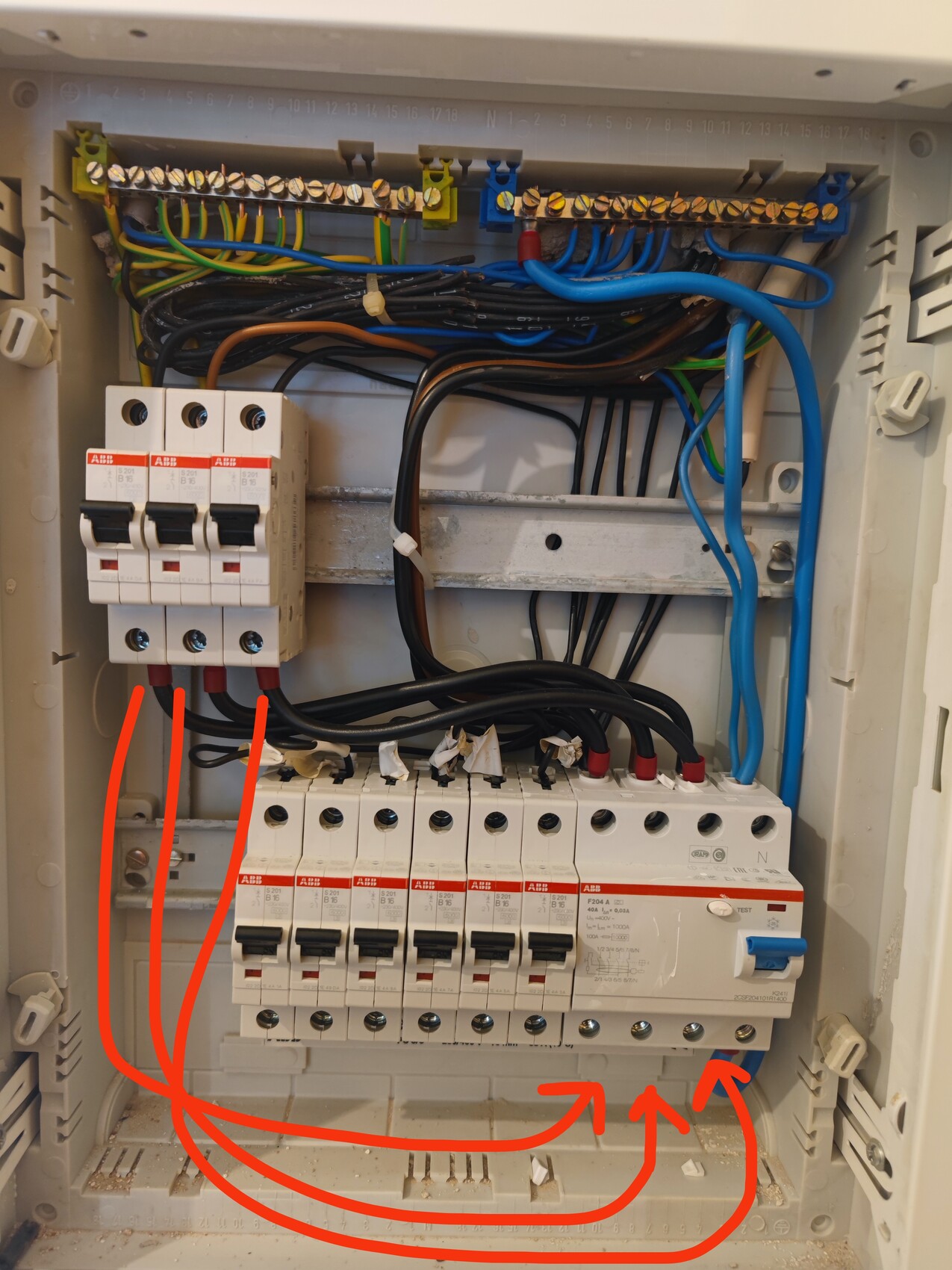
I would have expected that if I connect the three phases **after** the RCD, it would be properly protected at first, of course with the limitation that the RCD can only switch 3x40A and therefore should urgently be replaced with a 63A device. Or am I missing something here?
The manufacturer of your circuit breakers (among others) provides information stating that the maximum rated current of the circuit breakers (per phase after the RCD) must not exceed the rated current per phase of the residual current device (RCD) (this is what RotorMotor was referring to). Alternatively, a fuse can be used where the rated current is less than or equal to the rated current of the respective RCD (this is what I meant, based on a misinterpretation of the picture).
The electrician you will hire can either use an RCD with a higher rated current or protect the RCD with a 3-phase circuit breaker. However, they could also connect the stove’s supply lines to the existing circuit breakers in a way that makes both unnecessary. In that case, you would not be able to operate everything at maximum load simultaneously.
The electrician you will hire can either use an RCD with a higher rated current or protect the RCD with a 3-phase circuit breaker. However, they could also connect the stove’s supply lines to the existing circuit breakers in a way that makes both unnecessary. In that case, you would not be able to operate everything at maximum load simultaneously.