
ᐅ Conversion of a Two-Family House into a Single-Family Home – Floor Plan?
Created on: 12 Jul 2021 11:18
S
stunningsteveS
stunningsteve12 Jul 2021 11:18Hello everyone,
We have owned a typical two-family house from the 1970s for a few years now (a large apartment on the ground floor, a smaller granny flat on the upper floor), which we are currently converting into a single-family home. Until about a year ago, only the lower apartment was occupied, and the upper granny flat was vacant. Last year, we began the process of combining the two apartments by installing a new staircase and creating a large opening inside the building to connect them.
Now, we plan to gradually (but still fairly quickly within 1-2 years) redesign first the upper floor and later the ground floor so that the entire property can be used as a single-family home (which is currently difficult because there are two separate apartments with two living rooms, two kitchens, etc.). An energy retrofit will also be implemented as part of the renovation – but this is not the main focus here. My main concern is a practical layout optimization. The goal is not to carry out a full structural renovation, but we do plan several larger measures as needed to fulfill our key requirements.
Given the large available area including the extension (about 250 m² (2700 sq ft)), finding a practical layout is not easy. Additionally, the existing building volume and key elements (e.g., the staircases) set certain limits on the design. After many drafts and planning exercises, I now have a version that I would like to present for discussion here. I will try to answer questions regarding the remodeling as much as possible. I have omitted the basement floor plan for now as I fear it would make things too confusing.
Development Plan / Restrictions
Plot size – 750 m² (8000 sq ft)
Number of floors – 1.5 stories
Roof style – gable roof
Client Requirements
Basement, floors: basement, ground floor, and upper floor
Number of people, ages: 3 (soon 4), ages 37, 34, 2, 0
Office: one person working regularly from home
Guests per year: rare, possibly more as the children grow older
Open or closed architecture: open plan
Open kitchen, kitchen island: yes, desired
Number of dining seats: 6-8
Fireplace: not currently present; only if it fits in logically somewhere
Balcony, roof terrace: no; possibly feasible as part of a dormer but not essential
Garage, carport: two garages integrated into the basement
House Design
Designed by: mostly by ourselves, partially discussed with an architect and an energy consultant
What do you especially like? Large open living/dining area with kitchen island, big windows facing the terrace, separate master bedroom area on the ground floor
What do you dislike? The layout of the children’s rooms upstairs is a bit awkward (due to roof supports in the masonry), the laundry room in the basement means long distances, no pantry (but we managed so far without one), basement access is located in the living/dining area
Personal budget limit for renovation including fittings: €300,000 (including energy retrofit)
If you had to give up something, which details or additions could you do without?
- Dormer, walk-in closet
Why is the design the way it is? For example,
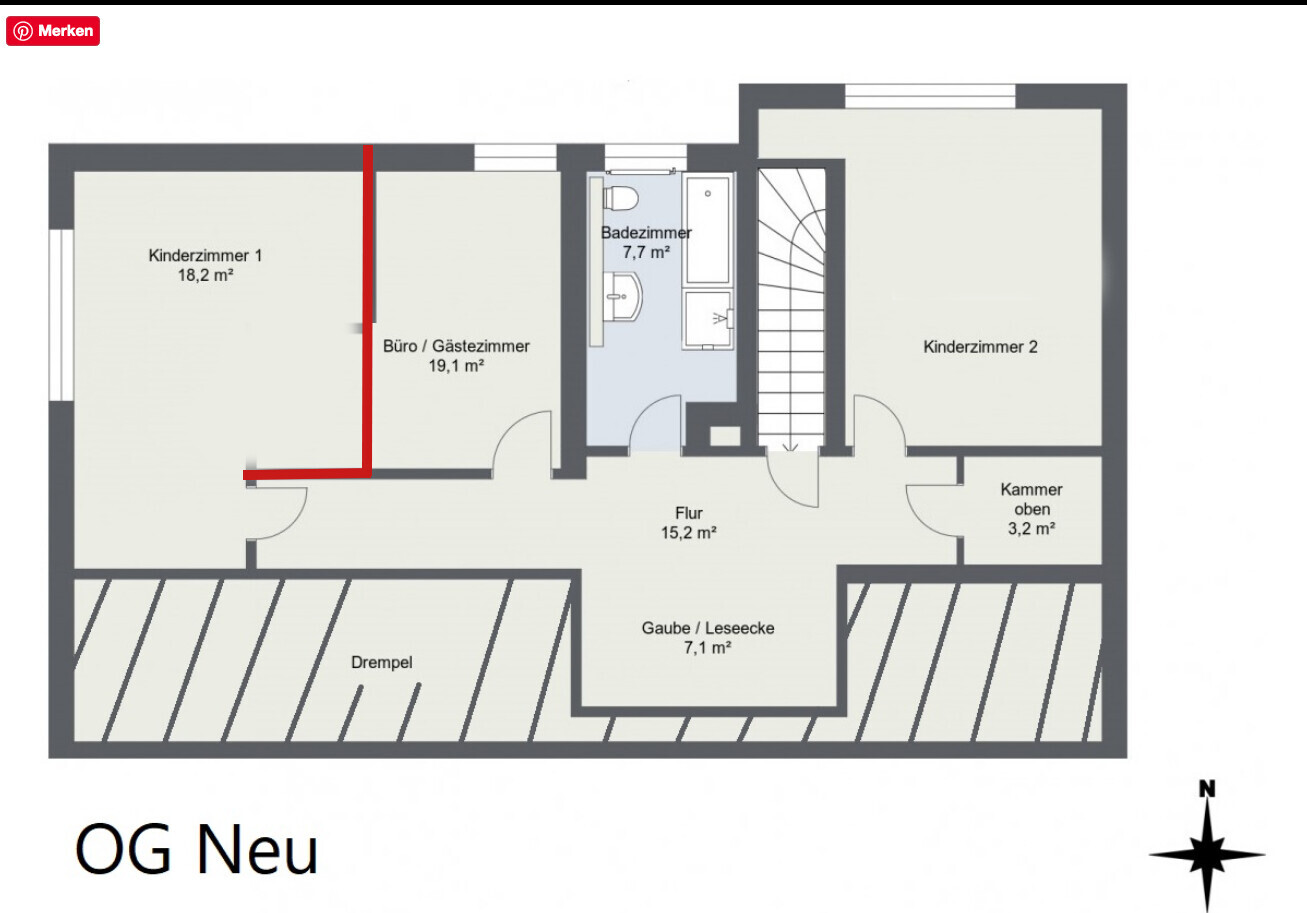
While the kids are still toddlers, we will probably use the planned office/guest room upstairs as our bedroom. In the medium term, we want to sleep downstairs and have the children upstairs. In the long term, when the children move out, the plan is to occupy only the ground floor in our older age.
I am attaching the existing floor plans, the version with changes, and the final version. Please let me know if anything is missing.
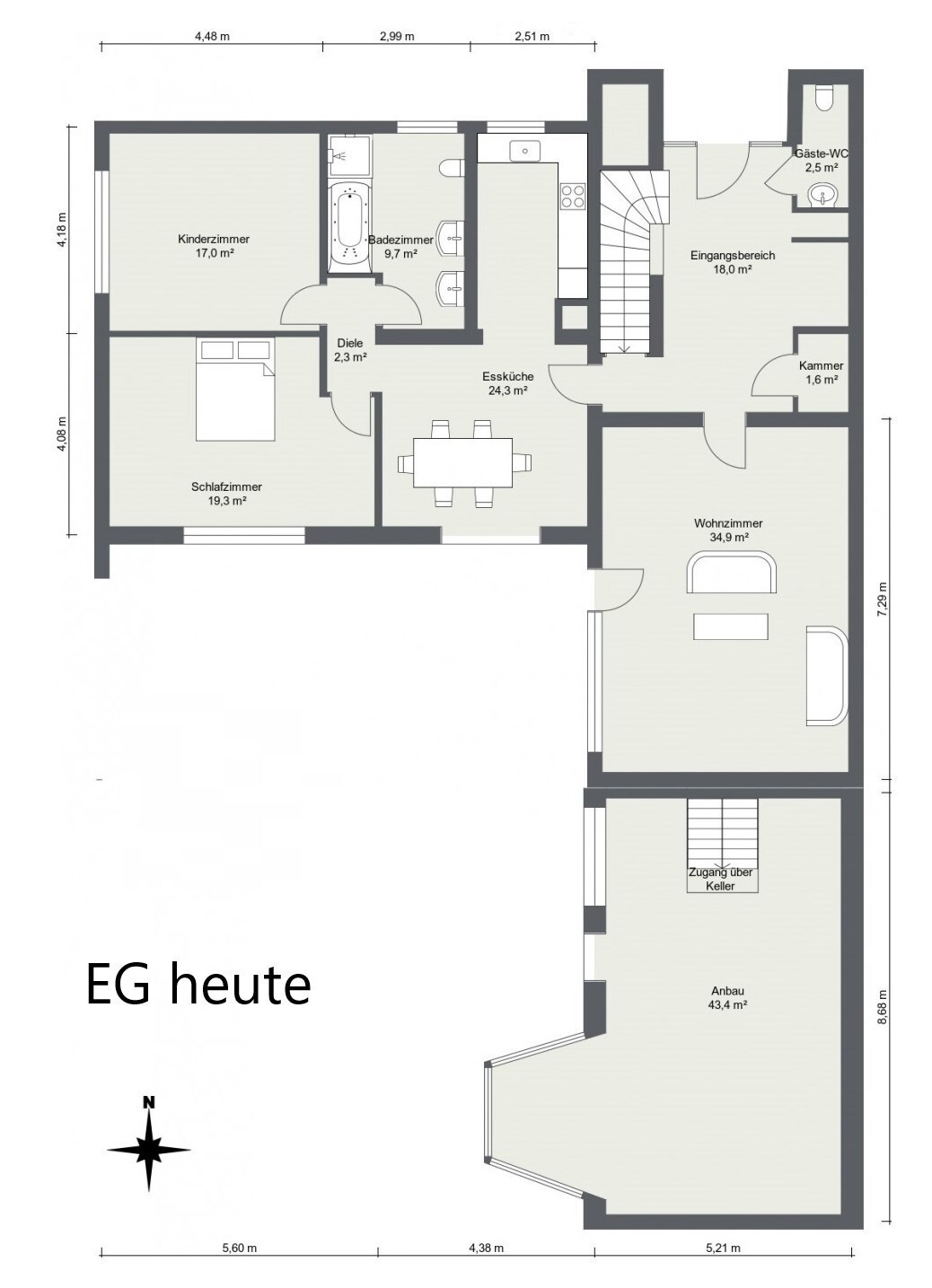

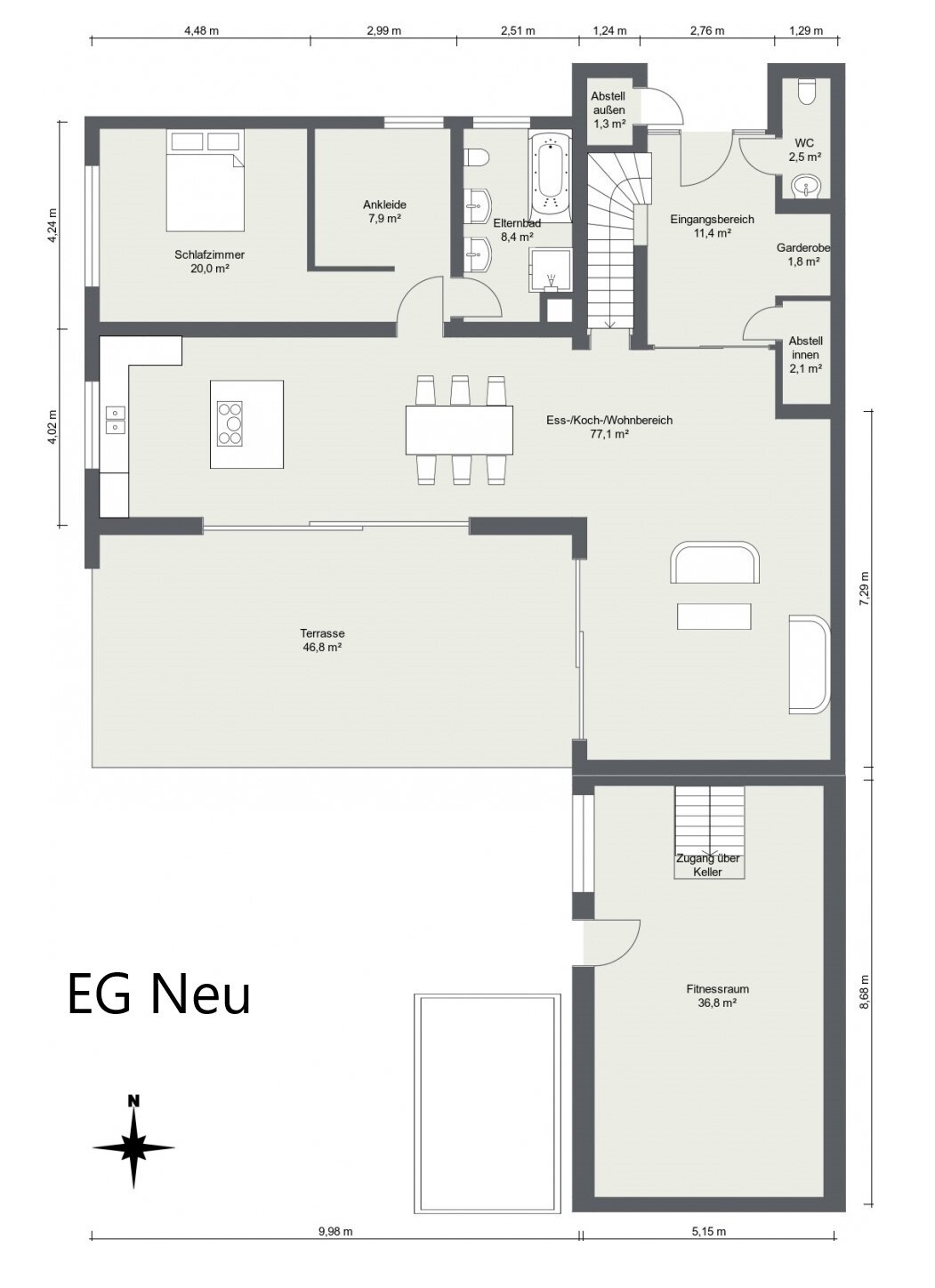
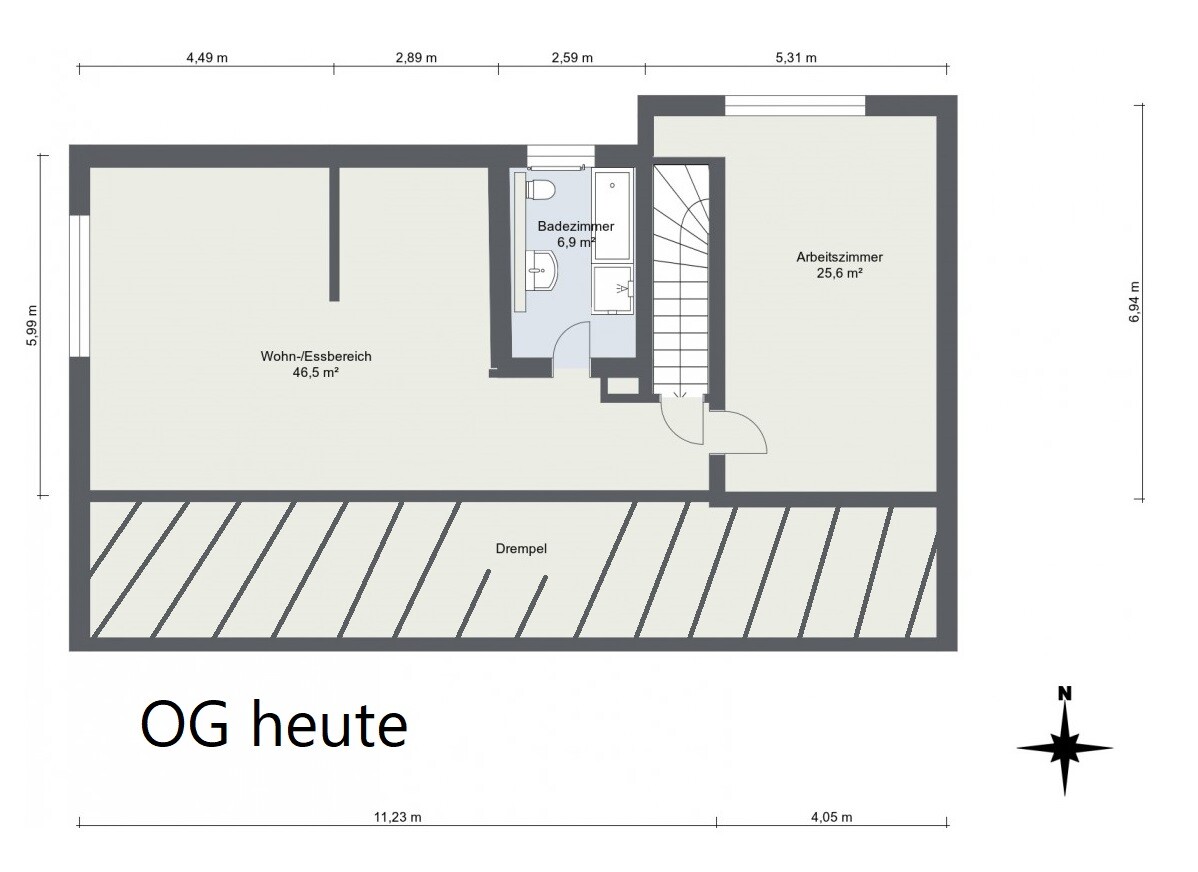

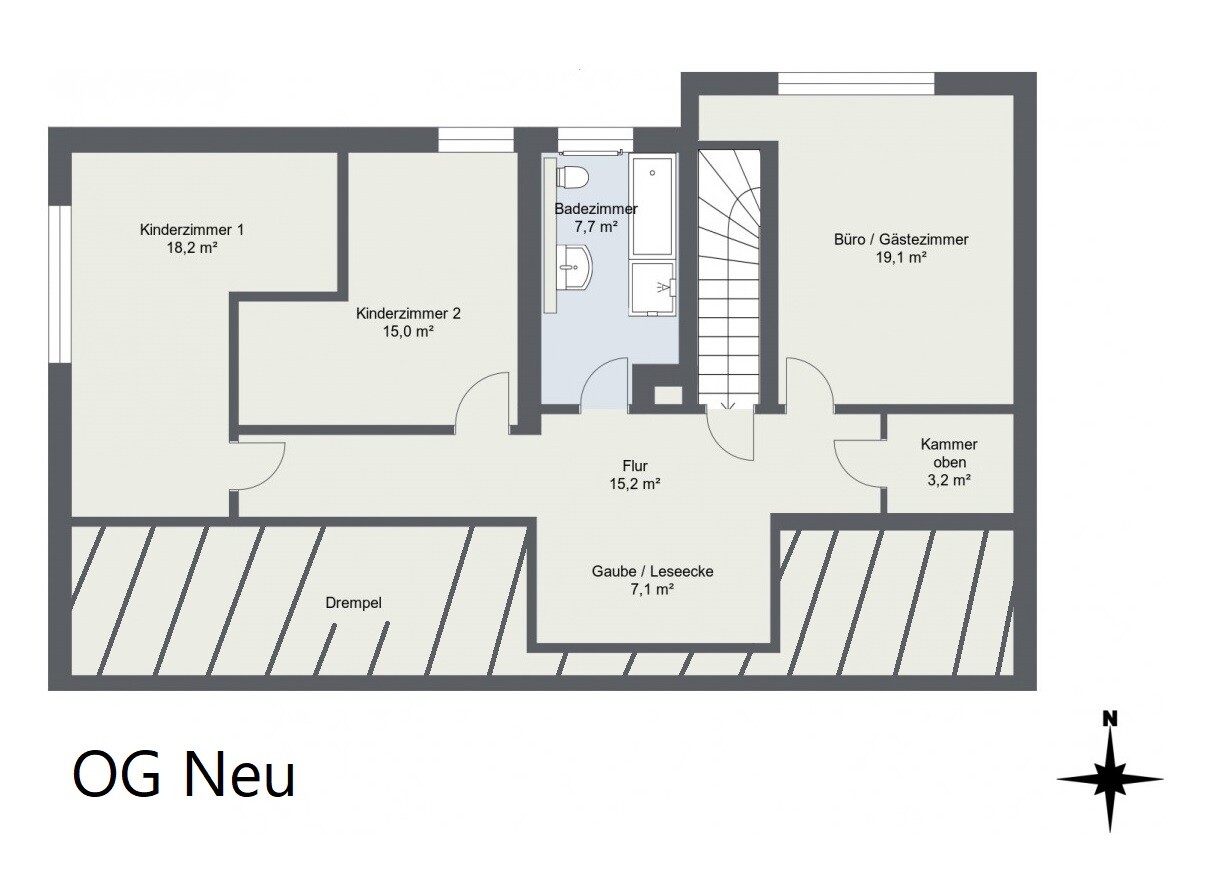
We have owned a typical two-family house from the 1970s for a few years now (a large apartment on the ground floor, a smaller granny flat on the upper floor), which we are currently converting into a single-family home. Until about a year ago, only the lower apartment was occupied, and the upper granny flat was vacant. Last year, we began the process of combining the two apartments by installing a new staircase and creating a large opening inside the building to connect them.
Now, we plan to gradually (but still fairly quickly within 1-2 years) redesign first the upper floor and later the ground floor so that the entire property can be used as a single-family home (which is currently difficult because there are two separate apartments with two living rooms, two kitchens, etc.). An energy retrofit will also be implemented as part of the renovation – but this is not the main focus here. My main concern is a practical layout optimization. The goal is not to carry out a full structural renovation, but we do plan several larger measures as needed to fulfill our key requirements.
Given the large available area including the extension (about 250 m² (2700 sq ft)), finding a practical layout is not easy. Additionally, the existing building volume and key elements (e.g., the staircases) set certain limits on the design. After many drafts and planning exercises, I now have a version that I would like to present for discussion here. I will try to answer questions regarding the remodeling as much as possible. I have omitted the basement floor plan for now as I fear it would make things too confusing.
Development Plan / Restrictions
Plot size – 750 m² (8000 sq ft)
Number of floors – 1.5 stories
Roof style – gable roof
Client Requirements
Basement, floors: basement, ground floor, and upper floor
Number of people, ages: 3 (soon 4), ages 37, 34, 2, 0
Office: one person working regularly from home
Guests per year: rare, possibly more as the children grow older
Open or closed architecture: open plan
Open kitchen, kitchen island: yes, desired
Number of dining seats: 6-8
Fireplace: not currently present; only if it fits in logically somewhere
Balcony, roof terrace: no; possibly feasible as part of a dormer but not essential
Garage, carport: two garages integrated into the basement
House Design
Designed by: mostly by ourselves, partially discussed with an architect and an energy consultant
What do you especially like? Large open living/dining area with kitchen island, big windows facing the terrace, separate master bedroom area on the ground floor
What do you dislike? The layout of the children’s rooms upstairs is a bit awkward (due to roof supports in the masonry), the laundry room in the basement means long distances, no pantry (but we managed so far without one), basement access is located in the living/dining area
Personal budget limit for renovation including fittings: €300,000 (including energy retrofit)
If you had to give up something, which details or additions could you do without?
- Dormer, walk-in closet
Why is the design the way it is? For example,
While the kids are still toddlers, we will probably use the planned office/guest room upstairs as our bedroom. In the medium term, we want to sleep downstairs and have the children upstairs. In the long term, when the children move out, the plan is to occupy only the ground floor in our older age.
I am attaching the existing floor plans, the version with changes, and the final version. Please let me know if anything is missing.

stunningsteve schrieb:
If anything is missing, please let me know.Pictures? The post should be at least 30 characters long.
https://www.instagram.com/11antgmxde/
https://www.linkedin.com/company/bauen-jetzt/
H
hanghaus200012 Jul 2021 12:55The thick red walls marked for demolition are load-bearing walls. Has a structural engineer reviewed this?
M
Myrna_Loy12 Jul 2021 12:56A 15 m (50 feet) long kitchen-dining area? 😱 I already have a nickname for it – the great hall.
It seems to me that the colors representing demolition and new construction are swapped compared to the standard.
https://www.instagram.com/11antgmxde/
https://www.linkedin.com/company/bauen-jetzt/
https://www.instagram.com/11antgmxde/
https://www.linkedin.com/company/bauen-jetzt/
M
Myrna_Loy12 Jul 2021 14:32If you like both children equally, I would divide the upper floor like this. I’d rather not comment on the ground floor layout. 😉
I assume the guest room on the upper floor will initially serve as the parents’ bedroom until the kids no longer need help at night?
I assume the guest room on the upper floor will initially serve as the parents’ bedroom until the kids no longer need help at night?
Similar topics