
ᐅ Renovation of a Floor – New Door Installation and Wall Demolition
Created on: 13 Feb 2026 20:20
H
hyperionHello,
we are planning to convert 2 rooms into 3:
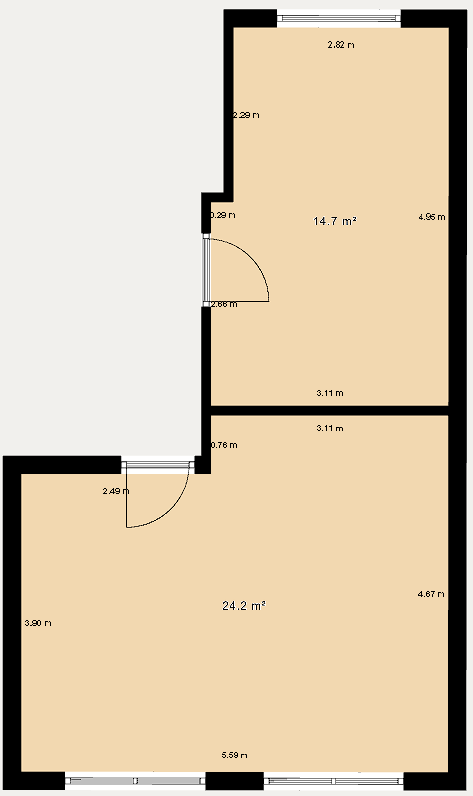
The thick walls around the outside are the exterior walls and are 24 cm (9.5 inches) thick. The thinner walls are made of lightweight concrete blocks and are 13 cm (5 inches) thick. The doors lead into the hallway. The thick wall in the hallway, where the door to the 24.2 m² (260 ft²) room is located, is also 24 cm (9.5 inches) thick and most likely load-bearing. This wall belongs to the stairwell. There is underfloor heating installed in the floor. The large room has two heating circuits – we are not yet sure how these are divided. The upper room has one heating circuit.
We plan to modify it as follows:
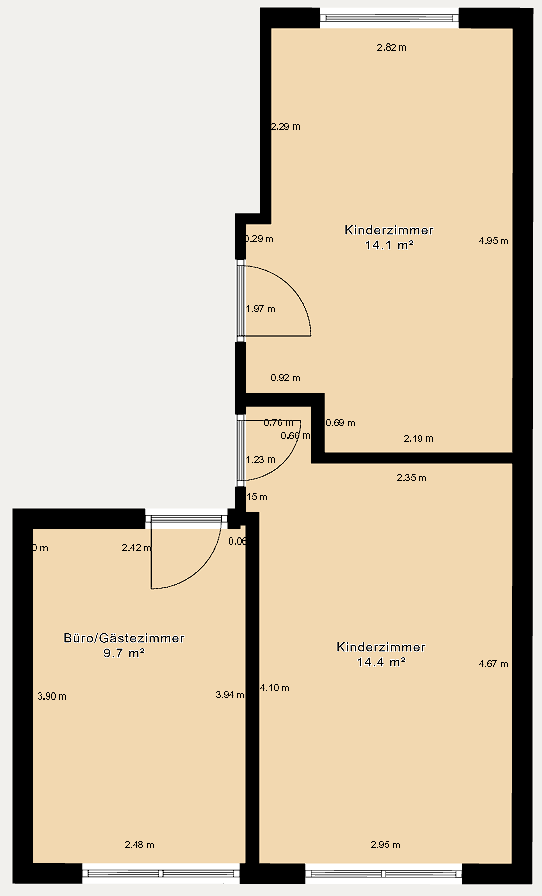
The new walls will be drywall partitions with a thickness of about 16 cm (6.3 inches). The frame for the new door in the middle should be as small as possible since it can be rather impractical.
I’m concerned about the new door. The lintel of the new door shouldn’t overlap with the lintel in the load-bearing wall. Also, cables most likely run in the area where the new door will be installed. This “pillar”
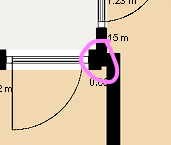
looks like this:
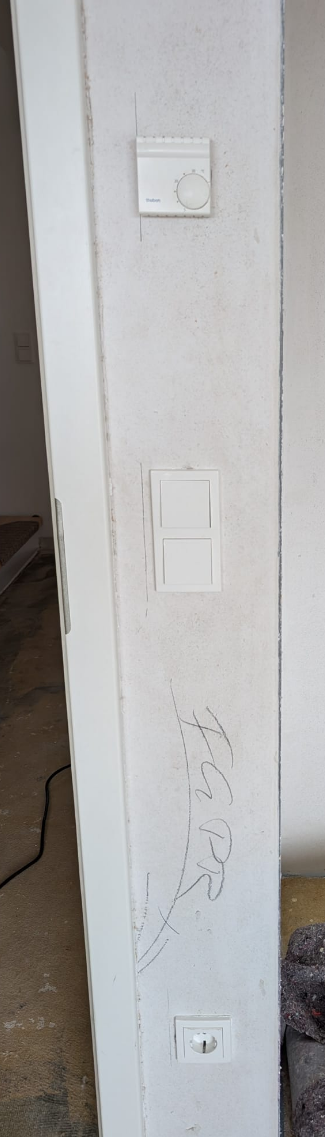
So there is quite a lot going on here. Using a cable detector, I found the following cable routes on this wall:
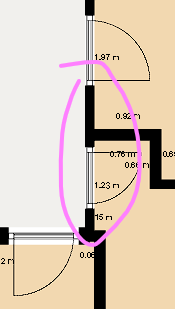
I have already roughly drawn in the new door and the new lintel as an example. You can see that the lintel and the cables interfere with each other.
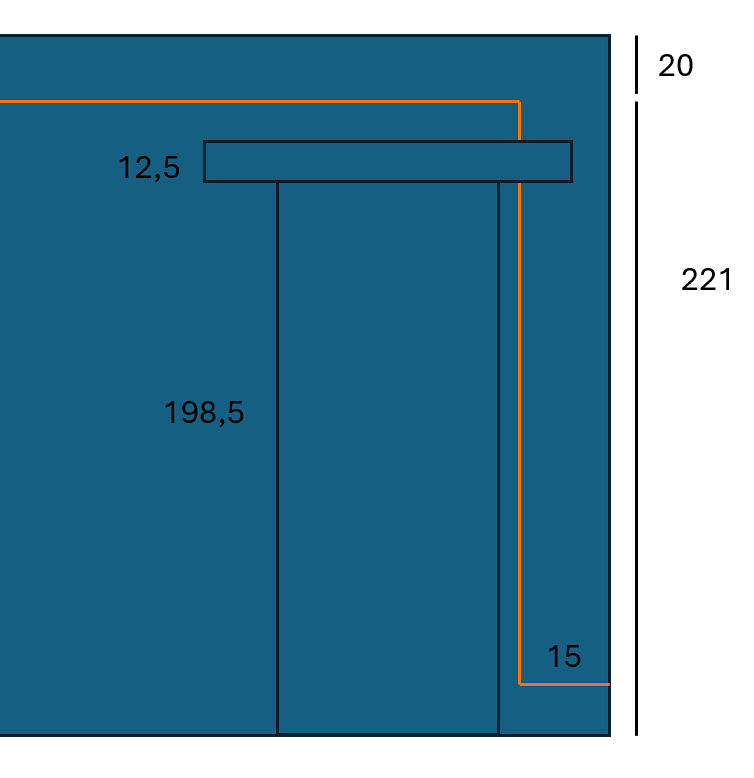
Ideally, I would position the door as far to the right as possible so that the door frame is as small as possible.
How would you approach these issues?
Thanks in advance for your advice.
Best regards
we are planning to convert 2 rooms into 3:
The thick walls around the outside are the exterior walls and are 24 cm (9.5 inches) thick. The thinner walls are made of lightweight concrete blocks and are 13 cm (5 inches) thick. The doors lead into the hallway. The thick wall in the hallway, where the door to the 24.2 m² (260 ft²) room is located, is also 24 cm (9.5 inches) thick and most likely load-bearing. This wall belongs to the stairwell. There is underfloor heating installed in the floor. The large room has two heating circuits – we are not yet sure how these are divided. The upper room has one heating circuit.
We plan to modify it as follows:
The new walls will be drywall partitions with a thickness of about 16 cm (6.3 inches). The frame for the new door in the middle should be as small as possible since it can be rather impractical.
I’m concerned about the new door. The lintel of the new door shouldn’t overlap with the lintel in the load-bearing wall. Also, cables most likely run in the area where the new door will be installed. This “pillar”
looks like this:
So there is quite a lot going on here. Using a cable detector, I found the following cable routes on this wall:
I have already roughly drawn in the new door and the new lintel as an example. You can see that the lintel and the cables interfere with each other.
Ideally, I would position the door as far to the right as possible so that the door frame is as small as possible.
How would you approach these issues?
Thanks in advance for your advice.
Best regards
Your kink in the wall is problematic. It will be difficult to fit furniture there, and it will likely get stuck. Also, people don’t like walking into a wall right behind a door. That’s dangerous as well. Make the kink as large as possible, or better yet, avoid having a kink altogether. No one measures a room when it’s nicely furnished.
Thank you very much. Of course, this is a compromise solution. We considered several options and ultimately decided on this one.
Reasons for this choice:
We also planned each children's room to be furnished with a 140cm (55 inch) bed, wardrobe, 2 shelves, couch, TV, and desk. Once the rooms become smaller, this becomes difficult to achieve.
Other variants we drafted were:
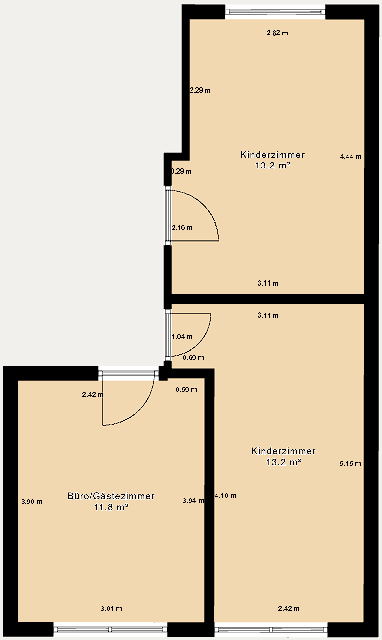
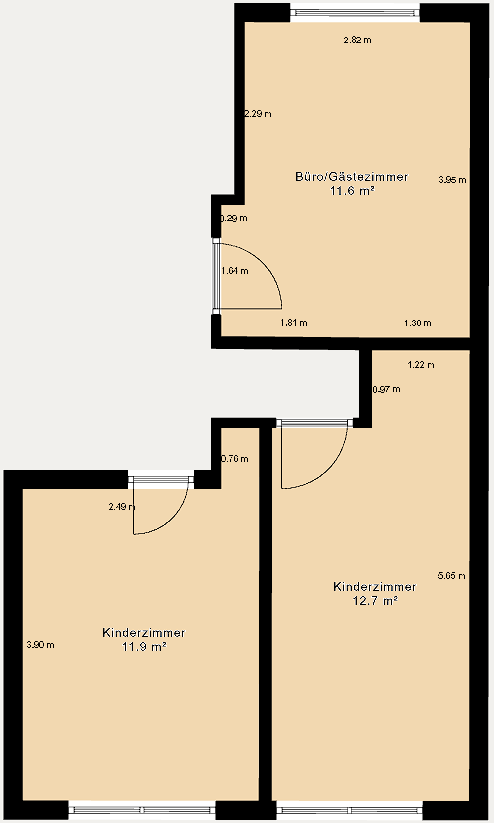
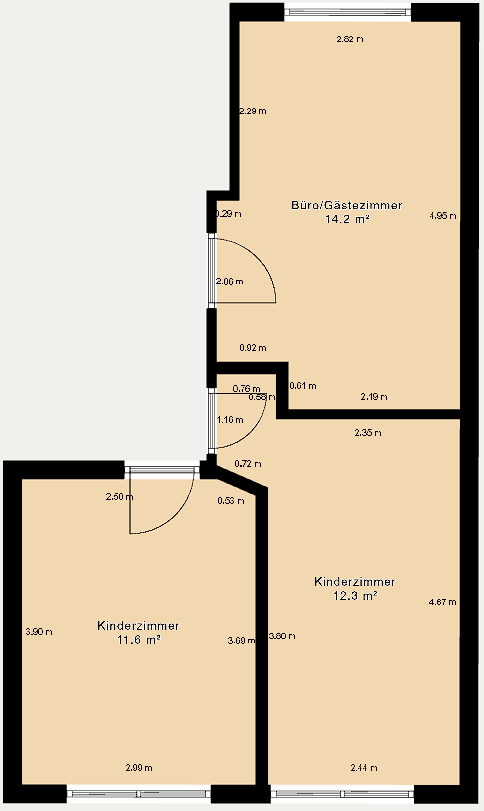
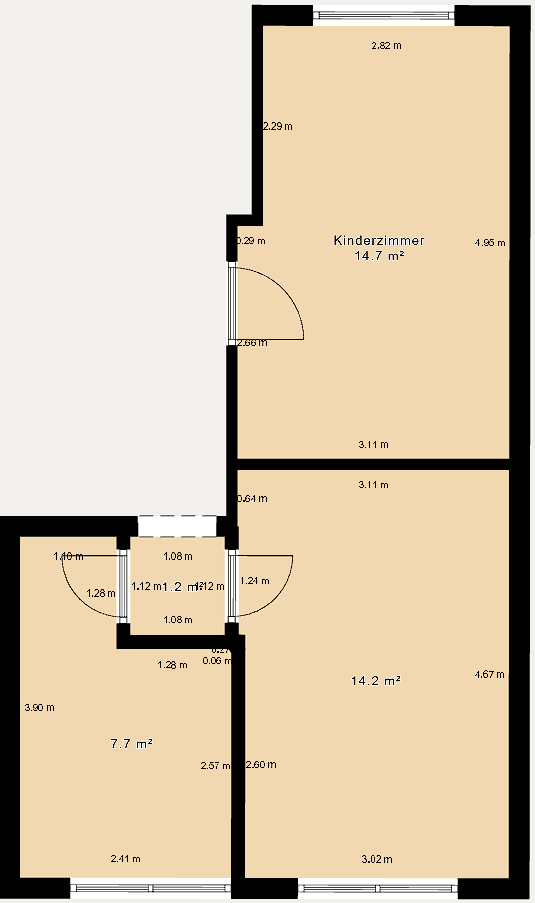
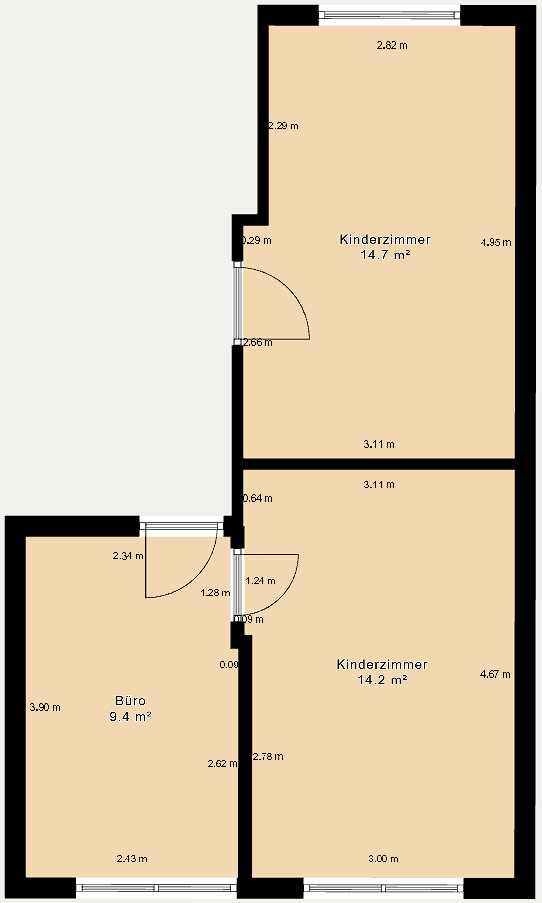

I am grateful both for good ideas on how to divide the rooms and for tips on implementation, as mentioned in my initial question.
Best regards
Reasons for this choice:
- The heating circuits fit almost perfectly.
- The children's rooms are as large as possible (this was our top priority).
- The children's rooms are roughly the same size.
We also planned each children's room to be furnished with a 140cm (55 inch) bed, wardrobe, 2 shelves, couch, TV, and desk. Once the rooms become smaller, this becomes difficult to achieve.
Other variants we drafted were:
I am grateful both for good ideas on how to divide the rooms and for tips on implementation, as mentioned in my initial question.
Best regards

I’ll pose a somewhat provocative question: "Do you actually own the entire house?" (Regardless of ownership details, it would be fundamentally helpful to present the structural relationships in a complete floor plan and building section!). In a condominium, all walls are part of the common property and any modifications require the approval of the owners’ association meeting.
https://www.instagram.com/11antgmxde/
https://www.linkedin.com/company/bauen-jetzt/
https://www.instagram.com/11antgmxde/
https://www.linkedin.com/company/bauen-jetzt/
Similar topics