
Hello,
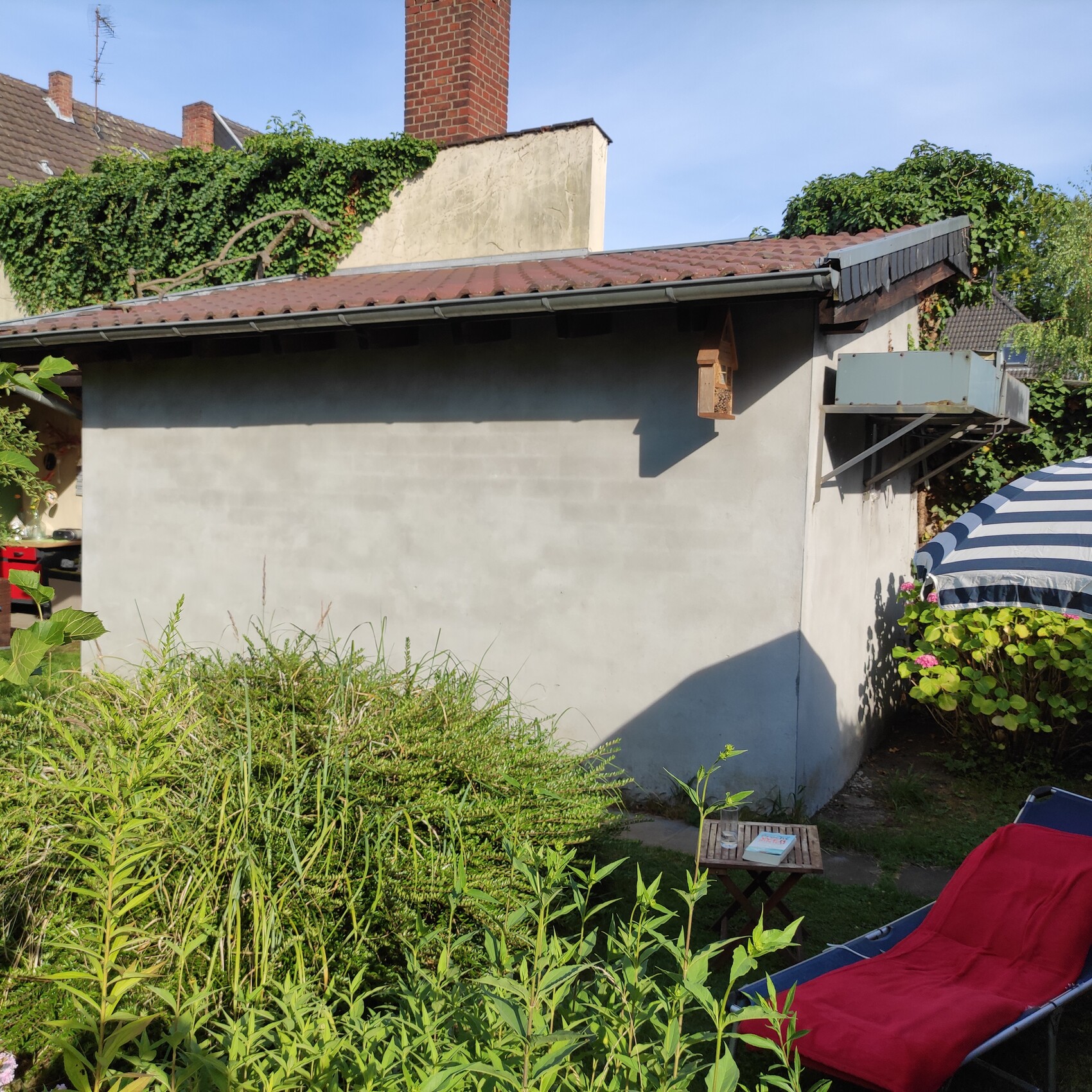
I am currently gutting a former cold storage room (see photo).
The cold storage room has three walls with a mono-pitched roof. The fourth wall is a shared wall with a garage or carport on the opposite long side, which is not visible in the picture.
The question is the following:
The floor (concrete foundation) of the former cold room is about 40 cm (16 inches) below the garden level, where it is now going to be accessed from the other side and used as a garden shed. The old entrance to the cold room, located on the opposite side from the front view shown in the picture, will be bricked up.
I would like to have a window in the long wall shown in the photo and either a door in this wall or in the short wall on the left, which would then provide access from the garden.
Due to the 40 cm (16 inches) difference in height between the garden level and the cold room floor, I see several options:
a. Side or front entrance with steps down into the space.
b. Filling the room with material to bridge the height difference to the garden level, creating an almost level entrance.
c. Excavating the garden in front of the future garden shed by about 40 cm (16 inches) and creating a recessed area or terrace of about 3 x 5 meters (10 x 16 feet) in front of the shed to allow an entrance at garden level.
The room height is sufficient for all three options. I am also aware that proper drainage needs to be ensured to prevent water ingress during heavy rain events.
Ideally, I want to avoid the 40 cm (16 inches) height difference, so option a is basically ruled out.
What do you think? Which practical and cost-effective solutions do you see to raise the floor height in the future garden shed by about 40 cm (16 inches)?
Thank you
I am currently gutting a former cold storage room (see photo).
The cold storage room has three walls with a mono-pitched roof. The fourth wall is a shared wall with a garage or carport on the opposite long side, which is not visible in the picture.
The question is the following:
The floor (concrete foundation) of the former cold room is about 40 cm (16 inches) below the garden level, where it is now going to be accessed from the other side and used as a garden shed. The old entrance to the cold room, located on the opposite side from the front view shown in the picture, will be bricked up.
I would like to have a window in the long wall shown in the photo and either a door in this wall or in the short wall on the left, which would then provide access from the garden.
Due to the 40 cm (16 inches) difference in height between the garden level and the cold room floor, I see several options:
a. Side or front entrance with steps down into the space.
b. Filling the room with material to bridge the height difference to the garden level, creating an almost level entrance.
c. Excavating the garden in front of the future garden shed by about 40 cm (16 inches) and creating a recessed area or terrace of about 3 x 5 meters (10 x 16 feet) in front of the shed to allow an entrance at garden level.
The room height is sufficient for all three options. I am also aware that proper drainage needs to be ensured to prevent water ingress during heavy rain events.
Ideally, I want to avoid the 40 cm (16 inches) height difference, so option a is basically ruled out.
What do you think? Which practical and cost-effective solutions do you see to raise the floor height in the future garden shed by about 40 cm (16 inches)?
Thank you
Hi,
if you really want to compensate for the 40cm (16 inches), filling up your ground (option b) is the most practical solution. For this, you should use stable, compacted fill material in layers—for example, recycled gravel as a load-bearing layer, topped with a clean layer (such as sand or fine gravel), and then a new concrete slab or screed, preferably with insulation in between. This way, you’ll get a level, dry, and structurally sound floor. Make sure to check the load-bearing capacity of the walls beforehand; otherwise, there could be settling. Option c, involving excavation and a deeper terrace, is technically feasible but will require more effort long-term for drainage, waterproofing, and maintenance, and might not blend as well visually.
Insulate directly against rising damp—don’t just focus upward but ensure continuous moisture protection connecting to the existing structure.
Good luck!
if you really want to compensate for the 40cm (16 inches), filling up your ground (option b) is the most practical solution. For this, you should use stable, compacted fill material in layers—for example, recycled gravel as a load-bearing layer, topped with a clean layer (such as sand or fine gravel), and then a new concrete slab or screed, preferably with insulation in between. This way, you’ll get a level, dry, and structurally sound floor. Make sure to check the load-bearing capacity of the walls beforehand; otherwise, there could be settling. Option c, involving excavation and a deeper terrace, is technically feasible but will require more effort long-term for drainage, waterproofing, and maintenance, and might not blend as well visually.
Insulate directly against rising damp—don’t just focus upward but ensure continuous moisture protection connecting to the existing structure.
Good luck!
Similar topics