
ᐅ Mechanical ventilation with heat recovery for the renovation of a small residential house from 1954
Created on: 26 Oct 2019 17:48
G
galdreth
Hello everyone,
I have been thinking about implementing a mechanical ventilation system with heat recovery. The house dates back to 1954 and is being completely renovated. The living area will later be about 125sqm (1350 sqft). There is an example calculator from Bosch which, using the approximate room sizes, suggests a "Bosch Vent 5000C HR230W" unit for a maximum duct length of 15 m (50 ft).
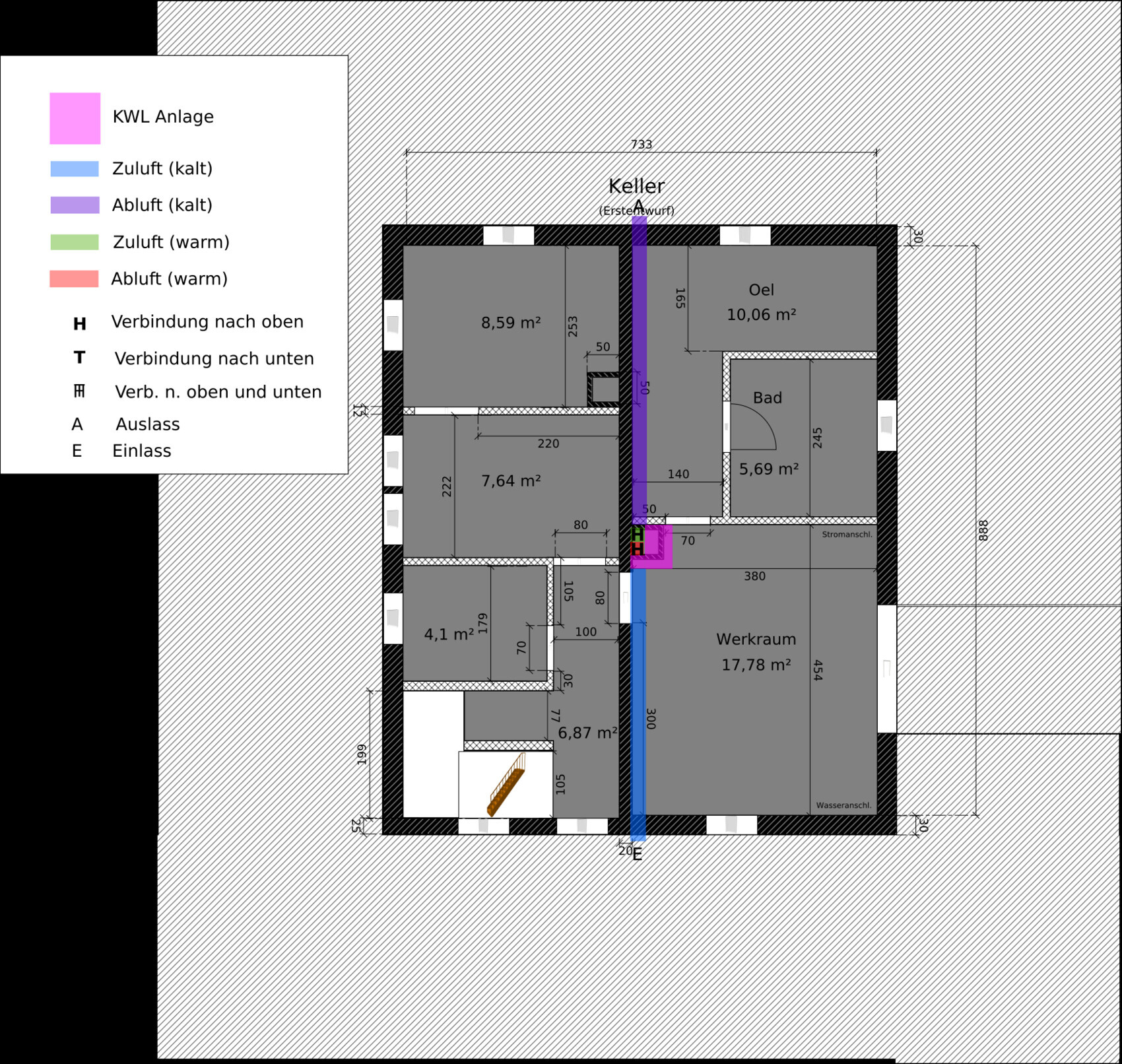
I have now tried to fit this into the actual floor plans and came up with a maximum duct length of 11 m (36 ft).
The basic idea is to use one of the old chimneys (the centrally located one) for the vertical ducts (DN160). The other chimney on the north side will be removed entirely. Starting from the first floor, there are wooden beam ceilings. Is it realistic to install flat ducts (flexible 140x50mm (5.5x2 inches)) in the ceiling cavities, and has anyone done this before?
In the basement, the mechanical ventilation unit will be placed centrally at the old chimney location. The fresh air intake will be on the south side below the entrance stairs. Exhaust air will be discharged to the north (property boundary and compost area). The narrow passage on the plan will need to be widened.
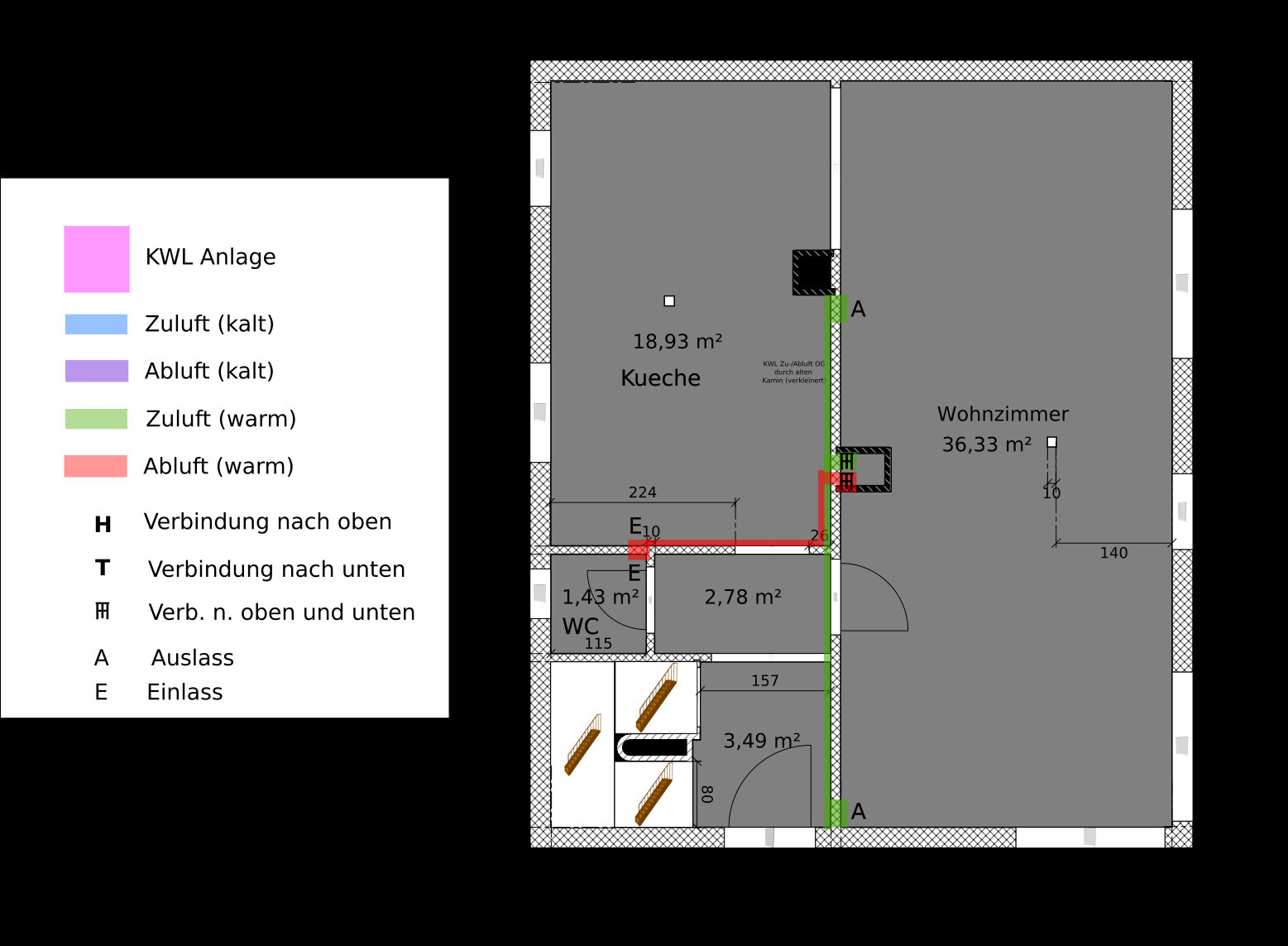
Ground floor: Branches and two outlets in the living room will come through the side wall. Two ducts will provide exhaust air for the kitchen and bathroom. Currently, flat ducts are shown running along the top of the walls. The kitchen and bathroom will each have two separate ducts to the main line (for soundproofing).
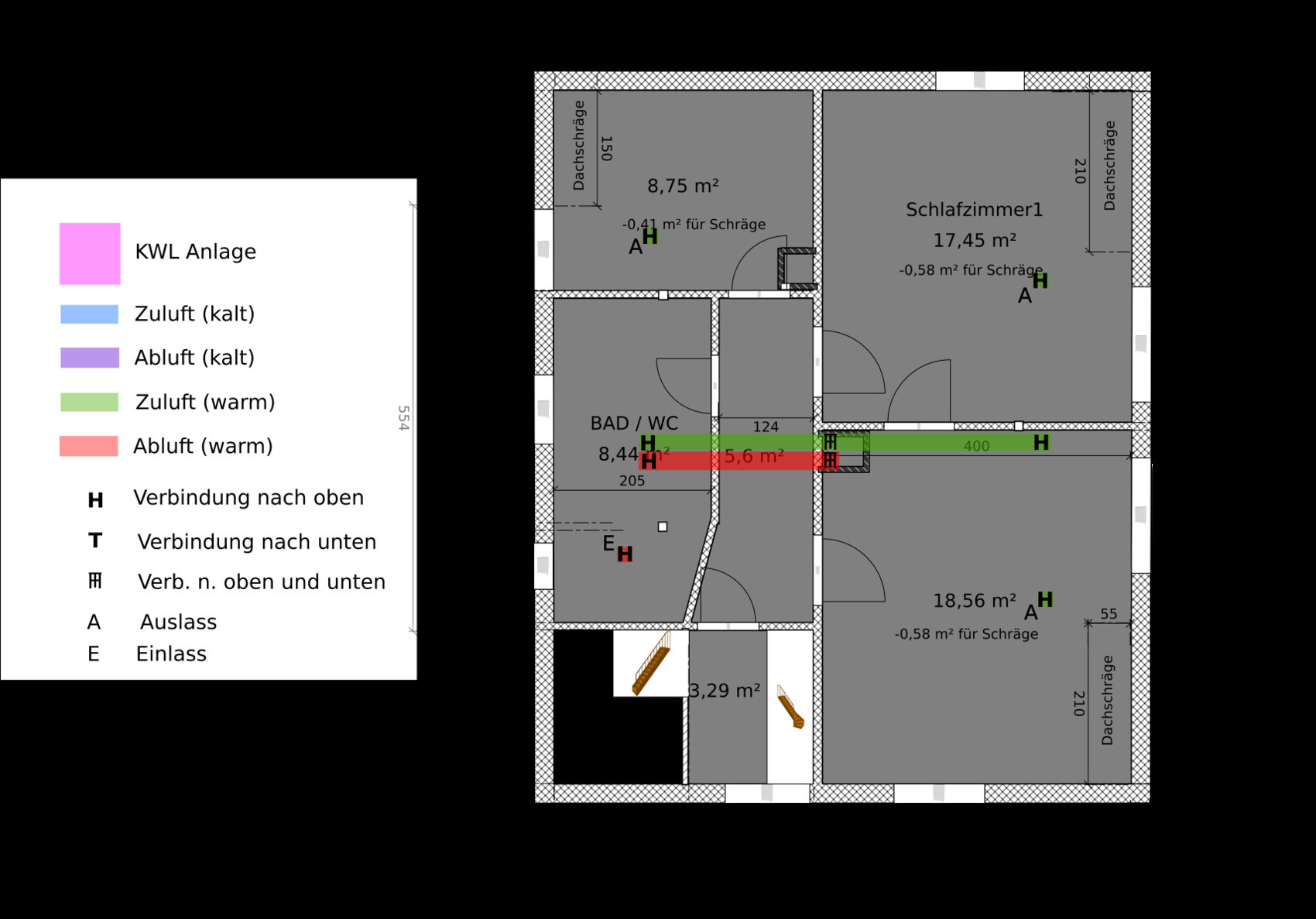
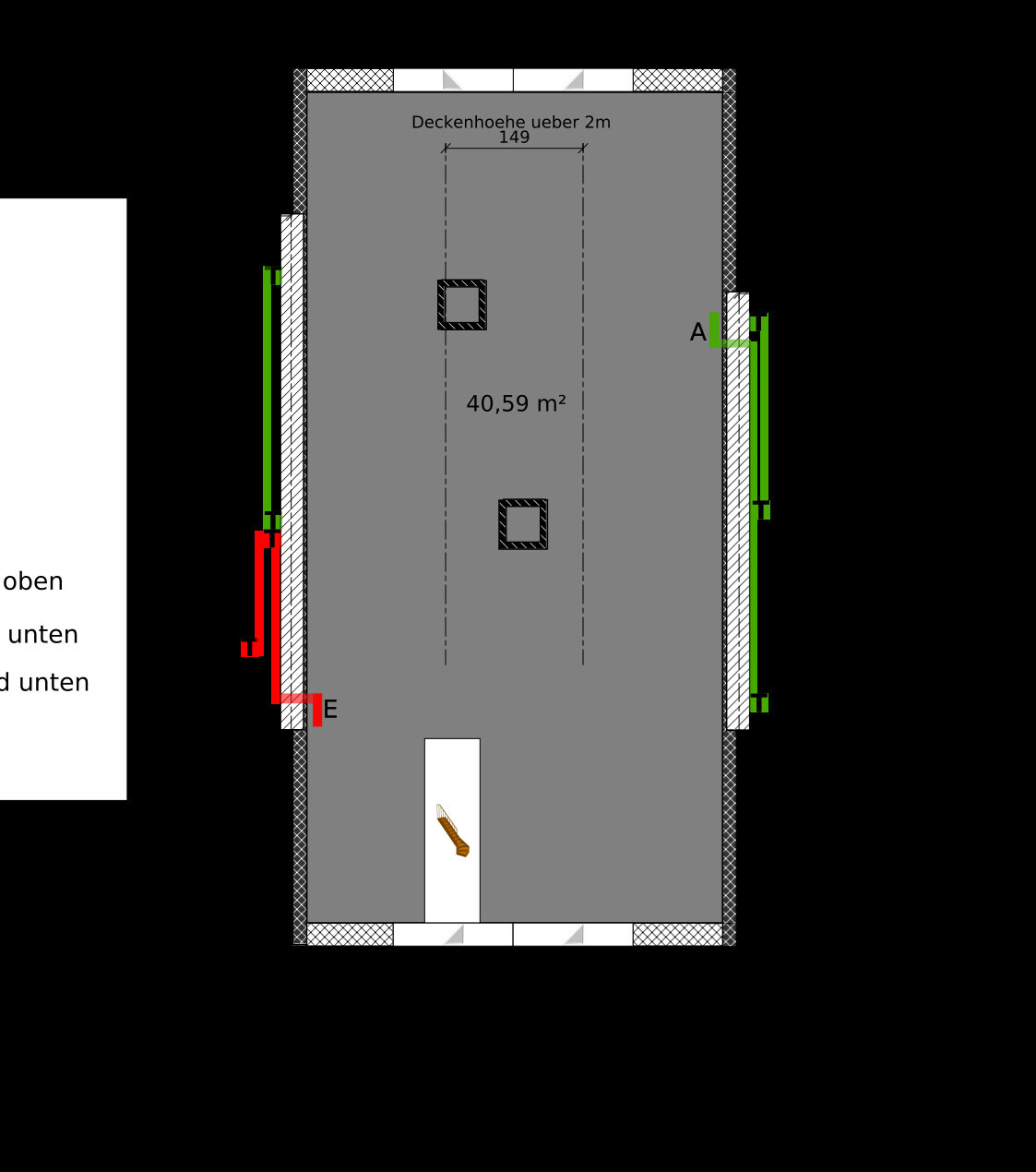
Attic and roof space: Here, several flat ducts will be routed mostly hidden within the ceiling to the outside, until reaching behind the roof purlins. Then I have about half a meter (20 inches) of vertical space in the attic, allowing me to install round ducts with large bending radii to the supply and exhaust points of the floors below. The attic will be converted later and connected to the ventilation system as well.
I would be interested to know if I have missed anything major or if this approach is feasible as described.
I have been thinking about implementing a mechanical ventilation system with heat recovery. The house dates back to 1954 and is being completely renovated. The living area will later be about 125sqm (1350 sqft). There is an example calculator from Bosch which, using the approximate room sizes, suggests a "Bosch Vent 5000C HR230W" unit for a maximum duct length of 15 m (50 ft).
I have now tried to fit this into the actual floor plans and came up with a maximum duct length of 11 m (36 ft).
The basic idea is to use one of the old chimneys (the centrally located one) for the vertical ducts (DN160). The other chimney on the north side will be removed entirely. Starting from the first floor, there are wooden beam ceilings. Is it realistic to install flat ducts (flexible 140x50mm (5.5x2 inches)) in the ceiling cavities, and has anyone done this before?
In the basement, the mechanical ventilation unit will be placed centrally at the old chimney location. The fresh air intake will be on the south side below the entrance stairs. Exhaust air will be discharged to the north (property boundary and compost area). The narrow passage on the plan will need to be widened.
Ground floor: Branches and two outlets in the living room will come through the side wall. Two ducts will provide exhaust air for the kitchen and bathroom. Currently, flat ducts are shown running along the top of the walls. The kitchen and bathroom will each have two separate ducts to the main line (for soundproofing).
Attic and roof space: Here, several flat ducts will be routed mostly hidden within the ceiling to the outside, until reaching behind the roof purlins. Then I have about half a meter (20 inches) of vertical space in the attic, allowing me to install round ducts with large bending radii to the supply and exhaust points of the floors below. The attic will be converted later and connected to the ventilation system as well.
I would be interested to know if I have missed anything major or if this approach is feasible as described.
Similar topics