
We have a mold problem on one wall in our temporary accommodation.
The issue has been ongoing for some time. Last autumn, we tried treating it with a mold removal kit that I had good experience with before, but unfortunately, it didn’t achieve the desired result. The likely cause is that the wall keeps getting wet at that spot.
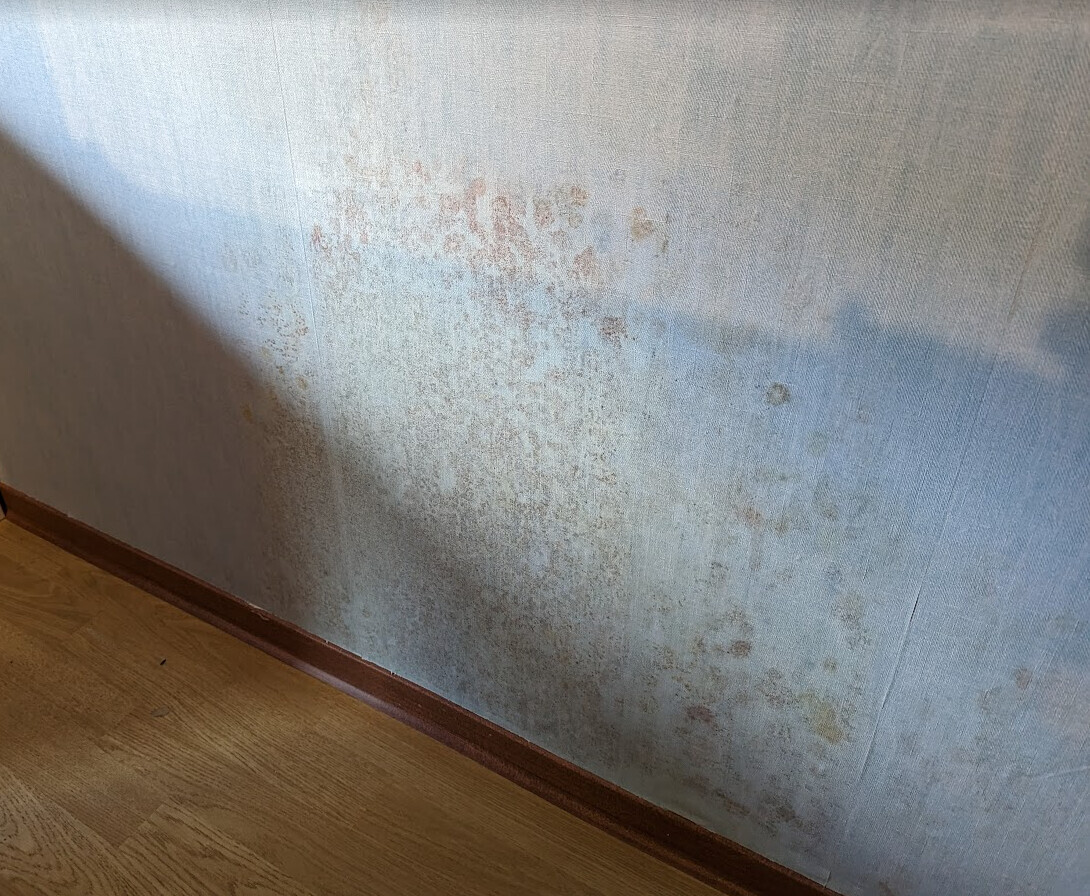
The stains are limited to about 1m² (11 sq ft) of wall surface. Within this area, the problem is steadily getting worse, but it is not spreading beyond that. On the opposite side of the wall is the shower in the bathroom. We suspect that something is leaking there, which causes the wall to become damp and mold to develop. For context, the wall was freshly wallpapered in July 2022. When we moved in, there was no visible issue. However, we are the first ones to really use this shower, since my uncle who previously lived here rarely used it. 🙄
To my great frustration, the affected wall is in our son’s nursery. So far, we had controlled the problem by placing a changing table in front of the wall. The changing pad on top ensured he couldn’t reach behind it, and the table was always kept about 20cm (8 inches) away from the wall.
Now we have to move the changing pad because baby number two is on the way. We’re wondering what to do with the wall. We have to stay here for about another 3 to 4 months until we can move out.
If I remove the changing pad, the table would be close to the moldy wall. That wouldn’t be too bad; I would probably just get rid of the table anyway rather than risk bringing mold into the new house over a $100 piece of furniture. That thought makes me shudder. :/
Still, I’m worried that the mold might get worse if a piece of furniture is placed directly against the wall. It would be especially bad if the mold started spreading sideways.
In the bathroom, we temporarily fixed black mold spots on the plasterboard ceiling by covering them with vinyl foil. It’s not pretty, but it at least provides a barrier between us and whatever is living in the ceiling. The advantage there is that we have shut off that bathroom (which was causing the ceiling to get wet). So while the ceiling is stained, it is now dry.
We can’t do the same for the children’s room wall. The shower next door is the only one in the house still in use.
Would taping plastic foil over the affected area work if the wall keeps getting wet? Or would it be better to push the table close to the wall without any foil?
Does anyone have a completely different, clever idea on how to solve this?
The issue has been ongoing for some time. Last autumn, we tried treating it with a mold removal kit that I had good experience with before, but unfortunately, it didn’t achieve the desired result. The likely cause is that the wall keeps getting wet at that spot.
The stains are limited to about 1m² (11 sq ft) of wall surface. Within this area, the problem is steadily getting worse, but it is not spreading beyond that. On the opposite side of the wall is the shower in the bathroom. We suspect that something is leaking there, which causes the wall to become damp and mold to develop. For context, the wall was freshly wallpapered in July 2022. When we moved in, there was no visible issue. However, we are the first ones to really use this shower, since my uncle who previously lived here rarely used it. 🙄
To my great frustration, the affected wall is in our son’s nursery. So far, we had controlled the problem by placing a changing table in front of the wall. The changing pad on top ensured he couldn’t reach behind it, and the table was always kept about 20cm (8 inches) away from the wall.
Now we have to move the changing pad because baby number two is on the way. We’re wondering what to do with the wall. We have to stay here for about another 3 to 4 months until we can move out.
If I remove the changing pad, the table would be close to the moldy wall. That wouldn’t be too bad; I would probably just get rid of the table anyway rather than risk bringing mold into the new house over a $100 piece of furniture. That thought makes me shudder. :/
Still, I’m worried that the mold might get worse if a piece of furniture is placed directly against the wall. It would be especially bad if the mold started spreading sideways.
In the bathroom, we temporarily fixed black mold spots on the plasterboard ceiling by covering them with vinyl foil. It’s not pretty, but it at least provides a barrier between us and whatever is living in the ceiling. The advantage there is that we have shut off that bathroom (which was causing the ceiling to get wet). So while the ceiling is stained, it is now dry.
We can’t do the same for the children’s room wall. The shower next door is the only one in the house still in use.
Would taping plastic foil over the affected area work if the wall keeps getting wet? Or would it be better to push the table close to the wall without any foil?
Does anyone have a completely different, clever idea on how to solve this?
