
Hello everyone,
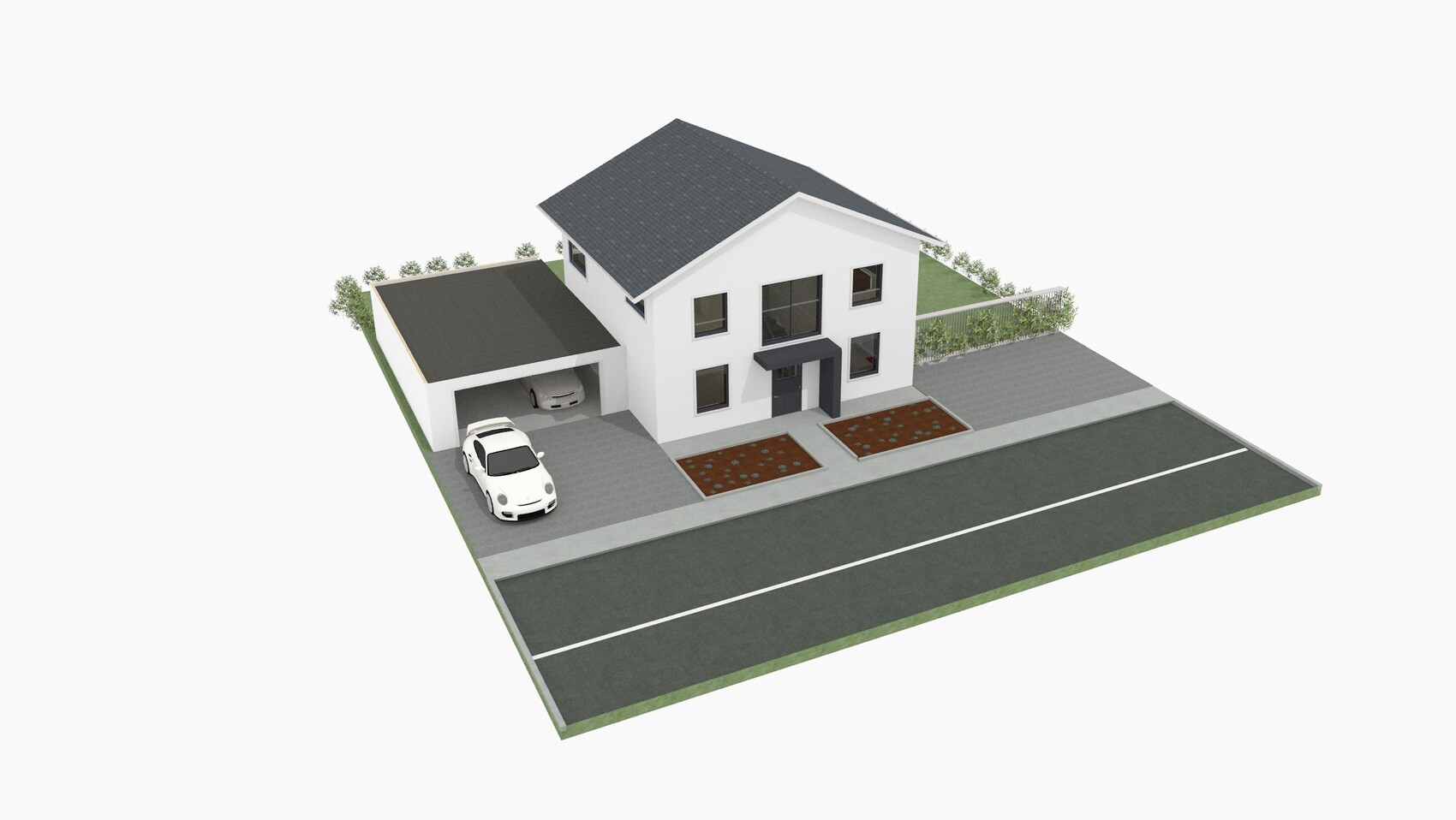
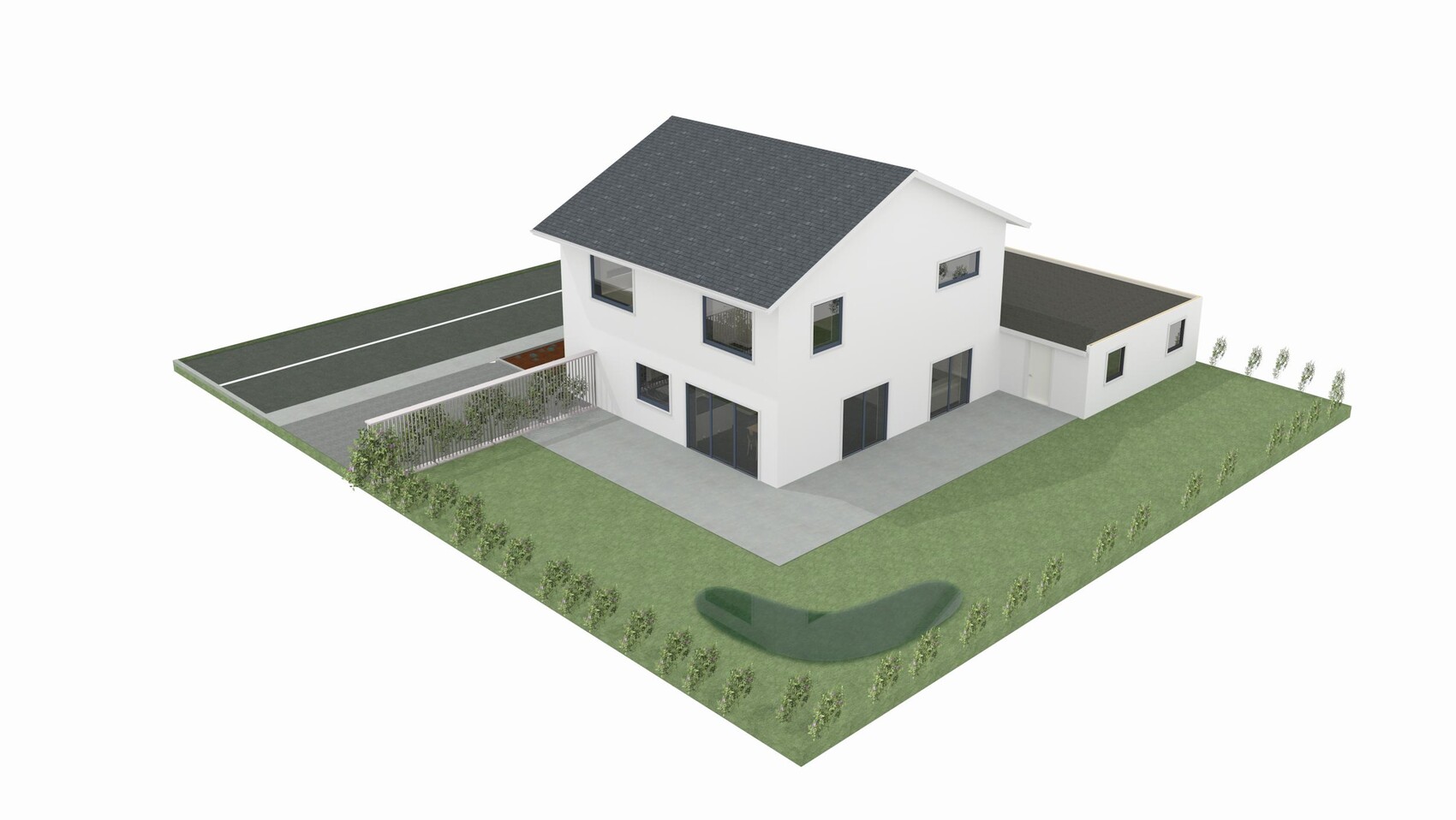
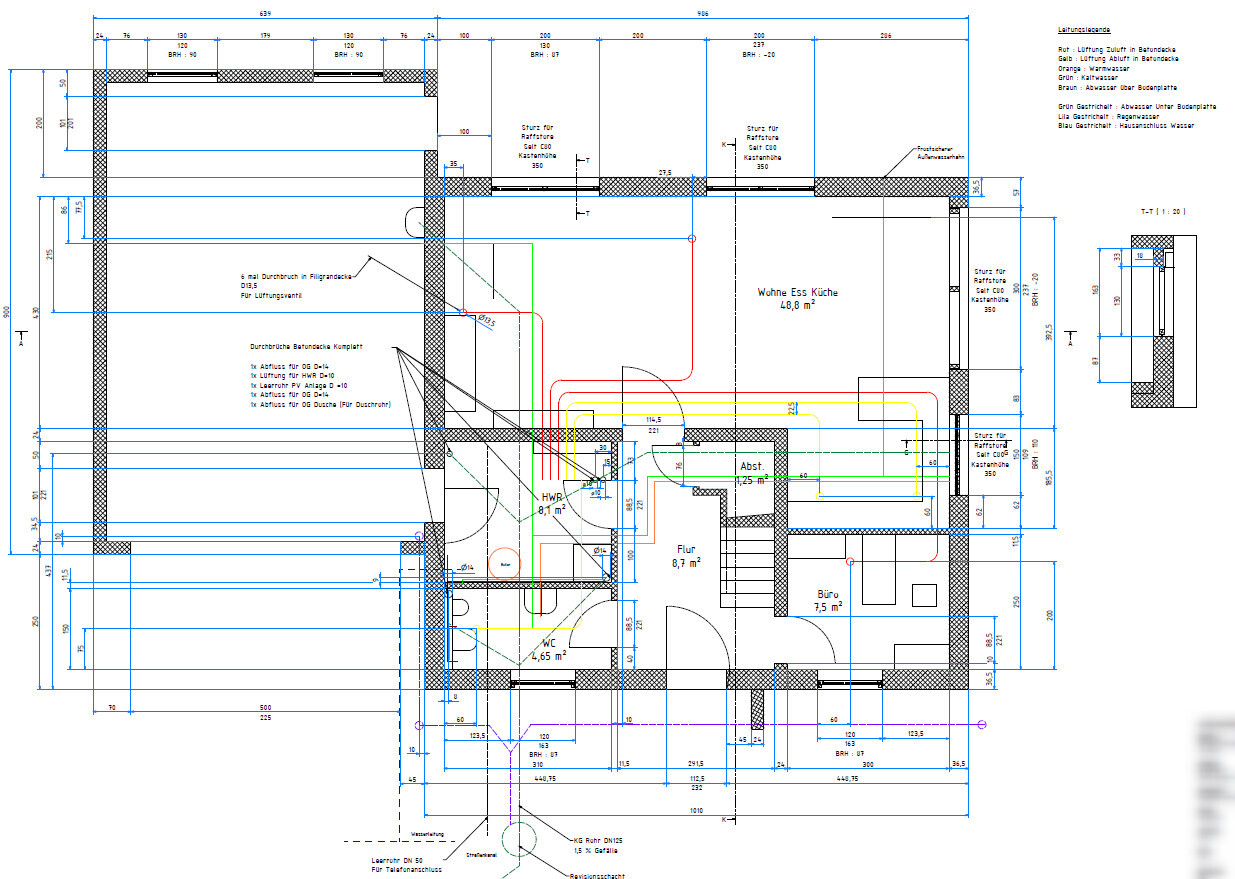
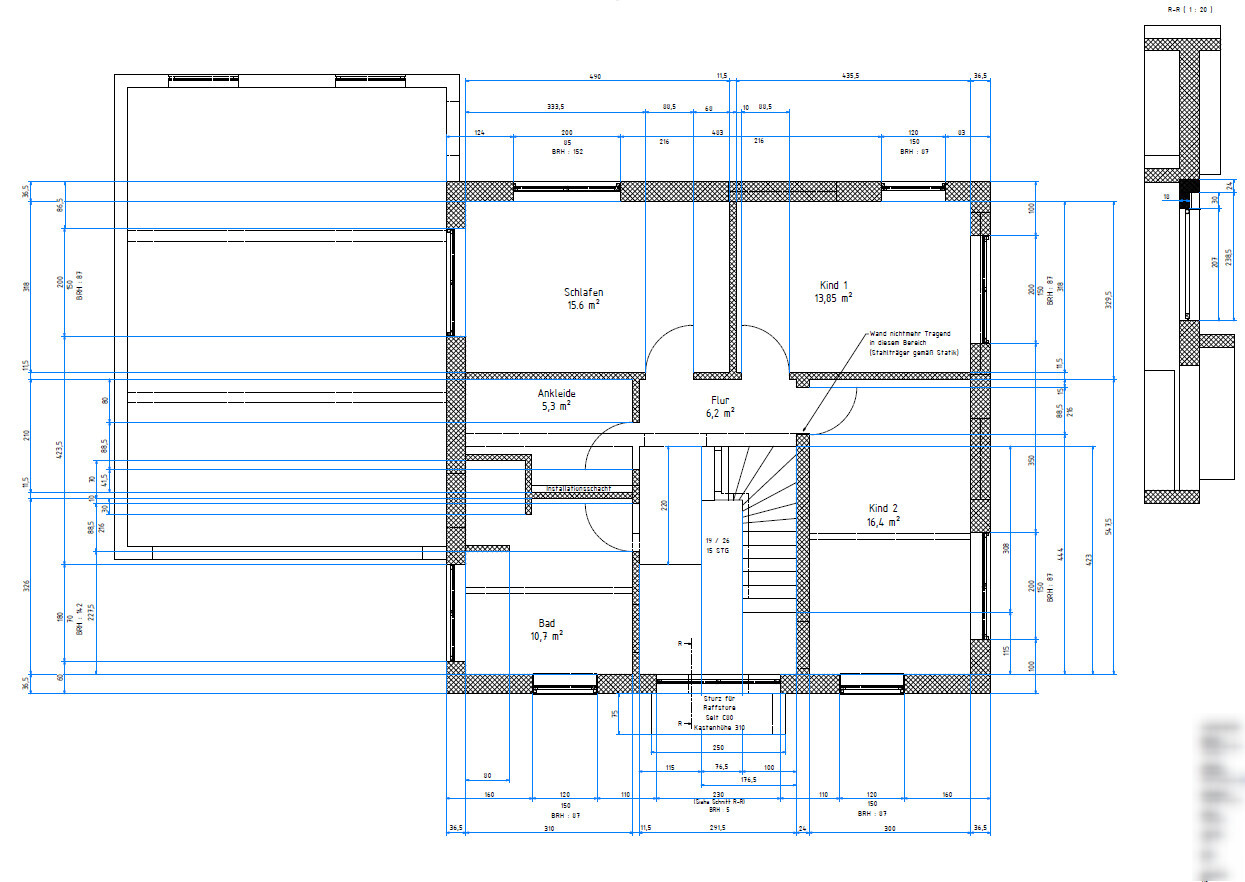
This is the construction report following an earlier thread on floor plan design.
Planned are:
618 m² (6650 sq ft) plot of land
150 m² (1615 sq ft) living space
50 m² (540 sq ft) double garage
Air-to-water heat pump with underfloor and wall heating
Zehnder ventilation system
Exterior blinds in the living room, kitchen, and gallery. Windows anthracite on both inside and outside
Smart home wireless Homematic IP
Planned budget: €300,000 including land and ancillary costs + €30,000 reserve
Plus €12,500 net for a 9.6 kWp photovoltaic system financed separately
Only small regional companies recommended by other builders are being considered.
So far, the following trades have been contracted:
Earthworks: €20,000
Shell construction: €73,000 + €1,000 for the porch above the front door, Wienerberger Poroton T9
Roof: €19,000 + €1,500 scaffolding
Electrical work: €11,000 excluding chiseling work
Window materials: 17 Salamander triple-glazed units + Beck & Heun roller shutters + 5 Selt exterior blinds = €16,000
Quotes received for:
Plastering without decorative finish: €21,000
Bathroom ceramics Villeroy & Boch: €3,000 from Reuter Bathroom Shop
Interior doors Herholz: €2,600
Hörmann front door + garage door: €3,000
Building services materials from the internet: €10,000
Zehnder ventilation unit ComfoAir Q350 TR enthalpy heat exchanger including materials: €4,000 from Selfio
Nobilia kitchen furniture: €5,500, Bosch Series 4 kitchen appliances from Für Uns Shop with 50% discount for €3,500
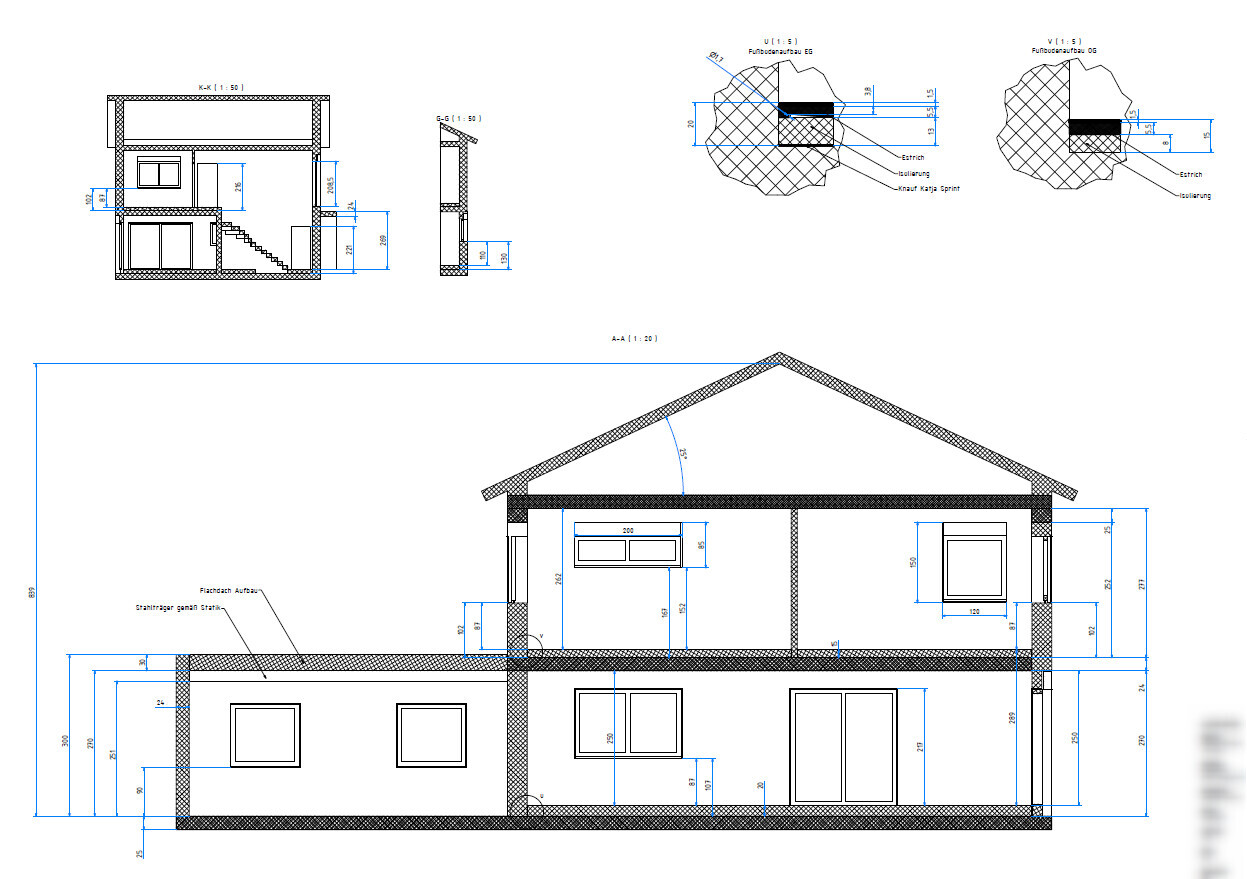
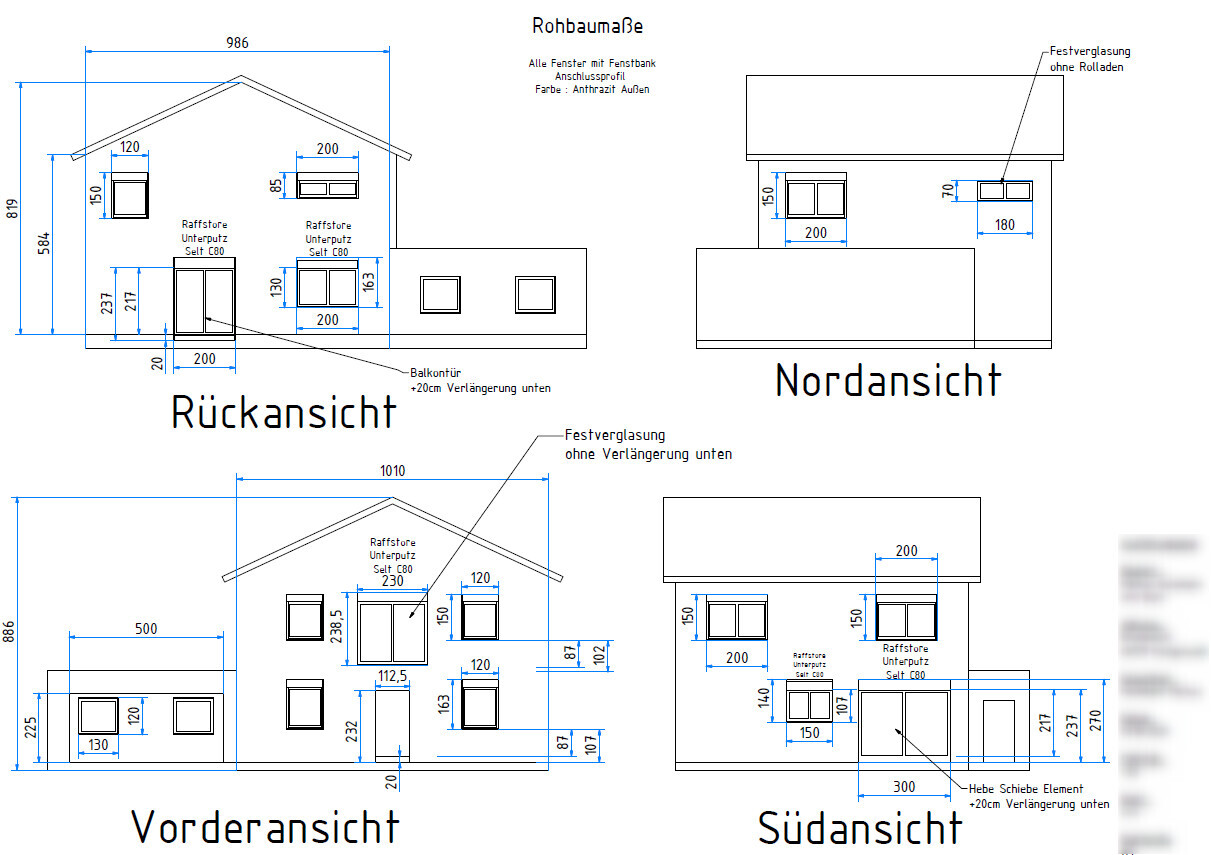

This is the construction report following an earlier thread on floor plan design.
Planned are:
618 m² (6650 sq ft) plot of land
150 m² (1615 sq ft) living space
50 m² (540 sq ft) double garage
Air-to-water heat pump with underfloor and wall heating
Zehnder ventilation system
Exterior blinds in the living room, kitchen, and gallery. Windows anthracite on both inside and outside
Smart home wireless Homematic IP
Planned budget: €300,000 including land and ancillary costs + €30,000 reserve
Plus €12,500 net for a 9.6 kWp photovoltaic system financed separately
Only small regional companies recommended by other builders are being considered.
So far, the following trades have been contracted:
Earthworks: €20,000
Shell construction: €73,000 + €1,000 for the porch above the front door, Wienerberger Poroton T9
Roof: €19,000 + €1,500 scaffolding
Electrical work: €11,000 excluding chiseling work
Window materials: 17 Salamander triple-glazed units + Beck & Heun roller shutters + 5 Selt exterior blinds = €16,000
Quotes received for:
Plastering without decorative finish: €21,000
Bathroom ceramics Villeroy & Boch: €3,000 from Reuter Bathroom Shop
Interior doors Herholz: €2,600
Hörmann front door + garage door: €3,000
Building services materials from the internet: €10,000
Zehnder ventilation unit ComfoAir Q350 TR enthalpy heat exchanger including materials: €4,000 from Selfio
Nobilia kitchen furniture: €5,500, Bosch Series 4 kitchen appliances from Für Uns Shop with 50% discount for €3,500
Octrineddy schrieb:
For that, the energy source would first have to provide a high temperature, which then gets artificially lowered again for the underfloor heating --> efficiency goes down the drain 😉Exactly right.
Octrineddy schrieb:
..The commonly installed underfloor heating is a low-temperature system (due to energy efficiency), which does not work well with water-based towel radiators. These usually require a significantly higher flow temperature.And what does the underfloor heating heat with then: raspberry juice, aloe vera gel, ...???https://www.instagram.com/11antgmxde/
https://www.linkedin.com/company/bauen-jetzt/

This is not the first time this topic has come up here.
Having two heating circuits is particularly problematic because, in most cases, corrosion in radiators contaminates the water, which is bad for underfloor heating.
Basically, it’s not ideal because, as mentioned, radiators require a higher supply temperature. With gas heating, this may not be as critical since it generally operates at higher system temperatures. However, with heat pumps, it is far from ideal because the heat pump has to provide supply temperatures of 40-50°C (104-122°F) solely for the radiators, even though the underfloor heating could manage with 35°C (95°F) or significantly less.
Having two heating circuits is particularly problematic because, in most cases, corrosion in radiators contaminates the water, which is bad for underfloor heating.
Basically, it’s not ideal because, as mentioned, radiators require a higher supply temperature. With gas heating, this may not be as critical since it generally operates at higher system temperatures. However, with heat pumps, it is far from ideal because the heat pump has to provide supply temperatures of 40-50°C (104-122°F) solely for the radiators, even though the underfloor heating could manage with 35°C (95°F) or significantly less.
 Schimi17914 Dec 2020 13:33
Where does the hot water for showering, etc., come from when using a heat pump?
Schimi1791 schrieb:
Where does the hot water for showering etc. come from when using a heat pump?The heat pump briefly raises the temperature separately to heat the domestic hot water.
It doesn’t mean it can’t do it... it just becomes inefficient.
A
allstar834 Dec 2020 13:53hegi___ schrieb:
Bathroom and toilet on the ground floor because these are the two most critical rooms with the highest heating load to floor area ratio.
Hydronic towel warmers no longer have a place in new buildings. How does wall heating work? Are the pipes from the underfloor heating just spaced closer together to heat the wall? What installation height is typically required?
Similar topics