
Hello,
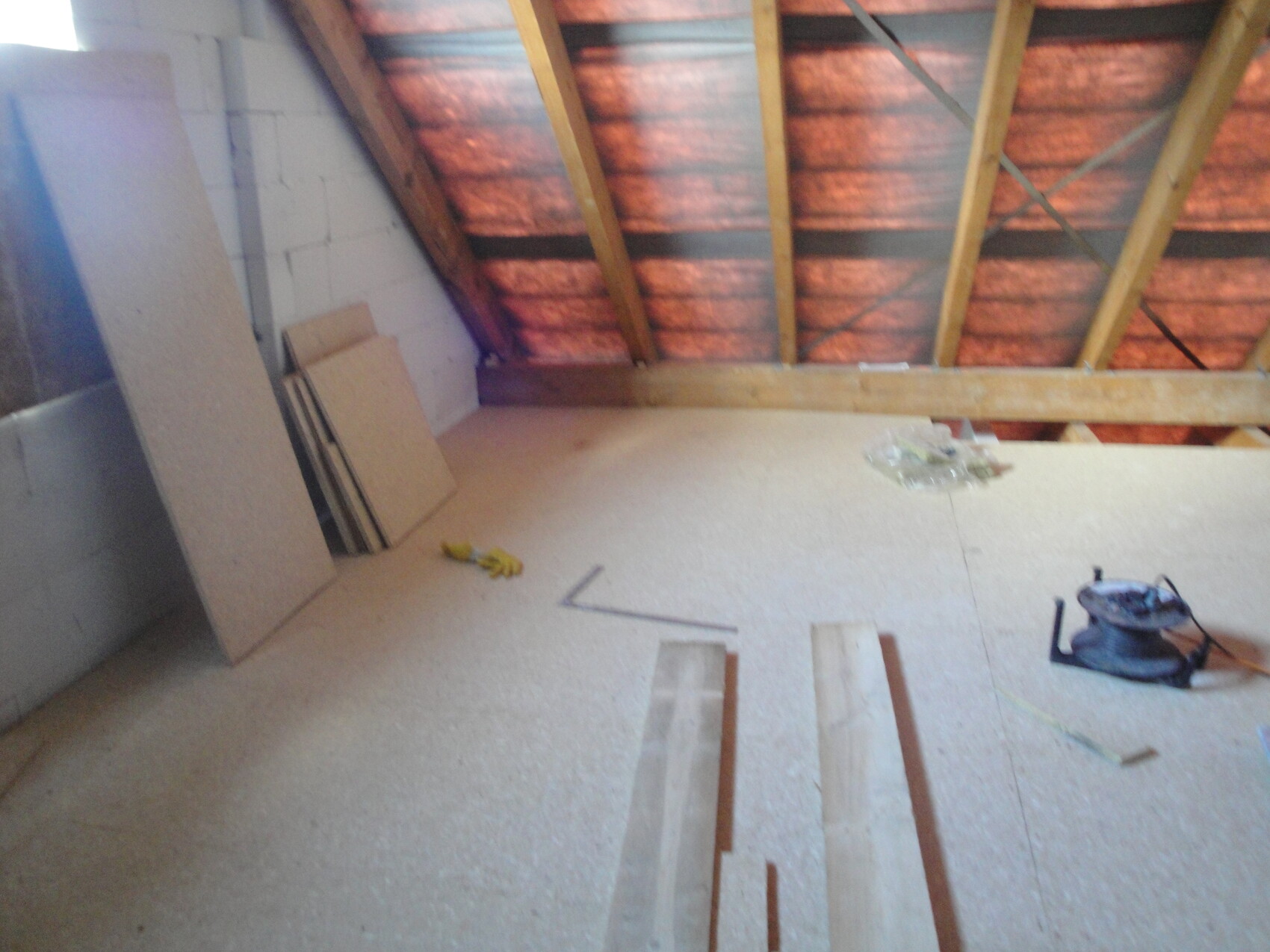
We had our house built in 2015. Of course, we ran into a lot of problems and ended up doing most of the work ourselves so that we could at least move in by 2017. At the end of 2019, our family grew with the arrival of two girls. Now the topic comes up: my home office will soon have to make way for a second children’s bedroom so that one of the girls can have her own room. The attic definitely has potential to create my new workspace. It is already insulated and the sloped ceilings are covered with OSB boards, over which I want to install ceiling panels. I think this looks better than painting the OSB boards, which gave us problems in the lower rooms.
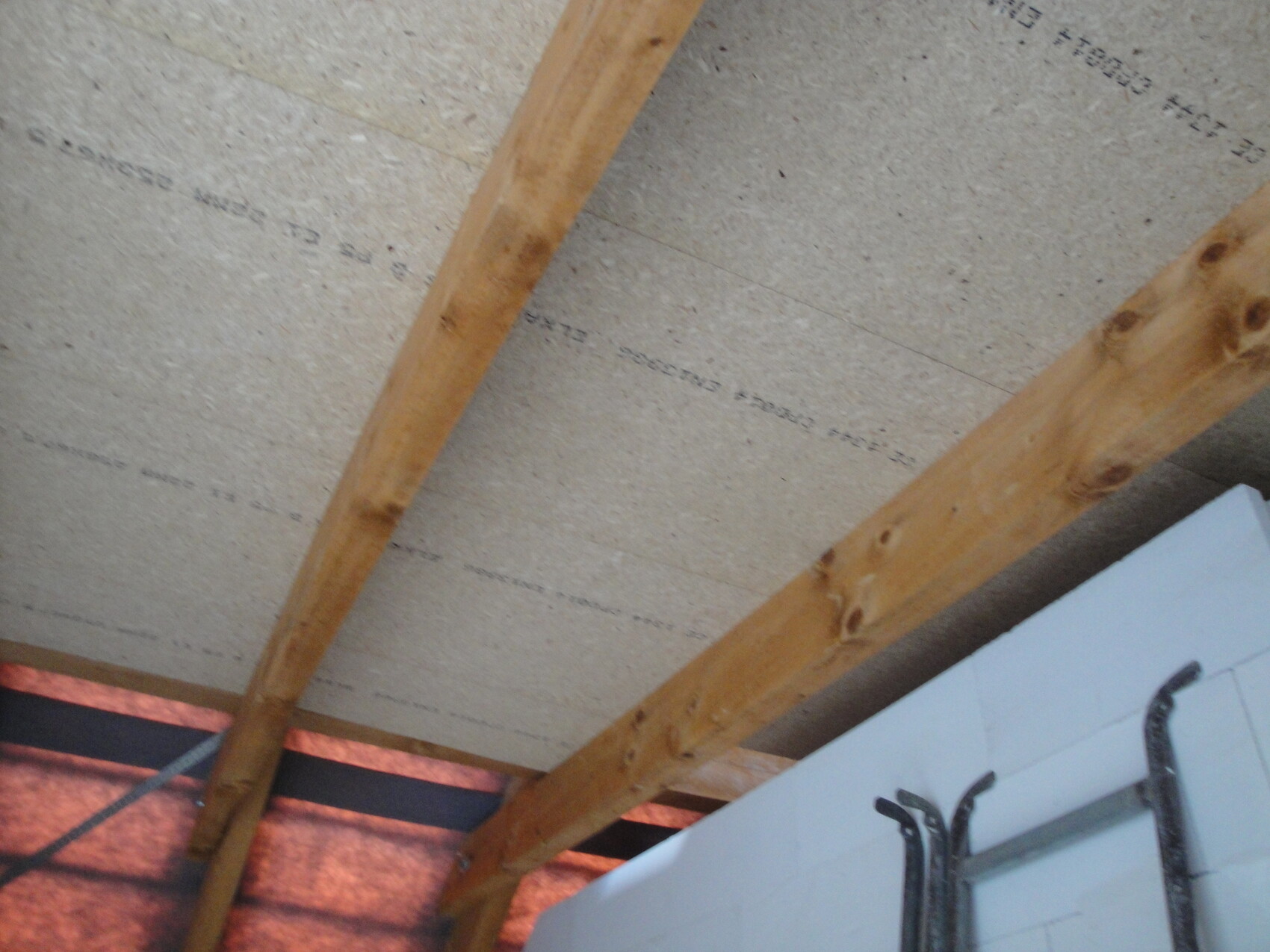
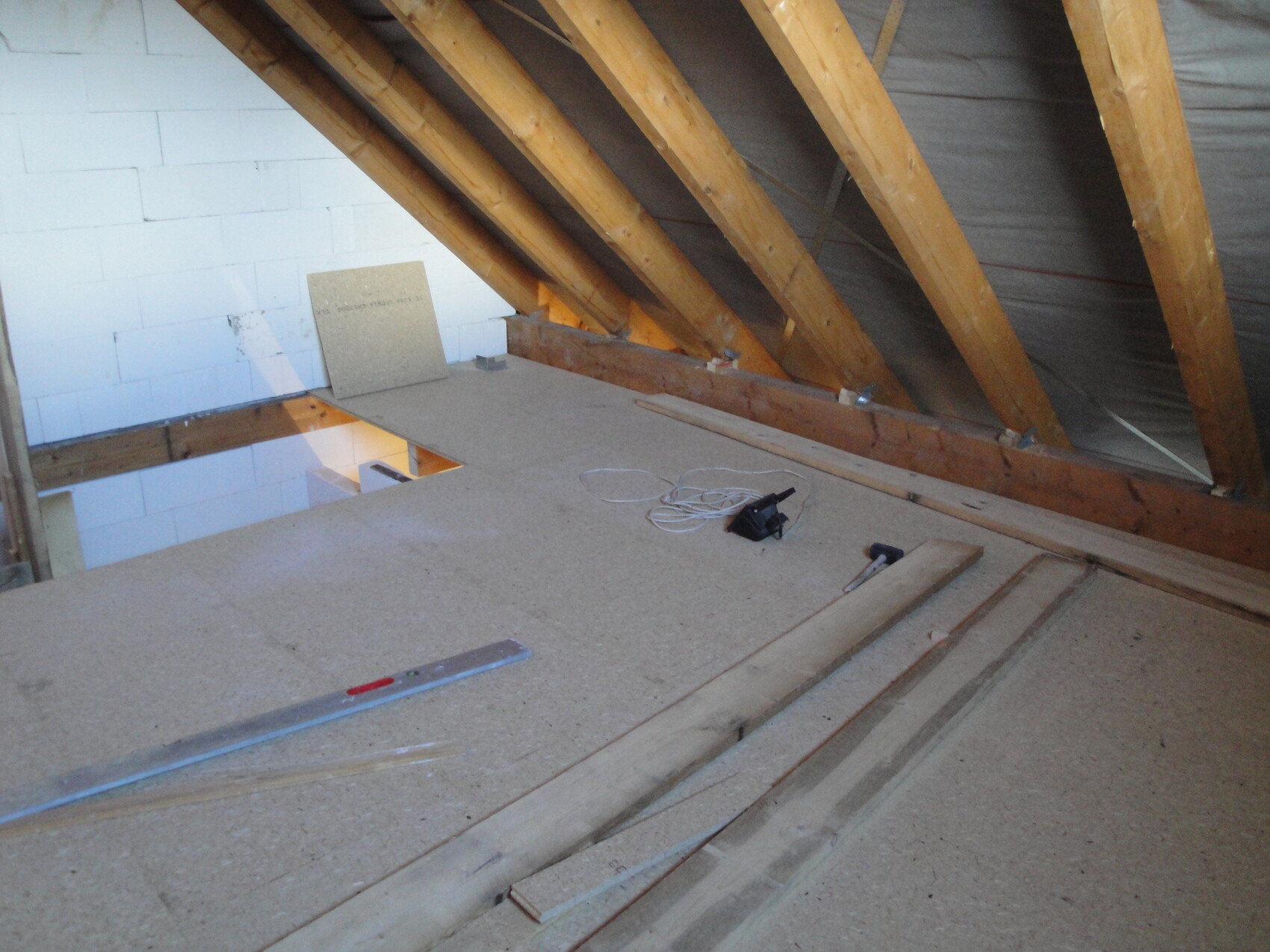
My biggest problem, and the reason I’m asking for your advice, is the attic floor. It is constructed with insulation between the joists and then thick chipboard panels on top. I think this is not sufficient because the floor has waves, meaning it is uneven. My question: Can I add a leveling compound over these chipboard panels and then install dry screed panels to lay laminate flooring on top, or would that be too much weight? I only have photos showing the joists from below before the insulation was installed between them, which might help. I can also measure the joist thickness if needed. It’s important for me to avoid causing structural problems or ending up “one floor lower” if the load is too much.
Maybe you can help me with this.
Best regards and thanks in advance,
Roady89
We had our house built in 2015. Of course, we ran into a lot of problems and ended up doing most of the work ourselves so that we could at least move in by 2017. At the end of 2019, our family grew with the arrival of two girls. Now the topic comes up: my home office will soon have to make way for a second children’s bedroom so that one of the girls can have her own room. The attic definitely has potential to create my new workspace. It is already insulated and the sloped ceilings are covered with OSB boards, over which I want to install ceiling panels. I think this looks better than painting the OSB boards, which gave us problems in the lower rooms.
My biggest problem, and the reason I’m asking for your advice, is the attic floor. It is constructed with insulation between the joists and then thick chipboard panels on top. I think this is not sufficient because the floor has waves, meaning it is uneven. My question: Can I add a leveling compound over these chipboard panels and then install dry screed panels to lay laminate flooring on top, or would that be too much weight? I only have photos showing the joists from below before the insulation was installed between them, which might help. I can also measure the joist thickness if needed. It’s important for me to avoid causing structural problems or ending up “one floor lower” if the load is too much.
Maybe you can help me with this.
Best regards and thanks in advance,
Roady89
Roady89 schrieb:
I have actually considered leveling compound as well. I just hadn’t looked into it because I’m not sure if it would provide enough impact sound insulation, and for the dry screed panels, I would have chosen ones that have some kind of underlay so that hopefully the footsteps are less audible upstairs.For example, there are vinyl floors with impact sound insulation built right underneath.P
pagoni202012 Sep 2020 09:01I don’t quite understand the issue with the "waves." The current panels are screwed down and strong enough to walk on, right? Maybe you could improve this by adding some support where needed, or how and where exactly are these waves occurring?
Similarly, you could screw down an additional layer of OSB panels as the floor, then level it out at the necessary points and install it without any waves.
You’ll still hear the footsteps underneath, so soundproofing for impact noise would be a lower priority for me with your project.
On the OSB panels on the slope, I would apply painter’s fleece and then paint them white or a light color.
Similarly, you could screw down an additional layer of OSB panels as the floor, then level it out at the necessary points and install it without any waves.
You’ll still hear the footsteps underneath, so soundproofing for impact noise would be a lower priority for me with your project.
On the OSB panels on the slope, I would apply painter’s fleece and then paint them white or a light color.
 Winniefred12 Sep 2020 09:54
Only a structural engineer can ultimately answer that for you. You probably still have the exact building plans, so I would consult a professional (load-bearing capacity of the attic floor) with those. Dry screed, dry leveling compound, and floor covering already add quite a bit of weight overall. So currently, there is only one layer of OSB board? We also have a wooden beam ceiling, with some slag in between, simple floorboards, OSB board, and then laminate directly on top. I wouldn’t have dared to add another layer without expert advice. It’s not just about what the beams can support, but also what that single layer of OSB board can bear, and I would always prefer to be cautious.
So, if you want to use it permanently and the floor should be as level and vibration-free as possible, I would invest some money in a professional opinion and then sleep easy. Maybe it’s possible to do it like this (OSB + dry leveling compound + dry screed + floor covering), but maybe the first layer already needs to be reinforced or replaced. It all depends on questions like how much the beams can carry and how much your first layer can support.
So, if you want to use it permanently and the floor should be as level and vibration-free as possible, I would invest some money in a professional opinion and then sleep easy. Maybe it’s possible to do it like this (OSB + dry leveling compound + dry screed + floor covering), but maybe the first layer already needs to be reinforced or replaced. It all depends on questions like how much the beams can carry and how much your first layer can support.
Winniefred12 Sep 2020 09:57pagoni2020 schrieb:
I don’t quite understand the "waves" you’re talking about. The current panels are screwed down and strong enough to walk on, right? Maybe you could fix this by adding some support where needed—where exactly are these waves?
Similarly, you could screw down another layer of OSB panels as the subfloor, level it out where necessary, and install it without any waves.
You’ll hear the creaking sounds underneath anyway; from a noise perspective, impact sound insulation would be secondary for your project.
I would also recommend sticking painter’s fleece on the angled OSB panels and then painting them white or a light color. That’s not a bad idea either. We prepared the bathroom floor for tiling that way: a double layer of OSB panels with some screed on top, then the rest of the flooring. But that was just a small room. In this case, there won’t be heavy tiles—hopefully a lightweight covering instead. It’s definitely worth considering, aiming for the lightest solution in terms of weight.
I will play the devil’s advocate here. In my opinion, the chipboard floor is a design flaw. There is insulation underneath that can absorb moisture from below, but the chipboard prevents it from drying out. This creates a risk of mold. I recommend removing the chipboard and nailing down tongue-and-groove boards instead, as these are vapor-permeable. On top of the tongue-and-groove boards, lay carpet or underlay with a high natural fiber content. This way, you will have a warm and comfortable room. Karsten

pagoni2020 schrieb:
I don’t quite understand the issue with the "waves." The current panels are screwed down and strong enough to walk on, right? Maybe you could fix this by adding some support underneath where needed, or how and where exactly are these waves?
You could also screw another layer of OSB panels onto the floor and level them at the necessary points to install a smooth surface without waves.
You will hear footsteps underneath anyway; soundproofing to reduce noise would be secondary in your case.
On the OSB panels on the sloped ceiling, I would stick painter’s fleece and then paint white or in a light color. First of all, thanks for all the answers.
By "waves" I mean I suspect the panels might have been second-quality goods and some are slightly warped, which has caused unevenness.
The panels are firmly screwed down and walkable. We have a lot of stuff stored up there that I am gradually sorting through and want to throw away so I can clear the area initially.
My very first plan was to screw narrow battens onto the panels, level the floor with loose fill, then screw another layer of OSB on top and cover it with laminate. But I think I’ll have to have a structural engineer come and tell me how I can use this room in terms of load-bearing capacity. It wouldn’t make sense to install the floor and then not be allowed to put furniture like a desk or similar on it.
Similar topics