
ᐅ Junction Between Interior Wall Insulation and Roof Insulation
Created on: 28 Apr 2021 20:53
M
MayoooxHello house building experts,
We are currently converting the attic of our old country house and could use your opinions.
The main issue is the insulation, specifically the connection between the interior wall insulation and the roof insulation.
Here’s a brief overview of the current situation. Most of the roof insulation is already in place. Since we don’t have a membrane under the roof tiles, we are working with ventilation behind the roofing. The structural engineer and roofer recommended this principle and its implementation.
Now, there is a large interior wall that divides the house in the middle into one large room on one side and two smaller rooms on the other side. The wall is not insulated, and there is no insulation between the roof and the wall either. This creates a significant thermal bridge. In the smaller rooms, we plan to add a storage room and a small bathroom (only a toilet and washbasin), so we don’t necessarily see the need to insulate the wall there. However, the larger room will be used as a bedroom with underfloor heating. To make it comfortable and avoid cold walls, we want to insulate this wall. The insulation will be 14mm or 20mm (0.55 inch or 0.79 inch) mineral wool with a thermal conductivity rating of 0.035 W/mK, depending on what we can source affordably (friends have leftover insulation available at a low price).
I have been thinking a lot about the exact implementation. The challenge, in my opinion, is that it is unavoidable that the wall will absorb moisture. Much of this could be avoided by installing a vapor barrier, but since there is no membrane between the wall and the overlying roof, moisture will be absorbed from rain, snow, etc. For this reason, I would like to also work with ventilation behind the insulation.
My approach would be as follows:
I will double the wall, which is necessary anyway, as it is very uneven. The plan is to use structural timber (KVH) measuring 300mm x 60mm (12 inches x 2.4 inches). One piece is already installed (see photos). I would then insulate the last rafter space of the roof adjacent to the wall up to the start of the wall itself and begin the wall insulation at the edge of the roof insulation. This would create an uninsulated space between the wall and the wall insulation under the roof tiles—allowing external air to enter the cavity between the wall and the wall insulation, circulate, and transport moisture toward the gable. In a way, I am building an enclosed “interior shell” within the room.
In my opinion, this is a reasonable solution to ensure functional ventilation while maintaining continuous insulation.
Do you think this approach makes sense? Are there any alternatives? Or am I completely off track? Would ventilation with outside air dramatically cool down the wall (in the rooms on the other side of the wall, no insulation will be installed)?
Thank you very much for your answers.
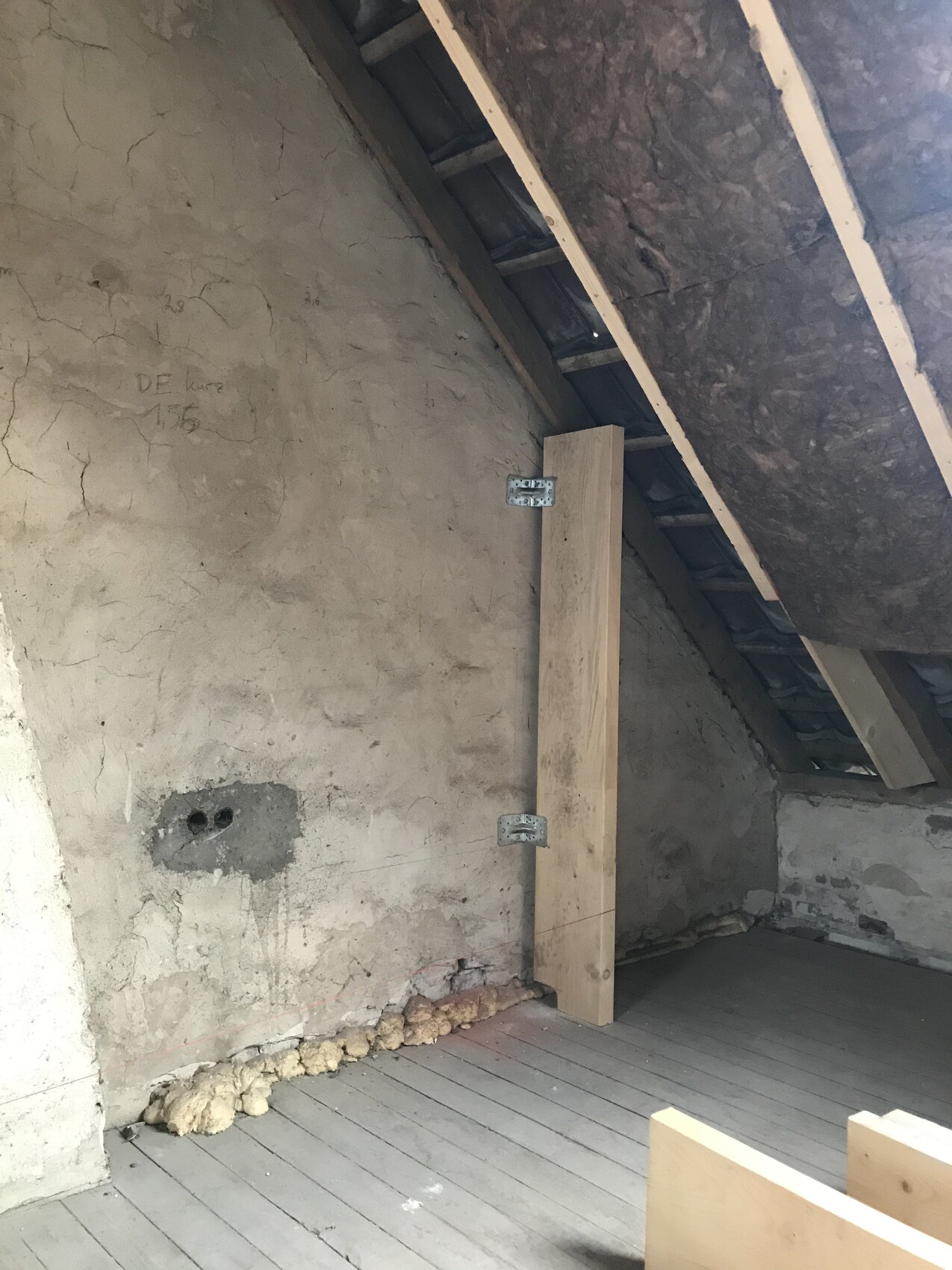
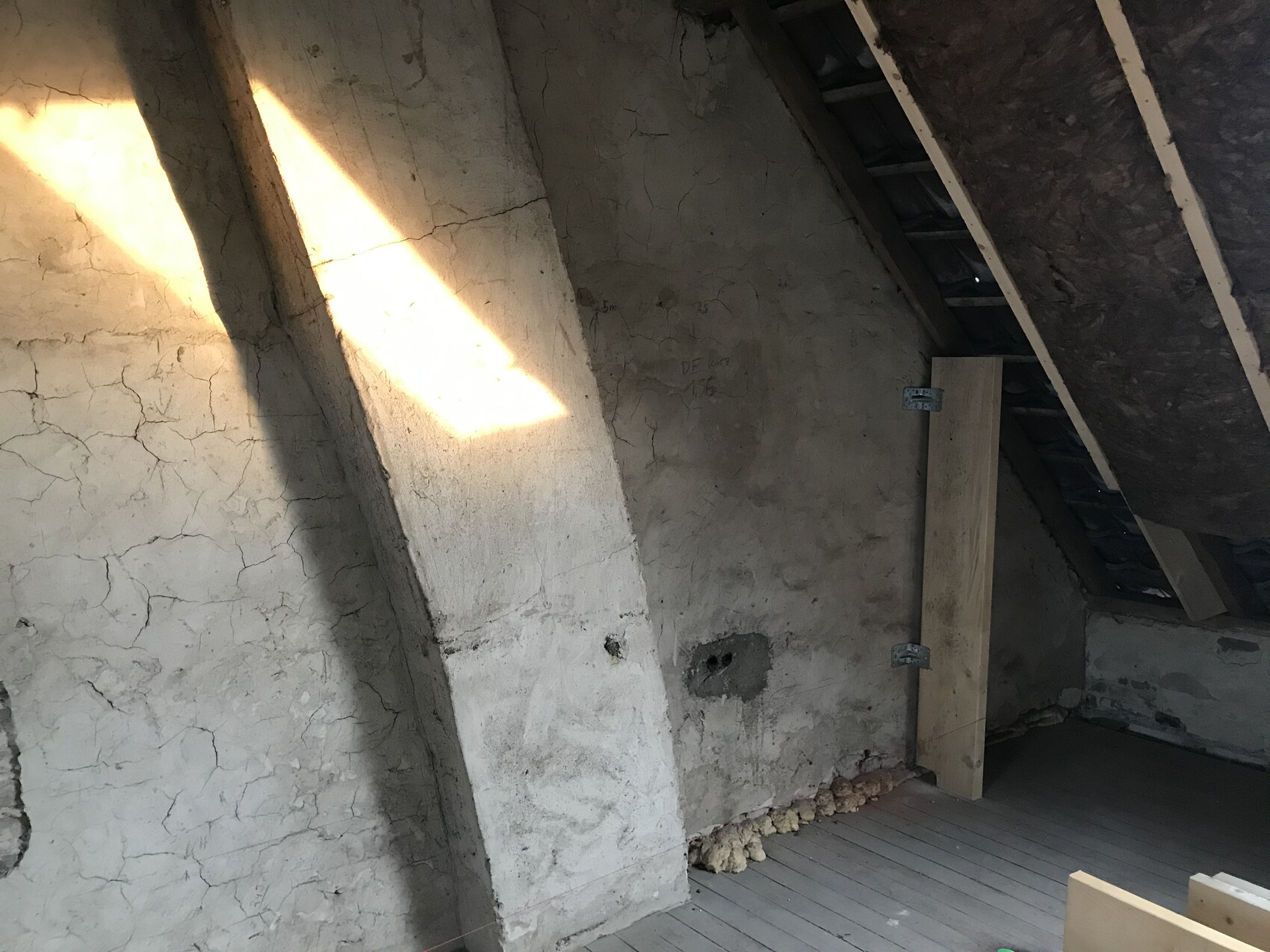
We are currently converting the attic of our old country house and could use your opinions.
The main issue is the insulation, specifically the connection between the interior wall insulation and the roof insulation.
Here’s a brief overview of the current situation. Most of the roof insulation is already in place. Since we don’t have a membrane under the roof tiles, we are working with ventilation behind the roofing. The structural engineer and roofer recommended this principle and its implementation.
Now, there is a large interior wall that divides the house in the middle into one large room on one side and two smaller rooms on the other side. The wall is not insulated, and there is no insulation between the roof and the wall either. This creates a significant thermal bridge. In the smaller rooms, we plan to add a storage room and a small bathroom (only a toilet and washbasin), so we don’t necessarily see the need to insulate the wall there. However, the larger room will be used as a bedroom with underfloor heating. To make it comfortable and avoid cold walls, we want to insulate this wall. The insulation will be 14mm or 20mm (0.55 inch or 0.79 inch) mineral wool with a thermal conductivity rating of 0.035 W/mK, depending on what we can source affordably (friends have leftover insulation available at a low price).
I have been thinking a lot about the exact implementation. The challenge, in my opinion, is that it is unavoidable that the wall will absorb moisture. Much of this could be avoided by installing a vapor barrier, but since there is no membrane between the wall and the overlying roof, moisture will be absorbed from rain, snow, etc. For this reason, I would like to also work with ventilation behind the insulation.
My approach would be as follows:
I will double the wall, which is necessary anyway, as it is very uneven. The plan is to use structural timber (KVH) measuring 300mm x 60mm (12 inches x 2.4 inches). One piece is already installed (see photos). I would then insulate the last rafter space of the roof adjacent to the wall up to the start of the wall itself and begin the wall insulation at the edge of the roof insulation. This would create an uninsulated space between the wall and the wall insulation under the roof tiles—allowing external air to enter the cavity between the wall and the wall insulation, circulate, and transport moisture toward the gable. In a way, I am building an enclosed “interior shell” within the room.
In my opinion, this is a reasonable solution to ensure functional ventilation while maintaining continuous insulation.
Do you think this approach makes sense? Are there any alternatives? Or am I completely off track? Would ventilation with outside air dramatically cool down the wall (in the rooms on the other side of the wall, no insulation will be installed)?
Thank you very much for your answers.
Hello,
so far, the reactions have been rather reserved xD
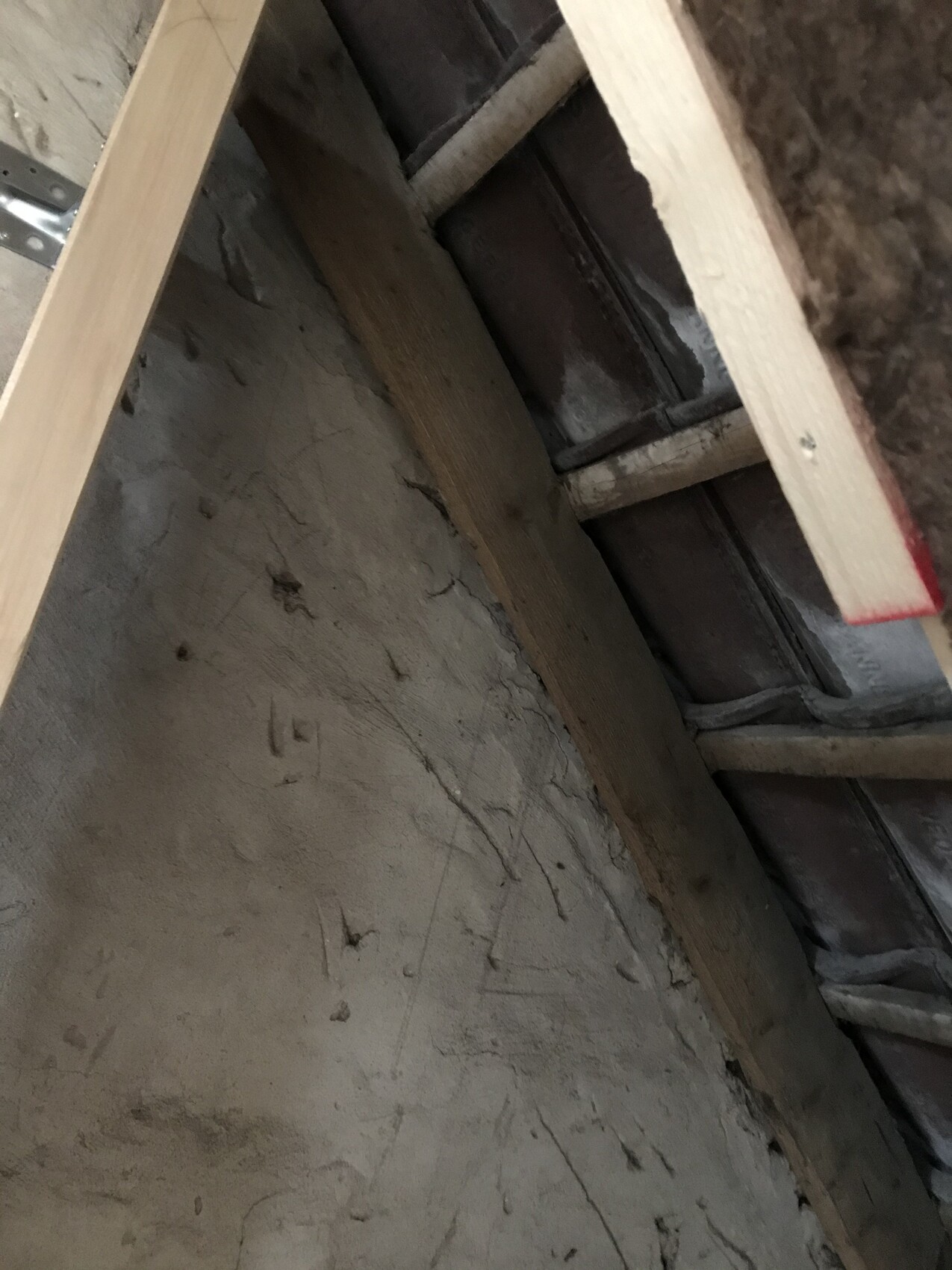
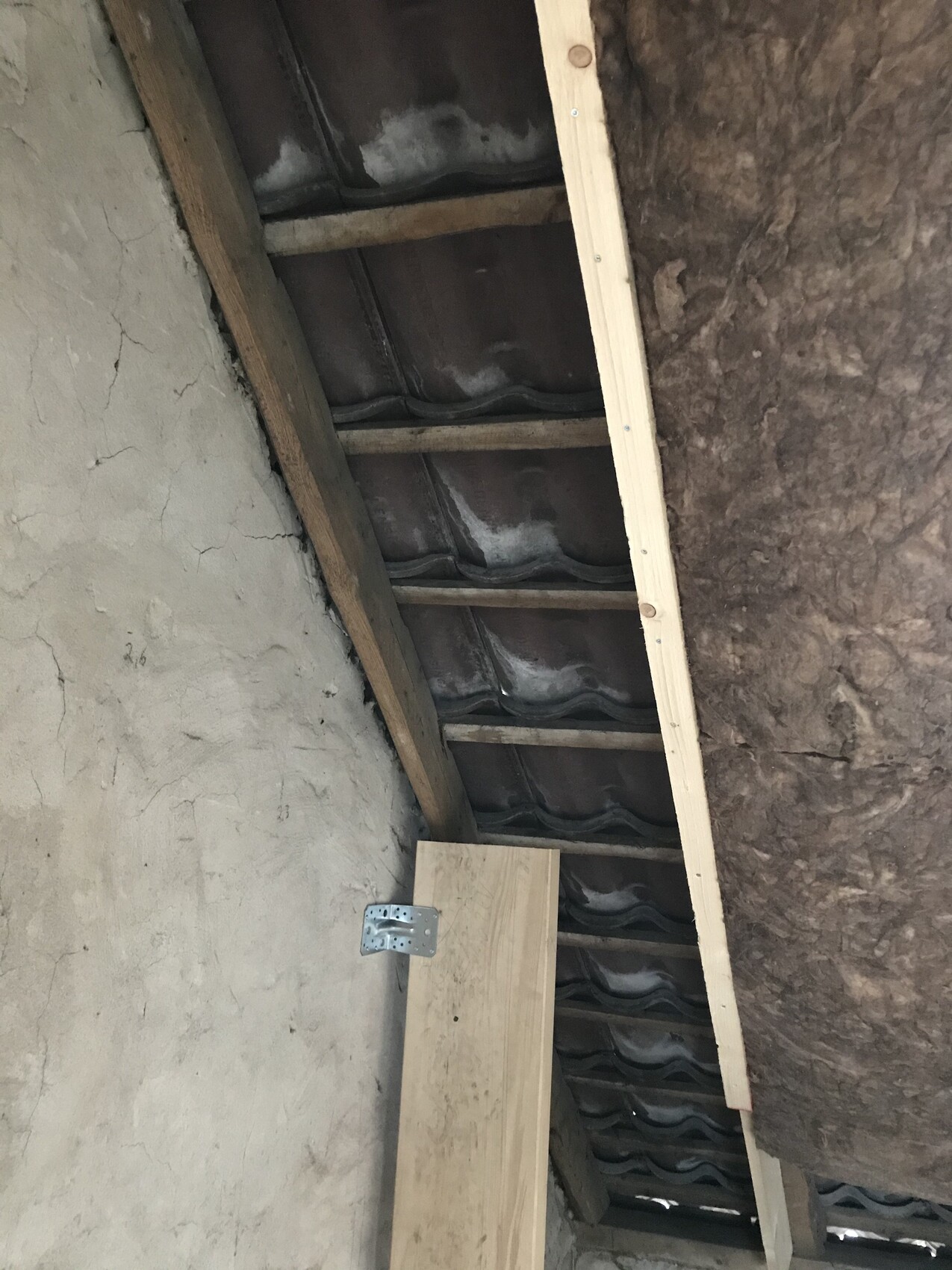
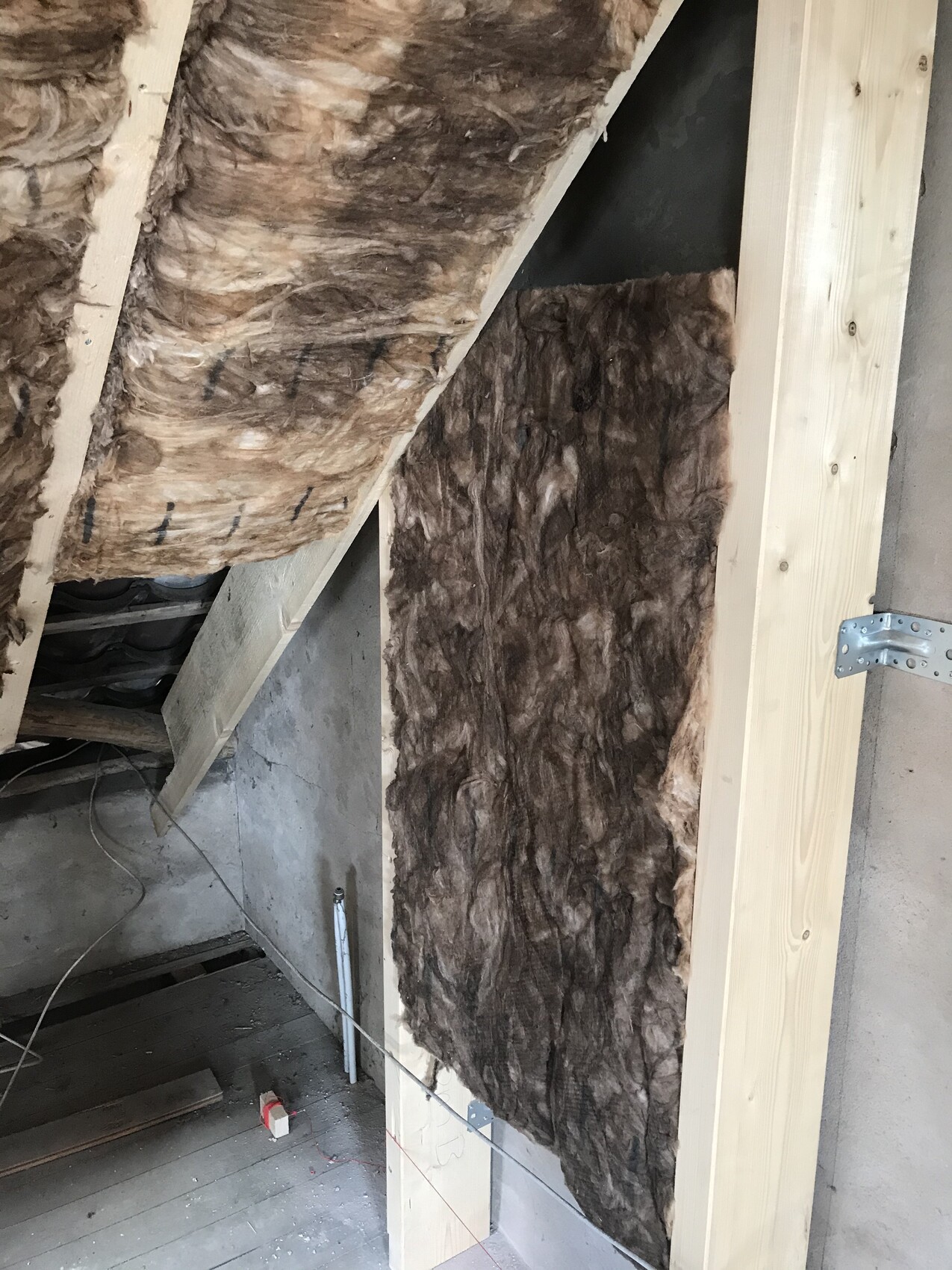
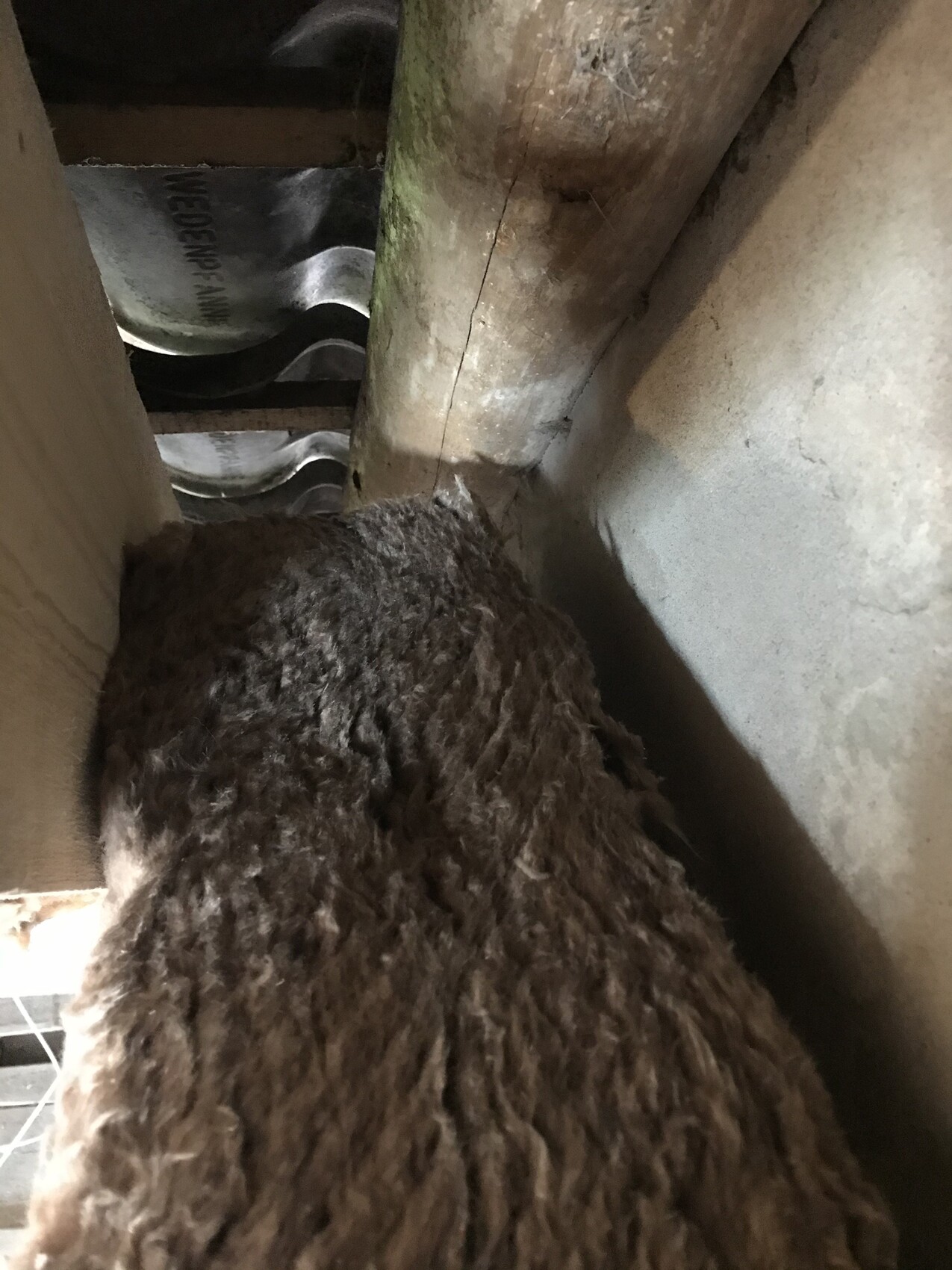
I temporarily installed this on a wall as a test. Photos attached.
As you can see, I planned to have the roof insulation meet the wall first, then slide the wall insulation behind it. Of course, I would mitre-cut the insulation on the wall. I think this approach is easier to understand.
What are the general opinions on this system? Am I completely off track here?
The alternative would be to extend the roof insulation up to the masonry wall and then butt the wall insulation against it from below.
so far, the reactions have been rather reserved xD
I temporarily installed this on a wall as a test. Photos attached.
As you can see, I planned to have the roof insulation meet the wall first, then slide the wall insulation behind it. Of course, I would mitre-cut the insulation on the wall. I think this approach is easier to understand.
What are the general opinions on this system? Am I completely off track here?
The alternative would be to extend the roof insulation up to the masonry wall and then butt the wall insulation against it from below.
Similar topics