
ᐅ Condensation or puddles on pipes – despite controlled mechanical ventilation and dehumidifiers
Created on: 31 Dec 2021 11:06
A
Abzug86
Hello everyone,
In August of this year, we took over a single-family house from the general contractor. It was planned together with us. A brief overview of the situation: we have 202 m² (2172 sq ft) of usable floor space (approximately 185 m² (1991 sq ft) of living area + 17 m² (183 sq ft) for technical/utility rooms), two full stories, an unfinished hipped roof, and no basement. Heating is provided by a heat pump with underfloor heating, although some rooms (e.g., technical/utility rooms) are unheated. We also installed a central ventilation system from Helios (controlled residential ventilation 500EC), including a ground-source heat exchanger (brine circuit) and an enthalpy heat exchanger. All rooms receive fresh air supply or have extracted air—this applies, for example, to the technical/utility rooms. Our ventilation system runs continuously at the set “nominal level.”
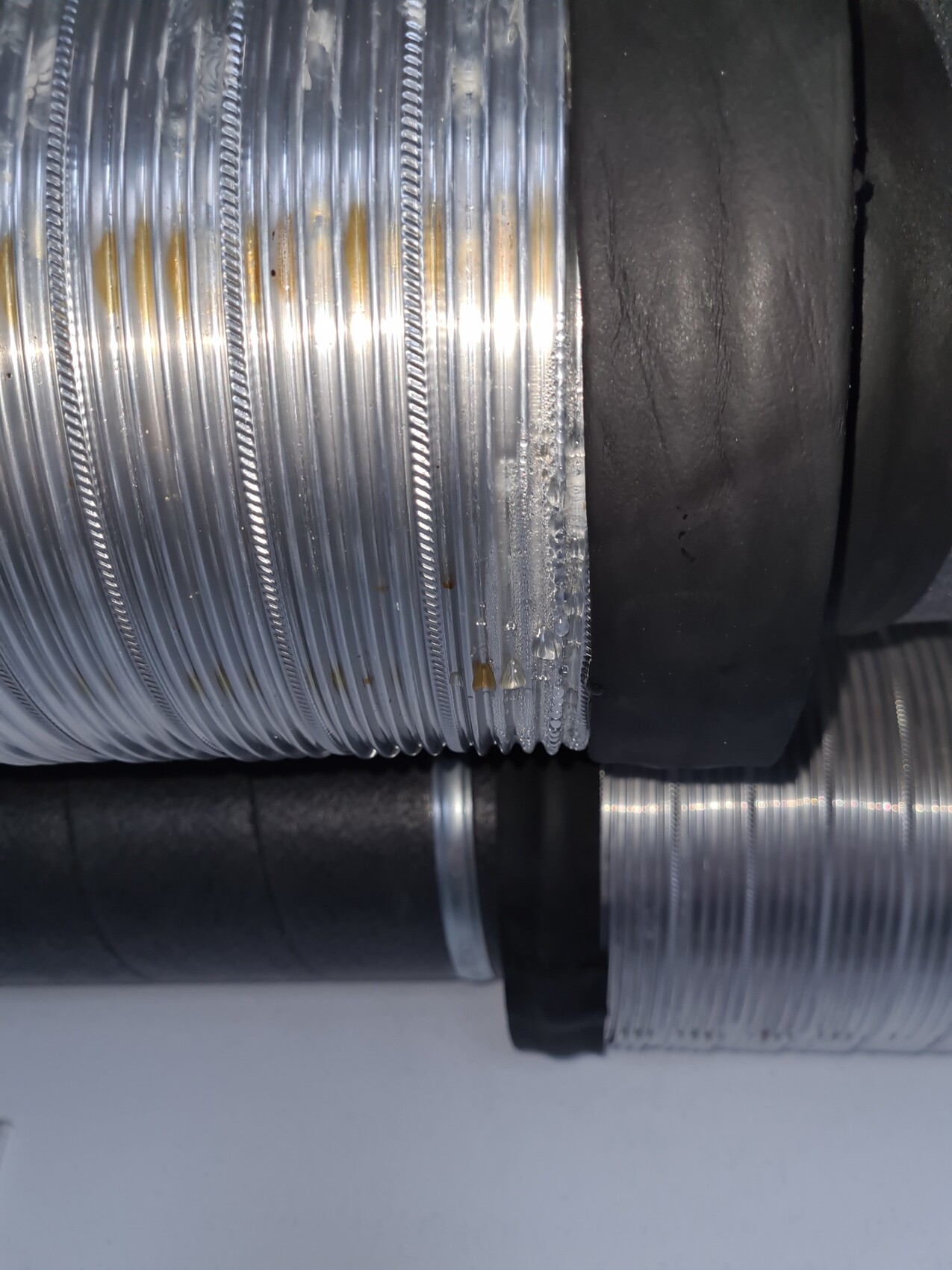
Now to the problem: since the outdoor temperature dropped below 10°C (50°F), we have experienced heavy condensation on practically all pipes in the technical/utility rooms. This includes, for example, the fresh water supply pipes, the pipes of the brine circuit, and also the supply air duct of the ventilation system. The condensation is sometimes so severe (worsening with colder temperatures) that puddles form at the base of the pipes and under critical points of the horizontally running pipes. I have attached several photos that show the situation at that time. The relative humidity was around 55–60%. From my understanding, this is relatively high but not excessively so—especially for an unheated room where washing and drying take place.
The general contractor has attributed the issue to excessive humidity due to construction moisture and advised us to ventilate more frequently. We naturally questioned why we have a ventilation system costing nearly 26,000 EUR if we still need to ventilate manually. Their response was, “It’s only at the beginning because of the construction moisture.” I would like to point out that in all other rooms of the house, under similar temperatures, the humidity levels are around 40–45%. So, I cannot detect any significant construction moisture elsewhere in the house.
Since we both work and cannot ventilate throughout the day, we purchased a larger dehumidifier and additionally ventilate in the mornings and evenings. Since then, the humidity has remained consistently below 50% (usually around 47–48%). However, the condensation issue has hardly improved or only marginally. As a result, the general contractor insulated many of the pipes. You can find photos of this in the attachments as well. The effect is that the condensation now appears on other uninsulated spots or that water is accumulating behind the insulation (when I press against the insulation, my fingers get wet).
Both the contracted installer and Helios are at a loss as to what else can be done. In the current condition, I consider mold growth within a few years to be likely, which of course must be avoided. Do you have any ideas on what else I can try? Many thanks in advance!
Regards
Micha
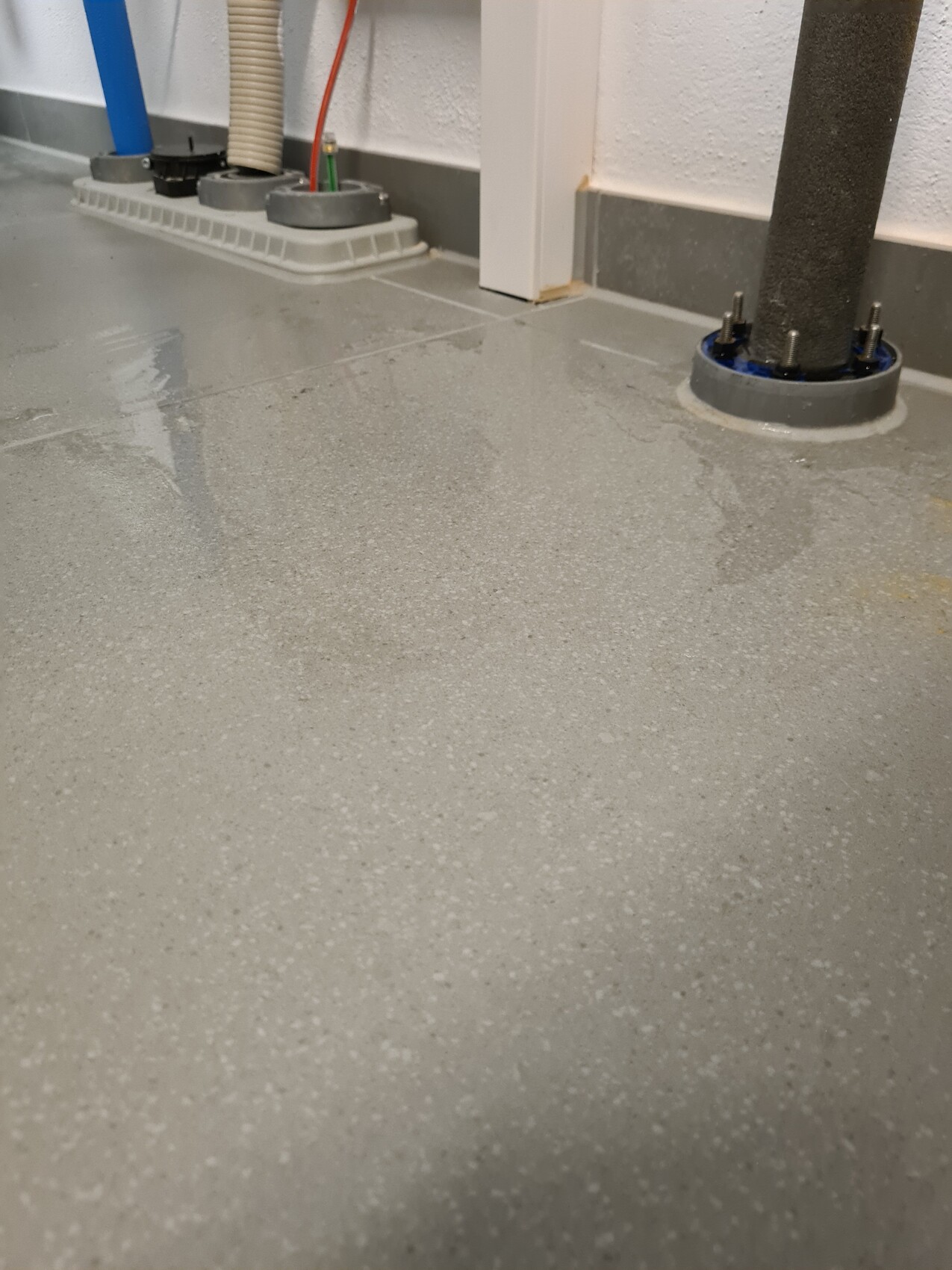
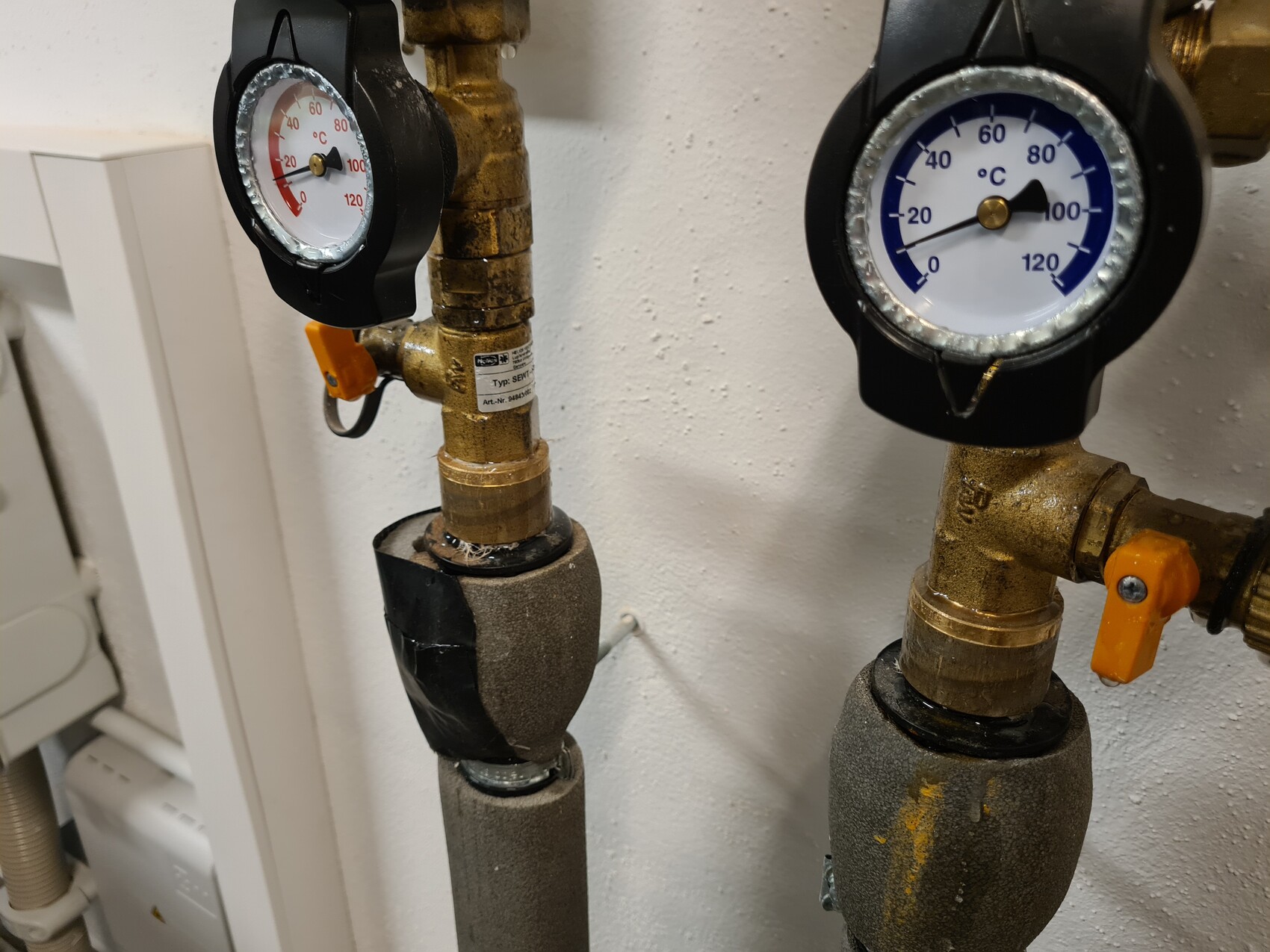
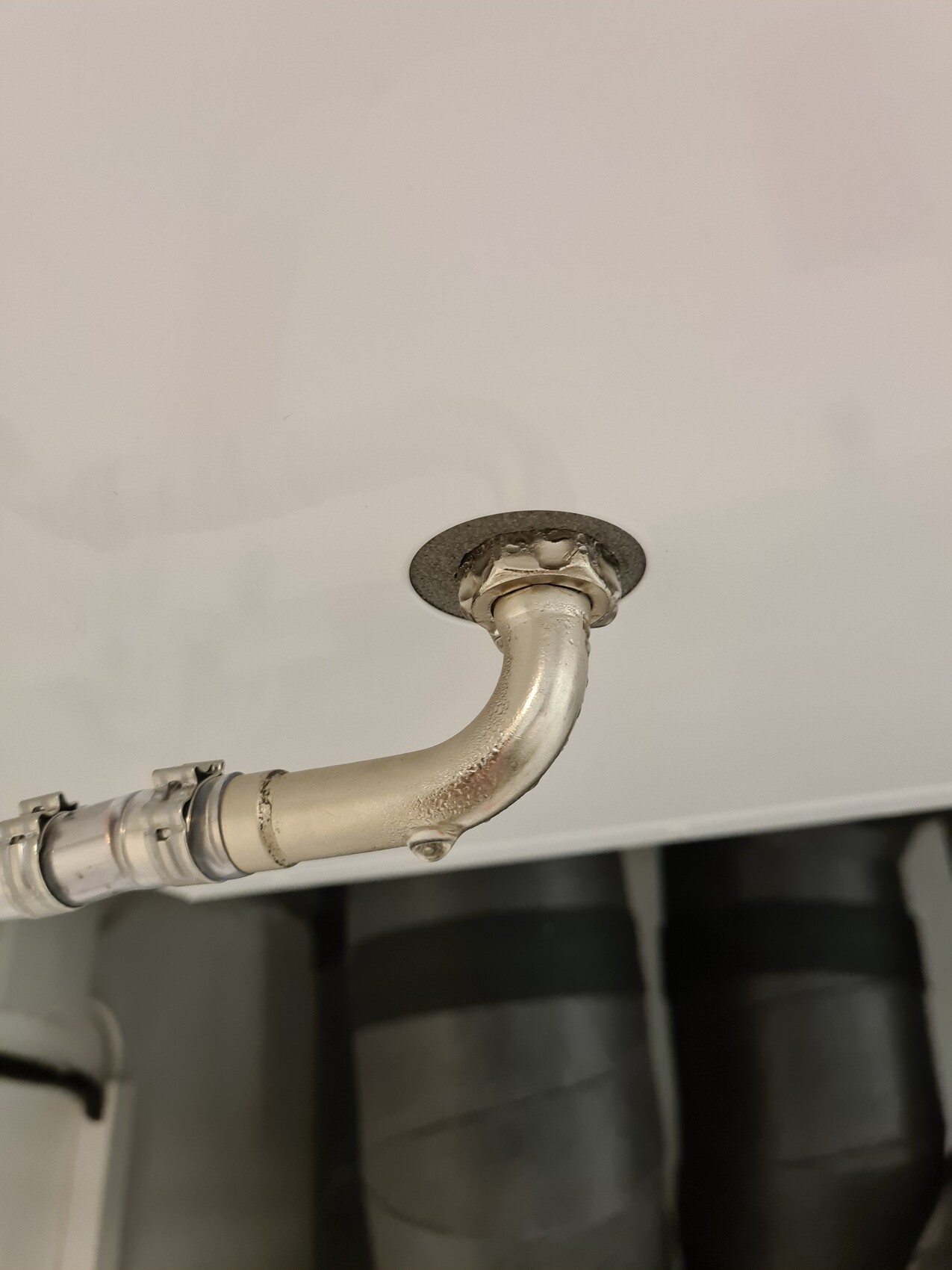
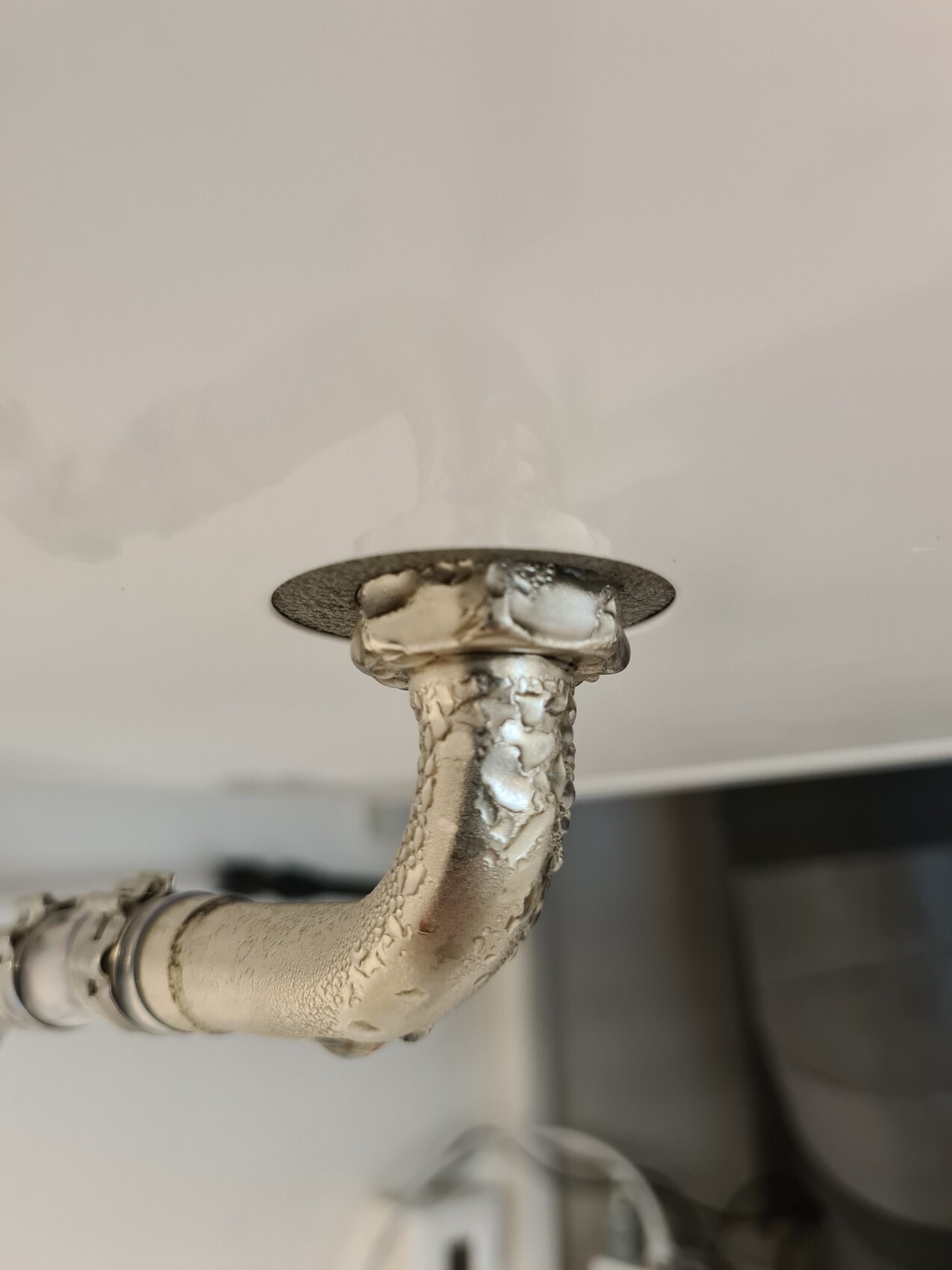
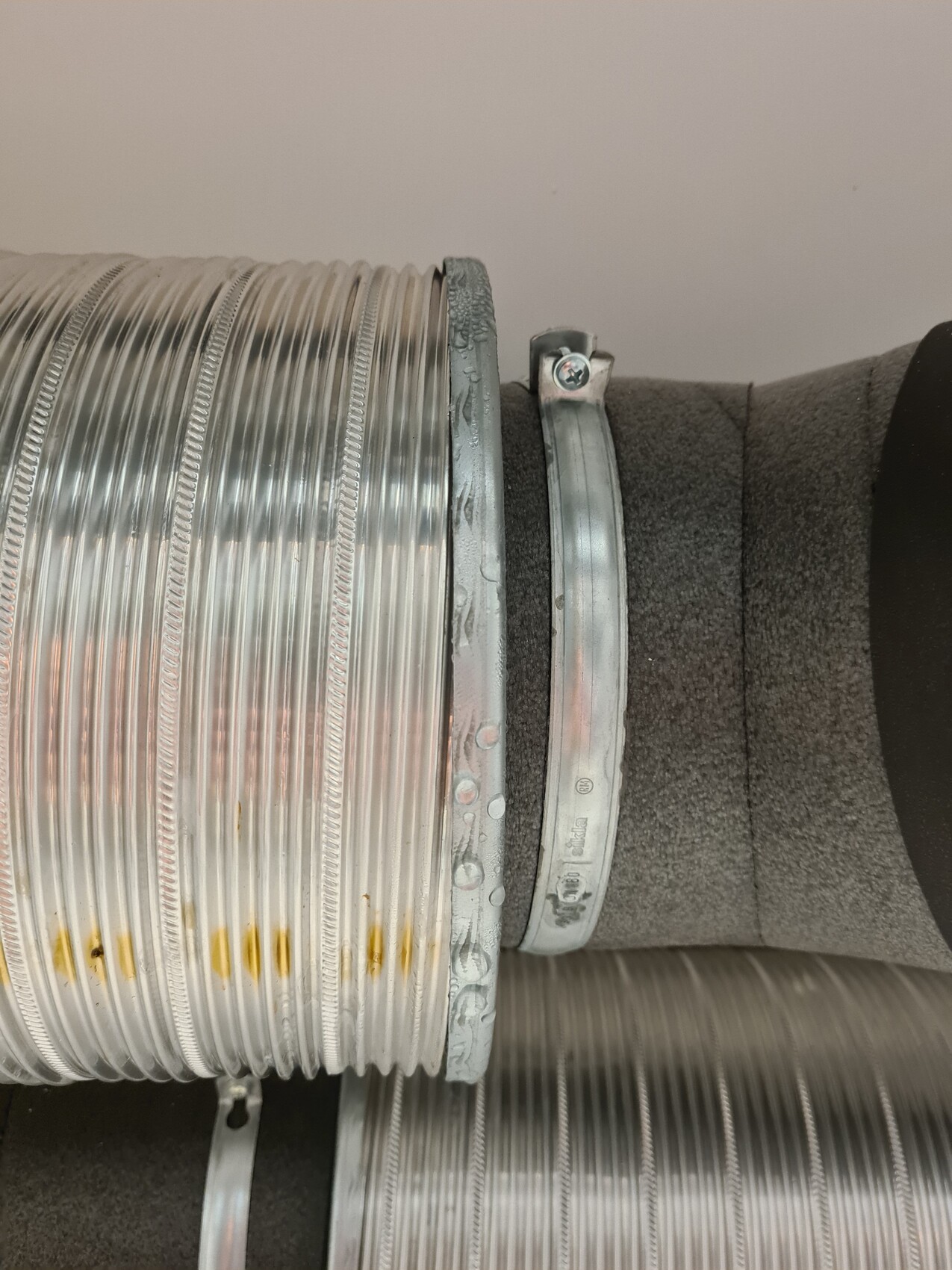
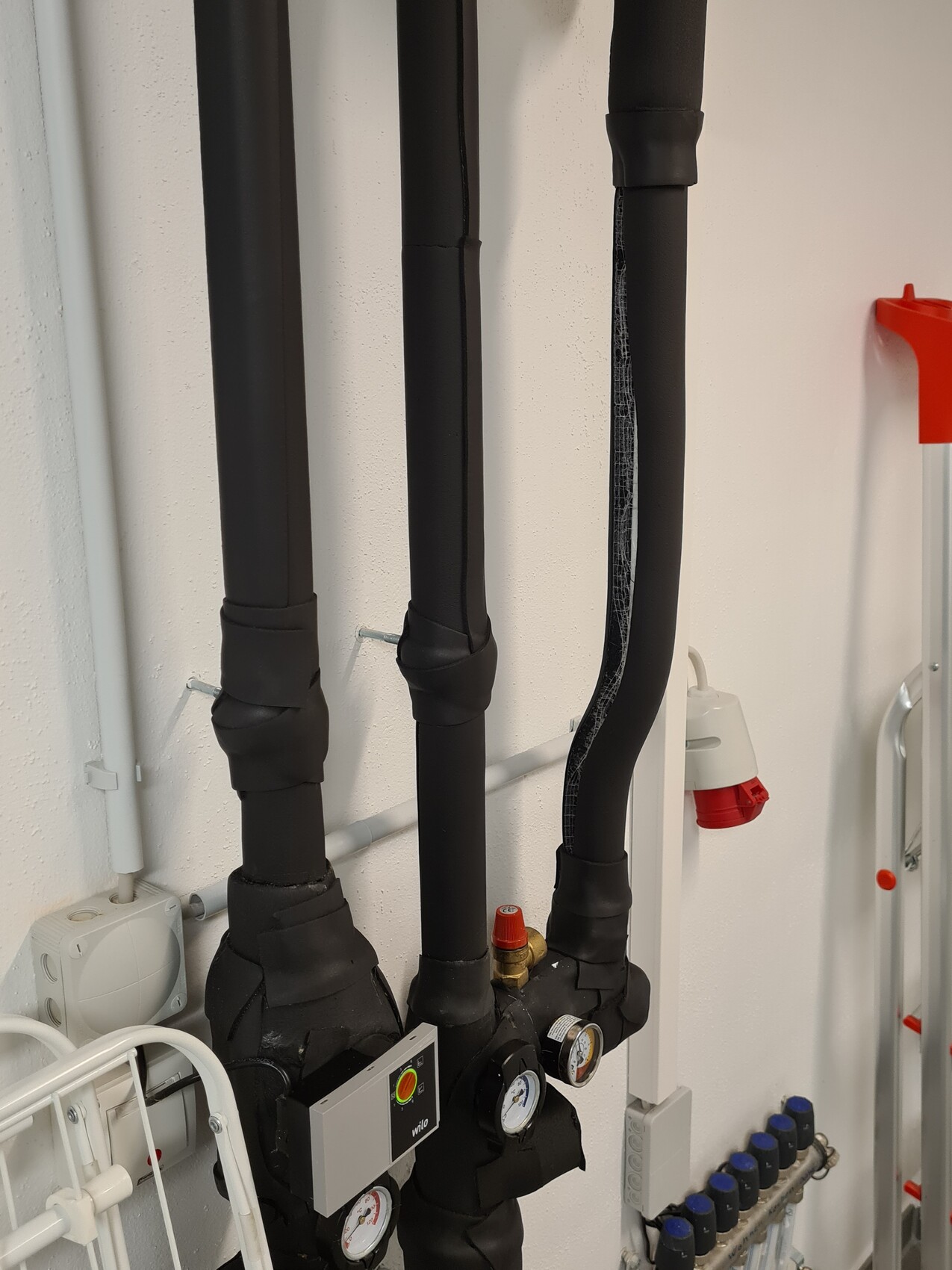
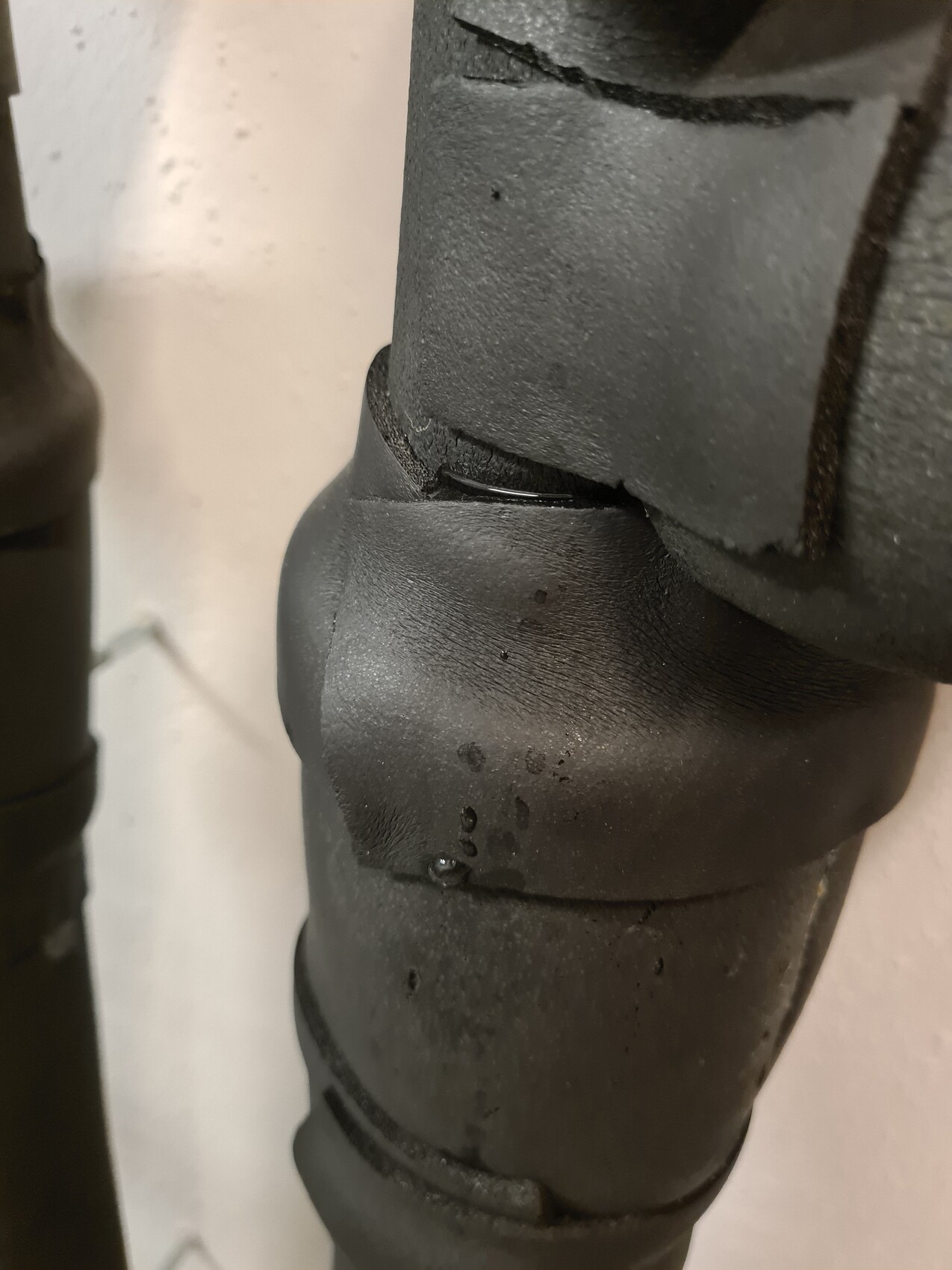
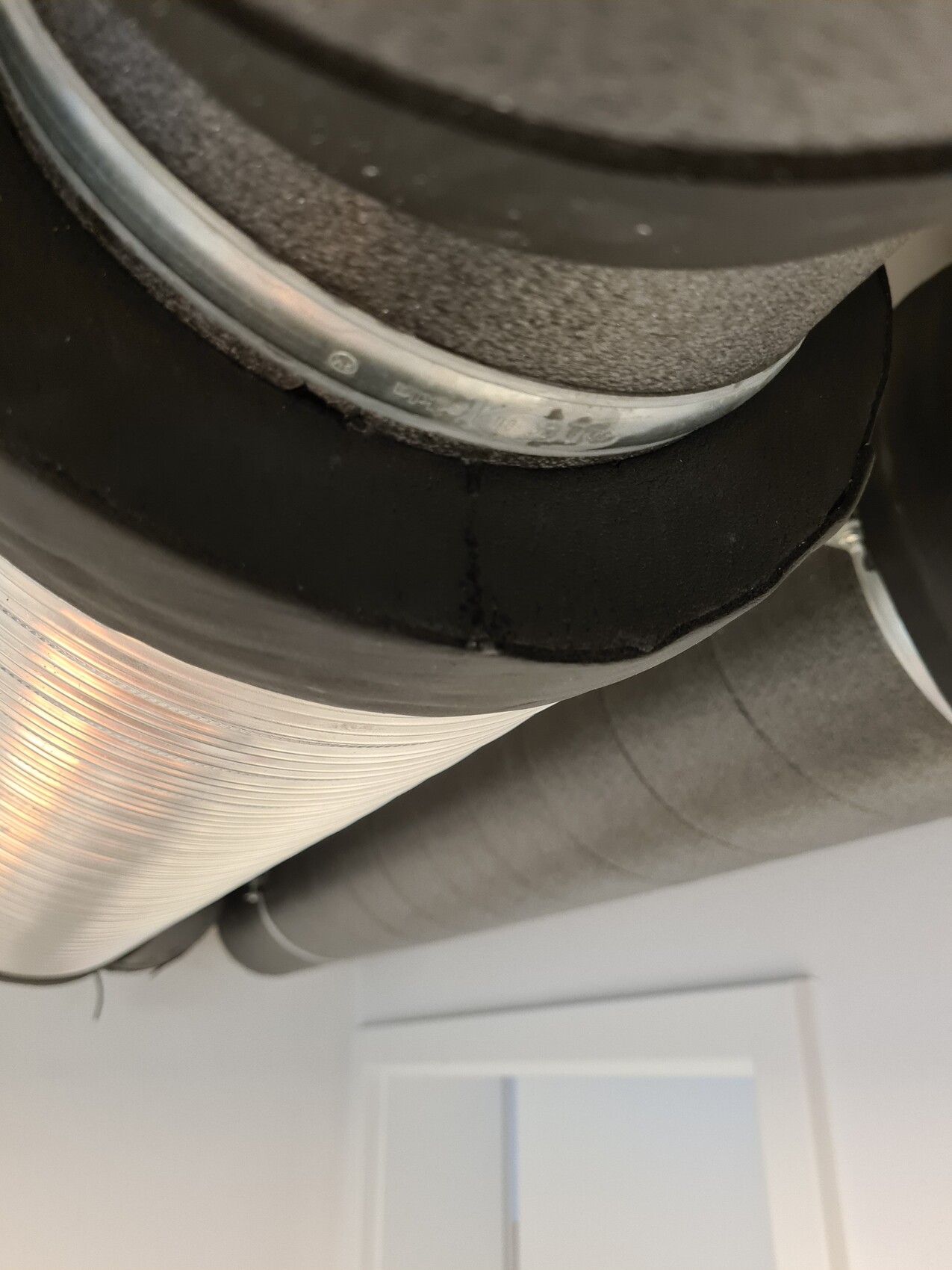
In August of this year, we took over a single-family house from the general contractor. It was planned together with us. A brief overview of the situation: we have 202 m² (2172 sq ft) of usable floor space (approximately 185 m² (1991 sq ft) of living area + 17 m² (183 sq ft) for technical/utility rooms), two full stories, an unfinished hipped roof, and no basement. Heating is provided by a heat pump with underfloor heating, although some rooms (e.g., technical/utility rooms) are unheated. We also installed a central ventilation system from Helios (controlled residential ventilation 500EC), including a ground-source heat exchanger (brine circuit) and an enthalpy heat exchanger. All rooms receive fresh air supply or have extracted air—this applies, for example, to the technical/utility rooms. Our ventilation system runs continuously at the set “nominal level.”
Now to the problem: since the outdoor temperature dropped below 10°C (50°F), we have experienced heavy condensation on practically all pipes in the technical/utility rooms. This includes, for example, the fresh water supply pipes, the pipes of the brine circuit, and also the supply air duct of the ventilation system. The condensation is sometimes so severe (worsening with colder temperatures) that puddles form at the base of the pipes and under critical points of the horizontally running pipes. I have attached several photos that show the situation at that time. The relative humidity was around 55–60%. From my understanding, this is relatively high but not excessively so—especially for an unheated room where washing and drying take place.
The general contractor has attributed the issue to excessive humidity due to construction moisture and advised us to ventilate more frequently. We naturally questioned why we have a ventilation system costing nearly 26,000 EUR if we still need to ventilate manually. Their response was, “It’s only at the beginning because of the construction moisture.” I would like to point out that in all other rooms of the house, under similar temperatures, the humidity levels are around 40–45%. So, I cannot detect any significant construction moisture elsewhere in the house.
Since we both work and cannot ventilate throughout the day, we purchased a larger dehumidifier and additionally ventilate in the mornings and evenings. Since then, the humidity has remained consistently below 50% (usually around 47–48%). However, the condensation issue has hardly improved or only marginally. As a result, the general contractor insulated many of the pipes. You can find photos of this in the attachments as well. The effect is that the condensation now appears on other uninsulated spots or that water is accumulating behind the insulation (when I press against the insulation, my fingers get wet).
Both the contracted installer and Helios are at a loss as to what else can be done. In the current condition, I consider mold growth within a few years to be likely, which of course must be avoided. Do you have any ideas on what else I can try? Many thanks in advance!
Regards
Micha
P
pagoni202031 Dec 2021 13:41@Abzug86 We currently have a similar problem. We definitely have significant condensation and an indoor humidity level of 66%.
Yesterday, we wrapped everything, including the water meter, with insulating tape, especially because the plumber hadn’t done it thoroughly.
This morning, the pipes and water meter were dry, so it seems to have helped somewhat. Since earlier today, we’ve also started heating the room, which is our next attempt.
We’re not sure where the humidity is coming from, since no laundry is done in the utility room and we thought the mechanical ventilation system was removing moisture. Despite running it at maximum setting for quite a while, the humidity hasn’t really decreased.
Now we are monitoring a corner to see if possibly moisture is entering the floor structure from outside.
So far, nobody has had a definitive solution; we are now trying to solve it by exclusion and I’m following your thread and will report back if I learn more.
I could also imagine residual construction moisture or that the affected exterior wall might be very cold, causing dew point issues.
We had water droplets everywhere, even on top of the heat pump.
Yesterday, we wrapped everything, including the water meter, with insulating tape, especially because the plumber hadn’t done it thoroughly.
This morning, the pipes and water meter were dry, so it seems to have helped somewhat. Since earlier today, we’ve also started heating the room, which is our next attempt.
We’re not sure where the humidity is coming from, since no laundry is done in the utility room and we thought the mechanical ventilation system was removing moisture. Despite running it at maximum setting for quite a while, the humidity hasn’t really decreased.
Now we are monitoring a corner to see if possibly moisture is entering the floor structure from outside.
So far, nobody has had a definitive solution; we are now trying to solve it by exclusion and I’m following your thread and will report back if I learn more.
I could also imagine residual construction moisture or that the affected exterior wall might be very cold, causing dew point issues.
We had water droplets everywhere, even on top of the heat pump.

Abzug86 schrieb:
Of course, the interior can be very cold depending on the outside temperature, and condensation then forms on the outside due to the large temperature difference. That's correct, and condensation can only form if there is moisture present in the air that can condense. So, we are back to post #4.
Mycraft schrieb:
too cold, too humid, or both combined. And moisture can only be controlled through heating and ventilation. That has always been the case and nothing about that changes.
B
Benutzer20031 Dec 2021 14:42pagoni2020 schrieb:
Definitely, we have significant condensation and an indoor humidity level of 66%. How can you get such humidity levels in a new build? Only if the house still contains residual moisture, is not ventilated (is there an exhaust-only mechanical ventilation system?), or is not heated.
pagoni2020 schrieb:
that the affected exterior wall might currently be very cold In a new build, it won’t get too cold, unless the room is also unheated and cold.
P
pagoni202031 Dec 2021 14:48Benutzer200 schrieb:
How do you achieve such indoor humidity levels in a new build?The big question.....We don’t have a screed, yet the lime plaster might still be retaining more moisture than expected. At the moment, it seems like one spot on the unfinished floor keeps getting damp. We are investigating, ventilating, and heating......
Mycraft schrieb:
That’s correct, and condensation can only form if there is moisture in the air that can condense. So we are back to post #4. Logically, 45 - 50% humidity is just about right.... I simply can’t go much lower, even if the dehumidifier runs all day. Moreover, the enthalpy heat exchanger repeatedly brings back a large portion of the moisture it removes—I can’t disable that system.
Mycraft schrieb:
And moisture can only be removed by heating plus ventilation. That has always been the case and nothing changes that. But that doesn’t change the fact that we are ventilating through a controlled residential ventilation system, additionally airing out twice a day with window ventilation, and the temperature in the room is within the normal range, right? So what else could be causing it?
 KingJulien31 Dec 2021 16:06
I argue that it is not too cold, but rather not cold enough! Because your utility room is so warm and you have an enthalpy heat exchanger, the absolute humidity is quite high. Since the temperature difference to the cold pipes is so large, water condenses there.
Similar topics