
Hello
There are several ways to pour a concrete floor.
The question now is whether to pour it on top of the walls, between the walls, or half and half.
See attachment.
Has anyone had experience with which of the three options (A, B, C) from the attachment would be advisable?
Tom
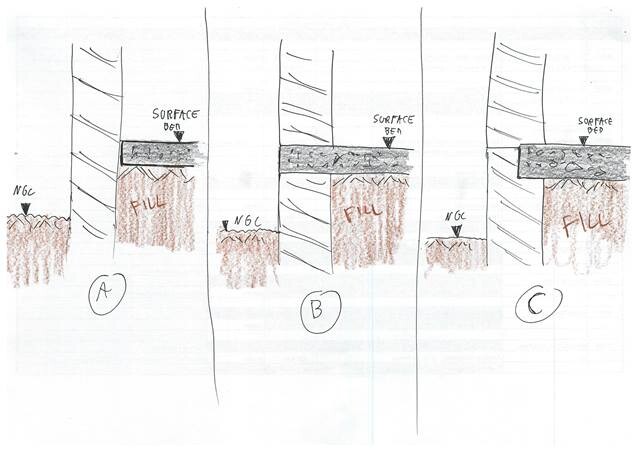
There are several ways to pour a concrete floor.
The question now is whether to pour it on top of the walls, between the walls, or half and half.
See attachment.
Has anyone had experience with which of the three options (A, B, C) from the attachment would be advisable?
Tom
N
nordanney21 Sep 2015 13:07Depends on the situation! 😉
B
Bauexperte21 Sep 2015 13:08Hello,
where exactly in Cape Town? By the way – what are the current lighting conditions?
Otherwise, I don’t quite understand your comment – whether on the walls or between the walls or half and half. Are you planning to pour a floor or walls?
Regards, Bauexperte
where exactly in Cape Town? By the way – what are the current lighting conditions?
Otherwise, I don’t quite understand your comment – whether on the walls or between the walls or half and half. Are you planning to pour a floor or walls?
Regards, Bauexperte
We are now starting to bring the walls up from the ground. The usual method here is to build the walls up first and then pour the floor slab between the walls. However, it can also be practical to pour the concrete floor on top of the rising walls, as this creates a working platform and makes it easier to set up scaffolding.
The walls are currently at a level below the floor, so now the decision needs to be made whether to continue building the walls up or to stop and pour the concrete floor first.
See photo
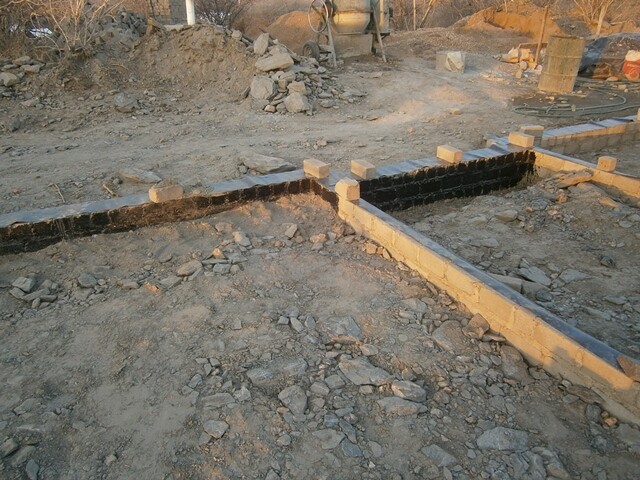
The walls are currently at a level below the floor, so now the decision needs to be made whether to continue building the walls up or to stop and pour the concrete floor first.
See photo
B
Bauexperte21 Sep 2015 23:36Good evening,
I just wanted to make sure that you really meant Cape Town—the City of Light for photographers—as your building location.
I’m wondering how you manage to place the ceiling above the ground floor with your system. The "prepared" floor looks rather adventurous to me. 😉
Of course, you should first pour the concrete slab and only then erect the walls. It is 1) easier and 2) avoids problems with clean joints or weak points, especially concerning protection against rising damp—if you are even familiar with such an issue.
If you also have to deal with high groundwater levels—just curious—how do you handle it?
Regards, Bauexperte
I just wanted to make sure that you really meant Cape Town—the City of Light for photographers—as your building location.
I’m wondering how you manage to place the ceiling above the ground floor with your system. The "prepared" floor looks rather adventurous to me. 😉
Of course, you should first pour the concrete slab and only then erect the walls. It is 1) easier and 2) avoids problems with clean joints or weak points, especially concerning protection against rising damp—if you are even familiar with such an issue.
If you also have to deal with high groundwater levels—just curious—how do you handle it?
Regards, Bauexperte
Similar topics