
ᐅ Compressible foam tape between cladding and window with an air gap
Created on: 4 Oct 2018 10:25
C
CelerdainC
Celerdain4 Oct 2018 10:25Hello,
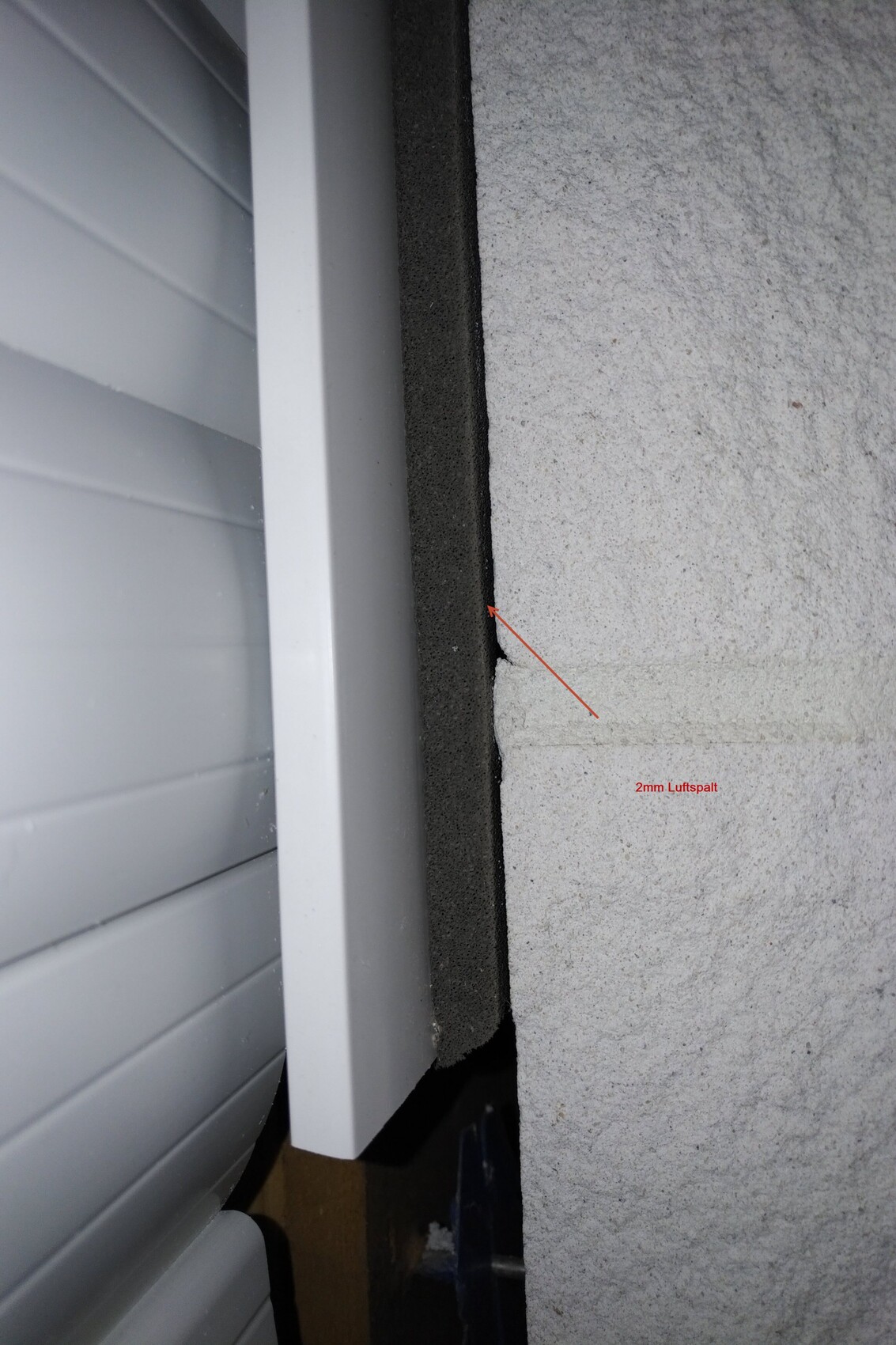
my windows are currently being installed (new build) and I noticed that the compressible sealing tapes between the window frame and the external masonry have gaps of about 2mm (0.08 inches) in some places. So the sealing tape is not properly compressed.
I talked to the window installer about this, and he said that the compressible sealing tapes are only meant for temporary sealing during the construction phase, and that the joint must be sealed later. According to him, only the sealant provides a proper waterproof barrier against driving rain.
He also said that the compressible tapes will break down after a few years.
However, if I want, they could install a different tape from the outside afterwards (compressible sealing tape in sausage shape or something like that).
This is actually completely the opposite of what I have read about window sealing.
What do you think? Do you have any arguments based on recognized industry standards that I could use? I was thinking of suggesting that he remove the frames and use a thicker compressible sealing tape to ensure a proper seal.
Thanks
my windows are currently being installed (new build) and I noticed that the compressible sealing tapes between the window frame and the external masonry have gaps of about 2mm (0.08 inches) in some places. So the sealing tape is not properly compressed.
I talked to the window installer about this, and he said that the compressible sealing tapes are only meant for temporary sealing during the construction phase, and that the joint must be sealed later. According to him, only the sealant provides a proper waterproof barrier against driving rain.
He also said that the compressible tapes will break down after a few years.
However, if I want, they could install a different tape from the outside afterwards (compressible sealing tape in sausage shape or something like that).
This is actually completely the opposite of what I have read about window sealing.
What do you think? Do you have any arguments based on recognized industry standards that I could use? I was thinking of suggesting that he remove the frames and use a thicker compressible sealing tape to ensure a proper seal.
Thanks
C
Celerdain4 Oct 2018 10:45Here is the picture again. The other photos didn’t turn out well... it was probably still too dark.
Celerdain schrieb:
which complies with the recognized rules of technology.The recognized rules of technology include an airtight and vapor-tight internal sealing, complete filling of the window joint with insulating material, and an external vapor-permeable, airtight, and weather-resistant sealing.
In addition, there are the specifications of the RAL Quality Association for Windows, which are not mandatory for installation. However, these specifications correspond to the current state of technology and include certain specified sealing methods. Some manufacturers label their products as “for RAL installation,” meaning that RAL has approved these products as suitable for correct sealing. If these requirements are to be explicitly met, this should be clearly stated in the contract or quotation. Alternatively, other sealing methods may be used, but all must be executed as described above (only the RAL certification is not mandatory).
The compression tape for external window sealing is the state of the art and also accepted by RAL. The important point here is the execution, which in your case appears to be defective. The tape expands after installation (within 24 hours). Then it should adhere fully and evenly on both sides (window and wall). This does not seem to be the case for you, either because the tape chosen was too thin or the windows were installed incorrectly. Airtightness cannot be guaranteed this way. PU compression tapes are UV-resistant and do not crumble after a few years. If your window installer now wants to cover up poor workmanship by adding an extra tape, I would advise against it. I do not know whether inserting something else (?) into the open joint is permitted anywhere. When in doubt, ask the manufacturer—if the window installer absolutely refuses, get a statement that the tape does not have to be fully relaxed but must still be slightly compressed and fully adhered on both sides. Additional sealing is then not necessary—only if you want to visually cover the joint.
As an alternative to compression tape, there are external window sealing strips with or without a plaster lip, depending on whether there is a brick or rendered facade. These are only used when windows are not internally attached to the masonry, and insulation is applied in front, or in renovations.
Since you have a brick veneer facade and a new build, I would insist on the correct execution of window installation with single-layer compression tape on the outside.
Addendum regarding the photo: Yes, that is botched work! Adding a strip over it now is patchwork! Completely sealing it with 3cm (1 inch) of silicone is ... NOT compliant with recognized rules of technology, because silicone is not permanently durable.

When using compressible sealing tape, pay close attention to the manufacturer’s specifications. For example, you might see a marking like "20/4/14," which means the tape is 20mm (0.8 inches) wide, 4mm (0.16 inches) thick in its compressed state, and can expand up to 14mm (0.55 inches) to fulfill its function (rainproofing). In reality, the tapes can stretch beyond these limits, but beyond that, they are no longer certified for use.
This means the tape might visually fill a gap of 25mm (1 inch), but it is only certified for up to 15mm (0.6 inches). So, even if the remaining gap were filled with something else (a poor solution, see @dertill), the rainproofing would no longer be guaranteed.
I would not accept the execution shown above either. Behind the facing brickwork, there will be a layer of insulation and an air gap. Apparently, the window installer did not want to mount the windows within this insulation layer (which is required for energy efficiency and building physics reasons), likely because it would have required extra effort (such as installing mounting brackets or similar). As a result, you now have this offset, which clearly cannot be bridged with the existing compressible sealing tape.
This means the tape might visually fill a gap of 25mm (1 inch), but it is only certified for up to 15mm (0.6 inches). So, even if the remaining gap were filled with something else (a poor solution, see @dertill), the rainproofing would no longer be guaranteed.
I would not accept the execution shown above either. Behind the facing brickwork, there will be a layer of insulation and an air gap. Apparently, the window installer did not want to mount the windows within this insulation layer (which is required for energy efficiency and building physics reasons), likely because it would have required extra effort (such as installing mounting brackets or similar). As a result, you now have this offset, which clearly cannot be bridged with the existing compressible sealing tape.
C
Celerdain4 Oct 2018 11:39Thank you for the detailed information.
The offset is caused by the angle brackets at the window lintel. These protrude slightly inward (into the cavity). The window installer could not position the window closer to the facing brick because the shutter guide would then hit the angle bracket. A thicker compressible sealing tape would probably have been needed in that case.
The offset is caused by the angle brackets at the window lintel. These protrude slightly inward (into the cavity). The window installer could not position the window closer to the facing brick because the shutter guide would then hit the angle bracket. A thicker compressible sealing tape would probably have been needed in that case.
C
Celerdain16 Oct 2018 16:30Hello,
I wanted to share an update and ask a few questions.
Some of the compressible sealing tapes were replaced, but the installers still need to make some corrections.
I took a few more pictures and would appreciate your input. After the issues with the compressible sealing tapes, I’m a bit uncertain about our window installer.
1. Middle level:
Here you can see the fleece that was glued to the frame from the inside to ensure airtightness. There is absolutely no insulation or mounting foam applied here. If the windowsill is installed in front of this, wouldn’t that create a significant thermal bridge!?
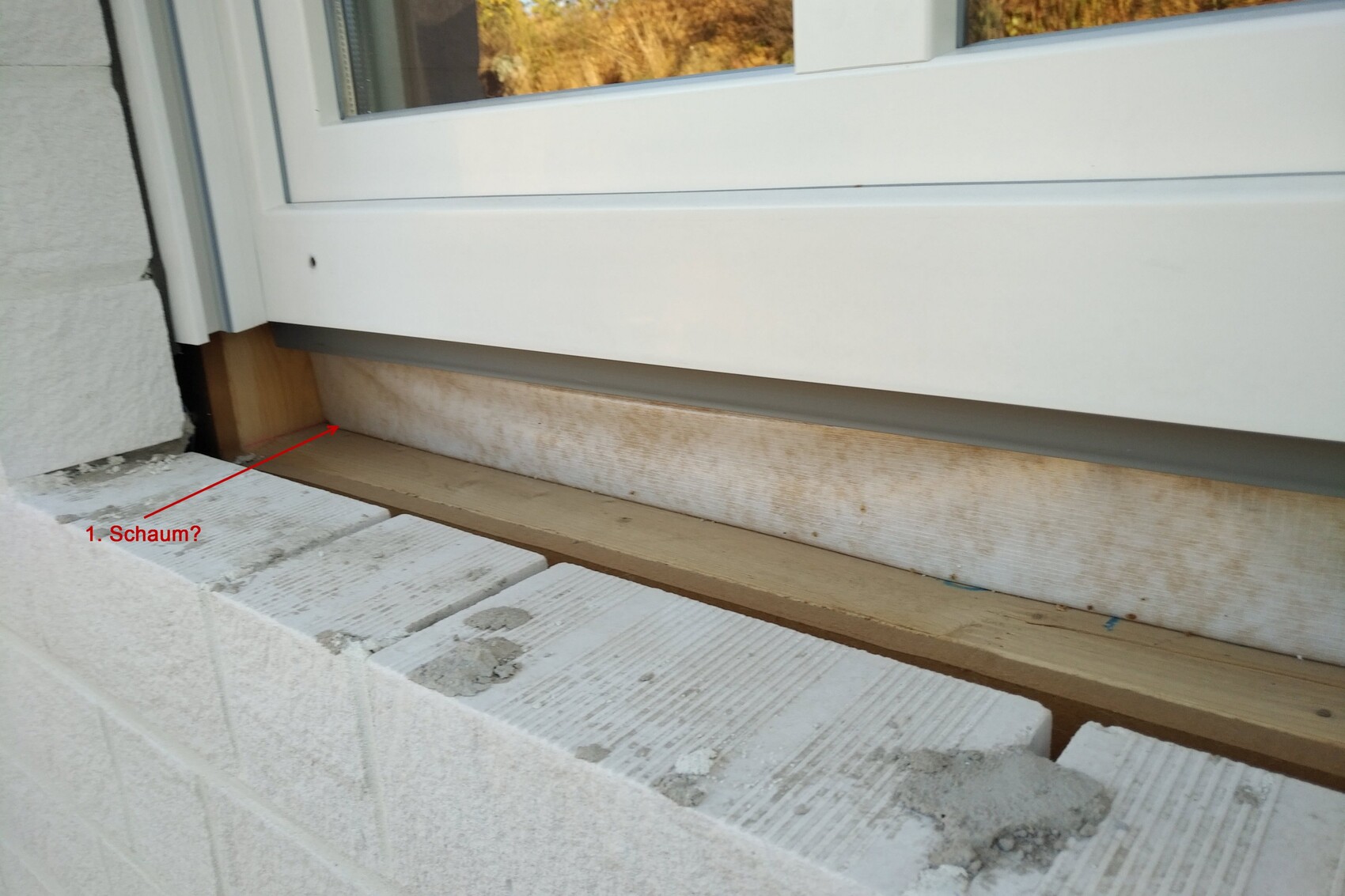
You can see here how the sunlight shines through the fleece from the outside.
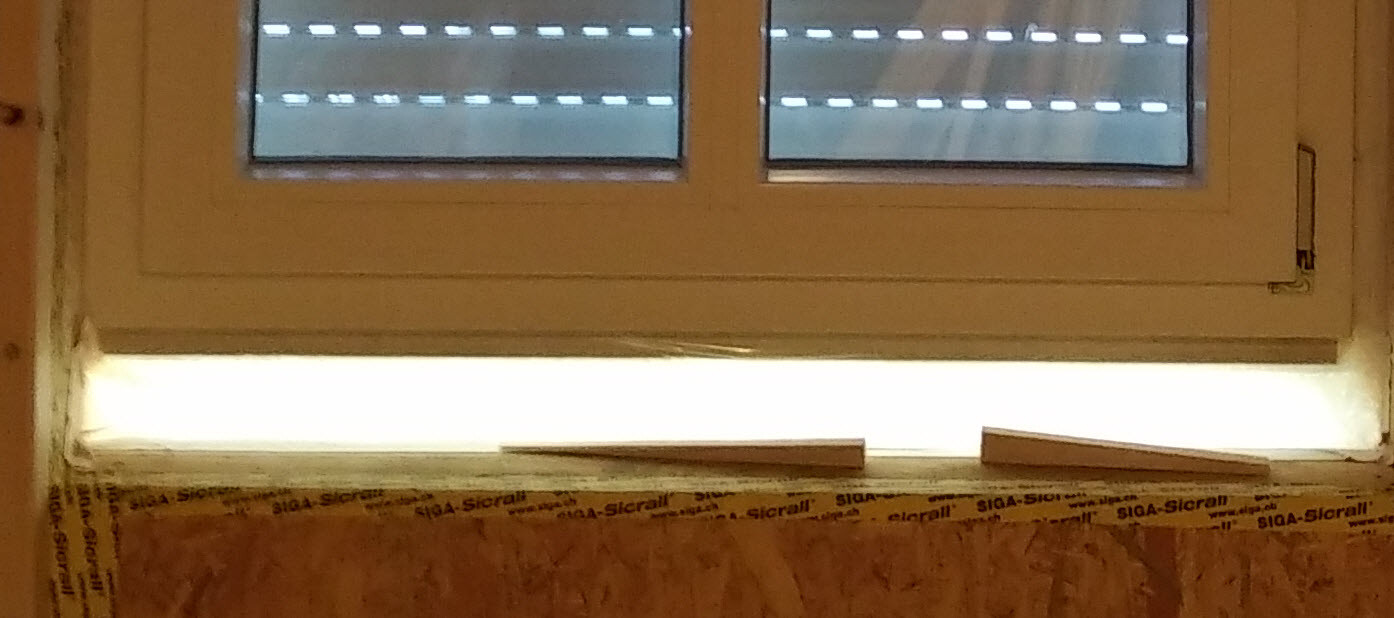
2. Screw through the airtight layer
All fastening anchors are screwed through the fleece. Does this still maintain airtightness?
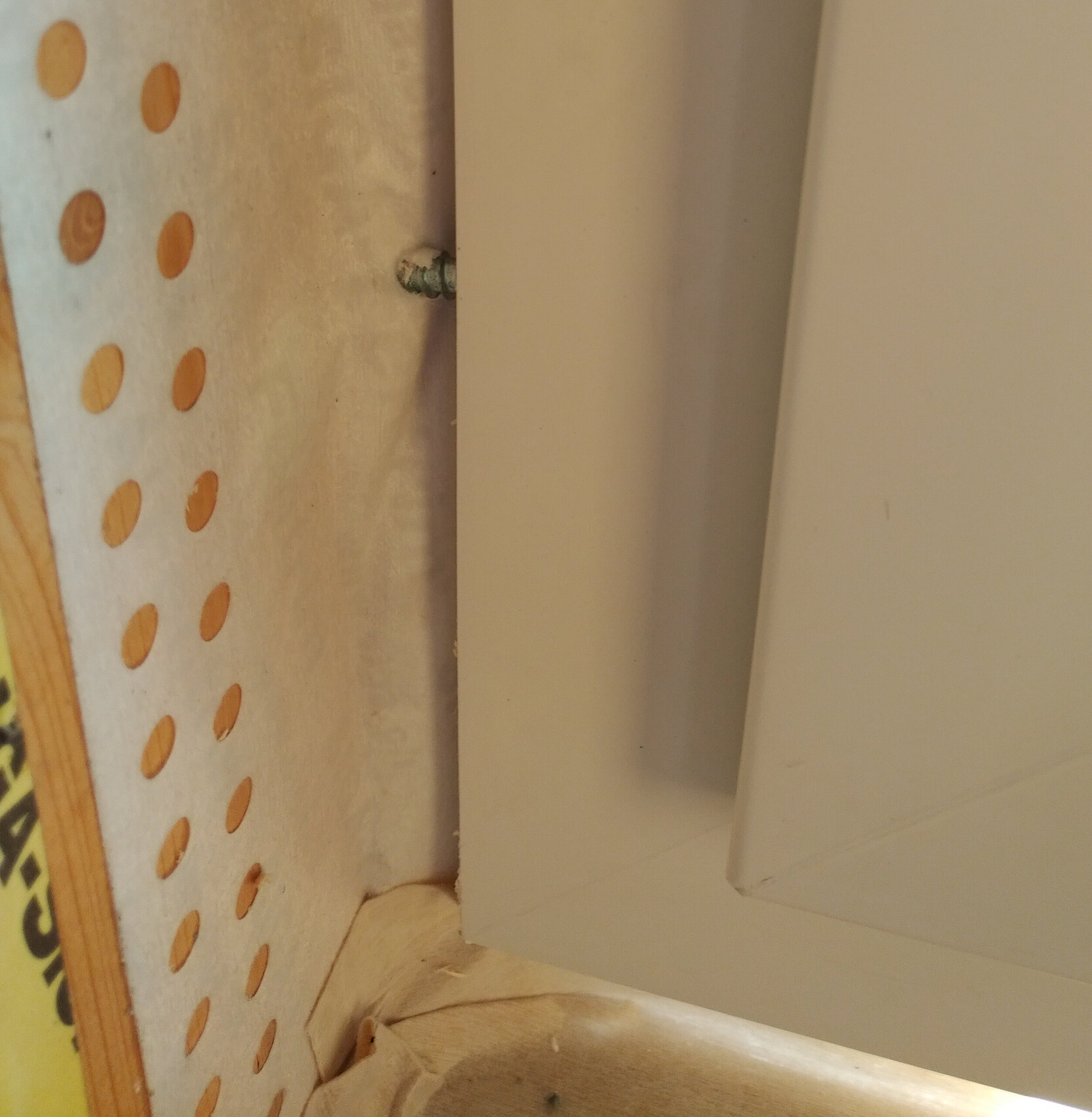
3. Fastening anchors
This is probably just an aesthetic issue, but I have never seen this before with any window. All the screws are visible from the inside. My wife isn’t too pleased about this.
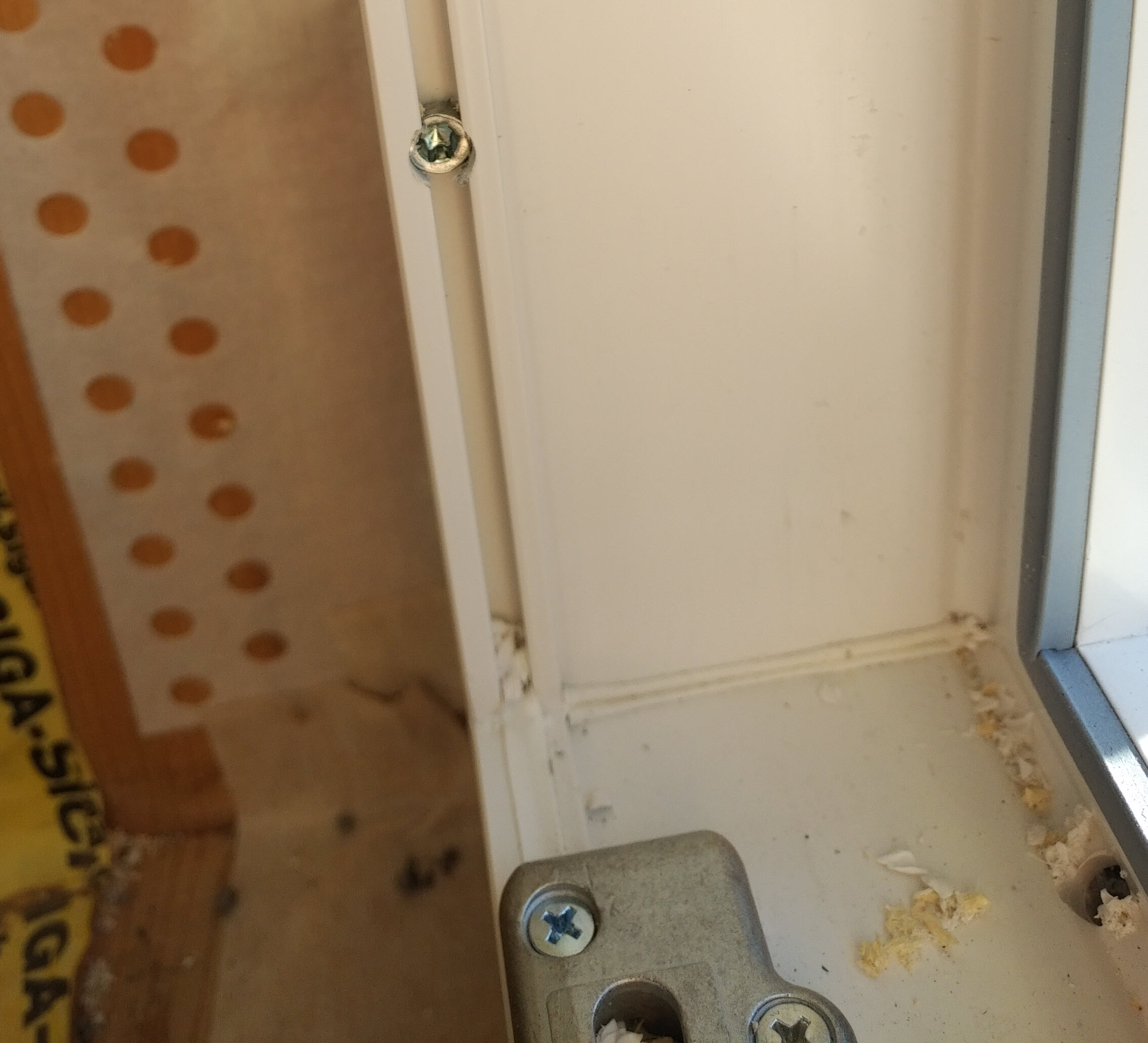
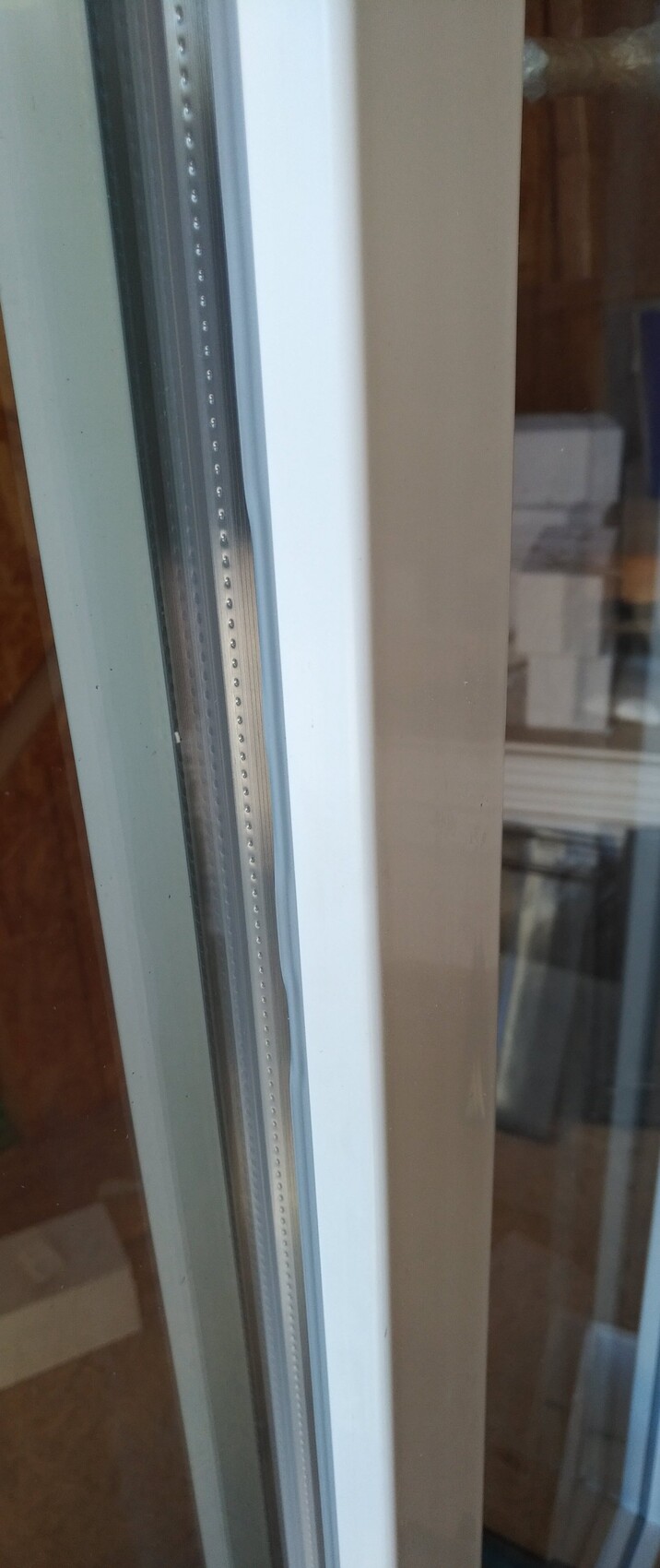
4. Window gasket
The window gasket on some windows is slightly deformed. Is this just a cosmetic issue and dirt trap, or is this something that must be accepted?
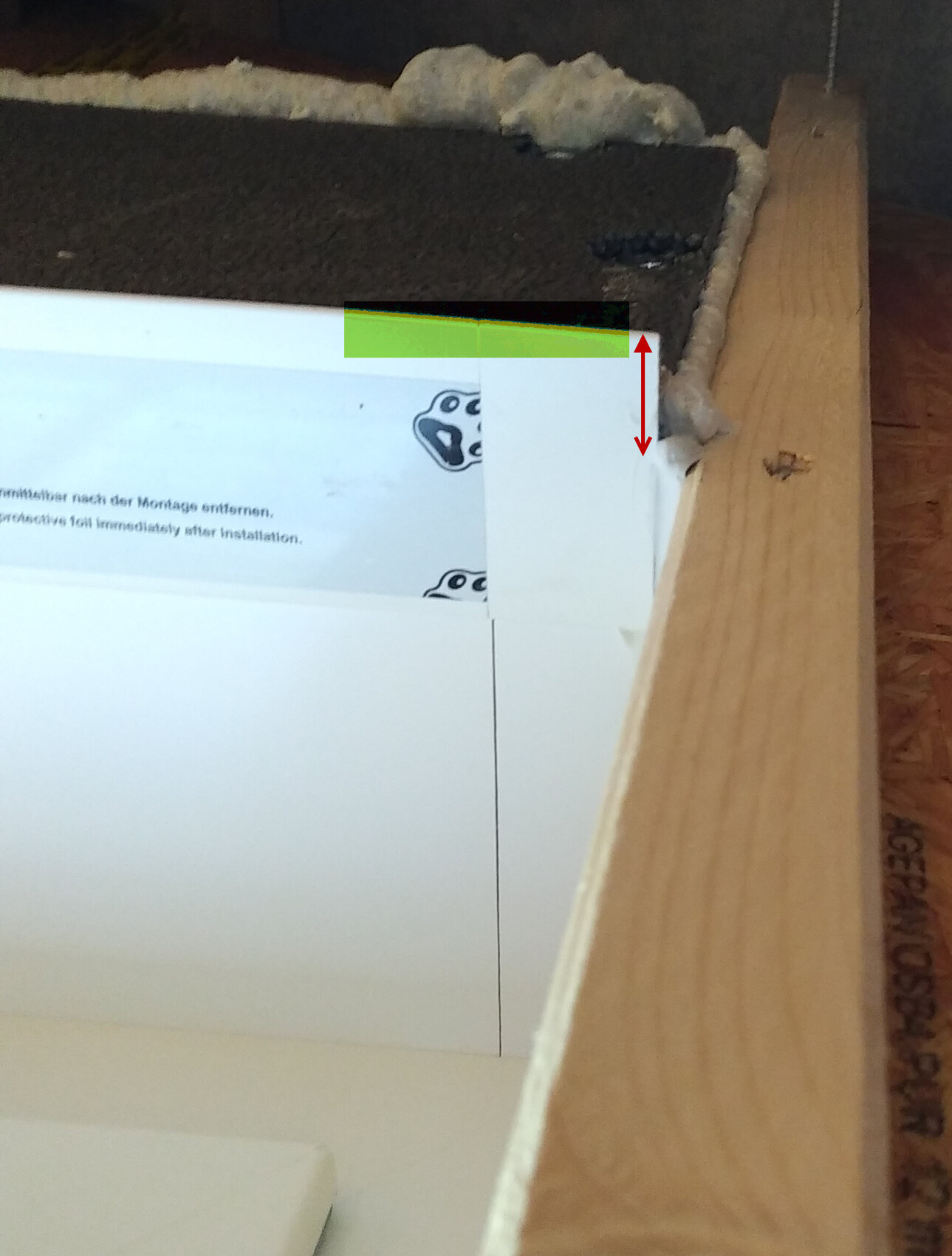
5. Roller shutter box
The roller shutter box protrudes too far into the room. I am scheduled to install a build-up of 12mm (0.5 inch) OSB board plus 12.5mm (0.5 inch) drywall. However, the window installer told me that only drywall will be installed over the roller shutter box, no OSB. If that’s the case, fine! But unfortunately, some shutter boxes extend too far into the room. If the drywall is installed flush with the rest of the cladding, the edge (marked in green) of the maintenance opening would protrude several millimeters (up to 1cm (0.4 inch)) beyond the drywall into the room. What level of deviation is still acceptable here?
Thank you very much!
I wanted to share an update and ask a few questions.
Some of the compressible sealing tapes were replaced, but the installers still need to make some corrections.
I took a few more pictures and would appreciate your input. After the issues with the compressible sealing tapes, I’m a bit uncertain about our window installer.
1. Middle level:
Here you can see the fleece that was glued to the frame from the inside to ensure airtightness. There is absolutely no insulation or mounting foam applied here. If the windowsill is installed in front of this, wouldn’t that create a significant thermal bridge!?
You can see here how the sunlight shines through the fleece from the outside.
2. Screw through the airtight layer
All fastening anchors are screwed through the fleece. Does this still maintain airtightness?
3. Fastening anchors
This is probably just an aesthetic issue, but I have never seen this before with any window. All the screws are visible from the inside. My wife isn’t too pleased about this.
4. Window gasket
The window gasket on some windows is slightly deformed. Is this just a cosmetic issue and dirt trap, or is this something that must be accepted?
5. Roller shutter box
The roller shutter box protrudes too far into the room. I am scheduled to install a build-up of 12mm (0.5 inch) OSB board plus 12.5mm (0.5 inch) drywall. However, the window installer told me that only drywall will be installed over the roller shutter box, no OSB. If that’s the case, fine! But unfortunately, some shutter boxes extend too far into the room. If the drywall is installed flush with the rest of the cladding, the edge (marked in green) of the maintenance opening would protrude several millimeters (up to 1cm (0.4 inch)) beyond the drywall into the room. What level of deviation is still acceptable here?
Thank you very much!
Similar topics