
Hello everyone,
I hope the topic description fits my question. Our house is now turnkey ready. The electrician rolled up all the network cables and hung them under the circuit breaker panel in the utility room.
For cost reasons, I would like to connect the cables to the patch panel myself.
I have 6 network outlets in the house. So I need a patch panel with at least 6 ports. A network switch and a Fritz!Box are already available.
Which patch panel would you recommend?
What else do I need to connect to the patch panel?
The "small thin gray" cable is the telephone connection, right? Which connector do I need for that?
I hope you can give me a bit of guidance.
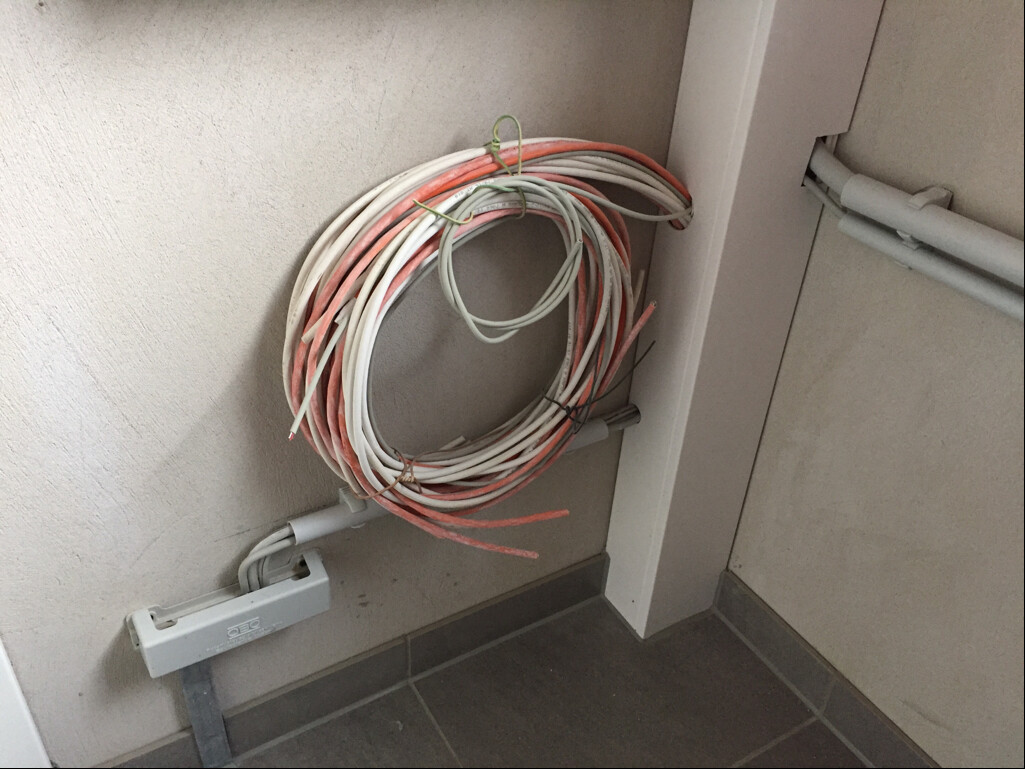
I hope the topic description fits my question. Our house is now turnkey ready. The electrician rolled up all the network cables and hung them under the circuit breaker panel in the utility room.
For cost reasons, I would like to connect the cables to the patch panel myself.
I have 6 network outlets in the house. So I need a patch panel with at least 6 ports. A network switch and a Fritz!Box are already available.
Which patch panel would you recommend?
What else do I need to connect to the patch panel?
The "small thin gray" cable is the telephone connection, right? Which connector do I need for that?
I hope you can give me a bit of guidance.
B
Bieber081528 Apr 2016 21:59For cost-savers: For small installations (6 network outlets in the house), skip the patch panel and directly crimp connectors onto the cable ends. Then plug these directly into the switch.
Otherwise, as already described. Use CAT6A hardware. Consider where you want Power over Ethernet (PoE); optionally, this can be routed through a separate patch panel (not mandatory, but possible), and possibly through a separate switch (a switch with PoE is more expensive and consumes more power than one without).
Ideally, use double CAT outlets. Then place the central router (e.g., Fritzbox) centrally (for Wi-Fi and DECT), use one cable for the route from the utility room to the router and the other for the return path.
A question for the original poster: If the electrician doesn't terminate the cables, they can't test continuity. How will their work be accepted then?
Otherwise, as already described. Use CAT6A hardware. Consider where you want Power over Ethernet (PoE); optionally, this can be routed through a separate patch panel (not mandatory, but possible), and possibly through a separate switch (a switch with PoE is more expensive and consumes more power than one without).
Ideally, use double CAT outlets. Then place the central router (e.g., Fritzbox) centrally (for Wi-Fi and DECT), use one cable for the route from the utility room to the router and the other for the return path.
A question for the original poster: If the electrician doesn't terminate the cables, they can't test continuity. How will their work be accepted then?
@Bieber: Just to clarify my understanding. I have 6 network outlets in the house. All the cables end up in the utility room. There, I can terminate the cables and connect them directly to my gigabit switch. From there, a patch cable goes to the Fritz!box. Would that be enough? Then I could completely skip the patch panel?
Regarding the NAS in the attic: I hadn’t considered the heat issue. I can also put the NAS in the utility room. Since the dryer and washing machine are also there, that shouldn’t be a problem, right? (Maybe a bit more humidity)
Regarding the NAS in the attic: I hadn’t considered the heat issue. I can also put the NAS in the utility room. Since the dryer and washing machine are also there, that shouldn’t be a problem, right? (Maybe a bit more humidity)
S
Sebastian7929 Apr 2016 10:03Crimping directly onto this is a bit tricky – CAT7 cables are usually much too thick. There are special connectors for them, but you will also need a good crimping tool...
Does the original poster really have the knowledge to carry out the wiring properly..?
Does the original poster really have the knowledge to carry out the wiring properly..?

 Sascha aus H29 Apr 2016 10:40
I can only agree with that. Today it may still be considered sufficient, but you don't know what your requirements will be in 5 years. With a patch panel, you are prepared for everything and have chosen the neatest solution – without even investing much money.
Similar topics