
Hello,
we will be moving out of our rental apartment soon. It has oak parquet flooring installed. Over time, unfortunately, water stains appeared on the floor (see picture). Does anyone have any ideas on how to remove them? We have already tried parquet soap, but without success.
Thank you very much in advance for your responses.

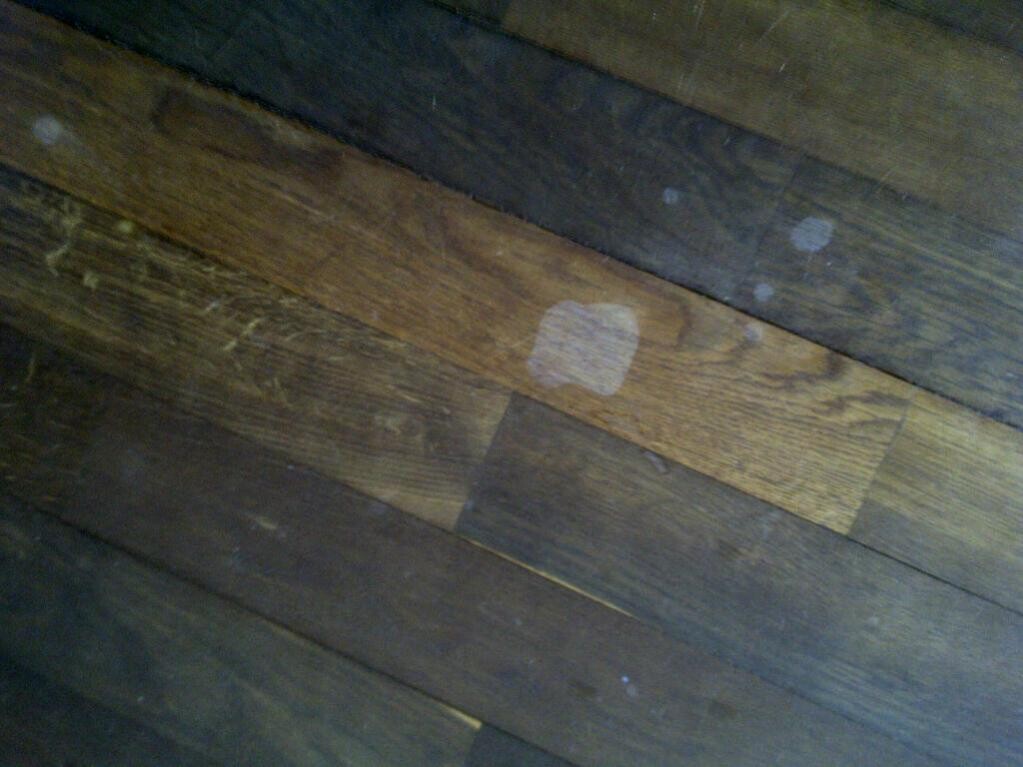
we will be moving out of our rental apartment soon. It has oak parquet flooring installed. Over time, unfortunately, water stains appeared on the floor (see picture). Does anyone have any ideas on how to remove them? We have already tried parquet soap, but without success.
Thank you very much in advance for your responses.
@dergiss:
Please excuse my directness, but on one hand, I believe water stains can definitely be avoided, and on the other hand, you will need to talk to the landlord about what should be done.
In my opinion, sanding down and resealing is essential here; anything else won’t be effective.
Please excuse my directness, but on one hand, I believe water stains can definitely be avoided, and on the other hand, you will need to talk to the landlord about what should be done.
In my opinion, sanding down and resealing is essential here; anything else won’t be effective.
Snow57 schrieb:
@dergiss:
Please excuse my directness, but on one hand, I believe water stains can definitely be prevented, and on the other hand, you will need to discuss with the landlord what steps to take.
I consider sanding and resealing unavoidable here; in my opinion, anything else will not help.Thank you very much for your response.
Directness is not a problem, so you can also explain to me directly how I could have prevented the water stains in this situation.
I look forward to your explanation.
Water stains occur when moisture is not absorbed quickly or from plant pots placed directly on the floor.
Over-wetting during mopping is also a cause that must be avoided.
Vacuuming or dry mopping is usually sufficient. If it ever becomes necessary to refresh the floor, appropriate cleaning products should be used. It is essential to distinguish between oiled, waxed, and lacquered surfaces in this case.
However, for all surfaces, microfiber cloths should not be used (abrasive effect).
Also, always clean with two buckets: one with cleaning solution (pay attention to the manufacturer’s recommended concentration) and a second bucket with clean water.
Do not misunderstand me—I am not implying that I handled things incorrectly, nor do I intend to lecture.
These are simply tips meant to help ensure years of enjoyment from wooden floors.
Over-wetting during mopping is also a cause that must be avoided.
Vacuuming or dry mopping is usually sufficient. If it ever becomes necessary to refresh the floor, appropriate cleaning products should be used. It is essential to distinguish between oiled, waxed, and lacquered surfaces in this case.
However, for all surfaces, microfiber cloths should not be used (abrasive effect).
Also, always clean with two buckets: one with cleaning solution (pay attention to the manufacturer’s recommended concentration) and a second bucket with clean water.
Do not misunderstand me—I am not implying that I handled things incorrectly, nor do I intend to lecture.
These are simply tips meant to help ensure years of enjoyment from wooden floors.
Snow57 schrieb:
@dergiss:
Please excuse my directness, but on the one hand, I believe water stains can definitely be avoided, and on the other hand, you will need to talk to the landlord about what needs to be done.
I consider sanding and resealing unavoidable here; in my opinion, anything else is pointless.Hello!
I agree with the first paragraph—but not the second. Sanding is usually done for widespread damage and/or heavy use over many years. And it’s not exactly cheap—especially if the landlord then claims a depreciation in value.
A surface treatment, for example with oil or a glaze, might be sufficient. But to avoid making things worse, it’s better to consult a specialist company.
Best regards,
TomTom1.
Similar topics