
C
Coletrickle_780817 Jan 2023 06:48Hello,
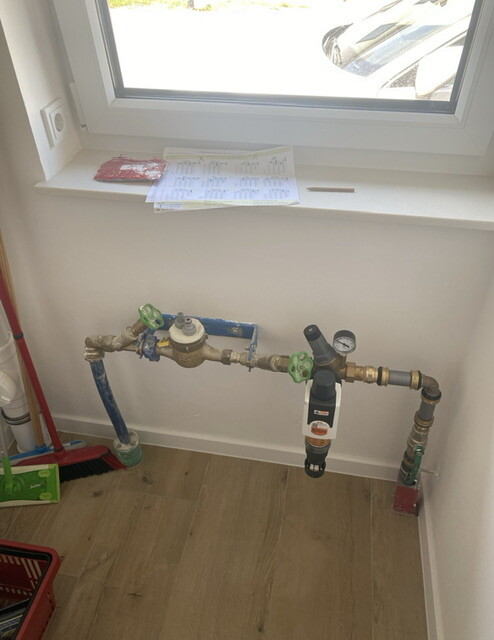
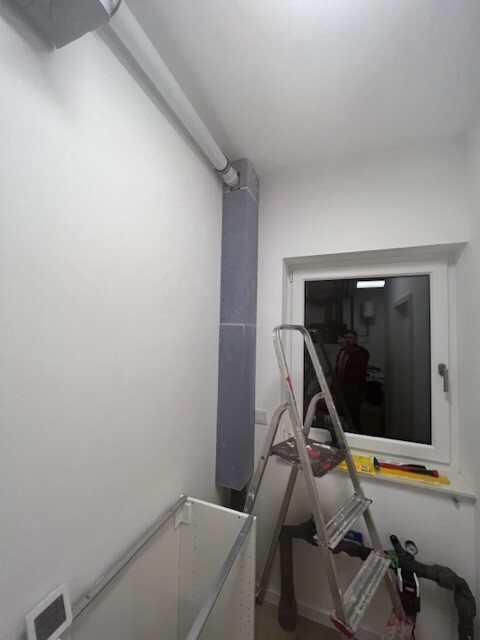
In our utility room (new build), the water supply enters the house, and from the ceiling comes the drain pipe with venting through the roof (the bathroom is located above the utility room).
I have noticed condensation mainly on the water supply pipe and slightly on the drain pipe. It is common knowledge that warm air condenses on cold pipes.
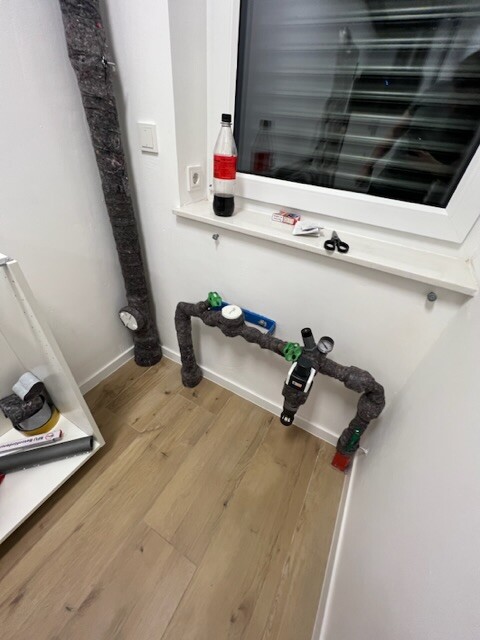
I wrapped all the pipes with an insulation tape made of a type of wool that is supposed to be moisture-resistant. Now, when I touch the pipes, they are no longer cold, and there is no more condensation.
Recently, during a visit related to a different issue, the plumbing company advised removing the insulation because mold could develop underneath it. I don’t understand this, since condensation usually occurs where warm air meets cold surfaces. That should no longer happen now.
What is correct?
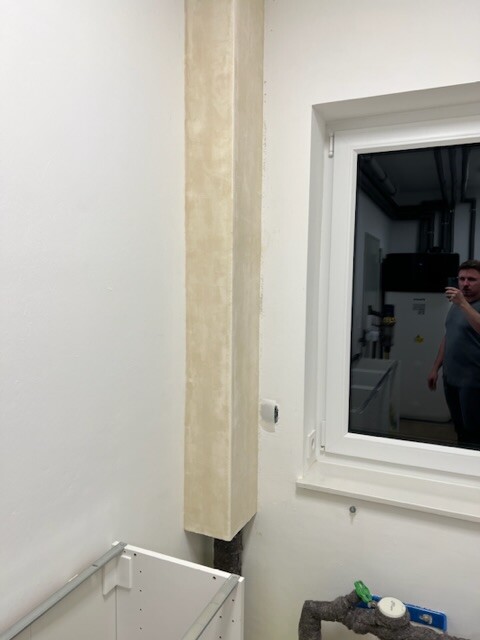
Additionally, I boxed in the drain pipe to improve the appearance and to provide a better connection for the countertop in the utility room kitchen.
My neighbor informed me yesterday that he had to remove his pipe boxing because it caused dampness behind it. That also doesn’t seem right to me, does it?
Attached are some pictures… I would appreciate any advice…
From the neighbor…
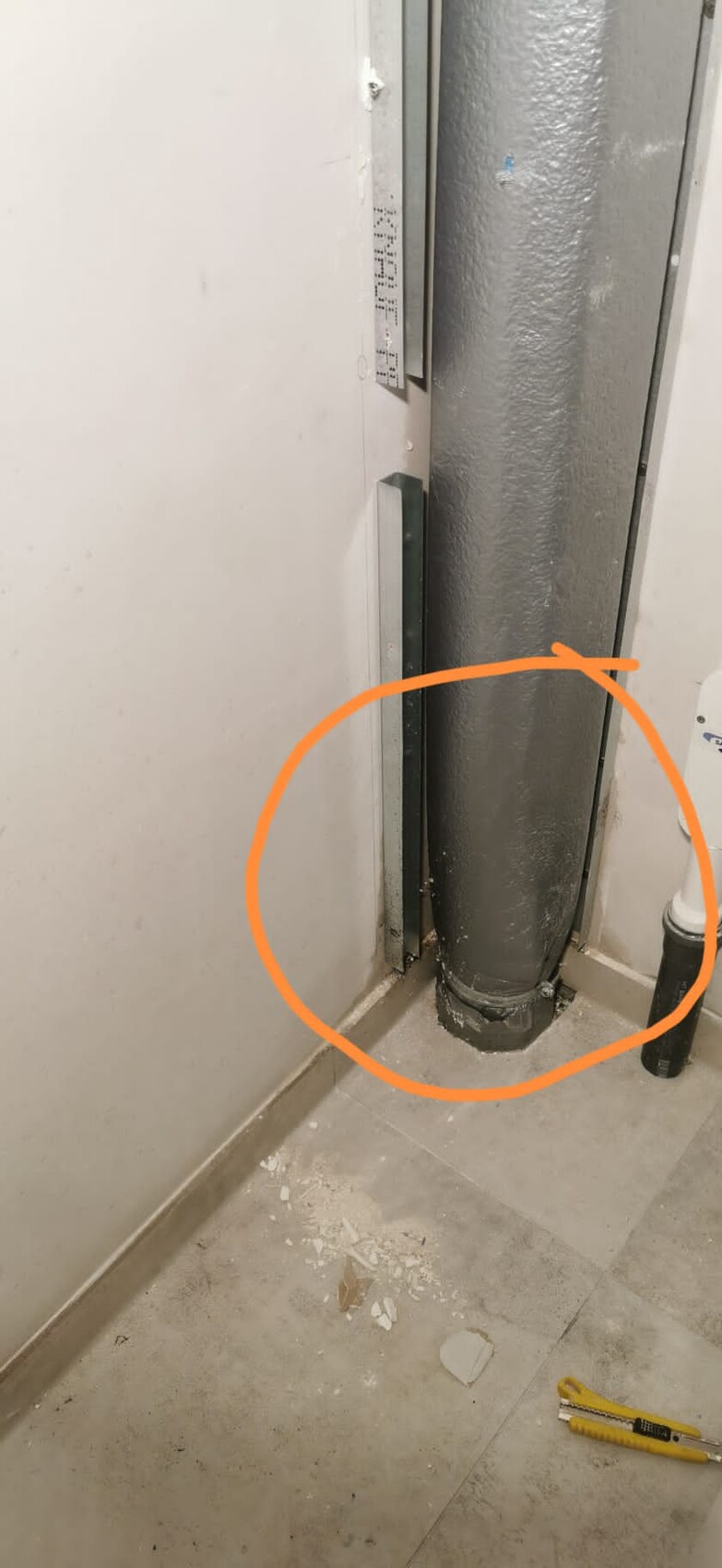
In our utility room (new build), the water supply enters the house, and from the ceiling comes the drain pipe with venting through the roof (the bathroom is located above the utility room).
I have noticed condensation mainly on the water supply pipe and slightly on the drain pipe. It is common knowledge that warm air condenses on cold pipes.
I wrapped all the pipes with an insulation tape made of a type of wool that is supposed to be moisture-resistant. Now, when I touch the pipes, they are no longer cold, and there is no more condensation.
Recently, during a visit related to a different issue, the plumbing company advised removing the insulation because mold could develop underneath it. I don’t understand this, since condensation usually occurs where warm air meets cold surfaces. That should no longer happen now.
What is correct?
Additionally, I boxed in the drain pipe to improve the appearance and to provide a better connection for the countertop in the utility room kitchen.
My neighbor informed me yesterday that he had to remove his pipe boxing because it caused dampness behind it. That also doesn’t seem right to me, does it?
Attached are some pictures… I would appreciate any advice…
From the neighbor…


I can’t say for sure whether condensation still forms after insulation. From my experience, condensation mainly occurs in the summer. Drawing conclusions for the entire year based on that seems risky.
Here’s a small tip. If I’m not mistaken, this is a pressure reducer with a filter, right? At least in my case, there’s a drain outlet at the bottom. After a few months, it starts to drip slightly, and this gradually increases over time. Because of this, I have a collection container attached underneath. Whenever I notice water collected there, I clean it. If this were hidden behind a cover, I would never think to check it and might have had several water damage issues already.
Here’s a small tip. If I’m not mistaken, this is a pressure reducer with a filter, right? At least in my case, there’s a drain outlet at the bottom. After a few months, it starts to drip slightly, and this gradually increases over time. Because of this, I have a collection container attached underneath. Whenever I notice water collected there, I clean it. If this were hidden behind a cover, I would never think to check it and might have had several water damage issues already.
C
Coletrickle_780817 Jan 2023 11:11Musketier schrieb:
I can’t say whether condensation will still occur after insulation. From my experience, it mainly condenses in the summer. I think it’s risky to generalize that to the whole year.
Here’s a small tip. If I’m not mistaken, that is a pressure reducer with a filter, right? At least mine has a drain at the bottom. After a few months, it starts to drip slightly, and this gradually increases. I have a drip tray installed underneath. Whenever I see water collected there, I clean it. If it were behind a covering, I would never think to check it and would have already experienced some water damage. The pressure reducer will not become clogged. A kitchen cabinet will be installed there, with the back panel modified accordingly to allow easy access to everything.
So, the drainage pipes were boxed in by the general contractor. As far as I know, however, without any insulation. I had a small access door installed at the point where the pipe meets the inspection opening. I recently took a look inside there. I did not find any moisture on the pipe.
In your case, it looks like you insulated the inspection opening?
In your case, it looks like you insulated the inspection opening?
C
Coletrickle_780817 Jan 2023 18:02Musketier schrieb:
So, the drain pipes in our case were boxed in by the general contractor. As far as I know, there wasn’t any insulation. At the point where the pipe has the inspection opening, I had a small access door installed. I recently took a look inside there. I didn’t notice any moisture on the pipe.
In your case, it looks like you have insulated the inspection opening? But Murano, it still needs to be possible to open it.
Similar topics