
ᐅ Urban villa of approximately 200 sqm without a basement. Please provide your feedback.
Created on: 11 Apr 2018 09:51
M
mrs_bauherrin
Zoning Plan / Restrictions
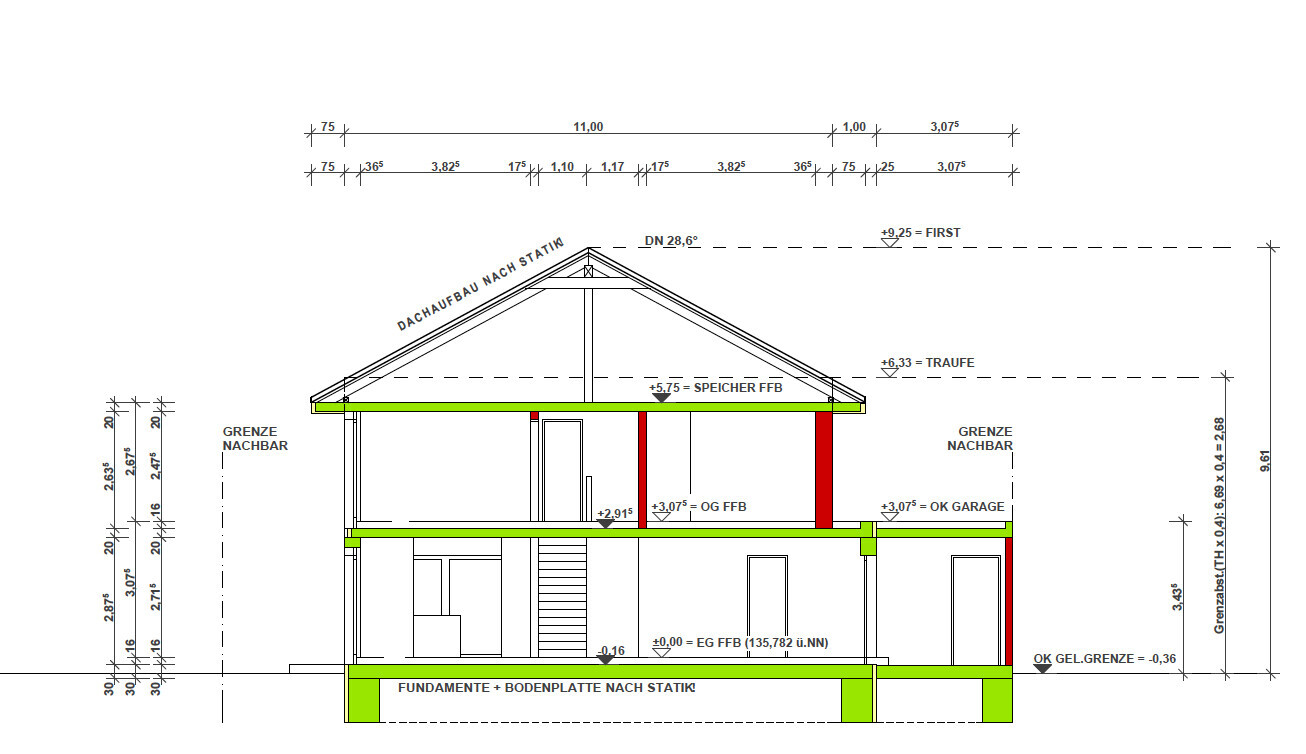
Plot size: 587 sqm (6,316 sq ft)
Slope: none
Floor area ratio
Gross floor area ratio
Building window, building line, and boundary lines
Edge development
Number of parking spaces: 2 per housing unit
Number of floors: 2
Roof type: no restrictions
Architectural style: urban villa
Orientation
Maximum height / restrictions – to neighbor: 0.4 m (15.7 inches) x eaves height
Other requirements: none
Client Requirements
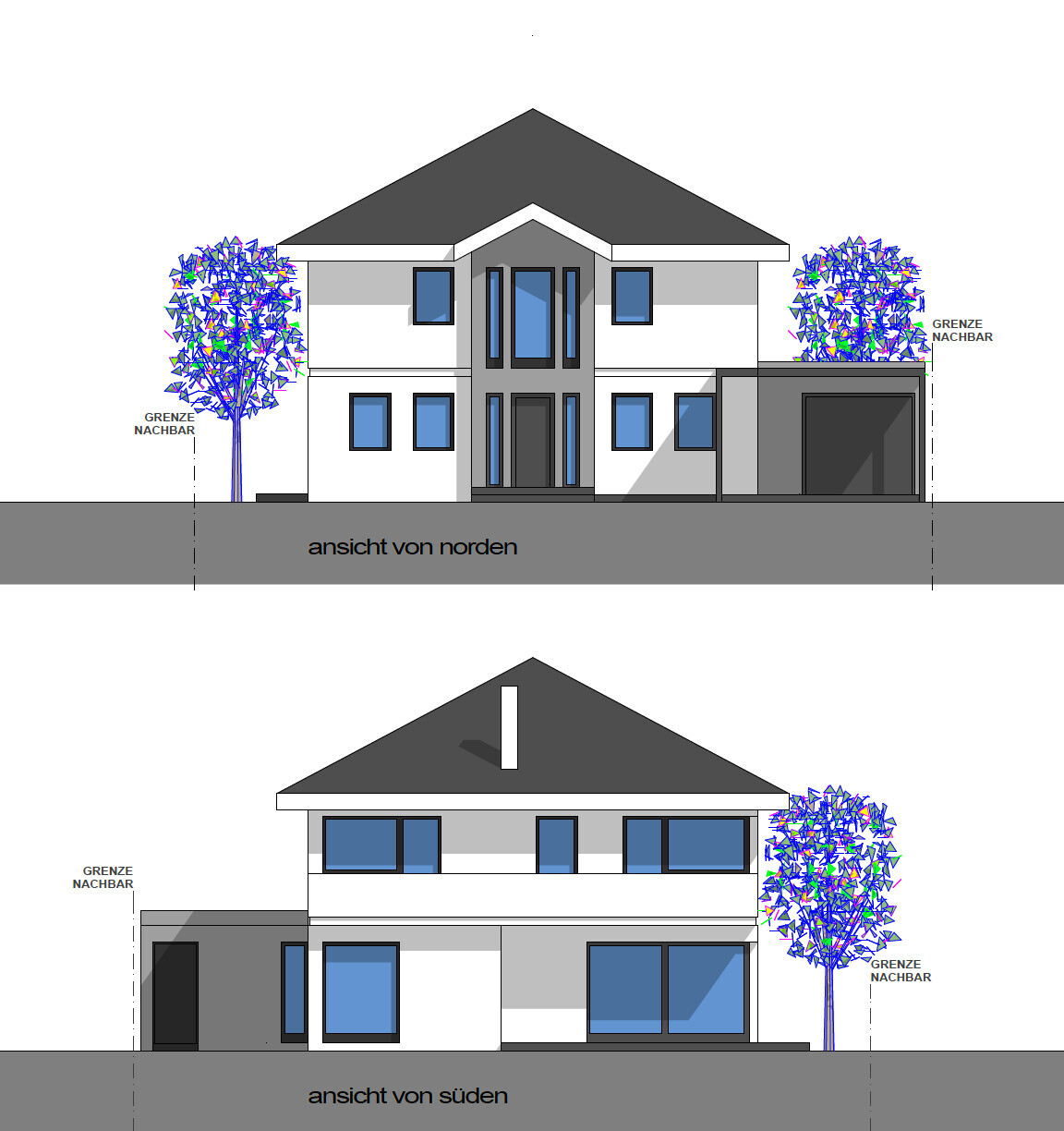
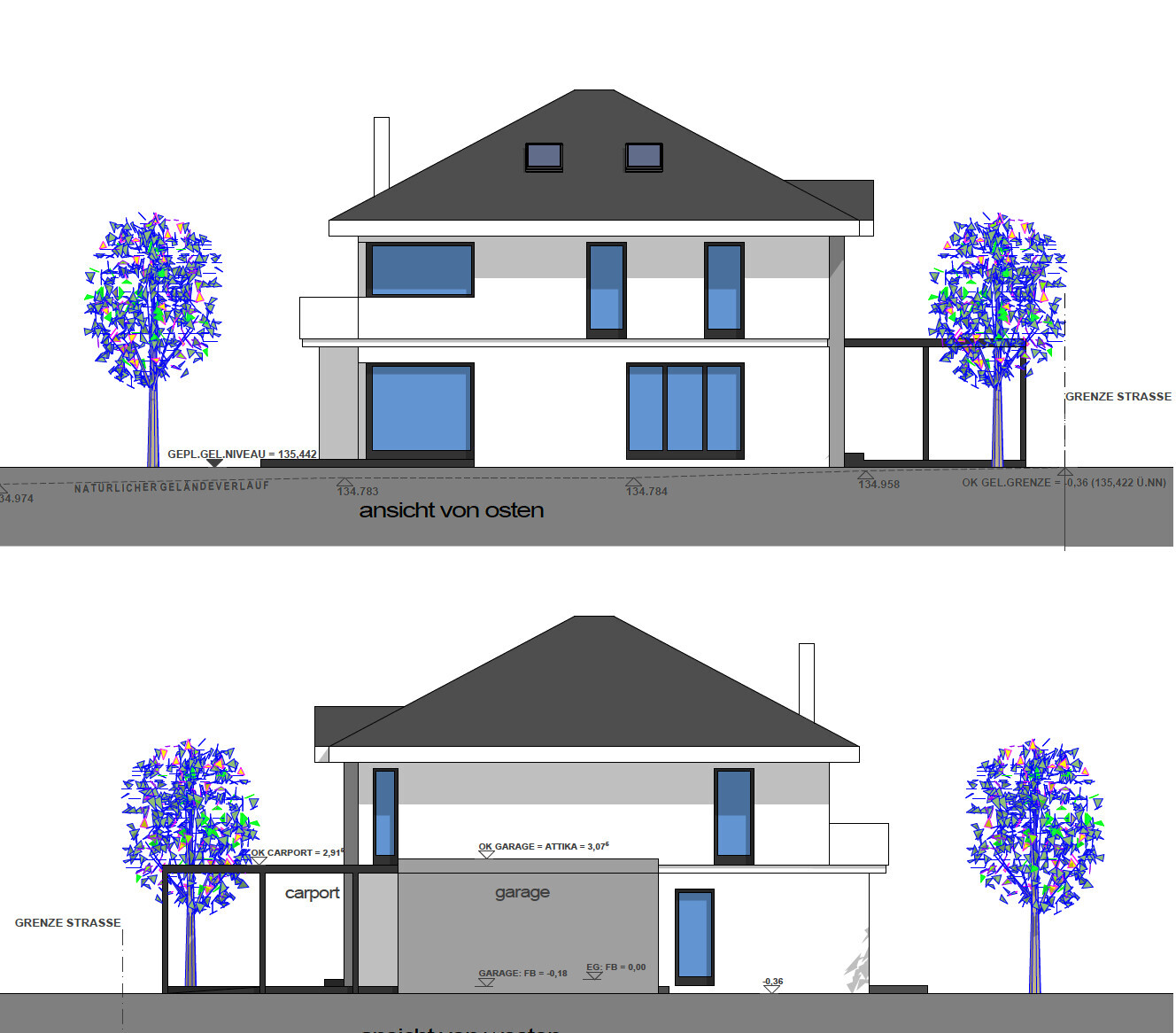
Style, roof type, building type: urban villa with hip roof and 2 full floors
Basement: no, floors: 2
Number of occupants: 3 (female 31, male 28, child 2)
Space requirement on ground and upper floors: approx. 100 sqm (1,076 sq ft)
Office use: family use rather than home office
Annual overnight guests: 1
Open or closed architecture: open
Traditional or modern design: modern
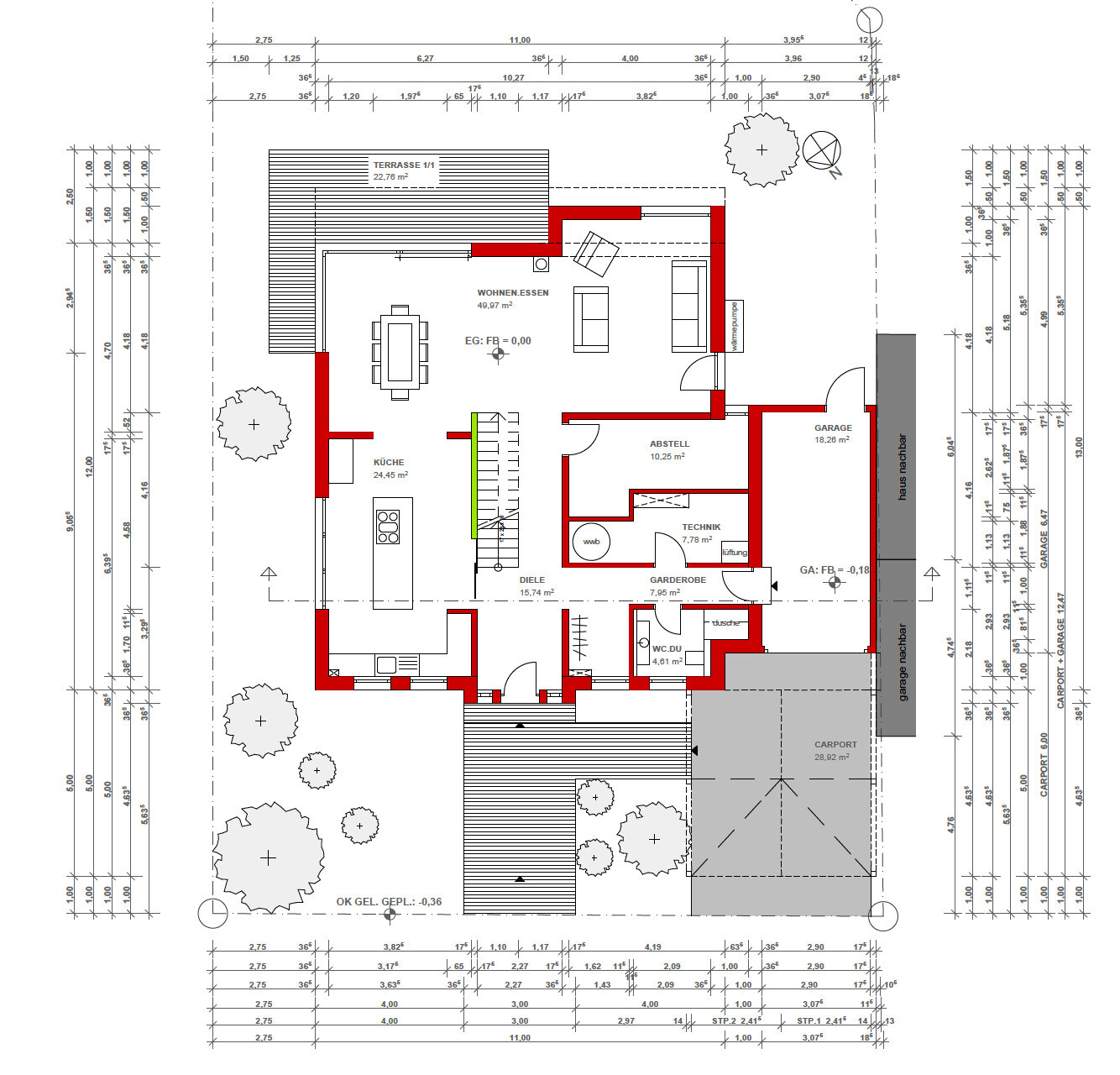
Open kitchen: no door between kitchen and dining area, with kitchen island
Number of dining seats: 6–8
Fireplace: yes, water-heated
Music/soundwall: no
Balcony: yes, roof terrace: no
Garage: yes, 1 parking space; carport: yes, 2 parking spaces
Utility garden: preferred but not yet planned, greenhouse: possibly
Additional wishes / special features / daily routine, including reasons for choices
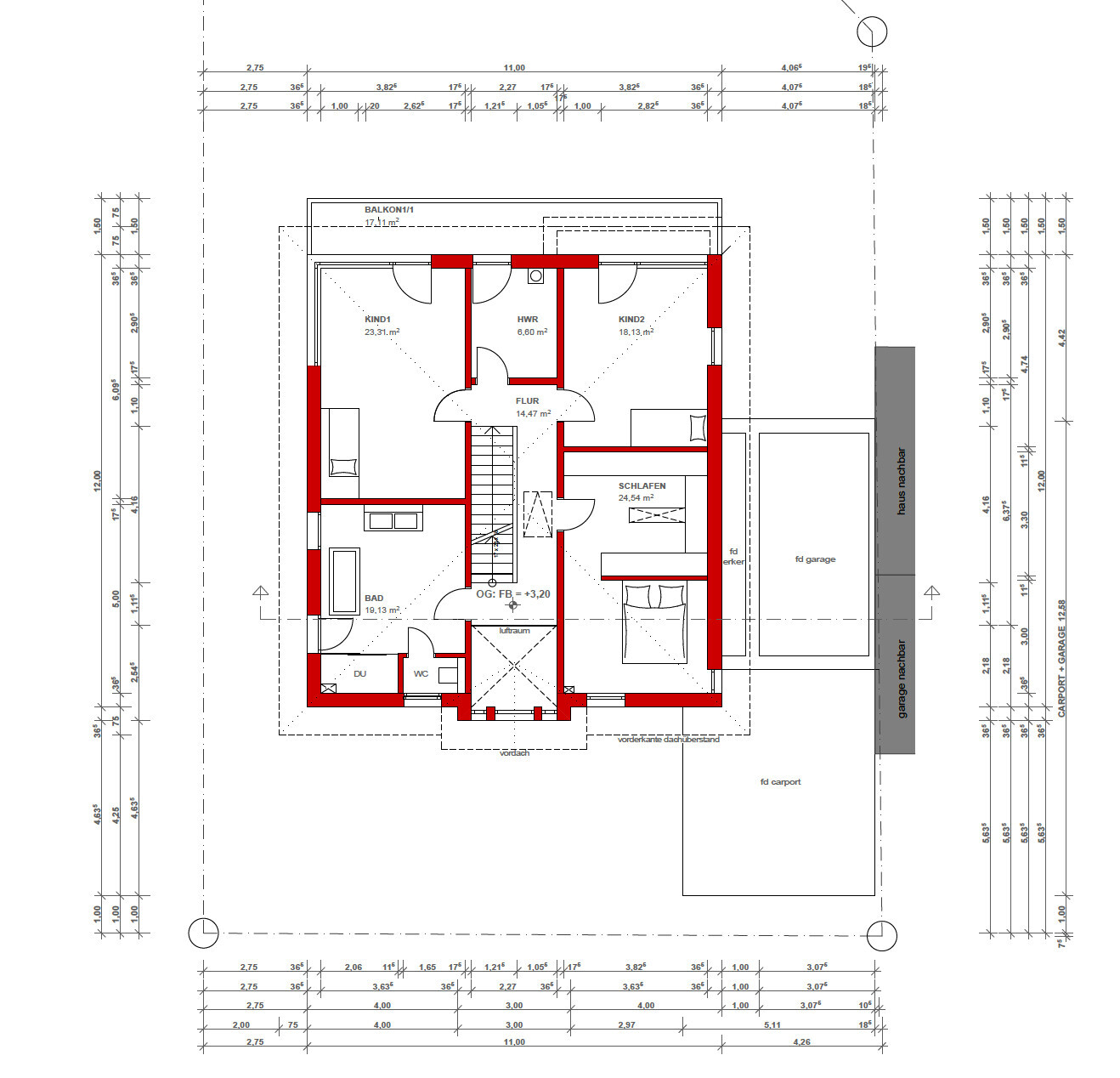
Laundry room was moved to the upper floor because there is hardly any space on the ground floor and the technical room is already very tight without washer and dryer. It was important to me to be able to dry laundry directly on the balcony, at least in warm weather.
We will have a cantilevered staircase and an open space above. Access from the garage to the house was important to me. I feel there is a lack of storage space for provisions, but maybe the kitchen will be big enough since we will have a side-by-side fridge again. We rarely use canned goods.
House Design
Who planned it: architect and many personal drafts
- Builder’s planner
- Architect
- Do-it-yourself
What do you particularly like? Cantilevered staircase with glass railing (which means I don’t mind cleaning it), balcony with glass railing, open living-dining area with fireplace.
What do you dislike? Why? The technical room takes up so much space and bothers me, but a basement was too expensive in terms of cost-benefit.
Price estimate according to architect/planner: 400,000 with 60,000 own contribution (window construction and installation, glass railing)
Personal price limit for the house including equipment: see above
Preferred heating system: heat pump
Additionally, controlled mechanical ventilation, and if budget allows, some connected home technology
If You Have to Give Up Something, which details / extensions
- Can you give up? Child 1’s room is a bit too large – the bathroom might get bigger.
- Can’t give up? Large children’s rooms >16 sqm (172 sq ft), high ceiling on ground floor 2.70 m (8.86 ft), large kitchen, 2 showers in the house
Why Has the Design Turned Out Like It Has?
For example: Standard design from the planner? Initially we wanted a central T-shaped staircase, but due to lack of space it became a straight cantilevered staircase.
Which requests were implemented by the architect? All
A mix of many examples from various magazines: yes, especially the one with the red V
What makes it particularly good or bad in your opinion? We took a long time, about 1.5 years, for the final planning
What Is the Most Important / Fundamental Question About the Floor Plan in 130 Characters or Less?
We would simply like to hear a third opinion again; often you don’t notice something that others see immediately.
What I also want to mention: Storage room = office and playroom but also with space for buckets, vacuum cleaner, etc.
The bathroom on the upper floor will be enlarged and child 1’s room slightly reduced.
Site plan is still to be created.
Plot size: 587 sqm (6,316 sq ft)
Slope: none
Floor area ratio
Gross floor area ratio
Building window, building line, and boundary lines
Edge development
Number of parking spaces: 2 per housing unit
Number of floors: 2
Roof type: no restrictions
Architectural style: urban villa
Orientation
Maximum height / restrictions – to neighbor: 0.4 m (15.7 inches) x eaves height
Other requirements: none
Client Requirements
Style, roof type, building type: urban villa with hip roof and 2 full floors
Basement: no, floors: 2
Number of occupants: 3 (female 31, male 28, child 2)
Space requirement on ground and upper floors: approx. 100 sqm (1,076 sq ft)
Office use: family use rather than home office
Annual overnight guests: 1
Open or closed architecture: open
Traditional or modern design: modern
Open kitchen: no door between kitchen and dining area, with kitchen island
Number of dining seats: 6–8
Fireplace: yes, water-heated
Music/soundwall: no
Balcony: yes, roof terrace: no
Garage: yes, 1 parking space; carport: yes, 2 parking spaces
Utility garden: preferred but not yet planned, greenhouse: possibly
Additional wishes / special features / daily routine, including reasons for choices
Laundry room was moved to the upper floor because there is hardly any space on the ground floor and the technical room is already very tight without washer and dryer. It was important to me to be able to dry laundry directly on the balcony, at least in warm weather.
We will have a cantilevered staircase and an open space above. Access from the garage to the house was important to me. I feel there is a lack of storage space for provisions, but maybe the kitchen will be big enough since we will have a side-by-side fridge again. We rarely use canned goods.
House Design
Who planned it: architect and many personal drafts
- Builder’s planner
- Architect
- Do-it-yourself
What do you particularly like? Cantilevered staircase with glass railing (which means I don’t mind cleaning it), balcony with glass railing, open living-dining area with fireplace.
What do you dislike? Why? The technical room takes up so much space and bothers me, but a basement was too expensive in terms of cost-benefit.
Price estimate according to architect/planner: 400,000 with 60,000 own contribution (window construction and installation, glass railing)
Personal price limit for the house including equipment: see above
Preferred heating system: heat pump
Additionally, controlled mechanical ventilation, and if budget allows, some connected home technology
If You Have to Give Up Something, which details / extensions
- Can you give up? Child 1’s room is a bit too large – the bathroom might get bigger.
- Can’t give up? Large children’s rooms >16 sqm (172 sq ft), high ceiling on ground floor 2.70 m (8.86 ft), large kitchen, 2 showers in the house
Why Has the Design Turned Out Like It Has?
For example: Standard design from the planner? Initially we wanted a central T-shaped staircase, but due to lack of space it became a straight cantilevered staircase.
Which requests were implemented by the architect? All
A mix of many examples from various magazines: yes, especially the one with the red V
What makes it particularly good or bad in your opinion? We took a long time, about 1.5 years, for the final planning
What Is the Most Important / Fundamental Question About the Floor Plan in 130 Characters or Less?
We would simply like to hear a third opinion again; often you don’t notice something that others see immediately.
What I also want to mention: Storage room = office and playroom but also with space for buckets, vacuum cleaner, etc.
The bathroom on the upper floor will be enlarged and child 1’s room slightly reduced.
Site plan is still to be created.
I find that a house of this size lacks a dedicated master area with a walk-in closet, bedroom, and private bathroom. We have two teenagers, and I believe having our own bathroom is the most important feature in our new house (although I suppose you can only truly appreciate that once you have older children yourself). I would fully glass the small bay window in the living area, not just halfway, but you can still place an armchair in front of it.
Best regards,
Sabine
Best regards,
Sabine

ivenh0 schrieb:
My suggestion:
Kitchen with a large island (which can of course be made even bigger to fit the cooktop and sink), with your side-by-side refrigerator placed beside it. Next to that, a small pantry. The bathroom and staircase each on the opposite side. The hallway removed to gain an additional room:
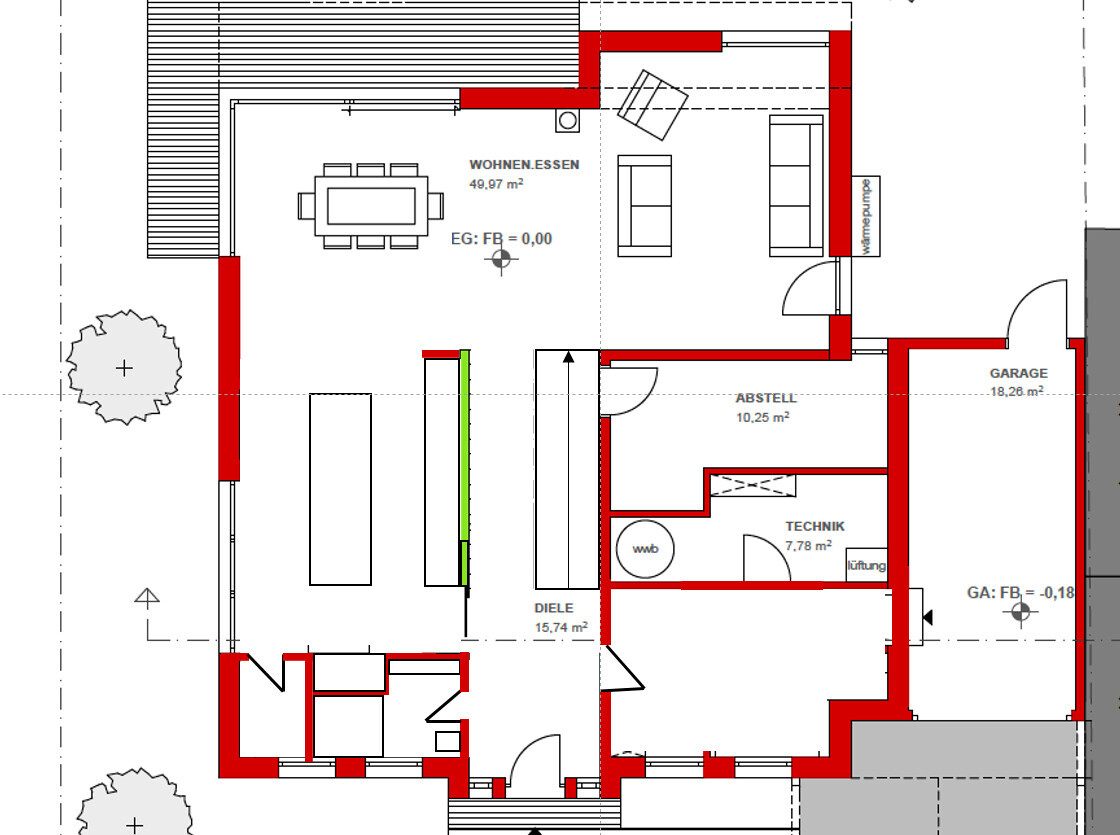
Good idea, but I would seriously miss having enough wardrobe space here. So, plan about half of the newly gained room as an (open) wardrobe (moving the wall between the two windows should be enough).
Inevh0, with a smaller pantry, I had also considered that! It looks good. However, on the utility room side, I would agree with Climbee not to add another room in favor of more closet space. Besides, I find the utility room too awkwardly shaped and difficult to furnish, and the storage room is too small and awkward for all its intended uses (baby sleeping area, storage, office).
Edit: If you create a proper office on the ground floor that also has space for a guest couch, then there should definitely be room for a children’s bathroom upstairs (instead of the office / additional room). But first and foremost, the original poster really needs to clarify what is possible in terms of drainage. We also have a bathtub drain running "through" the living room to the downstairs, but we have a basement where the wastewater can be routed with the necessary slope. Is that only possible beneath a slab foundation? Or can someone knowledgeable help me with this? (It bothers me that I can’t assess the utility room situation at all :-S)
Edit: If you create a proper office on the ground floor that also has space for a guest couch, then there should definitely be room for a children’s bathroom upstairs (instead of the office / additional room). But first and foremost, the original poster really needs to clarify what is possible in terms of drainage. We also have a bathtub drain running "through" the living room to the downstairs, but we have a basement where the wastewater can be routed with the necessary slope. Is that only possible beneath a slab foundation? Or can someone knowledgeable help me with this? (It bothers me that I can’t assess the utility room situation at all :-S)
Climbee schrieb:
Good idea, but I would seriously miss closet space here. So plan about half of the gained space as an (open) closet area (moving the wall between the two windows should be enough)Good idea.
The layout suggested by @ivenh0 allows for an even better and more efficient division.
Yes, the office (or baby’s bedroom) with a window can be reduced slightly, and you can possibly rearrange it with closet space, a powder room, built-in cupboards, etc.
The design benefits from eliminating the hallway.
This direct door to the garage is unnecessary here, and the floor plan doesn’t really allow for it either.
The kitchen is now more ergonomic—two-sided with an island.
I would still shorten the house by one meter (about 3 feet) in the middle.
It doesn’t gain anything from the oversize.
I’d say: for many houses, it would be nice to have an extra 50 to 100 cm (20 to 40 inches) in width or depth, but that’s often not possible due to costs.
Then there are houses where the room sizes are just right: not too small, enough space for furniture, and a comfortable sense of openness.
Then there are a few houses without a budget limit. In those cases, it often happens that some things are planned oversized, which can actually make everyday life more complicated.
Of course, you can build 200 m² (2,150 sq ft), but usually then you plan for additional rooms (third child’s bedroom, guest or office room, sauna, children’s bathroom, gym, spa…).
Here, a large storage room is planned that should hold vacuum cleaner, mop, tools, cleaning supplies—and also a baby and a desk.
The rooms upstairs are larger than necessary—there’s roughly 10–15 m² (110–160 sq ft) too much. So everything could be scaled back or rearranged into rooms that make more sense. I think the living and dining areas are good and fine.
The kitchen is too long, as already mentioned above.
Apart from that:
Move the dressing room’s partition wall by one meter (about 3 feet) so the dressing room is smaller and the bedroom larger, and rotate the bed 90 degrees → more space for the bed and a cozier feel, because 1. sleeping near a door and window is uncomfortable, and 2. the bed might be replaced someday… we had 160 cm (63 inches) before and now have a new one at 160 cm (63 inches), but the surrounding space is wider.
The utility room could be windowless—that might be an option?
Also, check whether the west-facing light in the rooms is sufficient. The window in the northwest only gets sun in the early evening… if you move it towards the top of the plan, it probably gets more light.
The laundry room could be made accessible from the bathroom. That way, the bedrooms can be more balanced.
If the office/storage and technical rooms were swapped, larger windows could be planned for the office. At the same time, the wall could be straightened overall, since the offset, which was primarily for lighting the storage room, would no longer be necessary. Fewer corners and projections mean lower costs.

Similar topics