
ᐅ Floor plan of a 160 sqm urban villa, without a basement – what are your thoughts?
Created on: 10 May 2018 02:46
P
Patkia
Development Plan / Restrictions
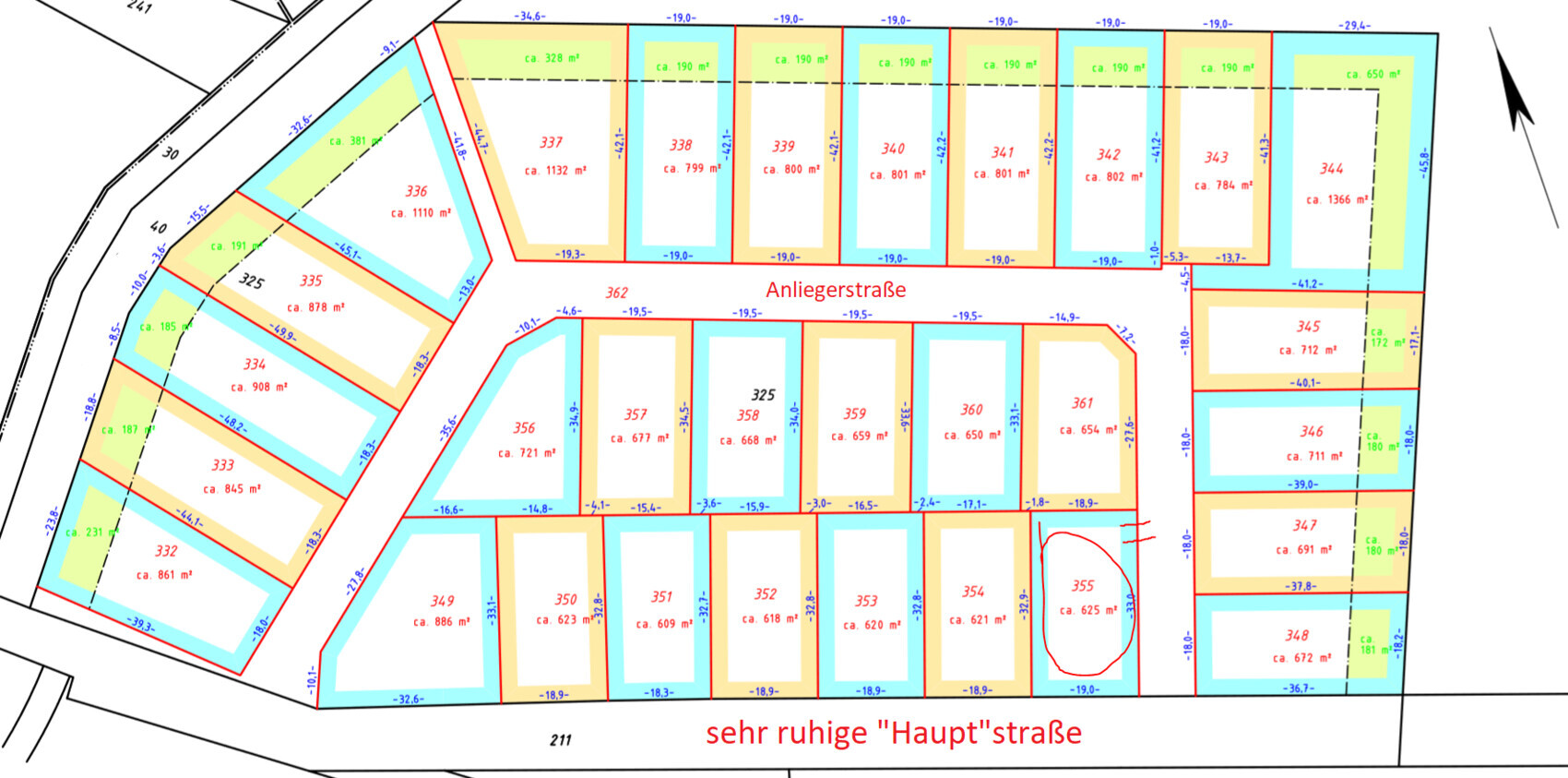
Plot size: 626 sqm (6730 sq ft)
Slope: none
Site coverage ratio: 0.35 + 50% for ancillary structures
Floor area ratio:
Building window, building line, and boundary: 3 m (10 ft), no special requirements
Edge development: permitted
Number of parking spaces: no requirement
Number of floors: 3
Roof type: -
Architectural style: -
Orientation: -
Maximum heights / limits: 12 m (39 ft)
Additional requirements: 1 tree per every 300 sqm (3200 sq ft) started
Homeowners’ Requirements
City villa style, hip / pyramid roof
2 full stories
Residents: 2 adults, around 30 years old, 1-2 children planned
Room requirements:
Ground floor: kitchen / dining / living / pantry / guest room (office) / utility room / guest WC
Upper floor: 3 bedrooms / walk-in closet / storage / bathroom
Office: on ground floor, also to be used as guest room
Occasional overnight guests
Open or closed layout: partly open / partly closed
Traditional or modern construction: modern
Open kitchen, cooking island, possibly a small pantry
Minimum seating at dining table: 6
Fireplace: yes
Music / stereo wall: home cinema area
Roof terrace: possibly planned later on garage
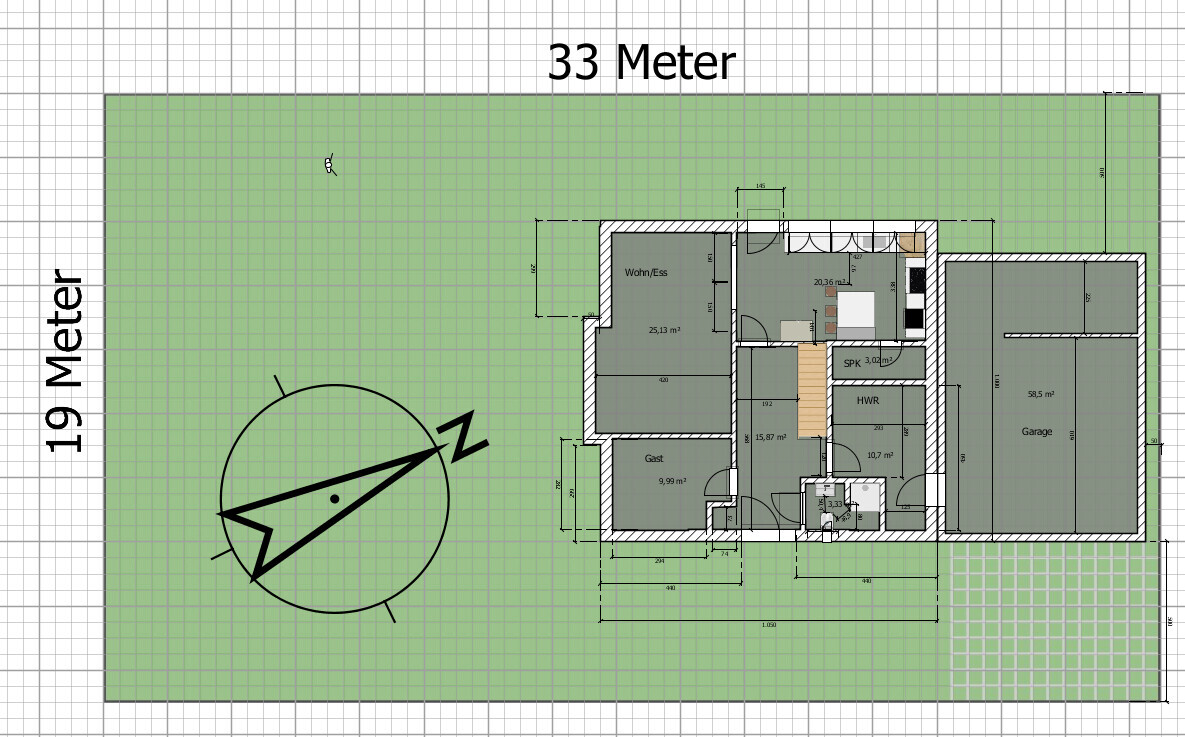
Garage: yes, double garage with workshop / storage area: 9 m × 6.5 m (30 ft × 21 ft) with access to the house, planned as self-built, driveway large enough for 2 cars
Utility garden, greenhouse: no
Additional wishes / special features / daily routine, including reasons why certain things are preferred or avoided:
Primarily for aesthetic reasons, a small bay window should be included. Not deeper than 50 cm (20 inches) due to roof overhang. There will be a canopy over the front door as a visual relief, so the bay window should face the garden.
Ground Floor (GF):
Bright hallway,
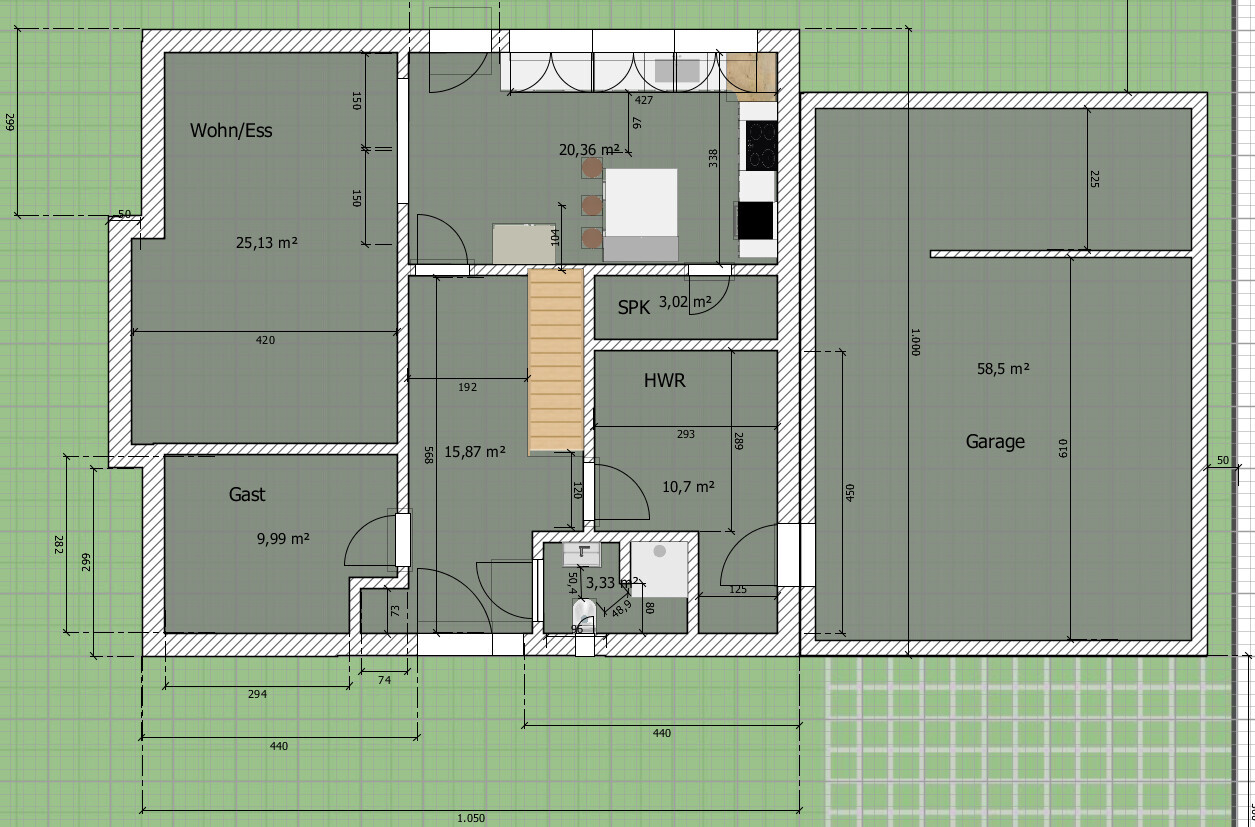
Large kitchen with island (including seating, e.g., stools) and preferably a small pantry (possibly accessible via a "fake" kitchen cabinet), plus a small “bench” made from low cabinets by the window, double-leaf sliding door guided inside the wall to separate dining / living area,
Bright dining area,
Spacious living area, preferably with a panoramic fireplace as a room divider (not next to the TV),
Guest room / office,
Generous utility room with space for possibly two electrical panels, softener system, ground source heat pump, washing machine (possibly dryer), and drying rack,
Guest WC with shower.
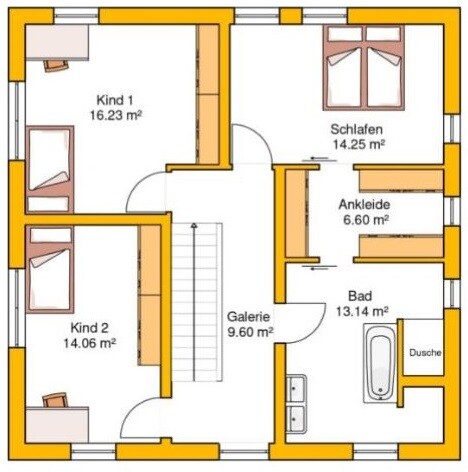
Upper Floor (UF): at least 2 children’s rooms, 1 storage room, bedroom can be fairly small. Instead, a spacious bathroom with 2 washbasins (or 1 long basin with 2 faucets), bathtub up to 2 m (6.5 ft), and shower. WC with privacy screen, e.g., with door T-shaped.
Walk-through dressing room between bedroom and bathroom. Sliding door on the wall between bedroom and dressing room and regular door between dressing room and bathroom. Bathroom should also be accessible from the hallway.
General:
Many windows (included in house price without limitation on number or size), some floor-to-ceiling. Possibly preparation in the bedroom for access to the (planned) roof terrace on the garage,
Lifting sliding door system between living / dining area and terrace,
Doors at least 1 m (39 inches) wide on the ground floor,
Terrace on the left side of the house, i.e., facing south. Depending on kitchen location, possibly also a narrower terrace around the corner at the top.
Ultimately, we think it would almost be nicer if the kitchen were on the left so you can look into the garden from there and have direct access to the large terrace. But this criterion changes with every revision of the floor plan :|
House Design
Who designed the plan:
The house plans mainly come from us with some inspiration from the internet.
So far, there has been no truly professional involvement. The upper floor plan was found directly online. However, there the house width is only 10 m (33 ft) instead of 10.5 m (34 ft). Also, the bay window on the left is obviously not included. It would be great to add a small storage room here.
What do you particularly like? Why?
What do you dislike? Why?
The two above points are not fully answered yet. We have often moved the kitchen from right to left and back without finding an ideal solution.
Similarly, we are not sure whether the garage should be placed far forward with some space behind for storage out of garden view, or moved about 2 m (6.5 ft) further back (3 m / 10 ft from boundary) to gain some visual privacy from the diagonal neighbor. We are open to innovative ideas about garage placement. It must definitely have access to the house.
Estimated cost according to architect / planner: 230,000
Personal budget limit for house including features: 240,000 (excluding garage, but including foundation slab)
Preferred heating technology: ground source heat pump
If you have to give up some features / extensions:
- What can you do without: hard to say, maybe the pantry? Though supplies would then have to be stored in expensive kitchen cabinets that offer less space.
- What can’t you do without: guest room on the ground floor, space for drying rack in the utility room (never want one of those racks visible in a living area again!).
Why is the design the way it is now?
The design came about through lots of freehand drawing on paper and tinkering on computer to get the best results. Unfortunately, we are stuck now.
Which of your wishes have been implemented by the architect?
A mixture of many examples from various magazines...
What do you think works well or poorly?
Poor: the downstairs and upstairs layouts are hard to coordinate, especially because of the staircase.
Pretty good: the upper floor layout, except that fitting a second door into the bathroom will be difficult.
Downstairs we have been constantly swapping kitchen front left and guest room top right or vice versa. We haven’t agreed on what would be easier to furnish.
What is your key fundamental question about the floor plan in 130 characters?
How can we fit all our wishes in the best mix of space, appearance, and usability in the floor plan?
Note: The plan might receive harsh criticism from forum users. Feedback is usually unfiltered—please be prepared. Nobody means to offend; it’s their perspective to help or open your eyes.
Thanks in advance for your help
Plot size: 626 sqm (6730 sq ft)
Slope: none
Site coverage ratio: 0.35 + 50% for ancillary structures
Floor area ratio:
Building window, building line, and boundary: 3 m (10 ft), no special requirements
Edge development: permitted
Number of parking spaces: no requirement
Number of floors: 3
Roof type: -
Architectural style: -
Orientation: -
Maximum heights / limits: 12 m (39 ft)
Additional requirements: 1 tree per every 300 sqm (3200 sq ft) started
Homeowners’ Requirements
City villa style, hip / pyramid roof
2 full stories
Residents: 2 adults, around 30 years old, 1-2 children planned
Room requirements:
Ground floor: kitchen / dining / living / pantry / guest room (office) / utility room / guest WC
Upper floor: 3 bedrooms / walk-in closet / storage / bathroom
Office: on ground floor, also to be used as guest room
Occasional overnight guests
Open or closed layout: partly open / partly closed
Traditional or modern construction: modern
Open kitchen, cooking island, possibly a small pantry
Minimum seating at dining table: 6
Fireplace: yes
Music / stereo wall: home cinema area
Roof terrace: possibly planned later on garage
Garage: yes, double garage with workshop / storage area: 9 m × 6.5 m (30 ft × 21 ft) with access to the house, planned as self-built, driveway large enough for 2 cars
Utility garden, greenhouse: no
Additional wishes / special features / daily routine, including reasons why certain things are preferred or avoided:
Primarily for aesthetic reasons, a small bay window should be included. Not deeper than 50 cm (20 inches) due to roof overhang. There will be a canopy over the front door as a visual relief, so the bay window should face the garden.
Ground Floor (GF):
Bright hallway,
Large kitchen with island (including seating, e.g., stools) and preferably a small pantry (possibly accessible via a "fake" kitchen cabinet), plus a small “bench” made from low cabinets by the window, double-leaf sliding door guided inside the wall to separate dining / living area,
Bright dining area,
Spacious living area, preferably with a panoramic fireplace as a room divider (not next to the TV),
Guest room / office,
Generous utility room with space for possibly two electrical panels, softener system, ground source heat pump, washing machine (possibly dryer), and drying rack,
Guest WC with shower.
Upper Floor (UF): at least 2 children’s rooms, 1 storage room, bedroom can be fairly small. Instead, a spacious bathroom with 2 washbasins (or 1 long basin with 2 faucets), bathtub up to 2 m (6.5 ft), and shower. WC with privacy screen, e.g., with door T-shaped.
Walk-through dressing room between bedroom and bathroom. Sliding door on the wall between bedroom and dressing room and regular door between dressing room and bathroom. Bathroom should also be accessible from the hallway.
General:
Many windows (included in house price without limitation on number or size), some floor-to-ceiling. Possibly preparation in the bedroom for access to the (planned) roof terrace on the garage,
Lifting sliding door system between living / dining area and terrace,
Doors at least 1 m (39 inches) wide on the ground floor,
Terrace on the left side of the house, i.e., facing south. Depending on kitchen location, possibly also a narrower terrace around the corner at the top.
Ultimately, we think it would almost be nicer if the kitchen were on the left so you can look into the garden from there and have direct access to the large terrace. But this criterion changes with every revision of the floor plan :|
House Design
Who designed the plan:
The house plans mainly come from us with some inspiration from the internet.
So far, there has been no truly professional involvement. The upper floor plan was found directly online. However, there the house width is only 10 m (33 ft) instead of 10.5 m (34 ft). Also, the bay window on the left is obviously not included. It would be great to add a small storage room here.
What do you particularly like? Why?
What do you dislike? Why?
The two above points are not fully answered yet. We have often moved the kitchen from right to left and back without finding an ideal solution.
Similarly, we are not sure whether the garage should be placed far forward with some space behind for storage out of garden view, or moved about 2 m (6.5 ft) further back (3 m / 10 ft from boundary) to gain some visual privacy from the diagonal neighbor. We are open to innovative ideas about garage placement. It must definitely have access to the house.
Estimated cost according to architect / planner: 230,000
Personal budget limit for house including features: 240,000 (excluding garage, but including foundation slab)
Preferred heating technology: ground source heat pump
If you have to give up some features / extensions:
- What can you do without: hard to say, maybe the pantry? Though supplies would then have to be stored in expensive kitchen cabinets that offer less space.
- What can’t you do without: guest room on the ground floor, space for drying rack in the utility room (never want one of those racks visible in a living area again!).
Why is the design the way it is now?
The design came about through lots of freehand drawing on paper and tinkering on computer to get the best results. Unfortunately, we are stuck now.
Which of your wishes have been implemented by the architect?
A mixture of many examples from various magazines...
What do you think works well or poorly?
Poor: the downstairs and upstairs layouts are hard to coordinate, especially because of the staircase.
Pretty good: the upper floor layout, except that fitting a second door into the bathroom will be difficult.
Downstairs we have been constantly swapping kitchen front left and guest room top right or vice versa. We haven’t agreed on what would be easier to furnish.
What is your key fundamental question about the floor plan in 130 characters?
How can we fit all our wishes in the best mix of space, appearance, and usability in the floor plan?
Note: The plan might receive harsh criticism from forum users. Feedback is usually unfiltered—please be prepared. Nobody means to offend; it’s their perspective to help or open your eyes.
Thanks in advance for your help
The entrance to the utility room takes up space.
The desire for this probably comes from the fact that, without a car, trips to the bakery are only possible on Sundays at best.
How about setting the garage back a bit and planning the entrance where the building services are currently planned, with the building services moving closer to the entrance? This also has the advantage that fewer doors need to be opened when carrying groceries.
The desire for this probably comes from the fact that, without a car, trips to the bakery are only possible on Sundays at best.
How about setting the garage back a bit and planning the entrance where the building services are currently planned, with the building services moving closer to the entrance? This also has the advantage that fewer doors need to be opened when carrying groceries.

First of all, many thanks to @ypg for the floor plan draft. It’s a completely different approach, so I’ll need to take a closer look at it.
Moving the entrance around the corner could definitely be considered.
I might see one problem with that, though. On the right side of the house, there are hardly any windows on the ground floor because the garage is located there. If I have a room that gets little natural light, for me that would clearly be the utility room. Therefore, I wouldn’t want to position it facing the garden but rather bring a more "important" room to the darker side.
So if the main entrance is around the corner on the right, the utility room would have to shift slightly upwards. However, that would immediately mean an additional cost of 1000 Euro for us, since the water connection would then have to be routed through a shaft. We would prefer to avoid that.
But I could consider a compromise: opening a possible pantry to the utility room, removing the door in the hallway, and then having access to the utility room only from the garage and the kitchen.
Though, would she really want to carry laundry through the kitchen all the time to get to the utility room?
We both don’t want to eliminate the door between the garage and the house.
I need to think all this over, and if she is out later, I might manage to make a quick sketch that includes your ideas.
Moving the entrance around the corner could definitely be considered.
I might see one problem with that, though. On the right side of the house, there are hardly any windows on the ground floor because the garage is located there. If I have a room that gets little natural light, for me that would clearly be the utility room. Therefore, I wouldn’t want to position it facing the garden but rather bring a more "important" room to the darker side.
So if the main entrance is around the corner on the right, the utility room would have to shift slightly upwards. However, that would immediately mean an additional cost of 1000 Euro for us, since the water connection would then have to be routed through a shaft. We would prefer to avoid that.
But I could consider a compromise: opening a possible pantry to the utility room, removing the door in the hallway, and then having access to the utility room only from the garage and the kitchen.
Though, would she really want to carry laundry through the kitchen all the time to get to the utility room?
We both don’t want to eliminate the door between the garage and the house.
I need to think all this over, and if she is out later, I might manage to make a quick sketch that includes your ideas.
Patkia schrieb:
We both want to keep the door between the garage and the house.
...Then list the reasons. Keep in mind that if the front door were moved to the right, it would be located almost right next to the garage door.
But even if not: here, we seem to have this discussion every couple of weeks.
In my opinion, you need to be able to afford having this second exit. The door itself is quite costly, and it also takes up space, which reduces the functionality of the utility room or technical room.
One of the more memorable discussions was with @zizzi. Maybe they can explain why this direct passage no longer works for them?
Furthermore, locating the utility room on your east side might make more sense, possibly avoiding running cables underneath the building? Also, the question is justified whether you might switch to a carport after building the house, especially considering the costs.
I would focus more on the floor plan itself, which should be cost-effective without unnecessary extras but still functional, rather than planning around a mental framework that leads to too many compromises.
The guest room in the northwest is also not a bad location.
Similar topics