
Hello everyone,
some of you already have your houses partly finished. Our electrical supplier offered us the following:
The final electrical installation was apparently completed yesterday, and indeed, all the cables are at the distribution panel. But they are not terminated; they are just the bare wires.
We expected the cables to have connectors attached.
Are we mistaken, or should/can we request that the cables be properly terminated?
Good luck,
kati1337
some of you already have your houses partly finished. Our electrical supplier offered us the following:
All telephone, CAT, and antenna cables will not be installed inside conduits and are delivered without being terminated (at the distribution panel). All telephone and CAT cables end at the distribution panel.
The final electrical installation was apparently completed yesterday, and indeed, all the cables are at the distribution panel. But they are not terminated; they are just the bare wires.
We expected the cables to have connectors attached.
Are we mistaken, or should/can we request that the cables be properly terminated?
Good luck,
kati1337

Tarnari schrieb:
You always have to terminate the cables, but the advantage is that later on, if you need to make changes to the patch panel, you only have to reconnect the cables.
Edit: Regardless, I really find it a pity that an electrician doesn’t point out that just having the bare cables isn’t enough.
I mean, most people responding here know that. But to expect that from an electrician?
*shakes head*
I’m wondering if there are electricians who just bring the power cables to the panel and then say, “Well, connecting them wasn’t part of the agreement. You’ll manage.” Thanks, I already found keystone jacks more appealing because you can work cable by cable and don’t end up with a panel already tangled with five cables. The argument about easier replacement is even better.
At the time when we had the site meetings with the electricians, they sent me an unsolicited quote for a patch panel, switch, and wiring, costing over 600€. Back then, I had no idea they would just leave the bare cables hanging out of the wall, so I thought it was outrageously overpriced. I had assumed the cables would already be terminated.
If the electrician had explained that during the site meeting instead of just sending me a quote by email without prior discussion, I might have actually accepted it.
S
Stefan89017 Sep 2020 22:29Take a look at a video on installing a Keystone module on YouTube. That should help clarify the differences.

Tarnari schrieb:
I’m wondering if there are electricians who just bring the power cables to the cabinet and then say, “Well, connecting them wasn’t agreed upon. You can manage it yourself.” Considering the often observed level of IT and telecommunications knowledge among electricians (outdated partial knowledge is a polite way to put it), it is hardly a greater blessing than when the electrician only goes as far as they understand the subject.
https://www.instagram.com/11antgmxde/
https://www.linkedin.com/company/bauen-jetzt/
@kati1337
Here’s my small “construction.” I had never worked with keystone modules before. First, I connected the access point, which surprisingly went well and was quite easy. Then I connected the other CAT cables. I always checked with a small TV connected via LAN to see if the internet was working, meaning YouTube was running. Two connections didn’t work. I thought maybe the electrician had wired the sockets incorrectly. I had no choice but to open the keystones again and re-terminate them. Then it worked. Probably something was mixed up before or there was no proper contact.
So here is the result:
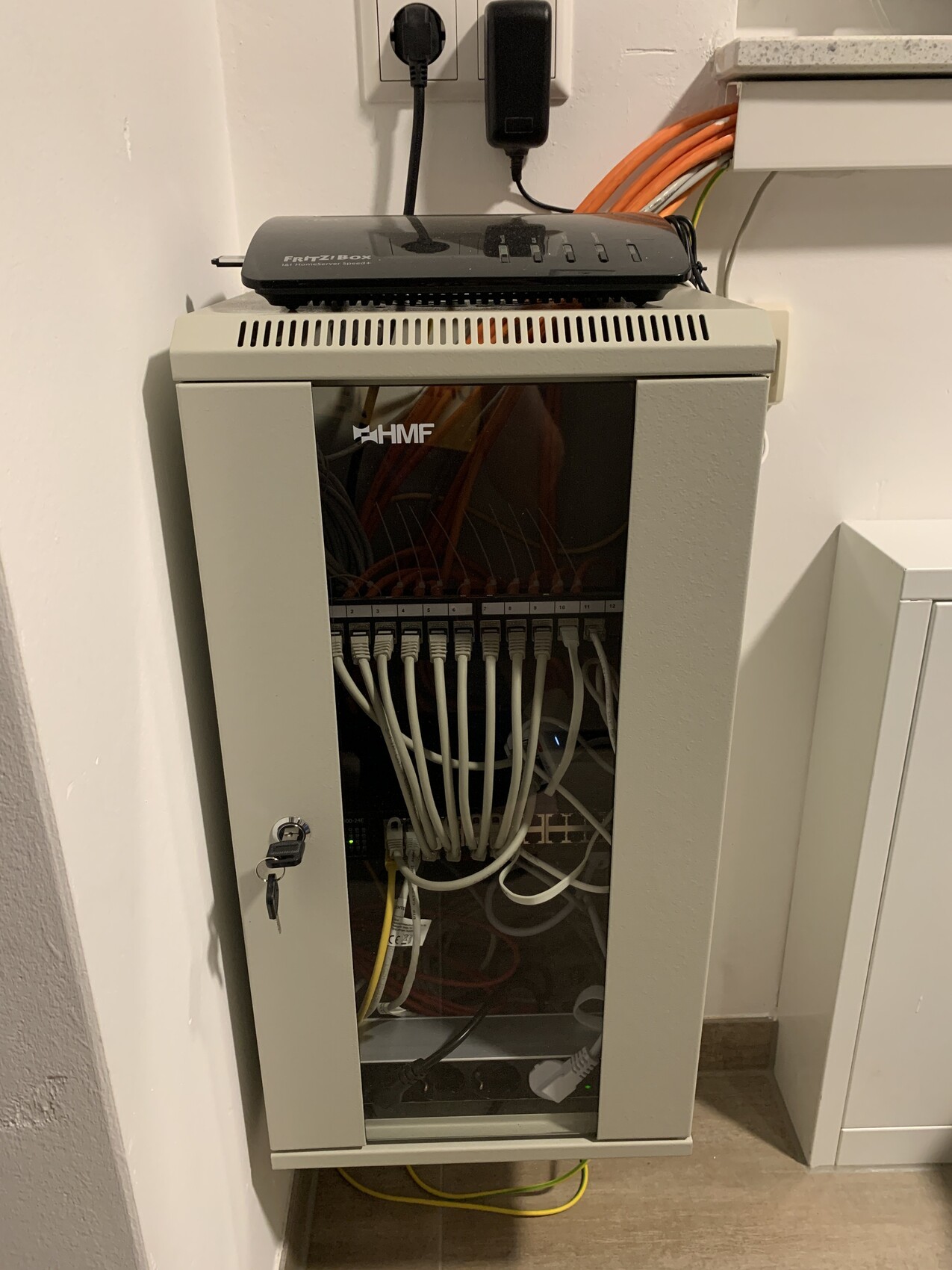

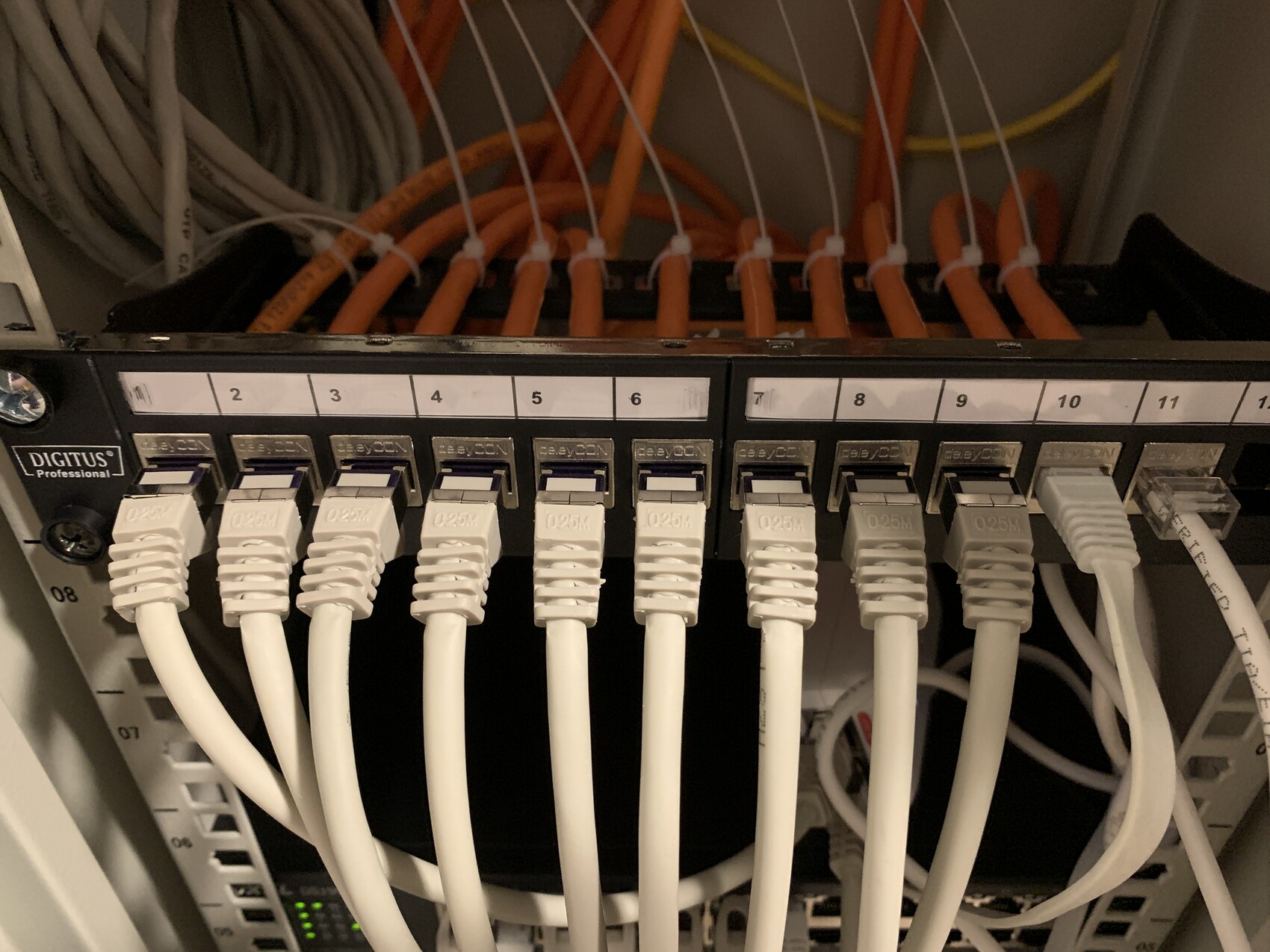
Here’s my small “construction.” I had never worked with keystone modules before. First, I connected the access point, which surprisingly went well and was quite easy. Then I connected the other CAT cables. I always checked with a small TV connected via LAN to see if the internet was working, meaning YouTube was running. Two connections didn’t work. I thought maybe the electrician had wired the sockets incorrectly. I had no choice but to open the keystones again and re-terminate them. Then it worked. Probably something was mixed up before or there was no proper contact.
So here is the result:
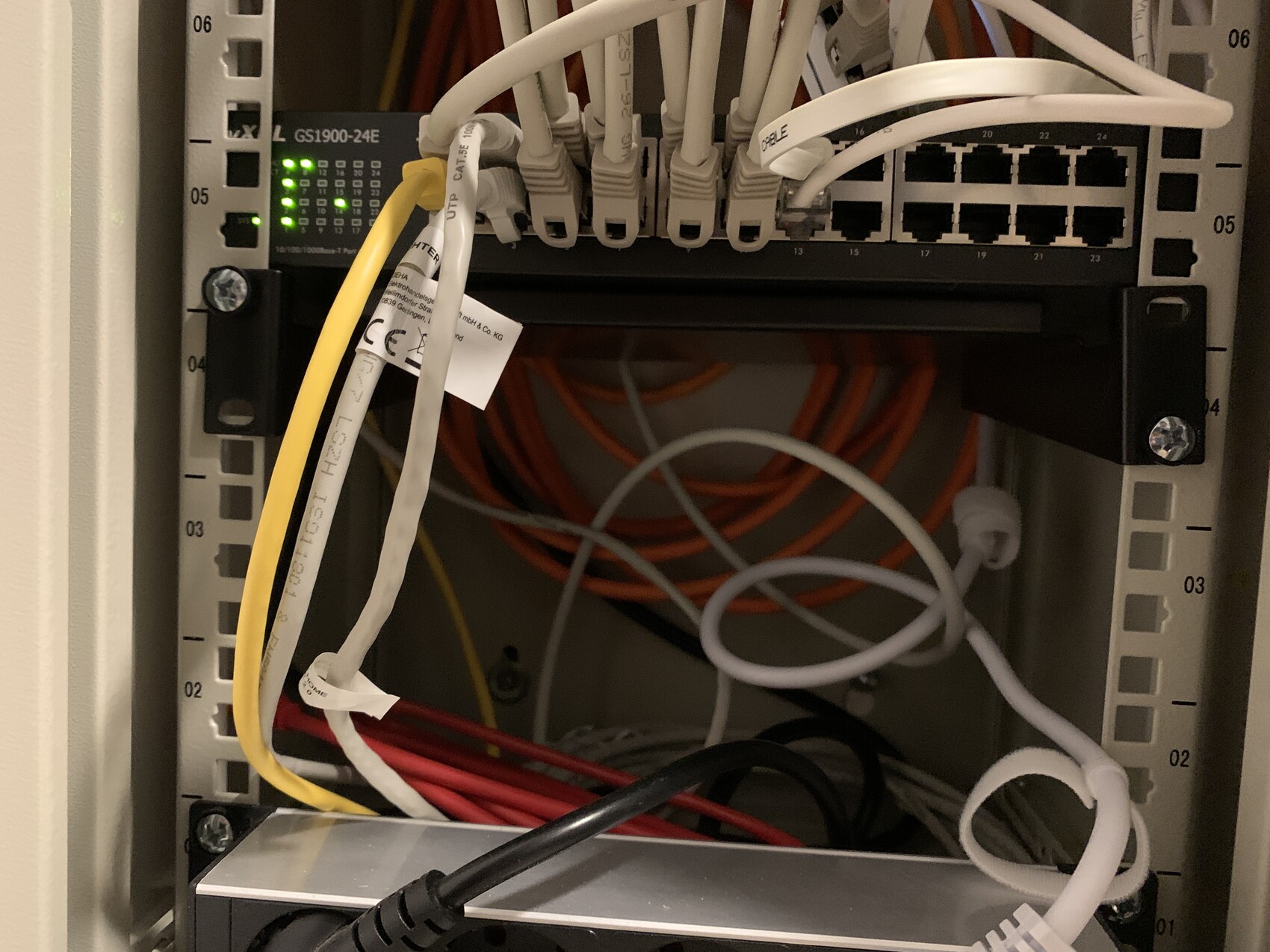
Absolutely satisfied. It’s a 10-inch cabinet. For a 19-inch one, the niche wouldn’t have been quite deep enough because the heating valve is on the right. The switch is placed on a shelf that has been mounted upside down.
Look for something like this at the big A:
10" shelf, front mounting, installation depth 160 mm (6.3 inches), deep black (RAL9005)
And the lower flat surface turned upwards.
Look for something like this at the big A:
10" shelf, front mounting, installation depth 160 mm (6.3 inches), deep black (RAL9005)
And the lower flat surface turned upwards.
Similar topics