
Hello everyone,
I saw this today at a major online retailer – see the screenshot.
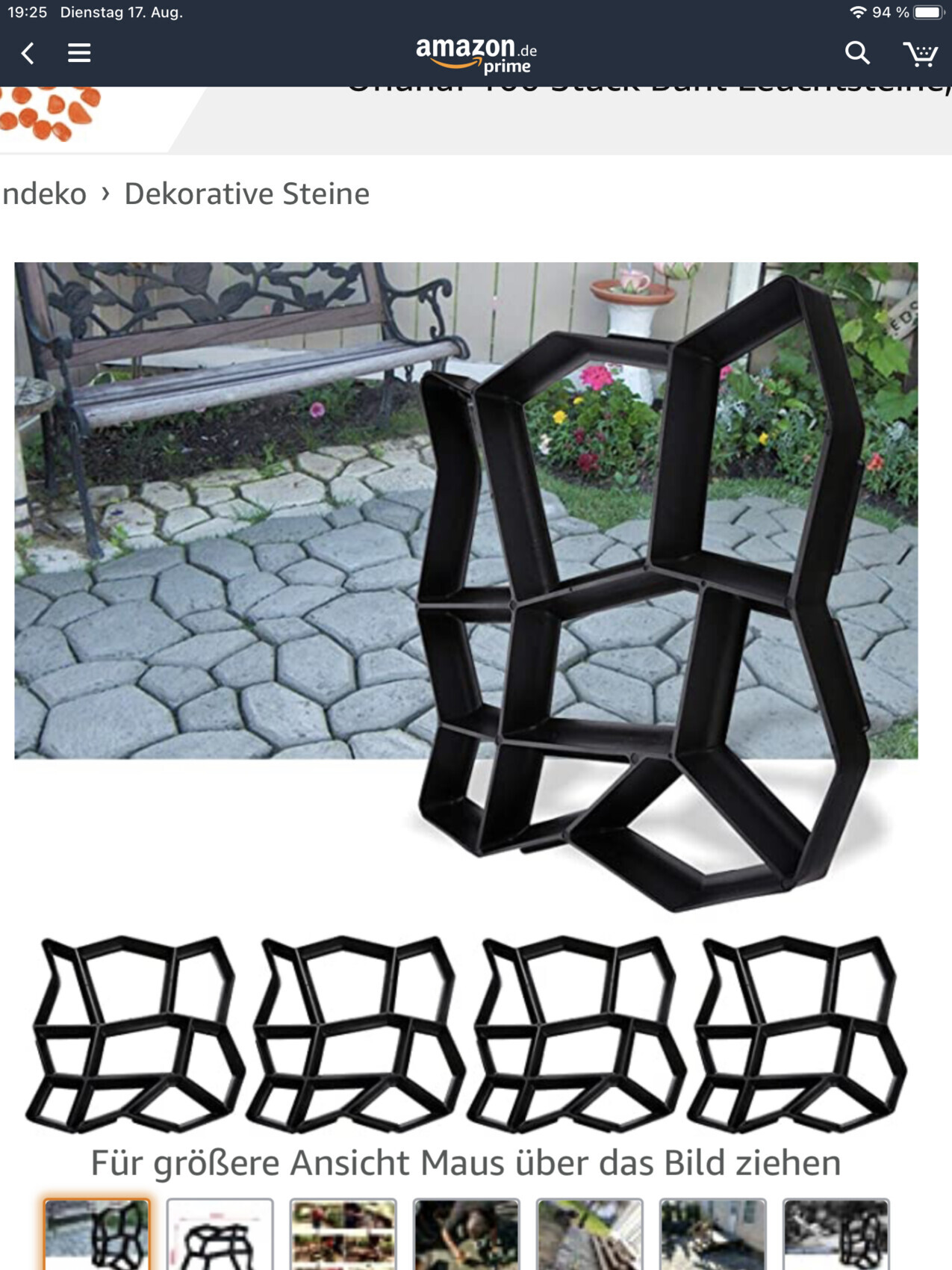
A mold for laying or casting paving stones.
Does something like this work?
How much more effort would it take compared to traditional paving?
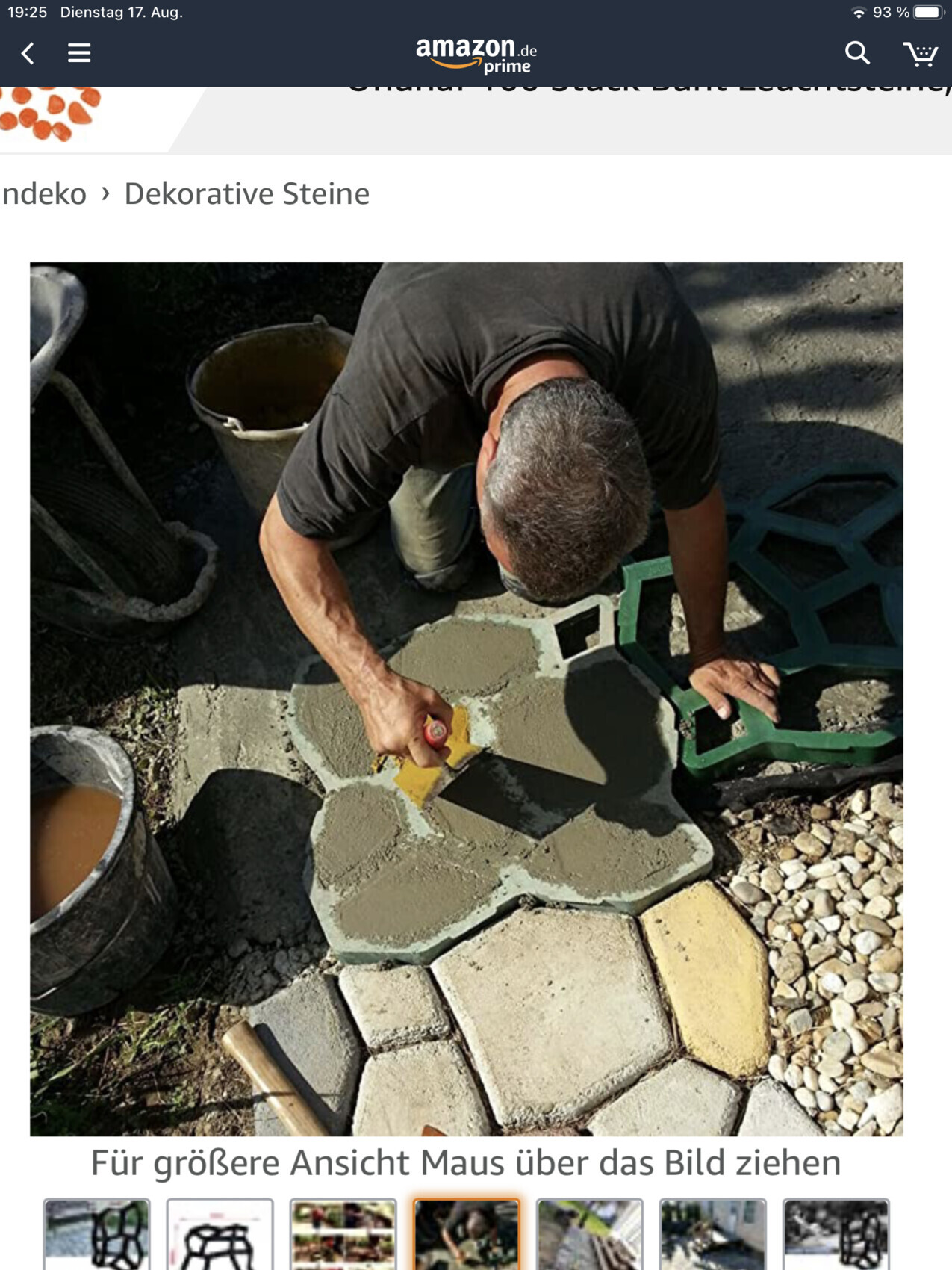
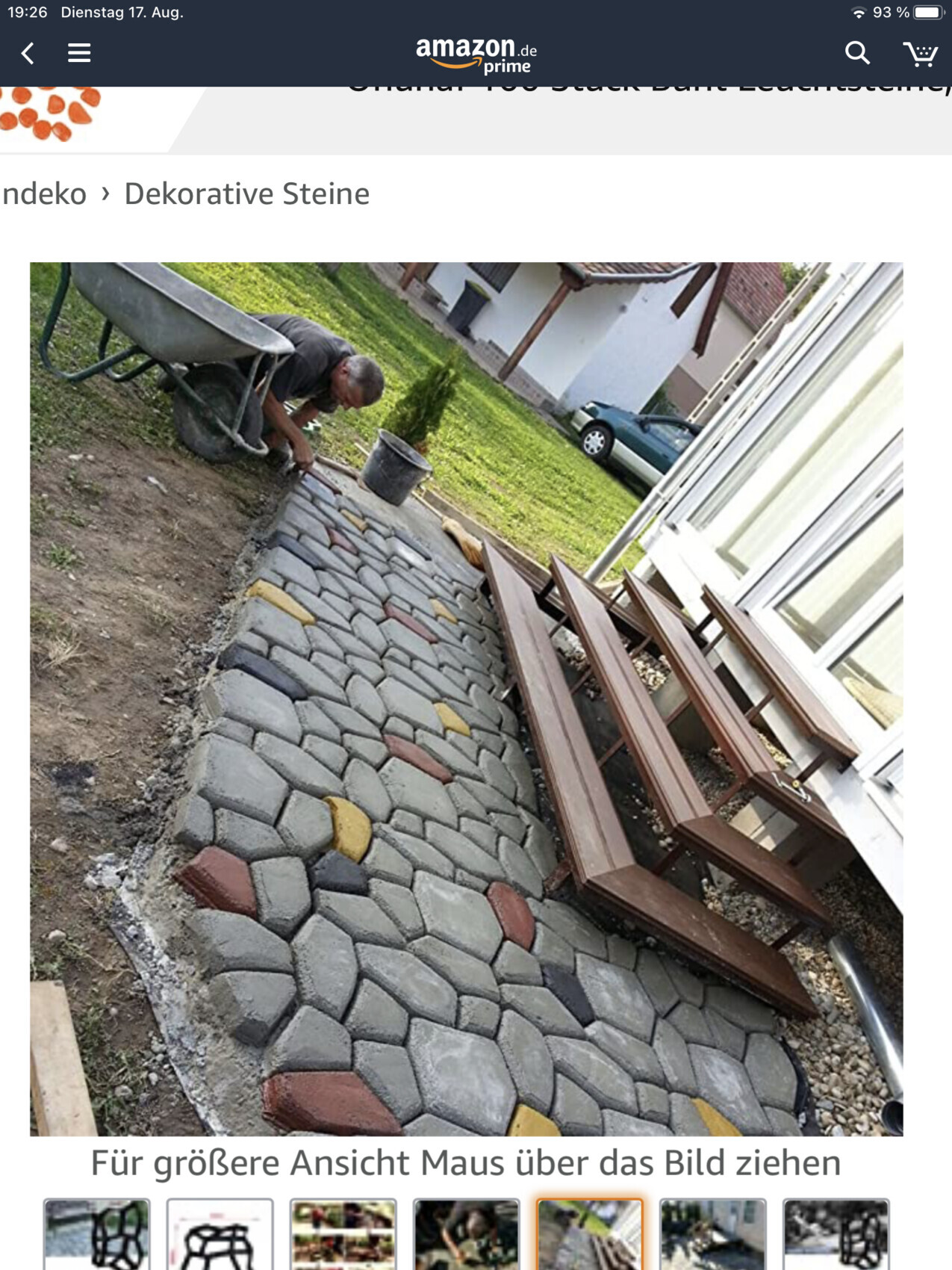
From the pictures, it already looks quite neat to me, especially the one with the color highlights.
I saw this today at a major online retailer – see the screenshot.
A mold for laying or casting paving stones.
Does something like this work?
How much more effort would it take compared to traditional paving?
From the pictures, it already looks quite neat to me, especially the one with the color highlights.
H
hampshire24 Aug 2021 10:02While the clever ones were still debating, the proactive one had already finished...
I had this idea in mind before as well and pursued it until recently, simply because I liked the shape and was intrigued by the idea of a DIY project...
In the end, I dismissed it because I probably wouldn’t be satisfied with the result, and the process could take forever. Just looking at the middle image in your example screenshot shows how modest the edges look! Like it was intended but not properly executed...
I could still imagine using it for a decorative pathway in the back garden or something similar, but for main walkways or even a terrace? No.
Regarding "sealed surfaces," it doesn’t really matter whether they are made with this method or regular paving. Both count as sealed surfaces.
In the end, I dismissed it because I probably wouldn’t be satisfied with the result, and the process could take forever. Just looking at the middle image in your example screenshot shows how modest the edges look! Like it was intended but not properly executed...
I could still imagine using it for a decorative pathway in the back garden or something similar, but for main walkways or even a terrace? No.
Regarding "sealed surfaces," it doesn’t really matter whether they are made with this method or regular paving. Both count as sealed surfaces.
 Winniefred24 Aug 2021 17:02
No, not in our case. Paved surfaces are not considered sealed because water can still infiltrate. This affects the amount of water fees we pay. Permeable surfaces are free of charge, while concrete or otherwise impermeable surfaces do incur fees.
Winniefred schrieb:
No, not in our area. Paved surfaces are not considered sealed because water can still infiltrate through them. This affects the amount we pay for water fees. Permeable surfaces are free of charge, while concrete and therefore impermeable surfaces incur costs.Okay, it seems this is interpreted differently by various municipalities.
Where I live, all such surfaces are considered sealed, and I am not familiar with other interpretations in nearby areas.

I recently saw something similar on Fixer Up. They pressed about 20x200 stencils into concrete, creating a pattern that looked like wooden planks—it looked really nice. Afterwards, it was also stained and treated.
The version mentioned here has probably been around for at least 20 years and, to be honest, looks pretty terrible.
The version mentioned here has probably been around for at least 20 years and, to be honest, looks pretty terrible.
Winniefred25 Aug 2021 11:54It should also be considered that such materials cannot be reused. Proper bricks can always be removed, relaid, or used elsewhere. Concrete can only be broken out and then disposed of.
Similar topics