
S
strebermeister22 Sep 2024 20:07Hello,
in our house (built in 1965), there is a mastic asphalt screed on the ground floor that we want to keep. Ideally, we would like to seal it to prevent any emissions. Some uneven areas need to be leveled. Click vinyl flooring will be installed later.
I have some questions regarding the proper treatment of mastic asphalt screed:
Note: Before starting the work, we had extensive asbestos testing carried out by an expert (testing wall plaster/mortar, screed, adhesive/leveling compounds) with a negative result.
Good luck Andreas
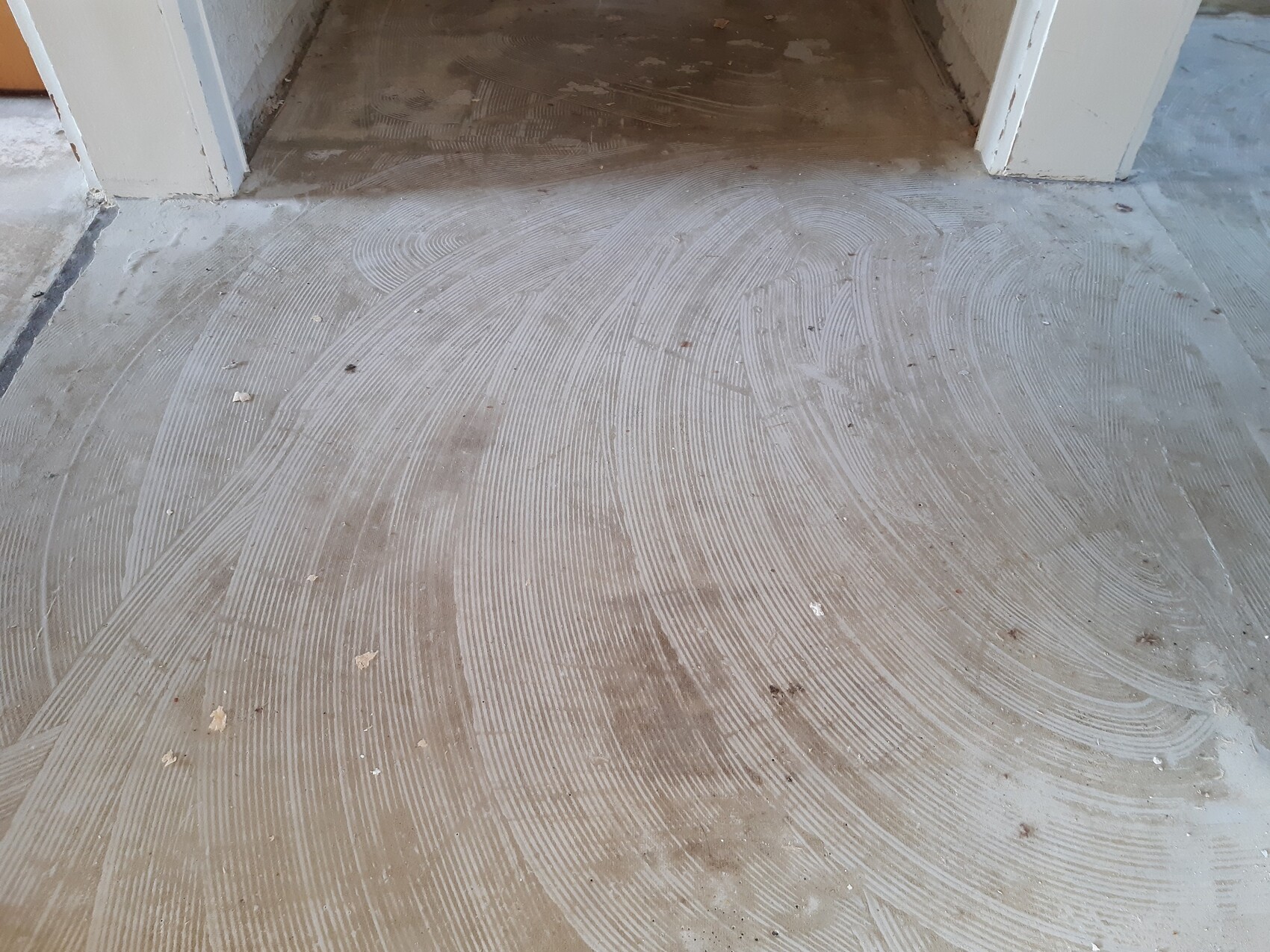
in our house (built in 1965), there is a mastic asphalt screed on the ground floor that we want to keep. Ideally, we would like to seal it to prevent any emissions. Some uneven areas need to be leveled. Click vinyl flooring will be installed later.
I have some questions regarding the proper treatment of mastic asphalt screed:
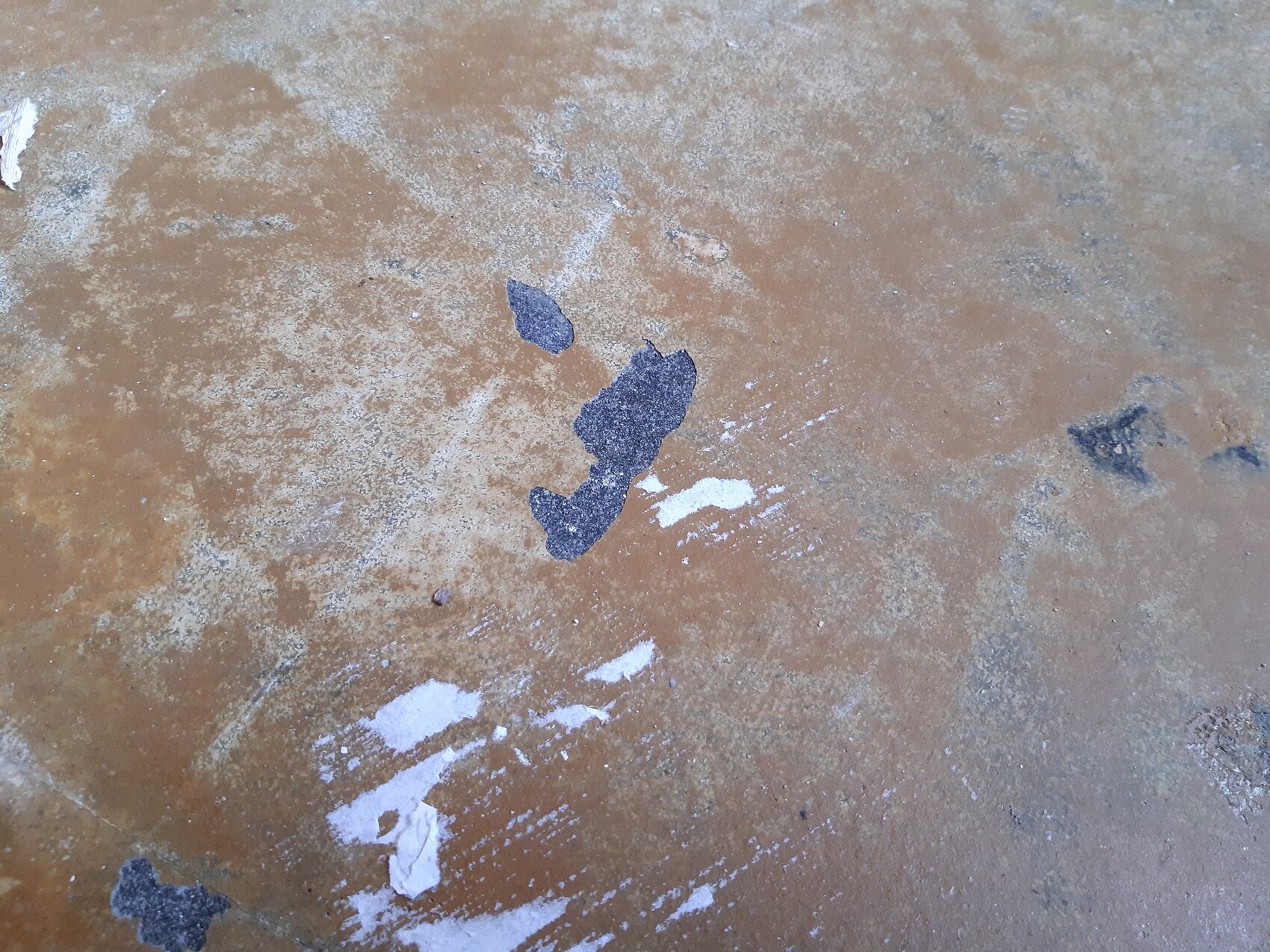
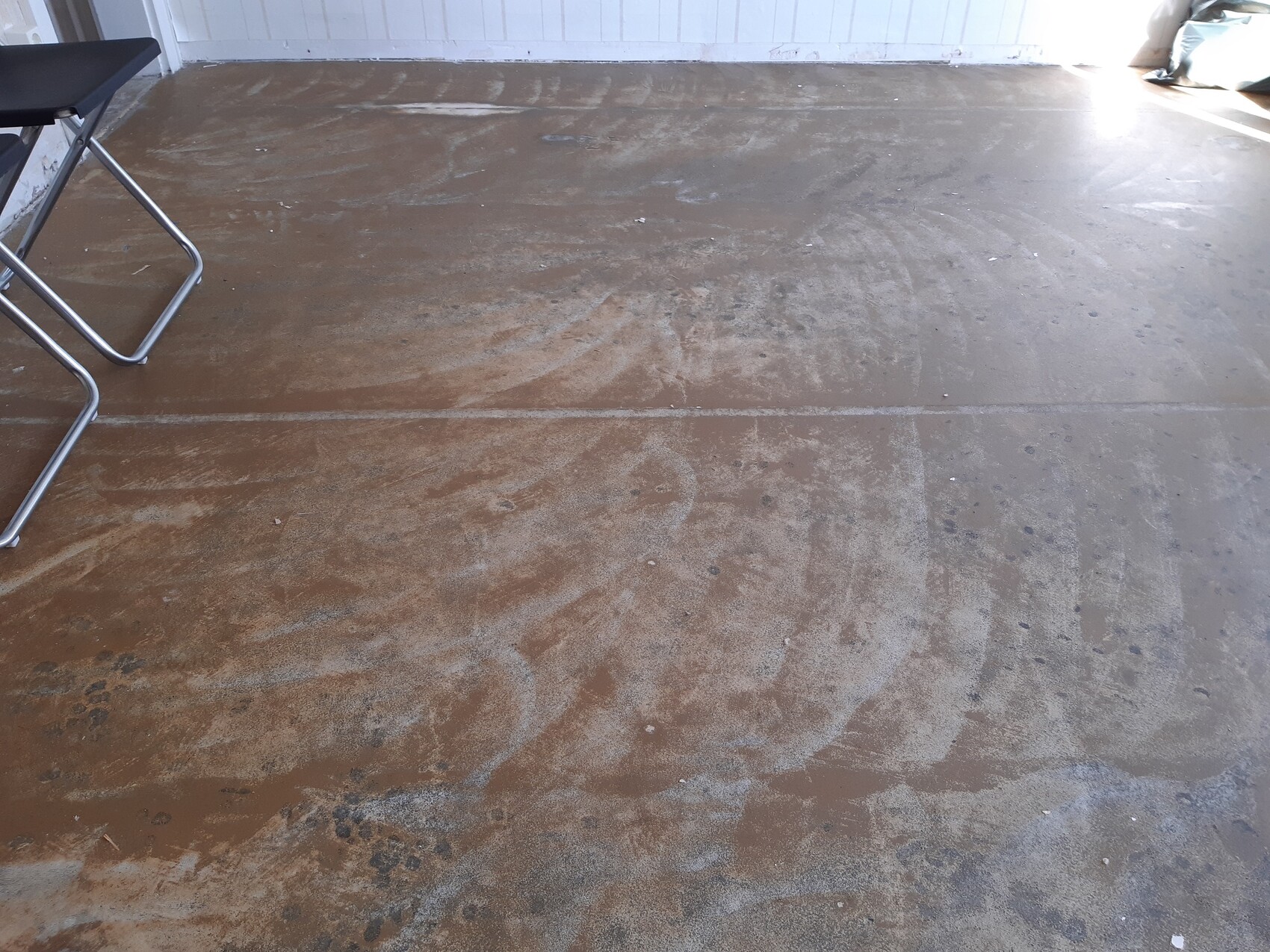
- In most rooms, carpet was glued onto the mastic asphalt screed. When removing it, a brownish residue (probably old carpet adhesive) remained. Is it necessary to completely remove this old adhesive before installing a new floor, or is a bonding primer sufficient?
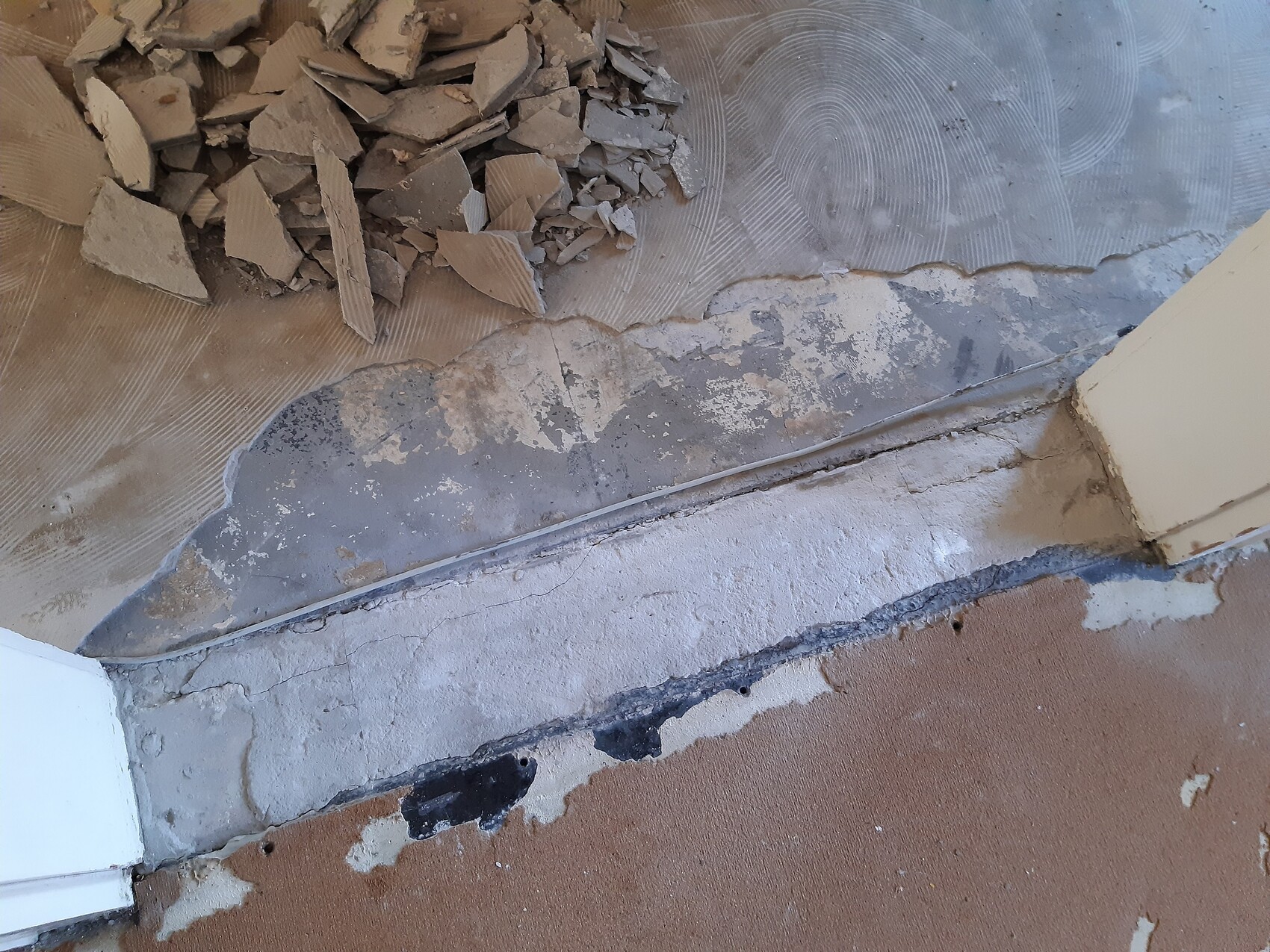
- Is it allowed to mechanically remove thick grey carpet adhesive in the hallway without risking damage (cracking) to the mastic asphalt screed? What methods are permitted? Chiseling? Milling?
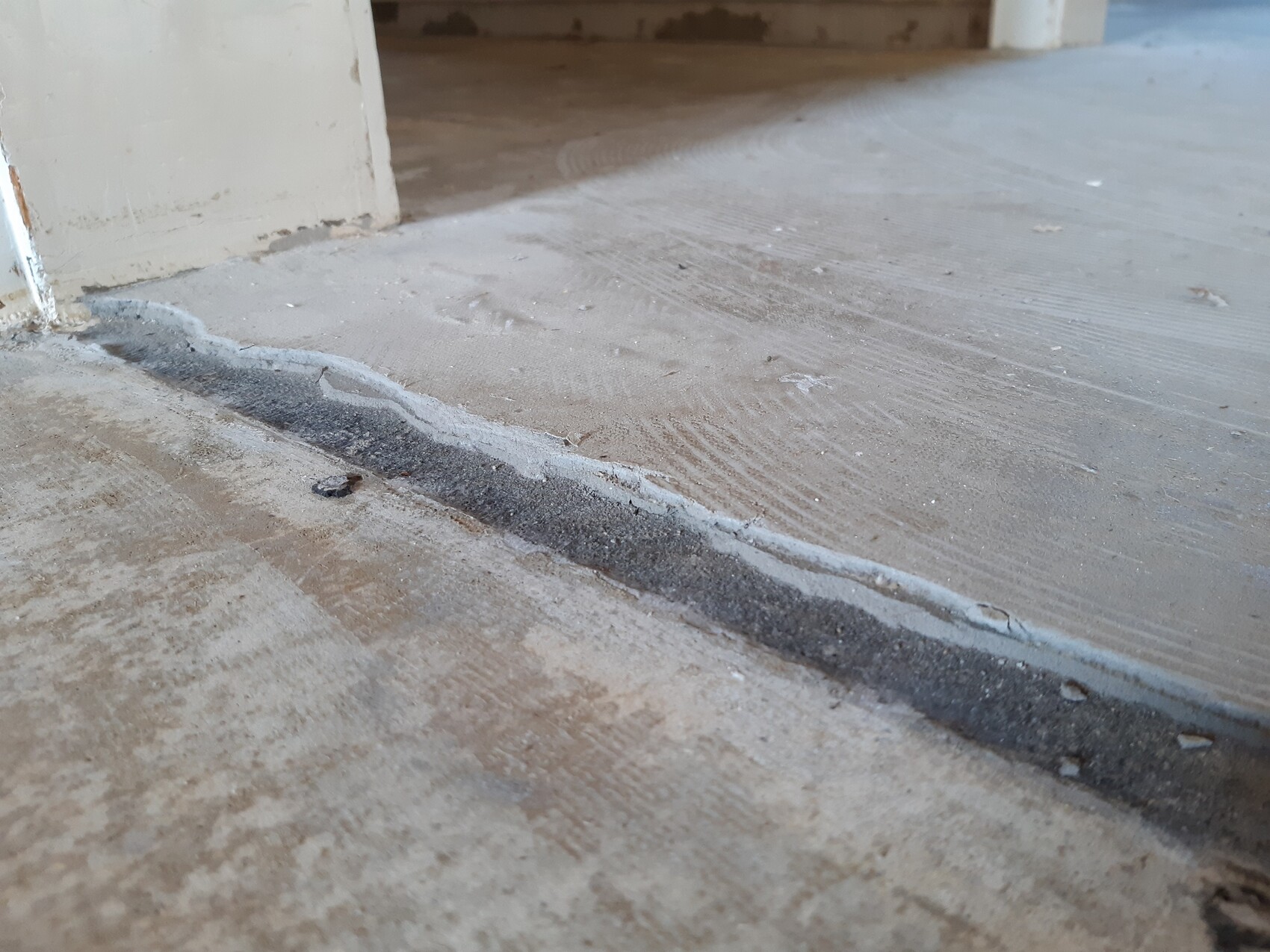
- At a door threshold, the mastic asphalt screed is not continuous because the room was previously separated. Is it sufficient to level these uneven areas locally, or should a leveling compound be applied over the entire floor area? Which type of leveling compound is recommended here? I have read in this forum that mineral-based leveling compounds can damage mastic asphalt screed.
- Whether emissions from the mastic asphalt screed occur can only be assessed by indoor air testing. But is there generally a way to seal it to minimize this risk? Or is the subsequent floor build-up and sealing sufficient?
Note: Before starting the work, we had extensive asbestos testing carried out by an expert (testing wall plaster/mortar, screed, adhesive/leveling compounds) with a negative result.
Good luck Andreas

To put it simply: old leveling compounds must be completely removed before installing a new floor covering!
(Comments on DIN 18365 flooring works)
The surface should be ground with diamond cup cutters, assuming dust-free technology is used (this is the current state of the art).
Thoroughly vacuum the dust and prime with a dispersion primer suitable for non-absorbent substrates.
Surface leveling should be done only with a low-stress leveling compound (calcium sulfate-based) in a thickness of up to 3mm (1/8 inch).
Otherwise, there is a risk of cracking, especially on bituminous screeds.
Regarding emissions from mastic asphalt: please disregard this unprofessional and unrealistic assumption.
Mastic asphalt screeds do not emit significant fumes; it is mainly bitumen, which is harmless in any emissions that might occur.
Yes, there is a possibility to seal a well-ground mastic asphalt surface.
However, first check if the ground surface is visually suitable for this.
If yes, seal with a polyurethane (PUR) finish, preferably curing to a matte finish (a glossy finish is always problematic).
--------------------
Good luck: KlaRa
(Comments on DIN 18365 flooring works)
The surface should be ground with diamond cup cutters, assuming dust-free technology is used (this is the current state of the art).
Thoroughly vacuum the dust and prime with a dispersion primer suitable for non-absorbent substrates.
Surface leveling should be done only with a low-stress leveling compound (calcium sulfate-based) in a thickness of up to 3mm (1/8 inch).
Otherwise, there is a risk of cracking, especially on bituminous screeds.
Regarding emissions from mastic asphalt: please disregard this unprofessional and unrealistic assumption.
Mastic asphalt screeds do not emit significant fumes; it is mainly bitumen, which is harmless in any emissions that might occur.
Yes, there is a possibility to seal a well-ground mastic asphalt surface.
However, first check if the ground surface is visually suitable for this.
If yes, seal with a polyurethane (PUR) finish, preferably curing to a matte finish (a glossy finish is always problematic).
--------------------
Good luck: KlaRa
Similar topics