
ᐅ Bypassing Building Line Restrictions Through Lot Enlargement Instead of Subdivision
Created on: 19 Jan 2024 14:17
B
basti1088B
basti108819 Jan 2024 14:17Hello everyone,
I have the following question.
My parents are going to transfer a plot of land to my sister and me, which directly borders their property.
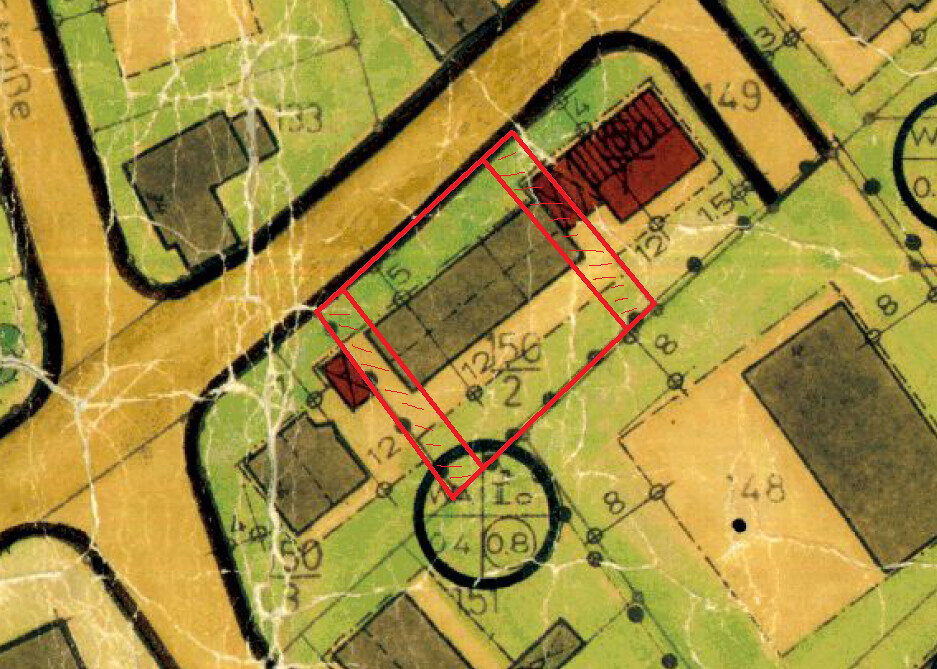
I have marked this plot in red in the following development plan.

The plot and house northeast of the red boundary belong to my parents.
Currently, there are two garages and an old workshop on the plot. Once these are demolished, my sister and I want to build a semi-detached house there.
As I understand it now, there are building setback lines of 3 meters (10 feet) on both sides of the plot that must be observed (also in front and at the back, but these are not relevant to the question and therefore not marked). If a semi-detached house is built in the middle, a garage may be placed on one of the two setback lines, but the other side must remain free.
But how would this change if my parents’ plot were enlarged?

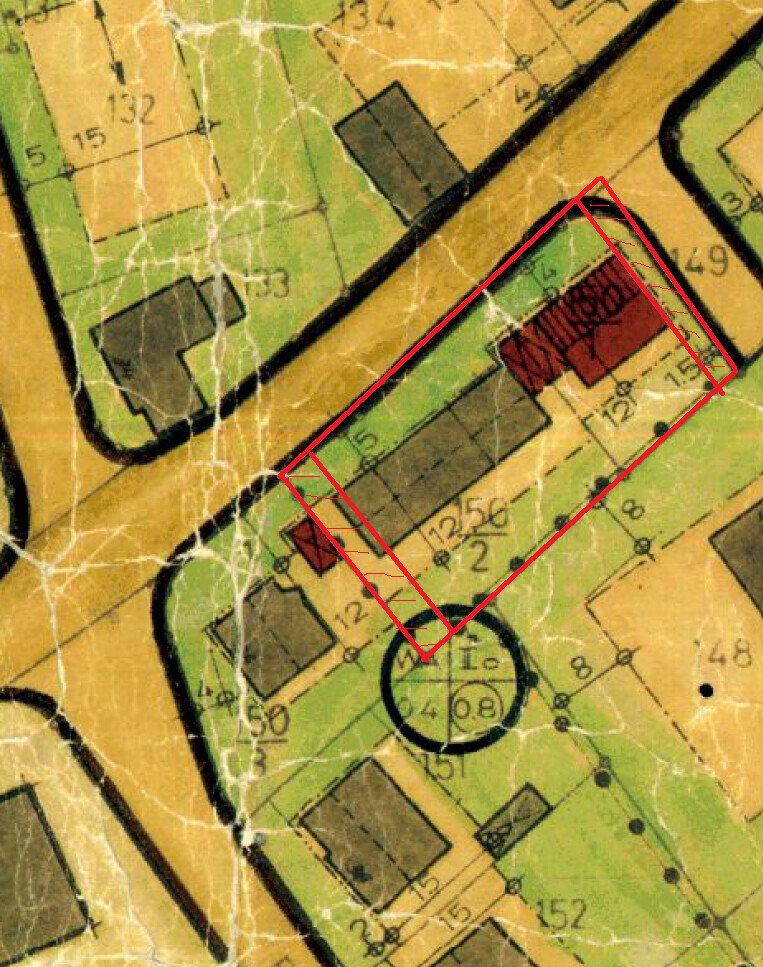
Would one of the building setback lines then no longer apply? Is that possible?
Best regards,
Basti
I have the following question.
My parents are going to transfer a plot of land to my sister and me, which directly borders their property.
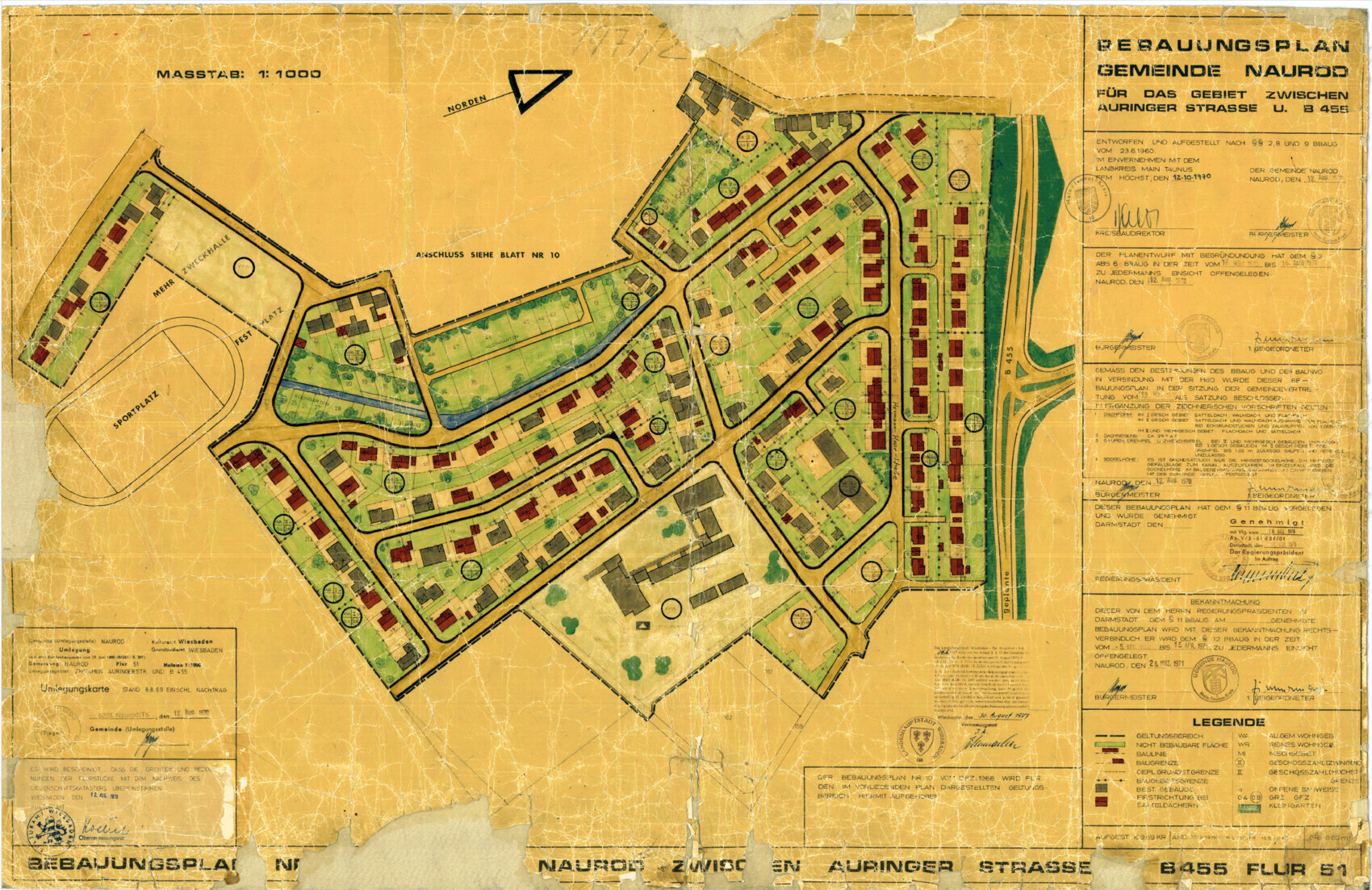
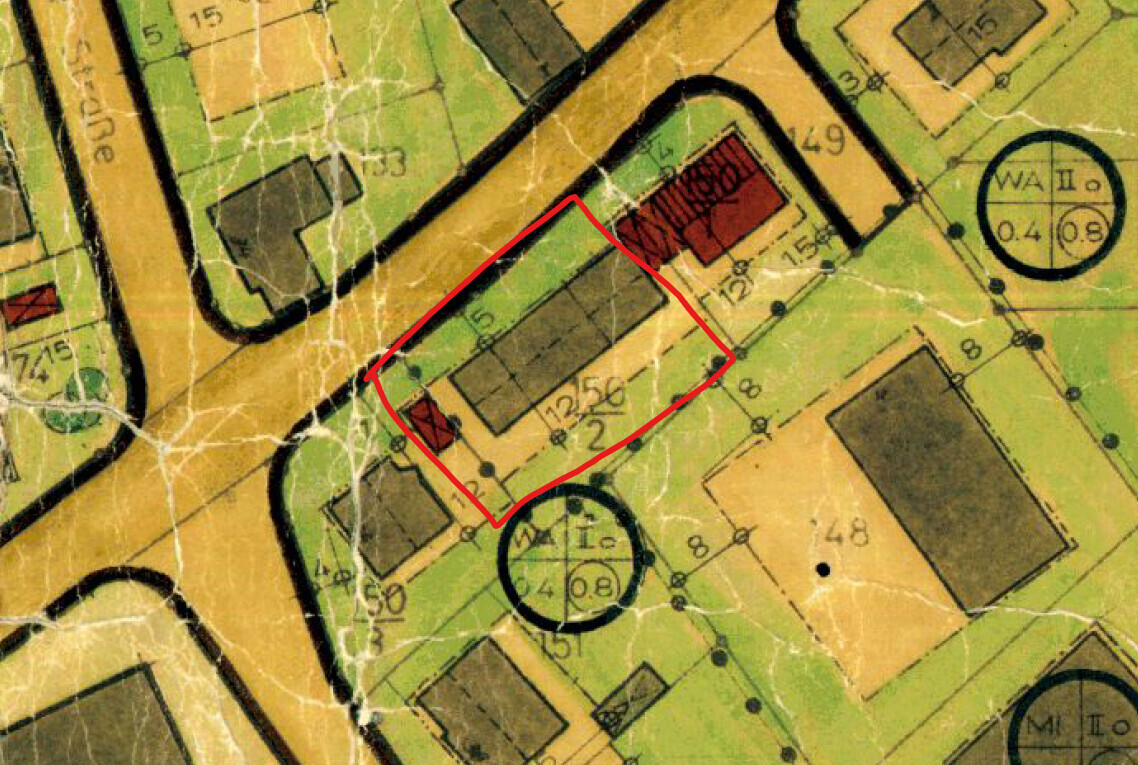
I have marked this plot in red in the following development plan.
The plot and house northeast of the red boundary belong to my parents.
Currently, there are two garages and an old workshop on the plot. Once these are demolished, my sister and I want to build a semi-detached house there.
As I understand it now, there are building setback lines of 3 meters (10 feet) on both sides of the plot that must be observed (also in front and at the back, but these are not relevant to the question and therefore not marked). If a semi-detached house is built in the middle, a garage may be placed on one of the two setback lines, but the other side must remain free.
But how would this change if my parents’ plot were enlarged?
Would one of the building setback lines then no longer apply? Is that possible?
Best regards,
Basti
basti1088 schrieb:
It is permitted to place a garage on one of the two property boundary lines; the other side must remain clear.This is not entirely correct. In general, a total of 15 meters (49 feet) of boundary construction with a garage is allowed, with a maximum of 9 meters (30 feet) on one side.Nevertheless, I cannot quite follow your reasoning. By the way, the small "o" stands for open construction style – just look it up online, and you will probably find a straightforward solution.
I assume he means that the two existing parcels (parents' property and workshop/construction site) should be merged into one parcel, so that the setback requirement between the semi-detached house plot and the parents' house no longer applies.
However, I believe you might be able to resolve this differently by obtaining approval from the neighbors (parents) to allow boundary construction for the garage on the second property line as well.
However, I believe you might be able to resolve this differently by obtaining approval from the neighbors (parents) to allow boundary construction for the garage on the second property line as well.
B
basti108819 Jan 2024 15:44Zubi123 schrieb:
I assume he means that the two plots of land so far (parents' property and workshop/construction site) are to be merged into one plot so that the setback requirement between the semi-detached house and the parents' house no longer applies.
I suspect you might solve this differently by obtaining consent from the neighbors (parents) allowing boundary construction for a garage on the second property boundary as well. Yes, that's exactly what I meant.
According to the information I have so far, there is no such thing as "obtaining permission"—the regulations are fixed and cannot be overridden. That is why I was looking for an alternative solution.
W
WilderSueden19 Jan 2024 15:53Permission from the neighbor alone is not enough; they must also accept the building setback area. This often causes problems, especially if the parents can no longer build anything within the setback area or if the existing garage would have to be demolished.
In principle, it should be possible to merge the plots and then divide them ideologically through a form of joint ownership. The disadvantage is that you would have a joint ownership structure, which means you could interfere with each other. This becomes particularly problematic if the properties are no longer all family-owned or if disputes arise.
In principle, it should be possible to merge the plots and then divide them ideologically through a form of joint ownership. The disadvantage is that you would have a joint ownership structure, which means you could interfere with each other. This becomes particularly problematic if the properties are no longer all family-owned or if disputes arise.
Similar topics