
ᐅ Building a Single-Family Home With or Without a Basement on a Small Plot of Land
Created on: 24 Jan 2020 08:25
D
Davidoff86
Good morning everyone,
In our house planning process, like many others, we are facing the question of whether to build with or without a basement.
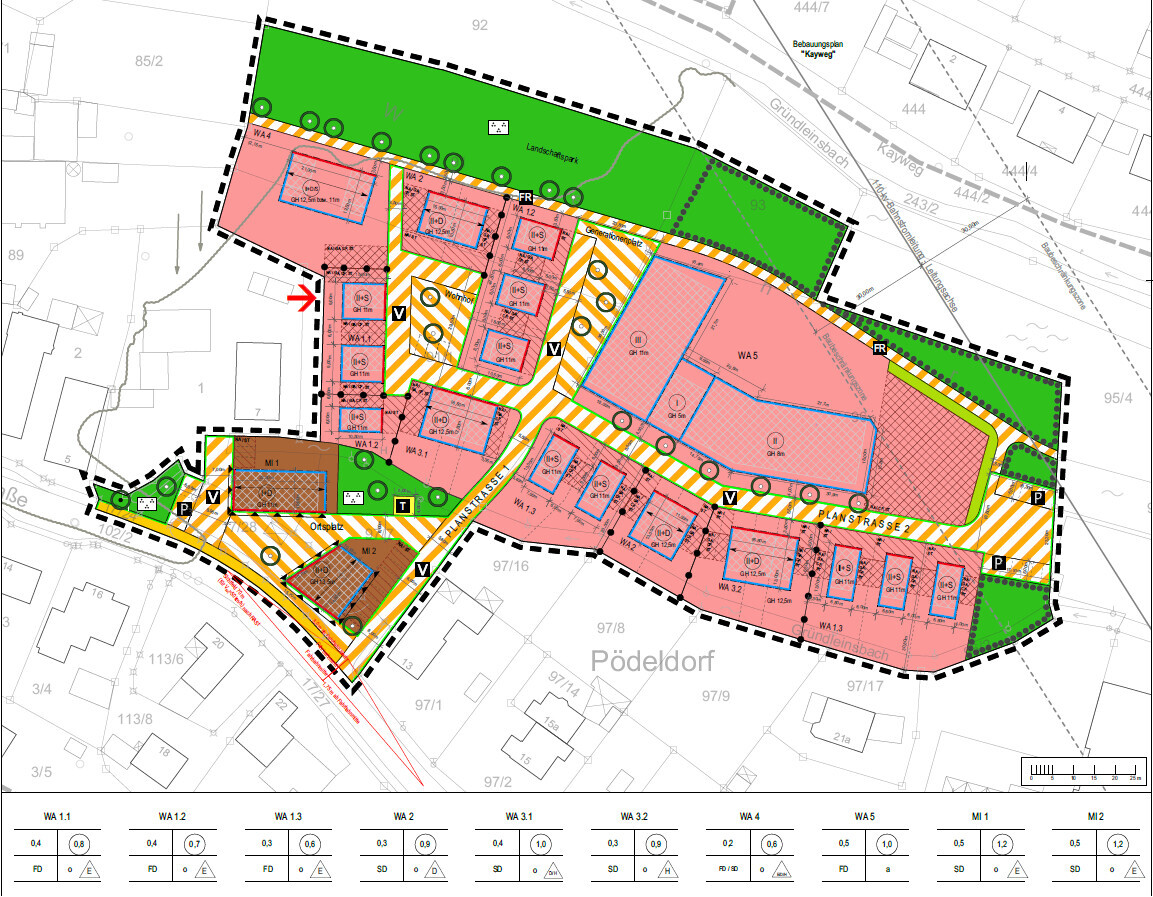
We have a flat, 225 m2 (2,422 sq ft) plot, on which, according to the development plan, we are supposed to build a single-family house. The house consists of a ground floor, first floor, and a recessed top floor (this is required by the development plan) and has a maximum gross building footprint of 9x9 m (30x30 ft), so we expect a living area of at least 150-160 m2 (1,615-1,722 sq ft). Under these conditions, the basement question is quite complicated.
Arguments in favor of the basement:
Arguments against:
And so on...
I know there are many, partly inconsistent (what if...) factors involved. Also, the topic of basements is always sensitive; some are generally in favor, others generally against.
Nonetheless, I would be very grateful for concrete and objective advice. Perhaps some of you have faced the same issue under similar conditions (small plot, strict development plan regulations, no free layout expansion of the ground floor, soil conditions, etc.) and I would be interested to hear how this was or is resolved regarding building services and storage space.
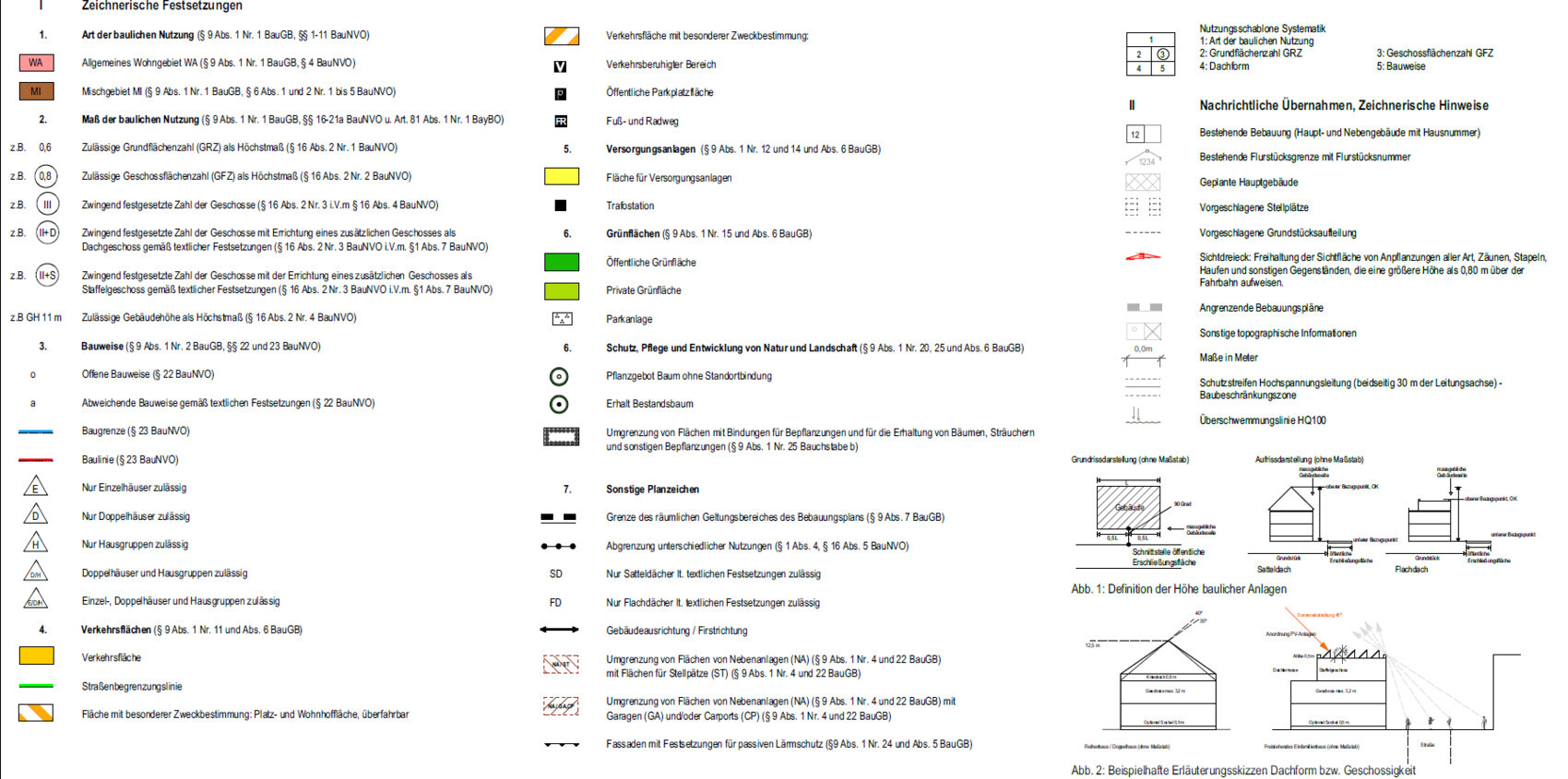
For better understanding, I am attaching the development plan.
Many thanks to everyone who would share their experience with me. Best regards
In our house planning process, like many others, we are facing the question of whether to build with or without a basement.
We have a flat, 225 m2 (2,422 sq ft) plot, on which, according to the development plan, we are supposed to build a single-family house. The house consists of a ground floor, first floor, and a recessed top floor (this is required by the development plan) and has a maximum gross building footprint of 9x9 m (30x30 ft), so we expect a living area of at least 150-160 m2 (1,615-1,722 sq ft). Under these conditions, the basement question is quite complicated.
Arguments in favor of the basement:
- A basement obviously offers a lot of space, for example, for building services, laundry, storage, etc.
- Without a basement, we definitely need a utility room on the ground floor. Although the external dimensions of 9x9 m (30x30 ft) would allow for this, we would prefer to use that space differently (e.g., my wife is a teacher and needs a home office);
- We will build a 10x3 m (33x10 ft) garage with an extra room, but this is limited to about 4x3 m (13x10 ft), where we have to store bicycles and garden furniture. Unfortunately, there is no more space, e.g., for a garden shed or similar;
- We currently have one child but plan for at least a second or even a third. The space could therefore become tight;
- Higher property value.
Arguments against:
- Due to the high groundwater level, the basement must be built as a watertight structure ("white tank" method), which means:
- High costs—I estimate at least €60,000–70,000 (utility basement, with few or no windows);
- Despite the watertight construction, I am still concerned about moisture, for example, if the basement is not built correctly. A house with a damp basement is worth less than one without;
- The idea of more children is, of course, uncertain. What if more children do not come? We would have a large house with little use for it.
And so on...
I know there are many, partly inconsistent (what if...) factors involved. Also, the topic of basements is always sensitive; some are generally in favor, others generally against.
Nonetheless, I would be very grateful for concrete and objective advice. Perhaps some of you have faced the same issue under similar conditions (small plot, strict development plan regulations, no free layout expansion of the ground floor, soil conditions, etc.) and I would be interested to hear how this was or is resolved regarding building services and storage space.
For better understanding, I am attaching the development plan.
Many thanks to everyone who would share their experience with me. Best regards

Davidoff86 schrieb:
The municipality indicated that you could/should definitely build 1 meter (3.3 feet) away from the building line (the whole thing was designed by an architect as part of a competition, and he "didn’t quite think through the building line properly"). Unbelievable! The planners must be related to @goalkeeper.
What do you want to do with that one meter (3.3 feet) in front of the house? Planning to give it to the city because they were too incompetent to make a proper plan and now you have to build the public sidewalk yourself? Do you even realize how much—or how little—a one meter (3.3 feet) setback really is? Honestly, I’d probably ignore that setback and focus on improving my house or terrace instead.
D
Davidoff8624 Jan 2020 10:25Scout schrieb:
Which federal state? Depending on that, you either have to
- maintain a setback of 2.5 or 3 meters (8.2 or 9.8 feet) from the property line for the garage
or
- place it directly on the boundary. Bavaria. Yes, according to the building plan, I have no alternative. I have to build the garage or carport either north or south of the house and can use the full 3 meters (9.8 feet) up to the boundary. The neighbors to the south and north are the same.
cschiko schrieb:
It really depends a lot on your habits, whether you store a lot (decorations, etc.) or rather little. Are you handy and do you have a lot of tools, maybe even want a small workshop, and so on? If you store relatively little, then a basement isn’t a must. But if you do have quite a bit to store and are probably planning for three kids, I’d lean more toward having a basement. I completely agree, it depends on our habits. A workshop isn’t necessary, but we are a bit like “stuff collectors.”
Vicky Pedia schrieb:
In general, it’s advisable to involve a construction supervisor during the critical phases. Then even a basement on “difficult” ground is not a problem. Definitely. If there’s going to be a basement, then definitely with an external construction supervisor. He is worth the money.
D
Davidoff8624 Jan 2020 10:28kaho674 schrieb:
What do you want to do with the meter in front of the house? Do you want to give it to the city because they didn’t make a proper plan and now have to build the public sidewalk themselves? Do you know how much—or rather how little—a 1 meter (3 feet) distance actually is? Yes, I know. On one hand, it’s a bit ridiculous. But having the front door practically right next to the street, even if it’s hardly trafficked?? I’m not sure...
D
Davidoff8624 Jan 2020 10:30Scout schrieb:
The definition of a recessed or partial upper floor (setback story) is usually about two-thirds of the area of the floor below. So, 6 x 9m (20 x 30 feet) would be possible, or alternatively a terrace of 3 x 9m (10 x 30 feet).
Two rooms and a bathroom would fit well, but it would also depend heavily on the exact location of the staircase. We will definitely consult an architect. I’m wondering whether the recessed upper floor counts as a full storey. I find different information online. If it does count, we would have to reduce the living area significantly.
Davidoff86 schrieb:
Do you mean on the upper floor?Yes, the narrow room shown at the bottom of the upper floor plan, as well as the office/laundry room on the ground floor.
Draw your plans (even if they are just rough ideas) on graph paper using a scale where 1cm equals 1 meter (around 0.4 inches). Then furnish the rooms to scale with only the essentials. This way, you will spot the first mistakes right while drawing.
Davidoff86 schrieb:
I’m wondering if a recessed top floor counts as a full storey. I find different statements online. No, it doesn’t. The binding regulation for you is first of all the development plan, and there it shows II+S in a circle. So you have to build two full storeys plus the recessed top floor. How the recessed top floor is defined can be found in the building code of your federal state, which we still don’t know.
Davidoff86 schrieb:
But the front door practically right on the street, even if it is hardly trafficked? The street is at the end of a cul-de-sac with only detached houses. It will very likely become a “play street” (or “home zone”), so ask your local building authority or check the legend of the development plan.
We have a traffic-calmed dead-end street at the end of a row of terraced houses nearby; basically, only two neighbors drive there. The “front garden” is about one meter (3 feet) deep like at all the neighbors’ and without any fencing. That basically serves as our walkway—there are no problems since there is no through traffic and mutual consideration is common practice, not an alien concept.