
ᐅ Building a garden fence on or next to an uneven concrete base?
Created on: 19 May 2025 20:50
F
Frankenländer
Hello,
I want to install a 1.2m (4 feet) high welded wire fence towards the neighbor’s property. My plot is about 25cm (10 inches) lower than the neighbor’s.
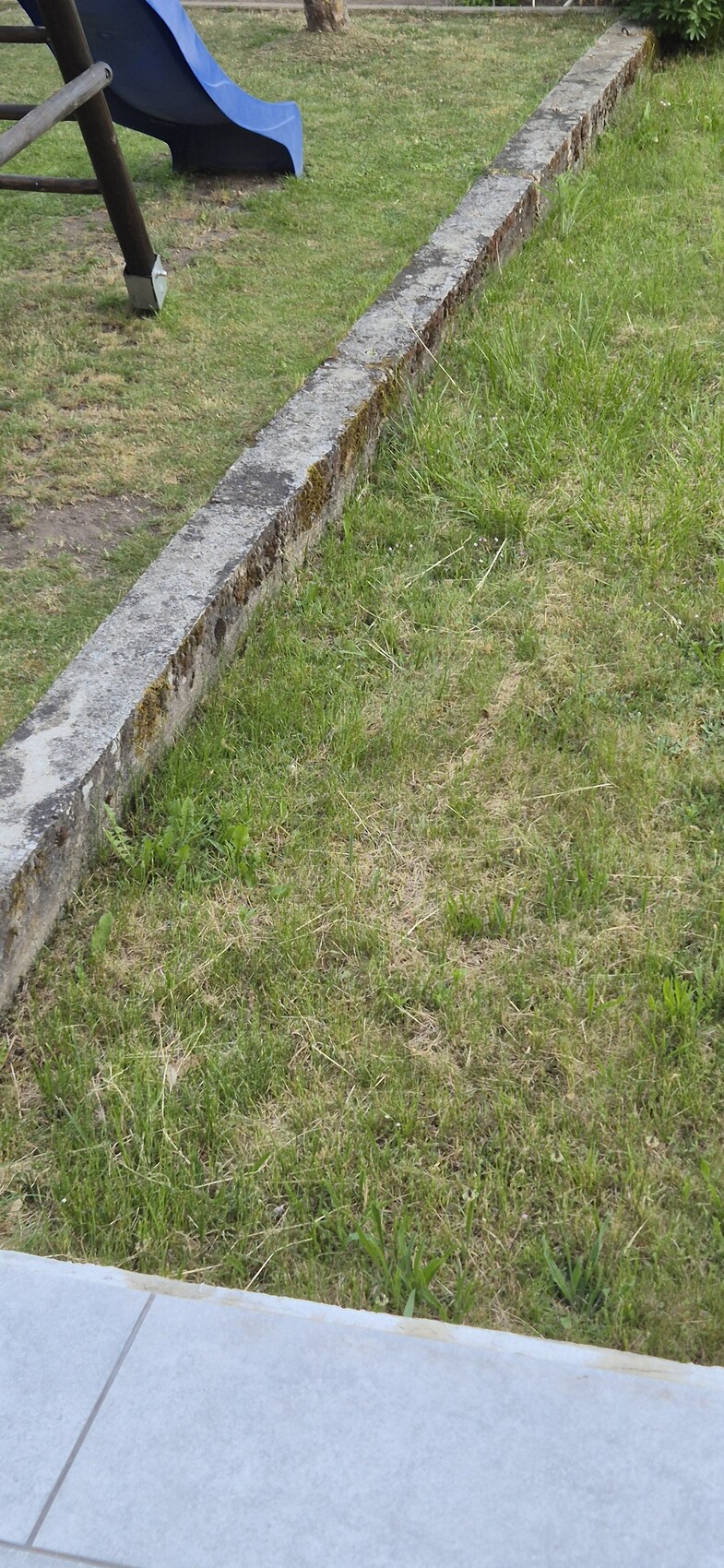
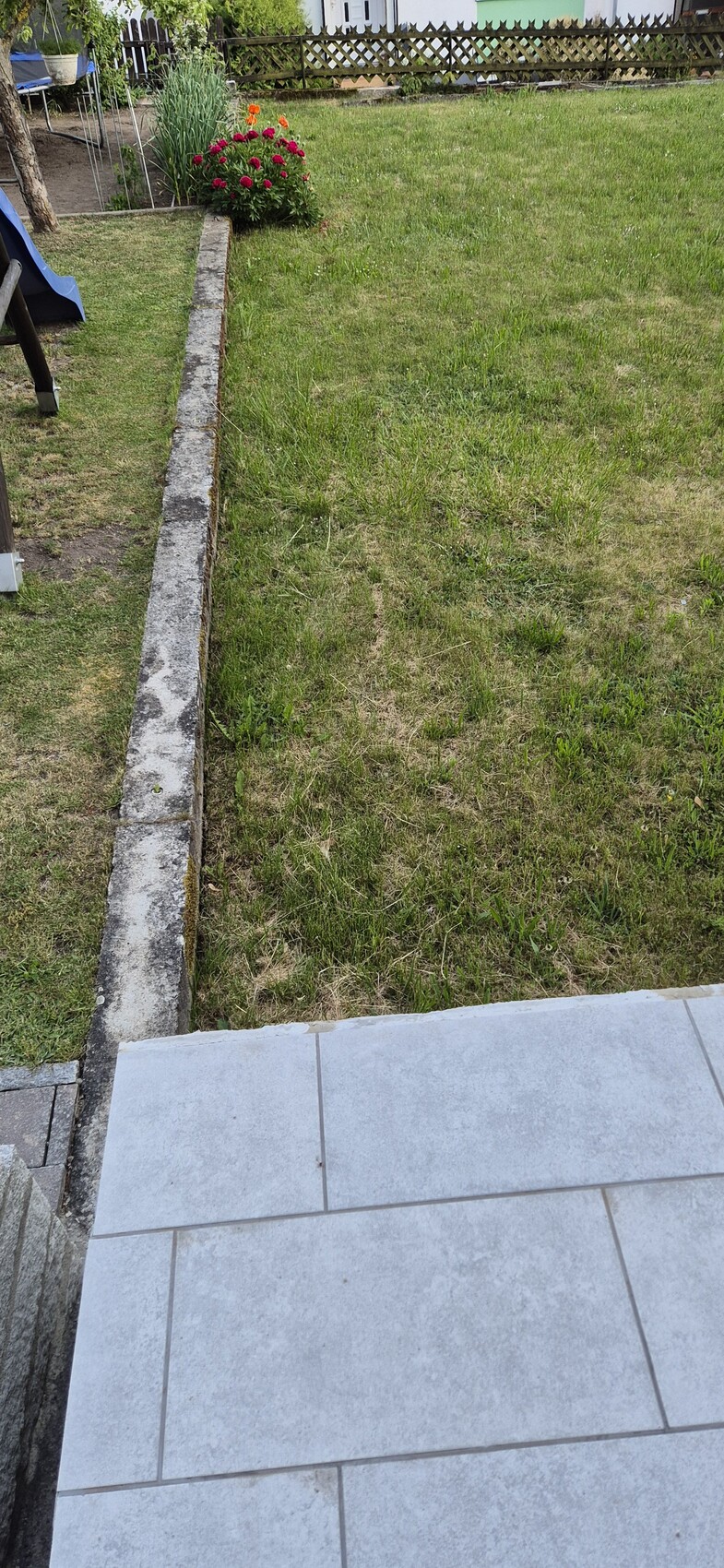
Along the property boundary, there is unfortunately a very uneven concrete base, original from the 1960s.
The base runs along the entire length from the left to the right end with a total slope of about 40cm (16 inches) and unfortunately with a few waves and “hills.” This makes it difficult to achieve a consistent height offset of the fence posts when mounting on the base, without leaving a big gap under the first few fence panels on the left side. My plan would be to core drill holes of about 15cm (6 inches) diameter into the existing base and then set the posts in mortar.
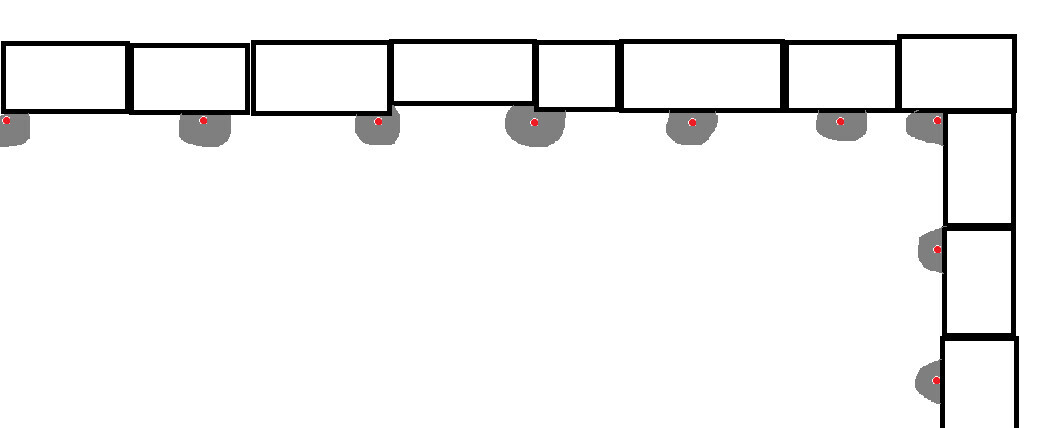
An alternative would be to buy slightly longer fence posts and install them directly next to the base on my lower ground. But I am unsure if this will be stable, since then only three sides of the post will be surrounded by concrete, and the post will lean directly against the existing concrete base with little or no concrete poured beside it during installation (see attached diagram for illustration). Also, I want to minimize space usage since the garden is very narrow.
The next issue is that a hedge is to be planted directly next to the fence. This means the ground beside the concreted fence posts will have to be dug up again for the hedge plants, which could risk reducing the stability of the fence post foundations.
The neighbor is generally fine whether the fence is installed on the base or beside it.
I just want to find the best overall solution for both fence and hedge.
What do you think?

I want to install a 1.2m (4 feet) high welded wire fence towards the neighbor’s property. My plot is about 25cm (10 inches) lower than the neighbor’s.
Along the property boundary, there is unfortunately a very uneven concrete base, original from the 1960s.
The base runs along the entire length from the left to the right end with a total slope of about 40cm (16 inches) and unfortunately with a few waves and “hills.” This makes it difficult to achieve a consistent height offset of the fence posts when mounting on the base, without leaving a big gap under the first few fence panels on the left side. My plan would be to core drill holes of about 15cm (6 inches) diameter into the existing base and then set the posts in mortar.
An alternative would be to buy slightly longer fence posts and install them directly next to the base on my lower ground. But I am unsure if this will be stable, since then only three sides of the post will be surrounded by concrete, and the post will lean directly against the existing concrete base with little or no concrete poured beside it during installation (see attached diagram for illustration). Also, I want to minimize space usage since the garden is very narrow.
The next issue is that a hedge is to be planted directly next to the fence. This means the ground beside the concreted fence posts will have to be dug up again for the hedge plants, which could risk reducing the stability of the fence post foundations.
The neighbor is generally fine whether the fence is installed on the base or beside it.
I just want to find the best overall solution for both fence and hedge.
What do you think?
F
Frankenländer20 May 2025 21:52That is the problem: The neighbors are "particularly challenging" and have three ill-mannered children. The hedge plants would not survive more than two months without being trampled. Therefore, the fence must be installed first. A fence on the neighbor’s property will not work.
W
wiltshire20 May 2025 22:00Build the fence of your choice on the base, making sure the top is level, and grind off a few centimeters (inches) here and there at the bottom. This way, you’ll get a straight fence on the uneven base. The subtle individuality will give it a distinct character.

How large are the height differences exactly? I’m not referring to the general slope of 40cm (16 inches), but rather when you place a 3m (10 feet) straight edge or, even better, a spirit level on the wall. What is the maximum gap between the straight edge and the wall?
Gaps up to 2cm (0.8 inches) could be leveled using deck boards, which should ideally be installed with a slight slope anyway to allow water to run off.
Regarding the hedge, you could start by planting one on your own side exactly as you want it, and place young locust trees in pots on the base (it’s best to collect wild ones somewhere near the railway embankment). Locust trees are very hardy and undemanding, grow quickly at first, and the young trees have long sharp thorns. Have fun, kids… haha…
A locust tree near us grew two meters (6.5 feet) tall in gravel within two years. We recently transplanted and potted it because my wife wants to reward its toughness. She didn’t expect it to survive since we had to cut some roots. Now, a few weeks later, it’s even blooming...
Gaps up to 2cm (0.8 inches) could be leveled using deck boards, which should ideally be installed with a slight slope anyway to allow water to run off.
Regarding the hedge, you could start by planting one on your own side exactly as you want it, and place young locust trees in pots on the base (it’s best to collect wild ones somewhere near the railway embankment). Locust trees are very hardy and undemanding, grow quickly at first, and the young trees have long sharp thorns. Have fun, kids… haha…
A locust tree near us grew two meters (6.5 feet) tall in gravel within two years. We recently transplanted and potted it because my wife wants to reward its toughness. She didn’t expect it to survive since we had to cut some roots. Now, a few weeks later, it’s even blooming...
Similar topics