
Hello,
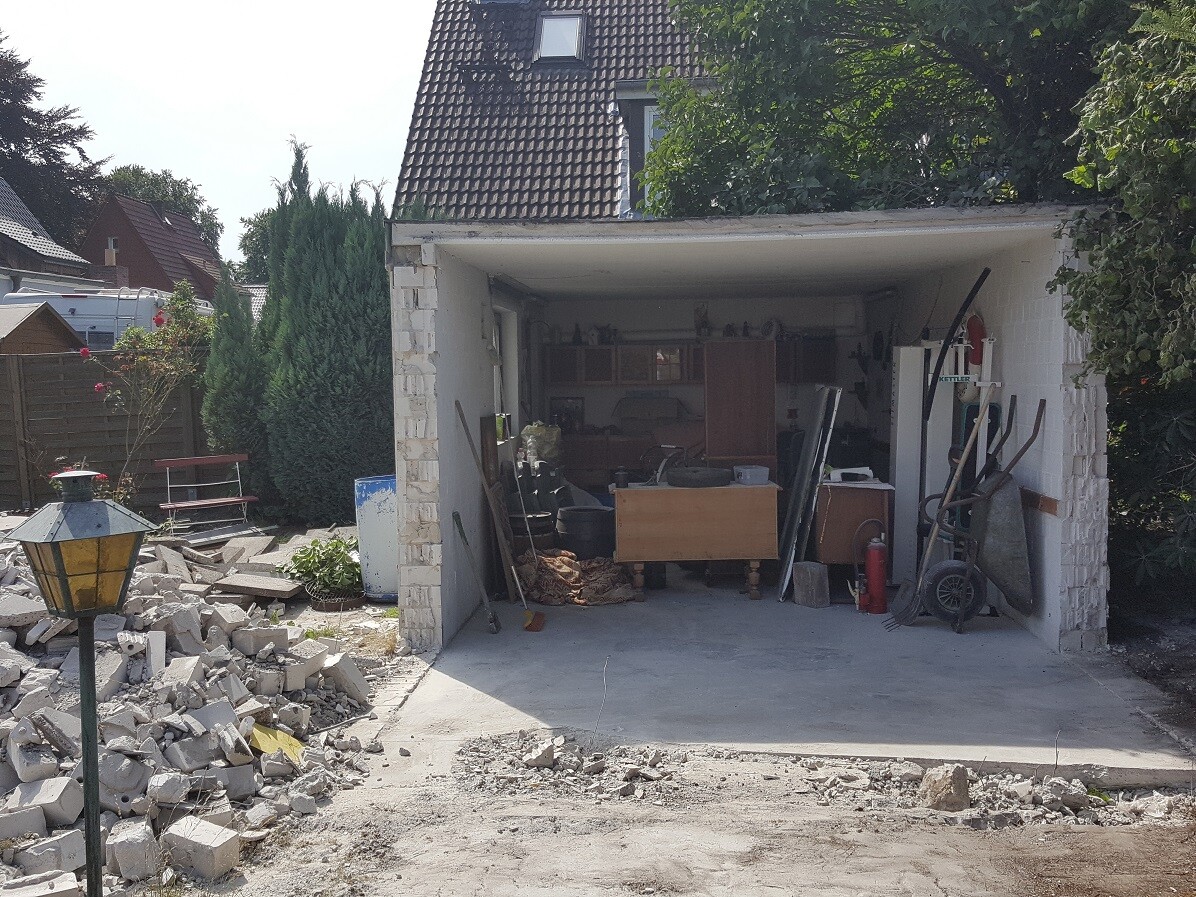
we had a 9 x 4 m (30 x 13 ft) garage shortened to 7 x 4 m (23 x 13 ft). Now the garage needs to be bricked up again. It’s already frustrating that I couldn’t do the demolition myself... Now, as the future homeowner, I want to at least build a wall myself! However, I have never done this before...
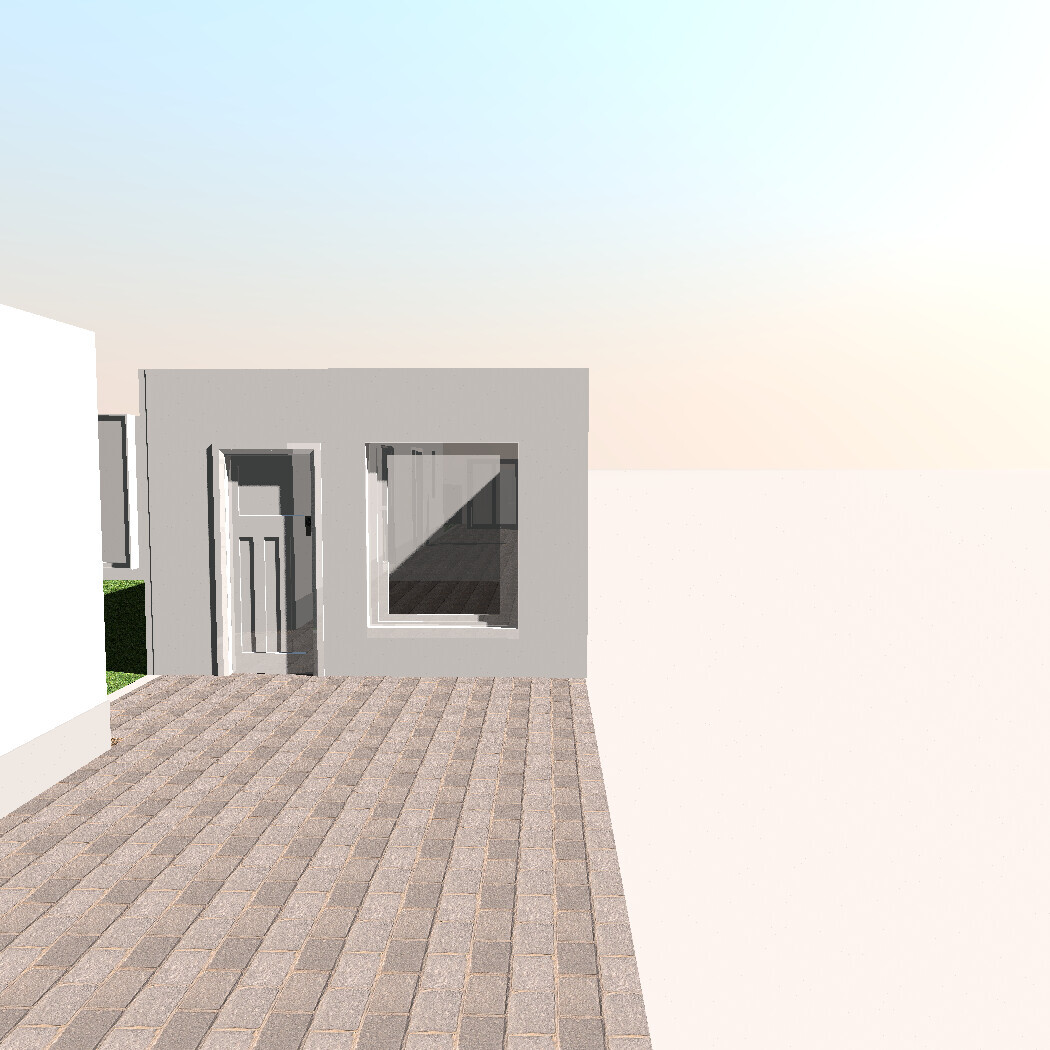
Additionally, a window and a door are to be installed.
The garage was built in 1981. It has a thick foundation with reinforcement and a frost skirt at a depth of 80 cm (31 inches). The walls are made of calcium silicate bricks (2DF). At the top there is a wall tie, which is currently hanging free on two sides due to the demolition. The ceiling consists of 4 m (13 ft) long aerated concrete slabs with steel reinforcement. These rest on the walls.
Now I want to brick up the front wall, where the garage door used to be and which has now been removed, by myself. Also, a standard door and a window should be installed.
In my mind, I had planned to simply build the new wall at a right angle to the existing wall so that it aligns with the aerated concrete ceiling on top. I would install a lintel above the door and window, and that’s it. However, I was told that I should interlock the corners of the walls for stability. Also, the wall tie should be continued?

Perhaps some of you can give me good advice on how to best get started, which approach is the right one, and whether it might be better to just hire a mason to do everything.
For clarification, I have attached photos of both the current state and the planned state.
Thank you in advance!
Good luck,
Manu
we had a 9 x 4 m (30 x 13 ft) garage shortened to 7 x 4 m (23 x 13 ft). Now the garage needs to be bricked up again. It’s already frustrating that I couldn’t do the demolition myself... Now, as the future homeowner, I want to at least build a wall myself! However, I have never done this before...
Additionally, a window and a door are to be installed.
The garage was built in 1981. It has a thick foundation with reinforcement and a frost skirt at a depth of 80 cm (31 inches). The walls are made of calcium silicate bricks (2DF). At the top there is a wall tie, which is currently hanging free on two sides due to the demolition. The ceiling consists of 4 m (13 ft) long aerated concrete slabs with steel reinforcement. These rest on the walls.
Now I want to brick up the front wall, where the garage door used to be and which has now been removed, by myself. Also, a standard door and a window should be installed.
In my mind, I had planned to simply build the new wall at a right angle to the existing wall so that it aligns with the aerated concrete ceiling on top. I would install a lintel above the door and window, and that’s it. However, I was told that I should interlock the corners of the walls for stability. Also, the wall tie should be continued?
Perhaps some of you can give me good advice on how to best get started, which approach is the right one, and whether it might be better to just hire a mason to do everything.
For clarification, I have attached photos of both the current state and the planned state.
Thank you in advance!
Good luck,
Manu
T
toxicmolotof26 Jul 2017 17:02Well, besides the authorities, it could also be a neighbor. Or perhaps a future neighbor at some point. Who knows?

Usage)
Without a gate, it is obvious: it is no longer a garage.
Interlocking)
You can skip it if you use calcium silicate bricks.
https://www.instagram.com/11antgmxde/
https://www.linkedin.com/company/bauen-jetzt/
Without a gate, it is obvious: it is no longer a garage.
Interlocking)
You can skip it if you use calcium silicate bricks.
https://www.instagram.com/11antgmxde/
https://www.linkedin.com/company/bauen-jetzt/
Thank you all for the feedback! I still have a few questions.
The horizontal damp-proof course against rising moisture? Good idea, I hadn’t considered that. Just roofing felt or bitumen?
True. Is that a problem? There’s probably going to be a proper floor covering later to make it a bit more comfortable.
Right! Very good, thank you!!
I will visit Ytong soon; they have a plant nearby. Let’s see what advice they give me. Thanks!
Yes, the garage is directly on the boundary—actually almost on two boundaries. But that’s no problem, at least as a garage. It is ultimately going to be used for storage, as a cellar replacement. I haven’t applied for the change of use yet. I will probably inquire informally. Has anyone actually experienced a building inspector coming out for something like this?
You can skip it? So back to my first idea: just build at a right angle against the existing walls up to the aerated concrete ceiling? Without wall ties and without interlocking? That would, of course, be the easiest.
One more question about the ceiling: How stable do you think such a reinforced aerated concrete ceiling is? The panels are about 4m (13 feet) long and 15cm (6 inches) thick. Each panel has steel reinforcement inside.
Thank you very much!
Bieber0815 schrieb:
- Use the same brick as the rest of the garage.
- As winnetou78 mentioned, regularly tie it into the other walls.
- Pay attention to the horizontal damp-proof course (which I think can also be seen on the other walls).
- The first row is the most important, put in the effort.
- For plastering, I would look for a mason (maybe as a favor or neighborhood help).
Regarding the ring beam, I would say: don’t be afraid of gaps, just block it up.
There should also be a metal flashing on the roof.
The horizontal damp-proof course against rising moisture? Good idea, I hadn’t considered that. Just roofing felt or bitumen?
winnetou78 schrieb:
In the end, you’re just building on top of the slab,
True. Is that a problem? There’s probably going to be a proper floor covering later to make it a bit more comfortable.
baufix42 schrieb:
I still see a lot of usable bricks in the demolition rubble. Clean them a bit and you save about 50 cents per brick.
Caspar2020 schrieb:
Above all, you’ll also reduce disposal costs for the rubble.
Right! Very good, thank you!!
Nordlys schrieb:
I want to go back to my suggestion about sealing with Ytong blocks. Simply attach them flush to the old walls, set an anchor every second or third row, it works. How? Look online. There are many YouTube videos. Karsten
I will visit Ytong soon; they have a plant nearby. Let’s see what advice they give me. Thanks!
toxicmolotow schrieb:
A different question:
Is the former garage built right on the property line? And is the change of use approved?
You don’t want to do all the work and then have the planning authorities come down on you saying it’s not allowed...
Yes, the garage is directly on the boundary—actually almost on two boundaries. But that’s no problem, at least as a garage. It is ultimately going to be used for storage, as a cellar replacement. I haven’t applied for the change of use yet. I will probably inquire informally. Has anyone actually experienced a building inspector coming out for something like this?
11ant schrieb:
Use)
Without a door, it obviously isn’t a garage anymore.
Interlocking)
You can skip that if you use sand-lime bricks.
You can skip it? So back to my first idea: just build at a right angle against the existing walls up to the aerated concrete ceiling? Without wall ties and without interlocking? That would, of course, be the easiest.
One more question about the ceiling: How stable do you think such a reinforced aerated concrete ceiling is? The panels are about 4m (13 feet) long and 15cm (6 inches) thick. Each panel has steel reinforcement inside.
Thank you very much!
T
toxicmolotof27 Jul 2017 12:27As if I had sensed it.
A basement replacement room is not the same as a garage.
And most likely, only a garage is permitted there.
If everything is to be done correctly, you need to get approval for the change of use. I cannot assess whether your building qualifies for a permit in that location.
And yes, the building authority visited me unannounced three times during the roughly 9-month construction phase.
A basement replacement room is not the same as a garage.
And most likely, only a garage is permitted there.
If everything is to be done correctly, you need to get approval for the change of use. I cannot assess whether your building qualifies for a permit in that location.
And yes, the building authority visited me unannounced three times during the roughly 9-month construction phase.
I guess it has happened now. The gate is gone. But I would have left it in place. And simply not parked the car in there. My garage will never actually house a car; it’s an affordable workshop, garden shed, etc. And as long as there is a gate, it is a garage. And as long as our car isn’t parked on the street, no one will care. Whether the lawn mower or the VW is inside, the neighbor couldn’t care less...
Forza... schrieb:
I’m planning to visit Ytong soon, as there’s a plant nearby. Let’s see what they recommend. What do you expect? Surely not that they would seriously suggest a different material, right?
How does one even come up with the idea to shorten a garage lengthwise “as a basement substitute,” reducing it to “long enough only for a second car if used as a basement substitute,” and then also want to replace the garage door that serves as the official garage entrance? – I would at least reinstall the door and try my first masonry attempts with a garden grill. Not everyone has one made from sand-lime brick.
Then the garage would just be shortened like a pair of pants and all would be peaceful again. No building authority is going to object to a few wine bottles stored in the garage. And having a door makes it much easier to take bulky waste out.
https://www.instagram.com/11antgmxde/
https://www.linkedin.com/company/bauen-jetzt/
Similar topics